 Bellingham Roofing
 Exterior Work Built for Blaine's Coastal Conditions
Blaine sits right on Semiahmo Bay and Drayton Harbor, about as close to the water and the Canadian border as you can get in Whatcom County. That location is part of what makes the town what it is, but it also means homes here take on a specific combination of weather stress that inland Bellingham neighborhoods don't deal with in the same way. Salt-laden air off the bay, wind-driven rain that comes in sideways during winter storms, and a moss season that can stretch nearly eight months out of the year all work on a house at once. We've built our siding, roofing, window, and deck work around those realities rather than treating Blaine like a smaller version of Bellingham.
A house a half-mile from the water ages differently than one tucked into the trees a few miles inland. Fasteners corrode faster, north-facing roof slopes stay damp longer, and painted or unfinished wood surfaces take a beating from the combination of salt and moisture. None of that means a home in Blaine is doomed to constant repair — it means the materials, fastener choices, and maintenance schedule need to match the environment.
What Salt Air Actually Does to a Home
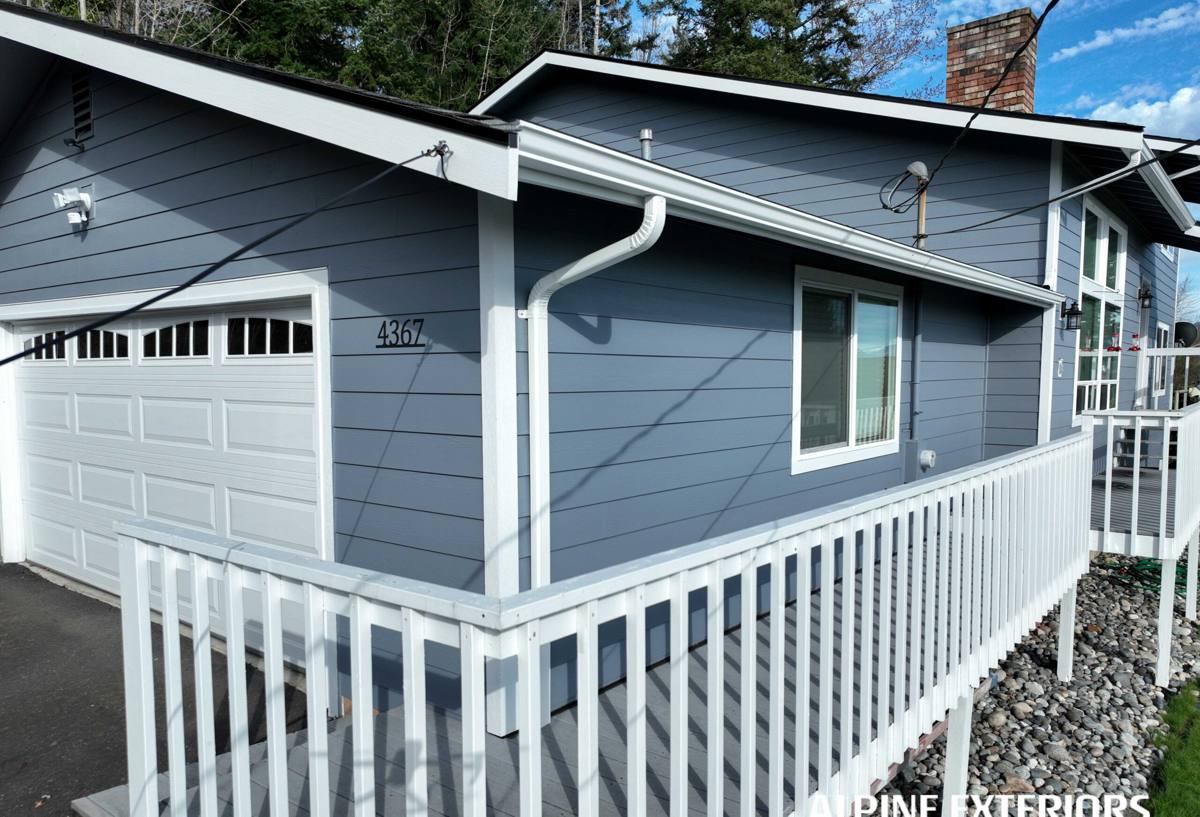
Salt air is corrosive to exposed metal, full stop. That includes exposed roofing fasteners, flashing, gutter hardware, and any hinges or hardware on exterior doors and windows. Over years, standard fasteners can start to weep rust streaks down siding or roofing, which is both a cosmetic problem and, eventually, a functional one if the fastener itself weakens.
It also affects finishes. Paint and stain on wood siding or trim tend to break down faster in a salt-air environment than the same product would inland, because the salt accelerates the natural breakdown of the finish layer. This is why we lean on corrosion-resistant fastener specs and finish systems rated for coastal exposure when we're working on a home in Blaine, rather than defaulting to whatever is standard for a job a few miles inland.
Where Salt Exposure Shows Up First
- Exposed nail heads and screws on fencing, decks, and trim
- Gutter hangers and downspout straps
- Metal flashing around chimneys, skylights, and roof-to-wall transitions
- Door and window hardware, especially on the water-facing side of a house
- Paint and stain finishes on the windward exterior walls
Driving Rain and the Roof-Wall Connection
Wind-driven rain is a different problem than straight-down rain. When storms push moisture sideways off the bay, water gets forced up under shingle laps, into siding seams, and around window and door openings in ways that gravity-only drainage assumptions don't account for. A roof or siding system that would perform fine in a calm rain event can still leak during a wind-driven storm if the flashing details and water-resistive barrier underneath weren't built for it.
This is really a roofing and siding issue at the same time, because the two systems meet at every wall-to-roof transition, every window head, and every deck ledger. We pay close attention to those transition points — proper step flashing, kick-out flashing at roof-to-wall intersections, and correctly lapped house wrap — because that's where driving rain finds its way in on exposed coastal lots.
Roofing in a Long Moss Season
Whatcom County's mild, wet climate supports moss growth for most of the year, and Blaine's proximity to the water and tree cover in many neighborhoods can make it worse in shaded or north-facing sections of a roof. Moss holds moisture against the roofing surface, works its way under shingle edges as it grows, and can shorten the useful life of a roof that would otherwise have years left in it.
Moss isn't just cosmetic. As it spreads it lifts shingle tabs slightly, which lets wind-driven rain get further underneath than it should. Left unchecked for years, that combination of moisture retention and physical lifting is one of the more common reasons we see premature granule loss and localized leaks on roofs that are otherwise mid-life.
Roofing Maintenance That Actually Matters Here
| Task | Why It Matters in Blaine | Rough Frequency |
|---|---|---|
| Moss removal (soft wash, not pressure wash) | Prevents shingle lifting and moisture retention on shaded slopes | Every 1-2 years |
| Gutter and downspout cleaning | Storm debris and moss buildup off the bay clog systems faster here | 2x per year |
| Flashing inspection | Salt air accelerates corrosion at flashing seams and fasteners | Annually |
| Attic ventilation check | Poor airflow traps moisture, encouraging moss and rot from underneath | Every few years |
Siding Choices for a Coastal Lot
For siding, the trade-offs come down to how a material handles sustained moisture exposure and salt air over the long run, not just how it looks on installation day. Fiber cement holds up well against both moisture and pests and doesn't require the same repainting cycle that wood siding does in this climate. Engineered wood products have improved a great deal, but they're more installation-sensitive — flashing and caulking details have to be done correctly the first time, because a coastal environment doesn't give a poorly sealed seam much room for error. Vinyl is a lower-maintenance option but can become brittle over time with UV and temperature cycling, which is worth weighing against your budget and how long you plan to be in the home.
We'll walk through these trade-offs honestly for your specific house and orientation to the water, rather than pushing one product as a universal answer. A home tucked behind a windbreak of trees has different needs than one with an open, unobstructed view of the bay.
Windows and the Salt-Air Factor
Window performance in a place like Blaine comes down to two things: the seal quality around the frame, and the corrosion resistance of the hardware and cladding. Aluminum-clad and vinyl frames generally hold up well, but hinges, locks, and cranks on operable windows are worth asking about specifically — cheaper hardware finishes can start showing pitting or discoloration within a few years this close to the water. We also pay attention to the flashing and sealant details around each window opening, since that's a common path for wind-driven rain to get behind the siding.
Decks Facing the Bay
Outdoor living spaces in Blaine deal with the same salt-and-moisture combination as the rest of the exterior, just with more direct sun and weather exposure since decks are rarely covered on all sides. Fastener corrosion is the most common issue we see on older decks here — galvanized or coated fasteners that were adequate inland can show rust streaking on a bay-facing deck within a handful of years. Composite decking has become a popular choice specifically because it sidesteps the repainting and sealing cycle that wood decking needs in this climate, though it still needs a properly built substructure and corrosion-resistant fasteners underneath to perform well long-term.
Why a Local Crew Matters for Blaine Homes
A contractor who mostly works inland or across a wide multi-county territory doesn't necessarily see enough Blaine-specific jobs to have a feel for how fast moss regrows on a north-facing slope here, or how quickly standard fasteners start to corrode on a bay-facing deck. That kind of pattern recognition comes from doing the work in this specific stretch of Whatcom County repeatedly, not from a general specification sheet.
Being local also means we're not commuting a long distance for a callback, a warranty check, or a quick inspection after a winter storm. For exterior work tied so closely to weather exposure, that responsiveness matters as much as the initial installation quality.
What to Look For Before You Hire
- Washington contractor license, current and in good standing
- Liability insurance and, for roofing work, workers' comp coverage
- A written estimate that specifies materials, fastener types, and flashing details — not just a bottom-line price
- Experience working on homes near the water, not just general regional experience
- A clear warranty on both materials and labor, explained in plain terms
- Willingness to explain trade-offs between materials rather than pushing one product
Getting Started
Whether you're dealing with a moss-heavy roof, siding that's starting to show its age from salt exposure, windows that don't seal the way they used to, or a deck that needs attention before another wet season, it helps to start with a straightforward look at what's actually going on rather than guessing. We offer free, no-pressure estimates for homes in Blaine and the surrounding area — use the form below to get one scheduled.