 Bellingham Roofing
 Fairhaven's Exterior Challenge: Water on Three Sides
Fairhaven sits right up against Bellingham Bay, and that waterfront location shapes almost everything about how a roof, a wall of siding, or a set of window seals ages here. Homes in this part of Bellingham deal with a combination most inland Whatcom County properties don't see in the same intensity: salt-laden air rolling off the bay, wind-driven rain that hits siding and trim at an angle instead of falling straight down, and a moss season that can stretch from early fall through late spring in a wet year. None of these things destroy a house overnight. They work slowly, and that's exactly why they get missed until a repair that could have cost a few hundred dollars turns into a full section replacement.
We've worked on enough homes near the water in Bellingham to know that "it's just some moss" or "the siding looks a little chalky" is usually the first visible sign of something that's been developing underneath for a year or two already. This page is about what we actually see on Fairhaven homes, how our roofing, siding, window, and deck work accounts for it, and what a homeowner can reasonably do between now and their next professional inspection.
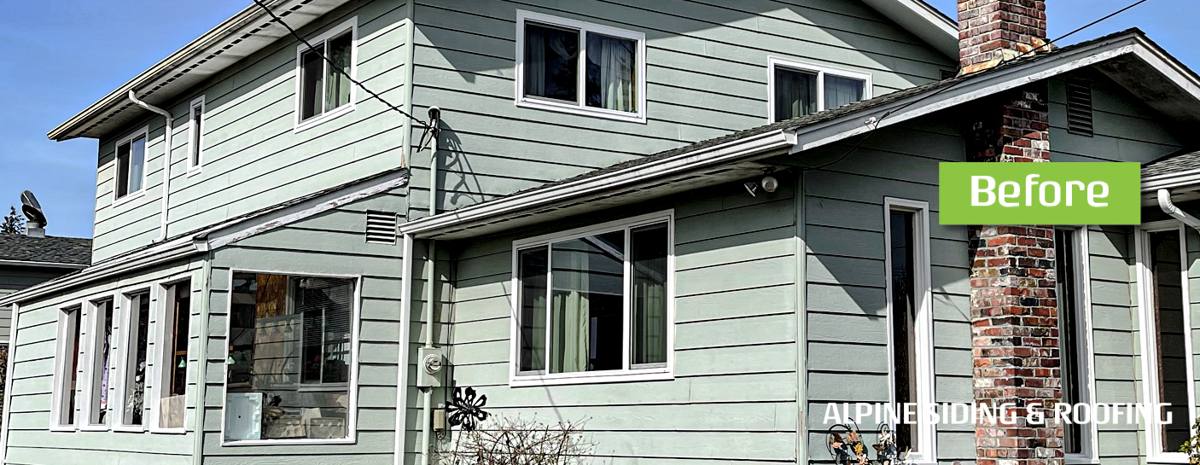
What Salt Air Actually Does to a House
Salt air isn't just a smell that rolls in with the fog. Airborne salt is corrosive, and it settles on every exposed surface of a home — roofing fasteners, flashing, gutter hangers, window frames, and any exposed metal trim. Over years, that exposure accelerates corrosion on lower-grade fasteners and thin-gauge metal flashing far faster than the same materials would wear inland.
Where We See It First
- Rust streaking below nail heads or exposed fastener lines on metal roofing and flashing
- Pitting or discoloration on gutter hangers and downspout brackets
- Premature chalking or dulling on painted siding and trim facing the water
- Corrosion around window hardware and screen frames on the bay-facing side of a home
The practical response isn't complicated: use fasteners and flashing rated for coastal exposure, don't cut corners on metal gauge or coating on the water-facing elevation, and inspect those areas more often than you would on a home a mile inland. We spec corrosion-resistant fasteners and flashing as standard on Fairhaven jobs, not as an upsell.
Driving Rain and Wind-Loaded Water Intrusion
Bellingham gets a lot of rain, but the rain that does the most damage near the bay usually isn't falling straight down — it's being pushed sideways by wind coming off the water. That matters because most exterior systems are designed with the assumption that water sheds downward. Wind-driven rain finds its way under laps in siding, around window flanges, and into roof valleys and penetrations that would stay dry in a calmer setting.
This is why flashing detail and house-wrap integration matter more here than they would in a sheltered inland lot. A roof or siding job that looks fine from the ground can still have water working its way behind the cladding if the flashing laps, kick-out flashing at roof-to-wall intersections, and window sill pans weren't installed with wind-driven conditions in mind. We pay close attention to these details on every Fairhaven project, because they're the difference between a house that stays dry for decades and one with hidden rot showing up five or ten years later.
Moss, Shade, and a Long Wet Season
Between the marine layer, tree cover common in older Fairhaven lots, and a wet season that runs long, moss and algae growth on roofs is one of the most consistent issues we see in this neighborhood. Moss isn't just cosmetic. As it grows, it holds moisture against the roofing surface, lifts shingle edges, and over time can work its way under the roofing material at seams and laps — which is where leaks actually start.
What Helps Slow It Down
- Keeping overhanging branches trimmed back to let more light and airflow reach the roof
- Clearing gutters and valleys of needles and debris before they compost into a moss-friendly bed
- Zinc or copper control strips near the ridge on new roof installs, which help suppress regrowth over time
- Gentle, low-pressure moss removal on a regular schedule rather than infrequent aggressive cleaning
We'll be honest that no roof in this climate is going to be permanently moss-free without maintenance. The goal is managing it before it compromises the roofing material, not eliminating it entirely.
Roofing for Fairhaven Homes
We install and repair asphalt composition roofing, metal roofing, and handle roof-to-wall flashing details that matter most in a coastal, high-moisture setting. For homes close to the water, we lean toward materials and fastener packages rated for coastal or marine exposure, and we're deliberate about flashing at valleys, chimneys, skylights, and roof-to-wall transitions — the spots where a roof actually fails.
Older homes in Fairhaven's historic district sometimes come with roof lines, dormers, and multiple pitch changes that add complexity most production-built homes don't have. That's not a problem for us, but it is a reason to have someone look at the roof who's used to working on older, more detailed rooflines rather than a crew that only knows simple gable roofs.
Siding, Windows, and Decks: The Rest of the Envelope
Roofing gets the most attention, but the same salt air and wind-driven rain that stress a roof are working on the rest of the exterior at the same time.
Siding
We install and repair fiber cement, engineered wood, and traditional lap siding, with attention to proper house-wrap integration, flashing at windows and doors, and rain-screen gaps where they make sense for a bay-facing wall. Caulking and paint film break down faster under UV and salt exposure, so we build in maintenance-friendly details rather than systems that require perfect caulk for the life of the house.
Windows
Window replacement and repair near the water means paying close attention to sill pan flashing and frame sealants, since a poorly flashed window is one of the more common hidden leak sources we find during siding tear-off. We also see hardware corrosion on older windows facing the bay, which is worth checking even if the glass and frame still look fine.
Decks
Decks facing the water take a beating from UV, salt, and moisture cycling — wood that swells and dries repeatedly is prone to checking, fastener pop, and eventual rot at ledger boards and post bases. We build and repair decks with corrosion-resistant hardware and proper ledger flashing, and we're upfront about the maintenance schedule composite versus wood decking actually requires in this environment rather than overselling either as maintenance-free.
Comparing Materials for a Bay-Facing Property
| Factor | Asphalt Composition Roofing | Metal Roofing | Fiber Cement Siding |
|---|---|---|---|
| Salt air resistance | Good with coastal-rated fasteners | Excellent with proper coating and fastener spec | Excellent — doesn't corrode |
| Moss resistance | Moderate; benefits from zinc strips | Higher — smoother surface sheds moss more easily | Not applicable (wall cladding) |
| Upfront cost | Lower | Higher | Moderate to higher than vinyl or wood |
| Maintenance need | Periodic moss/debris cleaning | Low; occasional fastener check | Periodic caulk and paint upkeep |
| Typical lifespan in this climate | 20-30 years | 40-plus years | 30-50 years with maintenance |
None of these is the "correct" choice for every home — budget, roof pitch, HOA or historic-district guidelines, and the look you want all factor in. We'll walk through the real trade-offs for your specific house rather than pushing one material across the board.
Why a Local Crew Matters Here
A contractor who mostly works inland or in drier parts of Whatcom County can still do competent general construction work, but they may not default to coastal-rated fasteners, may not think about kick-out flashing on a bay-facing wall, and may not have a maintenance conversation about moss until it's already a problem. Working regularly on homes in Fairhaven and along the Bellingham waterfront means we've already seen where these houses tend to develop issues, and we build the response into the work itself instead of treating it as an add-on.
It also means we're not guessing at permitting or design expectations if your property falls within Fairhaven's historic district guidelines — we'll flag that early rather than after work has started.
A Simple Maintenance Checklist for Fairhaven Homeowners
- Have gutters and downspouts cleared at least twice a year, more often under heavy tree cover
- Walk the roofline (or have it inspected) each fall for early moss growth before winter rains set in
- Check caulking around windows and siding laps on the bay-facing elevation annually
- Trim back branches that shade the roof and hold moisture against shingles
- Have deck ledger connections and fastener condition checked every couple of years
- Address small rust streaks or chalking on trim and flashing before they spread
Catching these early is almost always cheaper and less disruptive than waiting for a leak to show up inside the house.
Get a Straightforward Look at Your Property
If you're in Fairhaven or elsewhere along the Bellingham waterfront and want an honest read on your roof, siding, windows, or deck — whether it's a repair, a maintenance plan, or a full replacement — we're happy to come take a look. The estimate is free, there's no pressure, and you'll get a clear explanation of what we see and why, using the form below.