 Bellingham Roofing
 Ferndale Homes Face a Different Kind of Weather Than Most of the Country
Ferndale sits close enough to the water and to the open farmland of Whatcom County that homes here take on a specific combination of punishment: salt-laden air drifting in off the Salish Sea, long stretches of driving rain through fall and winter, and a moss season that can run eight months or more in shaded, north-facing spots. None of that is dramatic on its own. It's the accumulation that gets homeowners — a roof that looked fine in July and is growing a green carpet by February, siding that holds moisture in its seams longer than it should, trim that stays damp for days after a storm because it never gets direct sun.
We work on homes throughout Bellingham and the surrounding Whatcom County communities, and Ferndale properties consistently show the same pattern: it's rarely one catastrophic failure that brings someone to call a contractor. It's slow, cumulative wear — moss lifting shingles at the edges, salt air accelerating corrosion on fasteners and flashing, and rain finding its way into spots that were never quite sealed right the first time.
What Salt Air Actually Does to a Roof and Siding
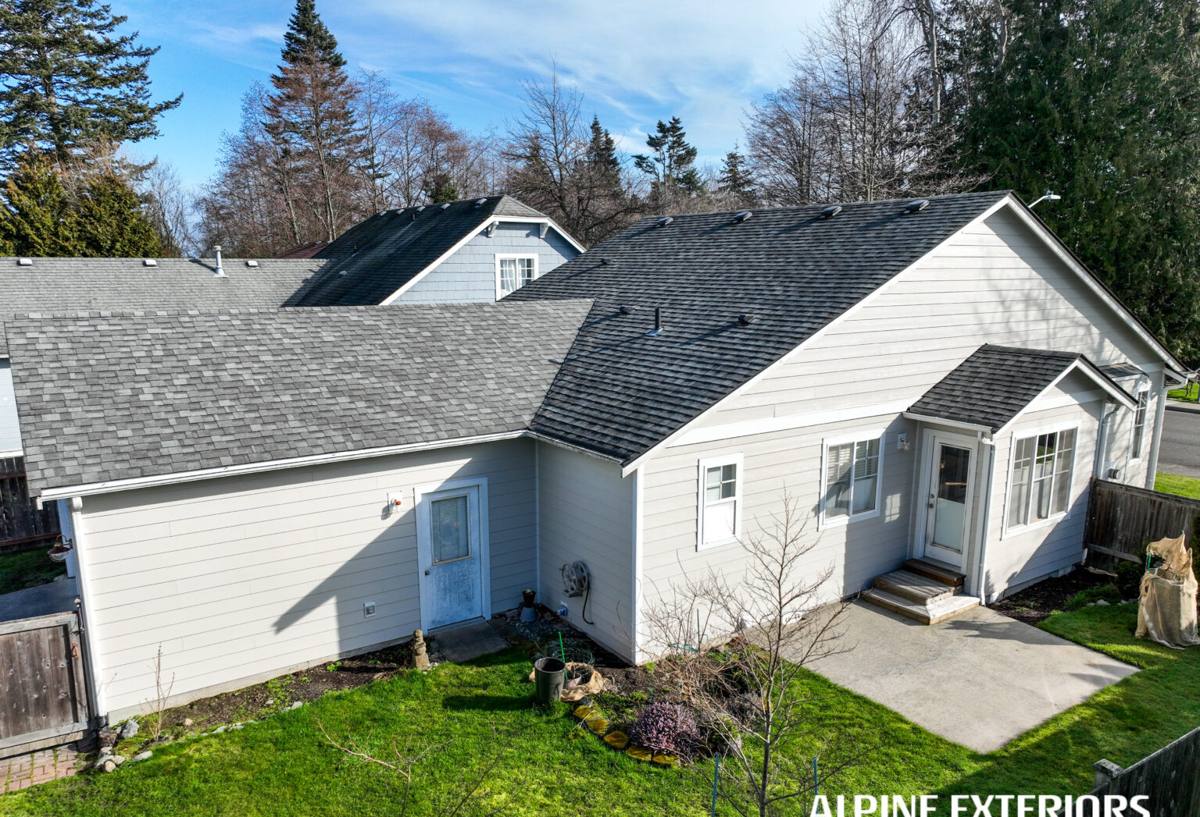
Salt air isn't just a coastal-town talking point — it has a measurable effect on exterior materials. Airborne salt is corrosive to exposed metal, which matters because metal shows up all over a roof system even when the roofing material itself isn't metal: nail heads, flashing around chimneys and vents, gutter hardware, and fasteners on siding and trim. Over years, that corrosion can weaken the very connections holding a roof or siding system together, long before the shingles or panels themselves look worn.
The practical takeaway isn't to panic about salt air — it's to use materials and fastener specs suited for it, and to inspect metal components on a schedule rather than waiting until something visibly fails. A roof or siding job done without that consideration tends to show its weak points years earlier than one done with it in mind.
Moss: The Slow, Patient Enemy
Moss doesn't just sit on a roof looking messy. As it grows, it holds moisture directly against the roofing material, works its way under shingle edges as it thickens, and can physically lift shingles enough to let wind-driven rain underneath. On siding, moss and algae staining in shaded corners are usually cosmetic, but on a roof, moss left unaddressed for a few seasons is one of the more common reasons we see otherwise sound roofs develop leaks years before they should.
Roofing Services for Ferndale Homes
Most of our roofing work in this area falls into a few categories: repair of localized damage (a section of lifted shingles, a flashing leak around a chimney or skylight, storm damage after a windstorm), full roof replacement on homes reaching the end of their material's service life, and moss treatment and prevention work that extends the life of a roof that's otherwise in decent shape.
When we're asked to replace a roof, the conversation usually comes down to matching the material to the home's exposure — how much shade it gets, how close it is to salt air influence, and how steep the roof pitch is, since pitch affects how well moss and debris shed on their own.
| Roofing Material | Typical Lifespan Here | Moss & Moisture Considerations |
|---|---|---|
| Asphalt composition shingle | 20-30 years | Most common choice; needs periodic moss treatment in shaded areas |
| Architectural/dimensional shingle | 25-35 years | Heavier profile sheds water and debris slightly better than 3-tab |
| Metal roofing (standing seam) | 40-60+ years | Sheds moss and moisture very well; fastener quality matters more in salt air |
| Cedar shake | 20-30 years with upkeep | Requires the most consistent moisture and moss management of any option here |
Signs a Ferndale Roof Needs Attention
- Moss or dark streaking concentrated on north-facing or shaded slopes
- Granules collecting in gutters or at downspout outlets
- Shingle edges that look lifted, curled, or cupped
- Rust staining around flashing, vents, or metal fasteners
- Any interior ceiling stain, even a small one, after a heavy rain event
- Sagging or soft-feeling spots when walked on during an inspection
Siding: Managing Moisture Over Time, Not Just Curb Appeal
Siding in this climate has one main job beyond looks: keep moisture moving away from the wall assembly instead of trapping it. Poorly lapped seams, caulk relied on where flashing should be doing the work, and siding installed tight against grade or landscaping are the recurring issues we run into on homes that weren't built or re-sided with this climate specifically in mind.
| Siding Type | Maintenance Burden | Notes for This Area |
|---|---|---|
| Fiber cement | Low-moderate | Handles moisture well when properly flashed and caulked; repaint cycle roughly 10-15 years |
| Vinyl | Low | Doesn't rot, but can hide moisture problems in the wall behind it if installed poorly |
| Wood lap or shingle | High | Best appearance-per-dollar for many, but needs the most consistent painting/staining schedule here |
| Engineered wood composite | Moderate | Good middle ground; installation detailing around seams matters more than with fiber cement |
Windows: Where Siding Problems Usually Start
A large share of the moisture damage we find behind siding traces back to window flashing, not the siding itself. Window replacement is a natural moment to correct flashing and sealing details that may have been done to a lower standard originally — especially on older Whatcom County homes where window openings were flashed with whatever methods were standard decades ago. We also see straightforward energy and comfort complaints drive window replacement: single-pane or early dual-pane units letting in cold and condensation during the wetter months.
Decks: Built for Standing Water, Not Just Rain
A deck in this area deals with a different exposure than a wall or roof — it collects standing water on horizontal surfaces, sits closer to grade where moisture lingers, and often has structural framing underneath that's harder to inspect without pulling boards. Composite decking has become a popular choice specifically because it removes the repainting/restaining cycle that wood decking demands here, though the framing and ledger connections underneath still need to be built and maintained to the same standard regardless of what decking material sits on top.
The most overlooked deck issue we see isn't the decking boards — it's the ledger board connection to the house, which needs proper flashing to keep water from tracking into the rim joist. That's an area worth a second look on any deck more than a decade old.
Why a Local Crew Matters Here
Exterior work in Whatcom County isn't identical to exterior work in a drier climate, and it isn't identical to exterior work in a coastal town further south, either. A crew that works this specific area regularly develops a feel for which slopes hold moss the longest, which fastener specs actually hold up to the salt exposure, and which flashing details keep failing on older homes when they're done to a generic standard. That local pattern-recognition is hard to replicate for a crew passing through once.
There's also a practical side to it: warranty and follow-up work are easier to stand behind when the crew that did the job is still working in the same neighborhoods next year, and the year after that.
What to Look for When Hiring a Contractor Here
- Washington state contractor license in good standing, and proof of current liability insurance
- A written estimate that specifies materials, fastener types, and flashing details — not just a total price
- Experience with moss treatment and prevention, not just replacement work
- Manufacturer certifications for the specific roofing or siding products being installed, if warranty coverage matters to you
- Willingness to walk the property and explain what they're seeing, in plain language, before quoting
- References or completed work you can actually see, not just photos
A Simple Seasonal Maintenance Rhythm
Most exterior problems in this climate are caught early or caught late — there's not much in between. A basic seasonal rhythm goes a long way: clear gutters and check for granule buildup in early fall before the heavy rains start, do a visual moss check on shaded roof slopes in late winter, and walk the siding and deck each spring looking for soft spots, peeling paint, or gaps in caulking that opened up over the winter. None of this requires a professional every time, but it does mean small issues get caught while they're still small, one-visit fixes instead of larger repairs.
If you're noticing moss buildup, a soft spot on the deck, drafty windows, or you just want an honest read on where your roof or siding actually stands, we're happy to take a look. Reach out using the form below for a free, no-pressure estimate — we'll walk the property, tell you what we see, and give you real numbers, not a sales pitch.