 Bellingham Roofing
 Birch Bay sits right on the water, and that changes what a roof, a wall of siding, or a set of exterior windows has to put up with year after year. Homes here deal with a combination most inland Whatcom County properties don't see in the same intensity: salt-laden air coming off the bay, wind-driven rain that finds its way into laps and seams that would stay dry a few miles inland, and a moss and algae season that runs longer than most homeowners expect. None of that means a house in Birch Bay needs exotic materials or a completely different approach than the rest of the Bellingham area. It means the details matter more, and the crew doing the work needs to actually understand why.
What the Bay Does to a House
Salt air is corrosive to exposed metal — fasteners, flashing edges, gutter hangers, and any hardware that isn't rated for coastal exposure will show pitting and rust well before their inland counterparts. It's not dramatic, but it's steady, and it's the kind of thing that gets ignored until a flashing joint fails and water starts tracking behind siding or under shingles.
The second factor is wind direction. Storms moving in off the water tend to drive rain sideways rather than straight down, which puts pressure on details that are designed to shed water falling vertically, not blowing horizontally. Roof-wall intersections, window and door flashing, and siding laps all have to work harder here than they would on a home set back from the shoreline.
Then there's the shade-and-moisture combination that shows up on tree-lined lots throughout Whatcom County, Birch Bay included. Where roof and siding surfaces stay damp and shaded for long stretches, moss and algae get a foothold and don't let go on their own. Left alone, moss holds moisture against roofing material, lifts shingle edges, and shortens the life of a roof that might otherwise have years left in it.
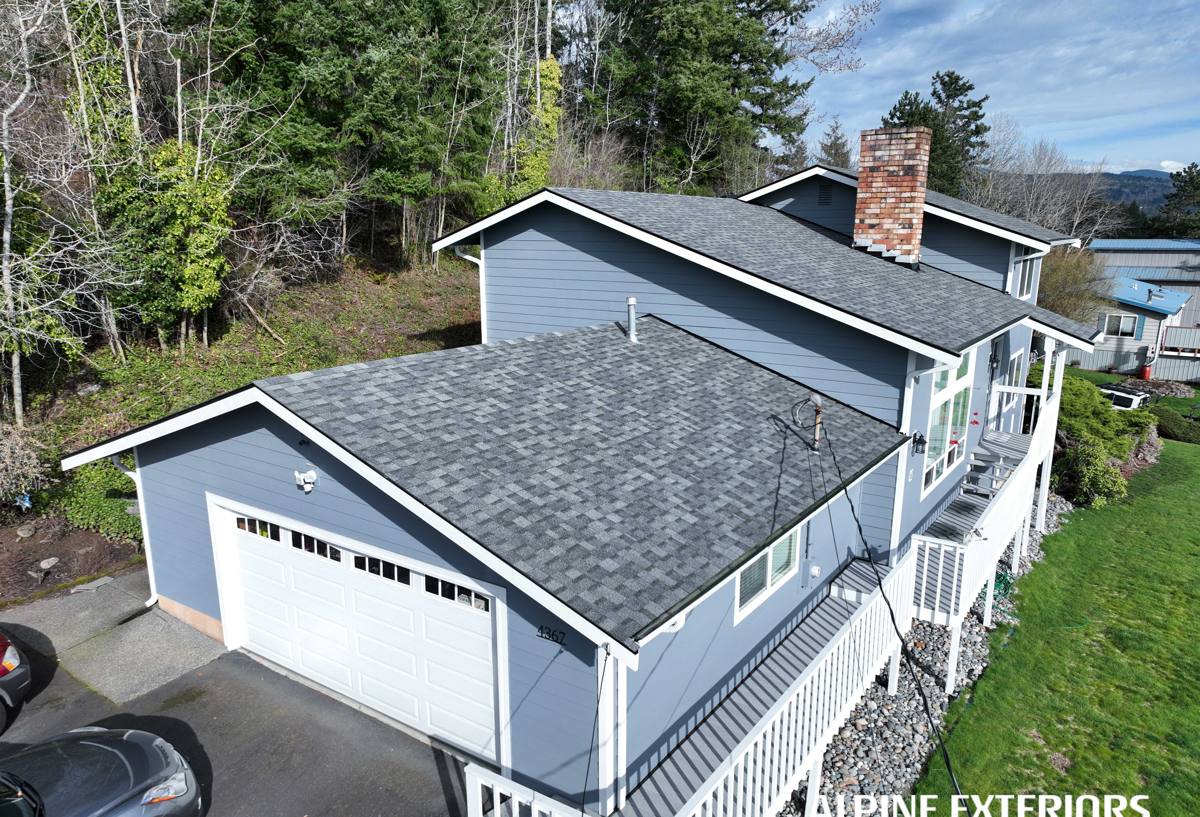
Roofing for Coastal Exposure
Material and Fastener Choices
For Birch Bay roofs, we pay close attention to fastener and flashing material — stainless steel or other corrosion-resistant hardware holds up to salt air in a way that standard galvanized components won't over the long run. This is a place where a slightly higher upfront cost on hardware saves a homeowner a callback in five years, not a decade.
Moss Management
Moss prevention is part of routine maintenance for us, not an afterthought. That means keeping gutters and valleys clear so water actually moves off the roof instead of sitting, and treating growth before it establishes rather than after it's already lifting shingle tabs. A roof that's kept clear of moss and organic buildup will consistently outlast one that isn't, regardless of the material.
Flashing Detail
Because wind-driven rain hits roof-wall intersections and penetrations from angles that straight-down rain never would, we treat flashing at chimneys, skylights, dormers, and roof-to-wall transitions as a place where corners genuinely cannot be cut. This is usually where coastal roof failures start — not in the field of the roofing material itself.
Siding That Handles Salt Air and Driving Rain
Siding on a bay-exposed home is doing two jobs at once: keeping bulk water out during wind-driven storms, and standing up to a slow chemical assault from salt in the air. We look at both when we're recommending a siding system for a Birch Bay property.
Fiber Cement
Fiber cement siding is a strong fit for this kind of exposure. It doesn't corrode, it holds paint well over time, and it's dimensionally stable in the freeze-thaw and wet-dry cycling that coastal weather puts a house through. The trade-off is weight and installation sensitivity — it has to be cut, fastened, and flashed correctly, or the durability advantage doesn't show up in practice.
Engineered Wood and Vinyl
Engineered wood siding is a reasonable option for homeowners who want a more traditional wood look with better moisture resistance than solid wood, provided the installation details — caulking, flashing, ventilation behind the cladding — are done right, since that's where moisture problems in any wood-based product tend to originate. Vinyl siding can work in less directly exposed areas of a Birch Bay lot, though in the most wind- and salt-exposed spots we're more selective about where we recommend it, mainly around long-term color retention and impact resistance in storm conditions.
Fastener and Trim Hardware
As with roofing, we default to corrosion-resistant fasteners and trim hardware on coastal siding jobs. It's a small line item relative to the overall project and it's one of the most cost-effective ways to avoid rust streaking and hardware failure down the road.
| Factor | Inland Bellingham Home | Birch Bay / Coastal Home |
|---|---|---|
| Fastener corrosion risk | Low to moderate | Higher — salt air accelerates rust |
| Wind-driven rain exposure | Typically vertical rainfall | Frequent horizontal, wind-driven rain |
| Moss and algae growth | Depends on tree cover | Common on shaded, moisture-retentive surfaces |
| Recommended hardware | Standard galvanized generally adequate | Stainless or coastal-rated hardware preferred |
| Flashing detail sensitivity | Standard best practice | Critical — angled rain tests every joint |
Windows Along the Bay
Older or lower-grade windows are often the first place a coastal home shows its exposure — condensation between panes, cloudy seals, sticking sashes, or drafts around the frame. Wind-driven rain also puts more pressure on window flashing and sill pans than a sheltered inland window ever sees. When we replace windows in Birch Bay, we pay particular attention to flashing integration with the surrounding siding or trim, since that junction is where most window-related leaks actually originate — rarely the window unit itself. Well-installed, properly sealed windows also help with the wind noise and drafts that come with living exposed to open water.
Decks Built for Wet, Salt-Exposed Air
A deck in Birch Bay spends more time damp than a deck a few miles inland, and it's exposed to the same salt air that affects roofing and siding hardware. That combination is hard on fasteners, connectors, and any wood that isn't properly sealed or maintained.
- Composite decking resists moisture absorption and doesn't need the periodic sealing solid wood requires, which matters on a deck that's rarely fully dry
- Structural connectors and fasteners should be corrosion-resistant — this is not a place to save money on hardware
- Proper spacing and ventilation underneath the deck surface helps it dry out between wet spells instead of staying saturated
- Railings and any exposed metal components benefit from coastal-rated finishes to resist salt-driven corrosion
Whether a homeowner wants a low-maintenance composite deck or a traditional wood deck maintained on a regular schedule, the build details that keep water moving and hardware from corroding matter more here than they would on a sheltered inland lot.
What a Local Crew Actually Adds
A lot of exterior work is generic — the fundamentals of a well-installed roof or a properly flashed window don't change based on zip code. But knowing that a Birch Bay roof needs closer attention to fastener corrosion, that moss season runs longer on shaded coastal lots, and that flashing has to account for wind-driven rain rather than just vertical rainfall — that's the kind of judgment that comes from actually working on homes in this specific stretch of Whatcom County, not from a general specification sheet. A crew that works across Bellingham and the surrounding coastal communities sees these patterns repeat and adjusts material and installation choices accordingly, rather than treating every job the same regardless of exposure.
Maintenance Habits That Extend the Life of Your Exterior
- Have roofs and gutters checked for moss buildup at least once a year, more often under heavy tree cover
- Keep gutters and downspouts clear so water isn't sitting against roof edges or siding
- Have flashing at roof-wall intersections and around penetrations inspected periodically, especially after major storms
- Watch for early signs of hardware corrosion — rust streaking near fasteners is worth addressing before it becomes a leak point
- Rinse salt residue off siding and exterior hardware periodically if the home is in a heavily exposed spot
Planning a Project
Whether it's a full roof replacement, a siding upgrade, new windows, or a deck rebuild, the right approach for a Birch Bay home starts with an honest look at how exposed the specific lot is — proximity to the water, tree cover, prevailing wind direction, and the current condition of the existing materials and hardware. That assessment drives which products make sense and where extra attention to flashing, fasteners, and drainage is worth the investment.
If you're dealing with moss buildup, corroding hardware, a leak that seems to trace back to wind-driven rain, or you're just planning ahead for a home exposed to the bay, we're happy to take a look and talk through what actually makes sense for your property. Reach out for a free, no-pressure estimate using the form below.