 Bellingham Roofing
 Roofing and Exterior Work in Sehome
Sehome sits close to the heart of Bellingham, wrapped around Sehome Hill and within a few minutes of Bellingham Bay. It's one of the city's older, more established neighborhoods, with a housing stock that spans mid-century single-family homes, postwar bungalows, and a good number of newer infill builds and multi-family properties near Western Washington University. That mix means no two roofs or exteriors in Sehome are facing quite the same set of problems — but the underlying climate stress is the same for everyone in this part of Whatcom County.
We work on homes throughout Sehome and the surrounding Bellingham neighborhoods, and the calls we get here tend to follow a pattern: moss creeping across a north-facing roof slope, siding that's held onto moisture too long, windows that fog or feel drafty every winter, and decks that have gone soft or slick faster than the owner expected. None of that is unusual for this area. It's just what salt air, driving rain, and a long wet season do to a house over time.
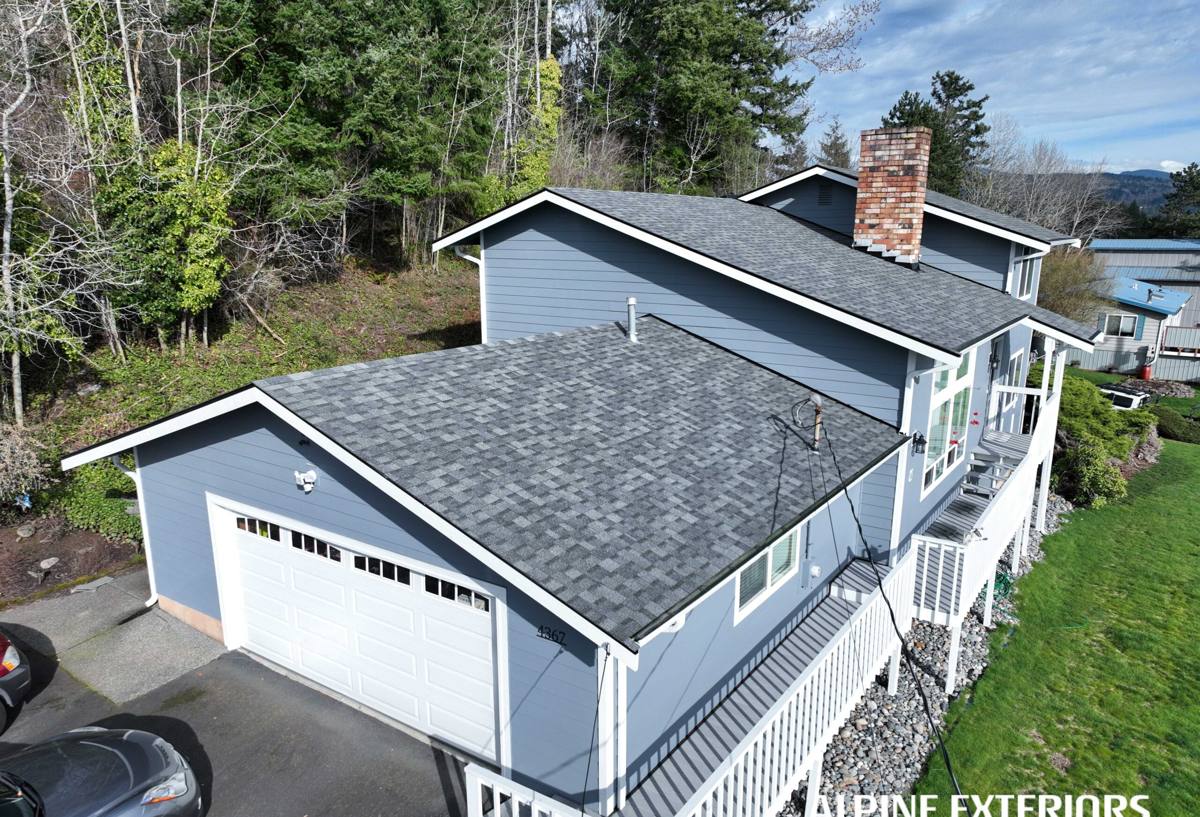
What Bellingham's Climate Does to a Sehome Roof
Bellingham's proximity to the water means homes here deal with a steady dose of salt-laden air, especially on days when wind comes off the bay. Salt air doesn't destroy a roof overnight, but it accelerates corrosion on metal flashing, fasteners, and gutter systems, and it can shorten the working life of lower-grade materials that weren't specified for a coastal-adjacent climate.
Layer on top of that Whatcom County's rain pattern — long stretches of steady, driving rain rather than short heavy downpours — and you get roofs that stay damp for days at a time. Combined with the shade from mature trees common in Sehome's older lots, that dampness is exactly what moss and algae need to take hold. Once moss establishes itself under shingle tabs or in valleys, it holds water against the roof deck and can work its way under the roofing material, which is where small problems turn into deck rot and interior leaks.
Where we see the most wear
- North- and east-facing slopes that get less direct sun and stay damp longer
- Valleys and low-slope sections where debris and moisture collect
- Flashing around chimneys, skylights, and roof-to-wall transitions
- Gutters and downspouts that back up during heavy rain events
- Roof sections shaded by mature trees, common on Sehome's established lots
Common roofing materials we work with locally
Asphalt composition shingle remains the most common roofing material in Sehome, largely because it offers a reasonable balance of cost and performance when installed correctly with proper underlayment and ventilation. Metal roofing has become more popular in recent years for homeowners planning to stay long-term — it sheds moss more readily than shingle and handles driving rain well, though it comes with a higher upfront cost. We're honest with clients about that trade-off rather than pushing one material as universally "better." The right choice depends on your roof's pitch, how much shade it gets, your budget, and how long you plan to own the home.
Siding That Holds Up Near the Bay
Siding in Sehome takes a similar beating to roofing, just from a different angle — literally. Driving rain hits vertical wall surfaces directly, and any gaps in flashing, caulking, or panel seams become entry points for moisture. Over time, that moisture gets trapped behind the siding and causes rot in the sheathing underneath, which is a far more expensive fix than the siding itself.
We pay close attention to water management details other crews sometimes rush past: proper house wrap overlap, correctly flashed window and door openings, and drainage gaps behind the siding material so any moisture that does get in has somewhere to go. Fiber cement and quality vinyl both perform well in this climate when installed with those details right. We steer clients away from certain lower-grade composite products not because the materials are inherently bad, but because their long-term moisture performance and warranty structure don't hold up as well under Bellingham's wet-season conditions — it's a maintenance and durability trade-off we'd rather flag upfront than let a homeowner discover in ten years.
Windows for Comfort and Moisture Control
Older homes in Sehome often still have their original single-pane or early double-pane windows, which struggle with both energy loss and condensation during Whatcom County's damp winters. Condensation between panes is usually a sign the seal has failed, and once that happens, the insulating gas between panes is gone and the window is basically just glass.
Replacing windows in an older Sehome home is also a chance to correct flashing and air-sealing issues that may have been done poorly — or not at all — decades ago. We flash every window opening to shed water down and out, not just caulk around the frame, because caulk alone is a maintenance item, not a permanent water barrier.
Decks Built for Whatcom County Weather
Decks in this climate face a specific problem: they're horizontal surfaces that collect standing water and stay shaded much of the year, which makes them prone to both wood rot and slick, moss-covered surfaces. A deck that looks fine in August can become a fall hazard by December if it wasn't built or maintained with drainage and material choice in mind.
We build and repair decks with attention to ledger board flashing (a common source of hidden rot where the deck meets the house), proper spacing between boards for drainage, and hardware rated for wet, salt-air-adjacent conditions. Composite decking has become popular for homeowners who want to reduce the yearly staining and sealing that wood decking requires here, though it comes at a higher material cost — again, a trade-off we'll walk through honestly rather than push one direction.
Comparing Materials for Bellingham's Climate
| Material | Typical Lifespan Here | Moss/Moisture Resistance | Upfront Cost |
|---|---|---|---|
| Asphalt composition shingle | 20-30 years | Moderate — needs periodic moss treatment | Lower |
| Metal roofing | 40-50+ years | Good — sheds moss and debris well | Higher |
| Fiber cement siding | 30-50 years | Good, when properly flashed | Moderate to higher |
| Quality vinyl siding | 20-40 years | Moderate — depends on installation detail | Lower to moderate |
| Wood decking | 10-15 years before major refinish/rebuild | Lower — needs annual maintenance | Lower |
| Composite decking | 25-30 years | Good — resists rot and moss buildup | Higher |
These are general ranges, not guarantees — actual lifespan depends heavily on installation quality, sun exposure, tree cover, and how consistently a home gets basic maintenance. A well-installed shingle roof with good ventilation can easily outperform a poorly installed metal roof, and vice versa.
A Seasonal Maintenance Checklist for Sehome Homeowners
- Clear gutters and downspouts at least twice a year, more often if you're under mature trees
- Check roof valleys and shaded slopes for early moss growth before it spreads
- Inspect caulking and flashing around windows and doors each fall, before the rainy season sets in
- Look at deck boards for soft spots, standing water, or slick moss buildup, especially near the house
- Have flashing at chimneys, skylights, and roof-wall transitions checked every few years — these are the most common leak points
- Walk the exterior after major windstorms to check for lifted shingles, loose siding panels, or damaged trim
Why a Local Crew Matters in Sehome
A roof, siding job, or deck built to a generic spec sheet doesn't account for what actually happens to a house in Bellingham. Crews who work across this area regularly know which details matter here — the flashing sequence that keeps driving rain out, the ventilation balance that slows moss regrowth, the drainage gap behind siding that keeps salt-tinged moisture from sitting against the sheathing. That knowledge comes from working on houses in this specific climate repeatedly, not from a manufacturer's install guide written for a drier region.
We also know Sehome's older housing stock tends to hide surprises — outdated flashing details, undersized ventilation, or trim that was never properly sealed. Catching those issues during a roofing, siding, window, or deck project, rather than after the next wet season, is where a local crew's experience actually pays off.
If you're noticing moss on the roof, damp spots on siding, drafty windows, or a deck that's seen better days, we're happy to take a look and give you a straightforward, no-pressure estimate. Use the form below to get in touch and we'll walk the property with you and talk through what your home actually needs.