 Bellingham Roofing
 Roofing in Columbia: Built for What Whatcom County Weather Actually Does
Columbia sits close enough to Bellingham Bay that salt-laden air is part of daily life, and that changes how a roof ages here compared to a house twenty miles inland. Add in the driving rain that comes off Puget Sound through the fall and winter, and a moss season that can run eight months or longer under the right shade and moisture conditions, and you've got a climate that is genuinely tough on roofing materials. We work on roofs across this neighborhood regularly, and the patterns repeat: fastener corrosion happens faster near the water, north-facing slopes under tree cover grow moss almost year-round, and roofs that go without attention for a few years tend to fail from the edges in — flashing, valleys, and eaves — long before the field of the roof itself gives out.
None of that means Columbia homes need exotic solutions. It means the basics — correct material selection, careful flashing and underlayment work, and a maintenance rhythm that matches the local moss and rain cycle — matter more here than they would somewhere drier. That's the approach we take on every roof in this area, whether it's a repair, a full replacement, or a first-time inspection.
What Salt Air and Coastal Moisture Do to a Roof
Being close to the bay means airborne salt settles on roofing surfaces and metal components even without a direct ocean view. Over years, that accelerates corrosion on exposed fasteners, flashing seams, and any metal that isn't rated for coastal exposure. Homeowners in Columbia sometimes notice this first as rust streaking below roof valleys or around vent stacks — a sign that the metal underneath is starting to break down faster than it should.
Where salt exposure shows up first
- Exposed roofing nails and staples, especially if they weren't hot-dip galvanized or stainless to begin with
- Flashing around chimneys, skylights, and roof-to-wall transitions
- Metal gutter and downspout hardware
- Any uncoated steel components on older roof systems
Our standard for this area is to spec corrosion-resistant fasteners and flashing on every job, not just as an upsell but because it's the difference between flashing that lasts the life of the roof and flashing that needs attention again in eight or ten years. It costs a little more up front and saves a callback down the road.
Moss, Shade, and the Long Wet Season
Whatcom County's rain doesn't just fall — it lingers, and Columbia's tree cover in places keeps roof surfaces shaded and damp well after a storm has passed elsewhere. That combination is exactly what moss and algae need to establish. Once moss gets a foothold, it does more than look bad: it holds moisture against the shingle or shake surface, lifts edges as it grows, and works its way under flashing and into seams over time.
Signs moss is past the cosmetic stage
- Moss growth thick enough to hold visible water after a dry day
- Shingle edges lifting or curling where moss has established
- Green or black streaking running down from ridges or valleys
- Granule buildup in gutters, indicating accelerated shingle wear
Light moss can often be treated and managed without a full replacement. Zinc or copper strips near the ridge, gentle low-pressure cleaning (never high-pressure washing, which strips granules and shortens shingle life), and keeping nearby branches trimmed back for airflow all help. Once moss has been established for a long stretch and started lifting material, though, patch treatment isn't enough — that's a sign the underlying roofing has taken damage that needs a closer look.
Driving Rain and Wind-Driven Water Intrusion
Rain in this area doesn't always fall straight down. Storms moving through the Sound and across Bellingham Bay often bring wind-driven rain that pushes water sideways into laps, seams, and any gap in flashing that a calmer rain would never find. This is why roof leaks in Columbia so often trace back to valleys, step flashing along dormers, and the transitions where a roof meets a wall or chimney rather than the open field of shingles.
Proper underlayment — ice-and-water membrane at eaves, valleys, and penetrations, with quality synthetic underlayment across the rest of the deck — is what stands between wind-driven rain and your attic. It's not optional in our book for this climate; it's a baseline. On both repairs and full replacements, we treat flashing and underlayment detail work as the part of the job that actually determines whether a roof stays dry, not just the shingle brand on top.
Repair, Recover, or Replace: How We Help You Decide
Not every roofing problem in Columbia calls for a full tear-off. We'll always give you a straight answer about what the roof actually needs, based on its age, material, and how much of the damage is isolated versus systemic.
| Situation | Typical Approach | What to Expect |
|---|---|---|
| Isolated leak, flashing failure, or storm damage on an otherwise sound roof | Targeted repair | Fastest fix, lowest cost, extends roof life if the rest of the system is healthy |
| Moderate moss/algae with early granule loss, roof under 15 years old | Treatment plus spot repair | Cleaning, protective strips, and repair of any lifted areas found during inspection |
| Widespread granule loss, multiple leak points, roof nearing the end of its material's lifespan | Full replacement | Higher upfront cost, but resets the clock and lets us correct any legacy flashing or ventilation issues |
| Roof failing well before its expected lifespan | Inspection to diagnose root cause | Often points to ventilation, original installation, or material choice — worth understanding before replacing like-for-like |
A roof inspection is the starting point for most of these decisions, and it's also the cheapest insurance you can buy against a surprise leak mid-winter.
Materials That Make Sense for This Climate
Asphalt composition shingle remains the most common and cost-effective choice for Columbia homes, and today's better-tier shingles are rated for wind and algae resistance that matters directly in this climate. Metal roofing is a strong option where homeowners want a longer service life and better shedding of moss and debris, though it comes at a higher upfront cost. We're candid about trade-offs on cedar shake specifically: it can look great, but in a climate this wet and shaded, it demands a maintenance commitment — regular treatment, cleaning, and vigilance against moisture retention — that not every homeowner wants to take on. If you're drawn to the look, we'll walk you through what that upkeep actually involves before you commit, rather than after.
Ventilation matters as much as the shingle
A roof system that traps moisture in the attic will fail early no matter how good the shingle is. Balanced intake and exhaust ventilation keeps moisture from condensing on the underside of the deck, which in our wet climate is one of the more common hidden causes of premature roof failure. We check ventilation on every inspection and replacement, not just the surface.
Windows, Siding, and Decks: The Rest of the Exterior Envelope
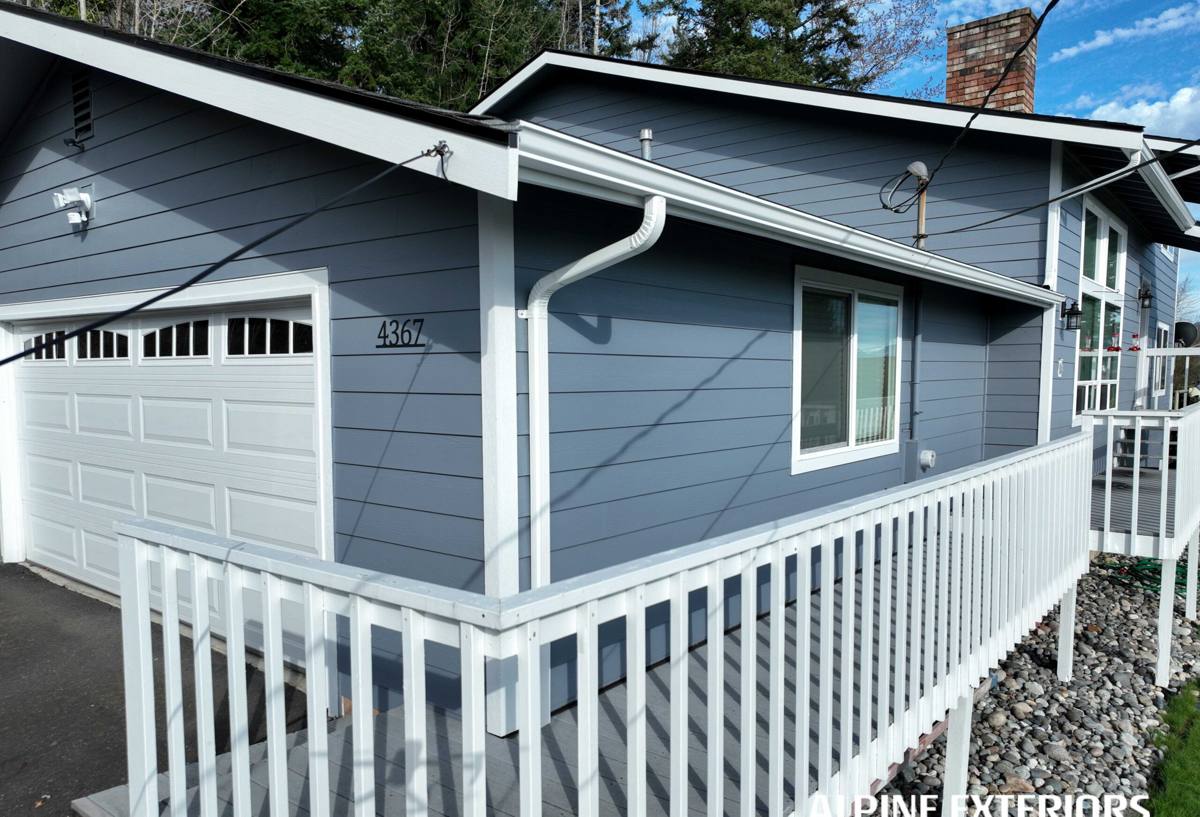
Roofing problems and exterior envelope problems tend to travel together in this climate. A roof leak that's gone unnoticed for a while often shows up first as water staining near a window head, or as siding damage below a poorly flashed roof edge. Because we handle siding, windows, and decks alongside roofing, we can look at a Columbia home's exterior as one connected system rather than treating each component in isolation. Deck framing exposed to the same driving rain and salt air faces similar fastener corrosion and moisture concerns as a roof — worth a look whenever we're already on site.
Why a Local Crew Matters Here
Roofing crews that don't work in coastal Whatcom County regularly can underestimate how much salt exposure and sustained moisture change material choices and maintenance schedules. We're not guessing at what Columbia roofs need — we see the same fastener corrosion, the same moss patterns on shaded north slopes, and the same wind-driven rain intrusion points on a regular basis. That local pattern recognition shortens the time between "something seems off" and an accurate diagnosis, and it means the materials and details we recommend are chosen for this specific climate, not a generic spec sheet.
A Simple Maintenance Checklist for Columbia Homeowners
- Inspect the roof (or have it inspected) at least once a year, ideally before the heavy fall rains start
- Keep gutters and downspouts clear so water isn't backing up under eaves
- Watch shaded, north-facing slopes for early moss growth and treat it before it establishes
- Trim back branches that keep sections of the roof shaded and damp
- Check flashing around chimneys, skylights, and vent stacks for rust or lifting after major storms
- Address small leaks immediately — wind-driven rain finds small gaps fast in this climate
Getting Started
Whether you've spotted moss taking hold, noticed a stain on a ceiling after the last storm, or just want an honest read on how much life is left in your roof, we're happy to take a look. If you're in Columbia and thinking about your roof, siding, windows, or deck, reach out for a free, no-pressure estimate — the form below is the easiest way to get started.