 Bellingham Roofing
 Why the Number on the Shingle Bag Doesn't Match Your Roof
Every roofing product comes with a lifespan number attached to it somewhere — 25 years, 30 years, "lifetime." Homeowners in Bellingham quote these numbers back to us all the time, and we understand why: it's the only figure they've been given. The problem is that those numbers come from manufacturer testing done under lab conditions or in dry, moderate climates. They assume perfect ventilation, ideal installation, and no sustained exposure to salt-laden marine air or months of standing moss.
None of that describes a roof in Whatcom County. Bellingham sits on Bellingham Bay, gets driving wind-driven rain off the Strait of Georgia, and stays damp and shaded enough for large parts of the year that moss isn't an occasional nuisance here — it's a seasonal condition you plan around. So when we talk about roof lifespan with a homeowner, we talk in ranges based on what we actually see coming off roofs in this county, not what's printed on packaging.
What Actually Determines How Long a Roof Lasts
Material matters, but it's rarely the deciding factor. In our experience pulling old roofs off Bellingham homes, four things determine whether a roof hits the low end or high end of its expected range far more than brand or price point.
Installation Quality
Underlayment choice, nail placement, flashing detail at valleys and penetrations, and starter course technique are where most premature failures start. A roof installed with shortcuts on flashing will leak years before the shingles themselves wear out — the material gets blamed when the workmanship was the actual problem.
Attic Ventilation and Insulation
Poor airflow traps heat and moisture underneath the roof deck. In a marine climate like ours, that trapped moisture doesn't just shorten shingle life — it invites rot in the sheathing itself, which turns a roofing job into a structural one.
Roof Slope and Exposure
Low-slope sections and north-facing planes that stay shaded most of the day hold moisture and grow moss faster than steep, sun-exposed slopes. Two roofs installed the same week, on the same street, can age very differently based on tree cover and pitch alone.
Maintenance History
Whether gutters were kept clear, whether moss was removed before it worked under the shingle tabs, whether small leaks were caught early — this is the difference between a roof that reaches 25 years and one that needs replacement at 15.
Realistic Lifespans by Material in Whatcom County Conditions
Here's how we'd honestly describe expected service life for the roofing types most common on Bellingham homes, factoring in our rain volume and moss pressure rather than manufacturer marketing.
| Material | Manufacturer Claim | Realistic Bellingham Range | Main Local Stressor |
|---|---|---|---|
| 3-Tab Asphalt Shingle | 20-25 years | 14-18 years | Moss lift, granule loss from constant moisture |
| Architectural (Laminate) Shingle | 30 years | 20-25 years | Moss and algae staining, wind-driven rain intrusion at flashing |
| Cedar Shake | 25-30 years | 15-20 years | Moisture retention, moss and moss-related rot |
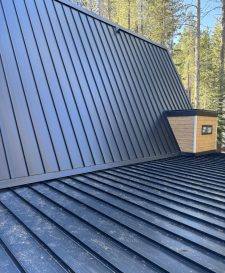
| Standing Seam Metal | 40-50 years | 35-45 years | Fastener and sealant maintenance, coastal salt exposure on fasteners |
| Composite/Synthetic Shingle | 30-50 years | 25-35 years | Generally strong performer; UV and impact over time |
Those ranges assume reasonably competent installation and at least occasional maintenance. A neglected roof of any material can fall well below its low end, and a well-maintained one can beat its high end.
The Three Bellingham-Specific Factors That Shorten Roof Life
Salt Air
Homes closer to Bellingham Bay and the waterfront see accelerated corrosion on exposed metal — nail heads, flashing seams, gutter fasteners, and metal roofing fasteners in particular. It's slow and easy to ignore until a fastener backs out or a flashing seam starts leaking. This is a bigger factor the closer a property sits to the water; it matters less a few miles inland.
Driving Rain
Bellingham doesn't just get a lot of rain — a good share of it comes in sideways off the Strait during winter storms. Wind-driven rain finds weaknesses that vertical rain never would: under-lapped flashing, marginal step flashing at wall intersections, and shingle tabs that have been lifted even slightly by wind or moss. Roofs that would perform fine in a drier or calmer climate get exposed here.
Long Moss Season
Between the shade from mature trees common in Bellingham neighborhoods and the extended damp season, moss has months to establish itself on north-facing and low-slope roof sections. Moss doesn't just look bad — it holds moisture against the roof surface, lifts shingle tabs as it grows, and works its rhizoids into the mat, which accelerates granule loss and, eventually, leaks at the lift points.
Signs Your Roof Is Approaching the End of Its Service Life
Roofs rarely fail all at once. They give warning signs for months or years before a full replacement becomes urgent. Worth checking for, especially after a hard winter:
- Granules collecting in gutters or at downspout outlets in noticeably larger amounts than in past years
- Shingle edges curling, cupping, or looking "fish-mouthed" rather than lying flat
- Moss established at the shingle tabs rather than just on the surface — it's harder to remove safely at that stage
- Daylight visible through the roof deck from inside the attic, or damp insulation
- Flashing that looks separated, rusted, or caulked over repeatedly as a patch rather than replaced
- Interior ceiling staining, especially near chimneys, skylights, or where two roof planes meet
- Sagging or soft spots underfoot on a roof walk, which usually means deck damage underneath
One or two of these on their own aren't necessarily an emergency. Several appearing together, or any sign of deck-level moisture, is when we'd recommend a proper inspection rather than waiting.
Maintenance That Actually Moves the Number
Of everything in this article, maintenance is the one variable a homeowner has the most control over. It won't turn a 15-year roof into a 40-year roof, but it reliably pushes a roof toward the top of its realistic range instead of the bottom.
Moss Management
Gentle, low-pressure moss removal — not a pressure washer, which strips granules and shortens life on its own — done before moss establishes itself at the tabs, is the single highest-value maintenance step in this climate. Zinc or copper strips near the ridge can help slow regrowth on shaded sections.
Gutter and Drainage Care
Clogged gutters back water up under the shingle edge, which is exactly the kind of slow, hidden moisture exposure that ages a roof from underneath. Keeping gutters and downspouts clear matters more here than in drier climates simply because of how much water Bellingham roofs are asked to shed.
Attic Ventilation Checks
If an attic feels noticeably warm and stuffy in summer or shows condensation in winter, ventilation is likely undersized for the home. This is worth addressing independent of any roofing work, since it affects both roof life and energy costs.
Prompt Flashing Repair
Small flashing issues are inexpensive to fix and expensive to ignore. Caught early, a lifted or corroded flashing detail is a quick repair; left alone through a few wet seasons, it becomes deck rot.
Repair or Replace: How We Think Through It
Not every aging roof needs full replacement, and we'd rather tell a homeowner the truth than sell a job that isn't needed yet. Generally:
| Situation | Typical Recommendation |
|---|---|
| Isolated flashing leak, deck otherwise sound, roof under 60% of expected life | Targeted repair |
| Moss established at tabs on part of the roof, rest in good shape | Moss treatment plus spot repair |
| Multiple leak points, granule loss widespread, roof past 80% of expected life | Full replacement usually more cost-effective long term |
| Deck moisture or soft spots found during inspection | Replacement, since deck damage compounds fast under our rainfall |
The honest version of this decision almost always comes down to what an inspection actually finds, not the roof's age alone. Two 18-year-old roofs on the same block can be in very different condition depending on their history.
Getting a Straight Answer About Your Roof
If you're trying to figure out where your roof falls in its lifespan — whether it's due for maintenance, a repair, or a full replacement — the fastest way to know for certain is to have someone look at it in person. We offer free, no-pressure estimates and inspections for homeowners throughout Bellingham and Whatcom County, and we'll give you a straight answer about what your roof actually needs, not just what its age suggests. Use the form below to get in touch and schedule a time that works for you.