 Bellingham Roofing
 Serving Barkley: Roofing Done Right
Barkley is one of the more distinct neighborhoods in Bellingham — a mix of newer homes, townhouses, and mixed-use development a short drive from Bellingham Bay and the I-5 corridor. Homes here span a wide range of ages and construction styles, but they all face the same basic problem: this is a marine climate, and marine climates are hard on the outside of a house. Salt-tinged air off the bay, long stretches of driving rain through fall and winter, and a moss season that can run most of the year all work steadily on roofs, siding, windows, and decks. None of it is dramatic. It's slow, cumulative wear — which is exactly the kind of damage that's easy to ignore until a repair turns into a replacement.
We work on roofing, siding, windows, and decks for homes throughout Bellingham and Whatcom County, and Barkley is a neighborhood we're in regularly. This page covers what we actually see on homes in this area, how we approach each part of the exterior, and what's worth paying attention to if you're planning repairs or upgrades.
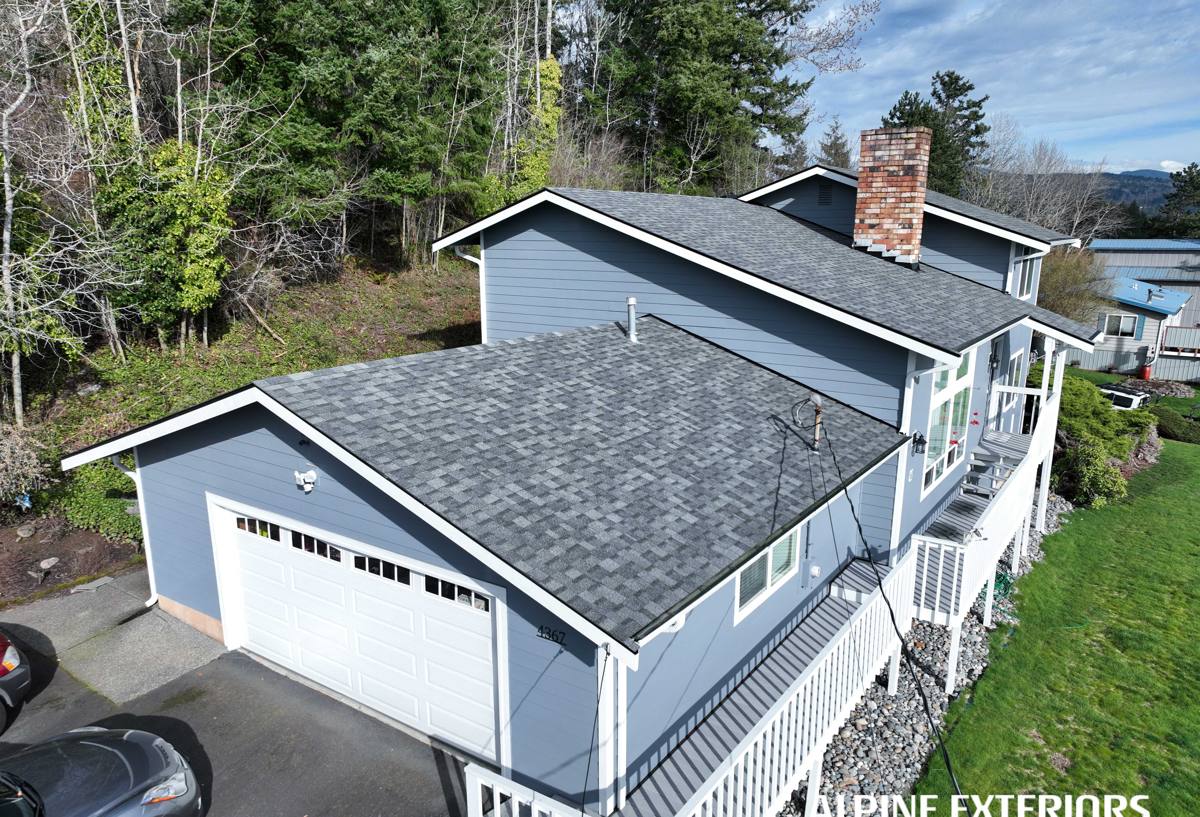
What the Climate Does to a Barkley Home
Salt Air
Proximity to Bellingham Bay means airborne salt is a real factor, even a few miles inland. Salt accelerates corrosion on exposed metal — flashing, fasteners, gutter hardware, and any unprotected steel components. It's not usually enough to cause fast failure, but it shortens the working life of lower-grade materials and makes fastener choice and flashing detail more important than they'd be in a drier, inland climate.
Driving Rain
Bellingham doesn't just get rain — it gets rain pushed sideways by wind off the Sound, which finds every weak seam, lap, and penetration in a building envelope. Roofs with marginal flashing at chimneys, skylights, and valleys, and siding with poor overlap or caulking as the primary water barrier, tend to show problems here that wouldn't show up in a calmer, drier region.
Moss and Sustained Moisture
Cool, wet, shaded conditions for much of the year make Whatcom County prime territory for moss and algae growth on roofing. Moss holds moisture against the roof surface, lifts shingle edges, and works its way under laps over time. North-facing slopes and roofs shaded by mature trees — common throughout Bellingham's older tree canopy — are especially prone to it.
Roofing for Barkley Conditions
Most homes in this area are roofed in asphalt composition shingle, with some cedar shake on older homes and metal roofing showing up more often on newer builds and additions. Each has trade-offs worth understanding rather than just picking on price.
Asphalt Composition Shingle
Still the most common and most cost-effective option. Quality varies significantly by manufacturer and product line — algae-resistant shingles (with copper or zinc granules) are worth the modest upcharge in a climate this favorable to moss and moss-adjacent growth. Proper underlayment and ice-and-water shield at eaves and valleys matter more here than in drier climates, given how much sustained moisture the roof deck is exposed to.
Metal Roofing
Handles driving rain and shedding moss better than most materials, and standing-seam metal sheds water aggressively with fewer horizontal laps for wind-driven rain to exploit. The trade-off is upfront cost and the need for correct fastener and flashing selection — in a salt-air environment, the wrong fastener material becomes the first thing to fail, well before the panel itself.
Cedar Shake
Cedar shake has a real place on older Bellingham homes and in neighborhoods where it's part of the architectural character, but we're honest with clients about what it takes to keep it performing in a wet, moss-prone climate: regular cleaning, ventilation underneath the shakes, and closer inspection intervals than composition or metal. It's not that cedar fails outright — it's a higher-maintenance material in exactly the conditions Barkley has in abundance, and we lay that out as a maintenance-burden trade-off rather than steering anyone away from it outright.
Siding That Actually Holds Up
Siding takes the brunt of driving rain, and in a marine climate, moisture management behind the siding matters as much as the surface material itself.
Fiber Cement
Fiber cement (like HardiePlank-style products) is our default recommendation for most Barkley homes. It doesn't absorb water the way wood does, holds paint longer in a humid climate, and resists the freeze-thaw and moisture-cycling that's common here. It's heavier and costs more to install than vinyl, but the maintenance burden over a 15-20 year window is noticeably lower.
Vinyl
Vinyl is a reasonable budget option and performs fine when installed correctly with proper drainage behind it, but it's more sensitive to installation quality than fiber cement — poor flashing or house-wrap detailing behind vinyl siding tends to show up as hidden moisture problems years later, not immediately. We're careful about weather-resistive barrier and flashing details regardless of which siding material a homeowner chooses.
Wood Siding
Wood siding (cedar lap, board-and-batten) still exists on many older homes in the area and has real aesthetic value. It requires the most upkeep of any common siding option in this climate — repainting or restaining on a shorter cycle, and vigilance about caulking and moisture intrusion at joints. We'll maintain and repair it, but we tell clients upfront what the maintenance schedule looks like versus fiber cement.
Windows: Comfort and Condensation
Window issues in Bellingham are rarely about extreme cold — they're about humidity and temperature swings. Older single-pane or early dual-pane windows commonly show up with condensation between panes (a sign the seal has failed) or persistent interior condensation from the humidity gradient between a warm interior and Bellingham's cool, damp outdoor air.
We install vinyl and fiberglass-framed replacement windows with dual- or triple-pane, low-E glass. In this climate, we pay close attention to:
- Proper flashing and integration with the surrounding siding — this is the single most common point of water intrusion around replacement windows
- Weep hole placement and drainage so condensation and driving rain have somewhere to go
- Low-E coatings that manage both heat loss in winter and glare/heat gain during summer
- Frame material choice based on the home's exposure — south- and west-facing walls see more UV and thermal cycling
Decks Built for Rain, Not Just Sun
A deck in Barkley spends more of the year wet than dry, which changes how it should be built and maintained compared to a deck in a drier climate. The priorities are drainage, ledger flashing, and material choice.
Pressure-Treated Wood
Still the most economical decking material and performs well if it's properly finished and refinished on a regular cycle — typically every couple of years in this climate, more often on horizontal surfaces that hold water.
Composite Decking
Composite decking has largely solved the surface rot problem that plagues wood decking here, and it doesn't need staining or sealing. The trade-offs are higher upfront cost and the need for correct substructure ventilation — composite doesn't rot, but trapped moisture underneath it can still cause problems for the framing beneath if the substructure isn't built with drainage and airflow in mind.
Ledger and Flashing Details
Where a deck attaches to the house is the single most common failure point we see in this climate — not because decking materials fail, but because ledger flashing was missed or installed incorrectly, letting water track into the rim joist and framing over time. This is a detail worth asking about regardless of who builds or repairs your deck.
Comparing Materials by Climate Fit
| Material | Best For | Climate Trade-Off |
|---|---|---|
| Algae-resistant asphalt shingle | Most roof replacements, budget-conscious projects | Needs periodic moss treatment; underlayment quality matters |
| Standing-seam metal | Homes wanting long-term, low-maintenance roofing | Higher upfront cost; fastener material must resist salt corrosion |
| Fiber cement siding | Most siding replacements | Heavier, costlier install; low ongoing maintenance |
| Vinyl siding | Budget-driven siding projects | Performance depends heavily on install quality behind the panels |
| Composite decking | Low-maintenance deck priorities | Higher material cost; substructure ventilation still required |
Why a Local Crew Matters Here
A lot of exterior work fails not because the materials were wrong, but because the details weren't adapted to the site. Flashing that works fine in a drier climate isn't enough here. Underlayment that's adequate elsewhere can be marginal on a shaded, moss-prone Bellingham roof. A crew that works across Whatcom County day in and day out learns which slopes hold moss, which exposures take the worst of the driving rain, and where salt air quietly shortens the life of hardware that looks fine on the surface. That's knowledge you build by doing the work here repeatedly, not by reading a spec sheet.
We also know the practical side of working in this area — permitting through the City of Bellingham or Whatcom County depending on where a property sits, and scheduling around the wet-season window when exterior work needs dry stretches to go in correctly.
A Simple Seasonal Checklist for Barkley Homeowners
- Check roof slopes for moss buildup each spring and fall, especially on shaded, north-facing sections
- Clear gutters and downspouts before the fall rains start in earnest
- Look for staining or soft spots on siding near ground level and around window trim
- Inspect deck ledger boards and fastener corrosion once a year
- Check window seals and frames for condensation between panes, a sign of seal failure
- Trim back tree limbs that shade roof sections and contribute to moss growth
Get a Straightforward Estimate
If you're noticing moss buildup, water staining, drafty windows, or a deck that's starting to feel soft underfoot, it's worth having someone look at it before a small fix turns into a bigger one. We offer free, no-pressure estimates for roofing, siding, window, and deck work throughout Barkley and the greater Bellingham area — reach out using the form below and we'll take a look.