 Bellingham Roofing
 Roofing in Edgemoor: A Different Set of Conditions Than Most of Bellingham
Edgemoor sits in one of the more distinct microclimates in Bellingham. The neighborhood's mix of mature tree canopy, proximity to Bellingham Bay, and elevated, wooded lots means roofs here take on a combination of stresses that a roof three miles inland in a more open subdivision simply doesn't face. Salt-tinged air off the water, near-constant shade from tall conifers, and long stretches of damp weather all work on a roof at the same time, and they don't always show up as obvious damage right away. We've worked on enough homes in this part of Whatcom County to know that a roof here can look fine from the ground and still be losing years of life to moss roots, trapped moisture, and slow metal corrosion underneath the surface.
That's really the starting point for any honest conversation about roofing in Edgemoor: it's not just about picking shingles and nailing them down. It's about understanding how this specific setting — tree cover, bluff exposure, coastal air — interacts with the materials and details of the roof over time.
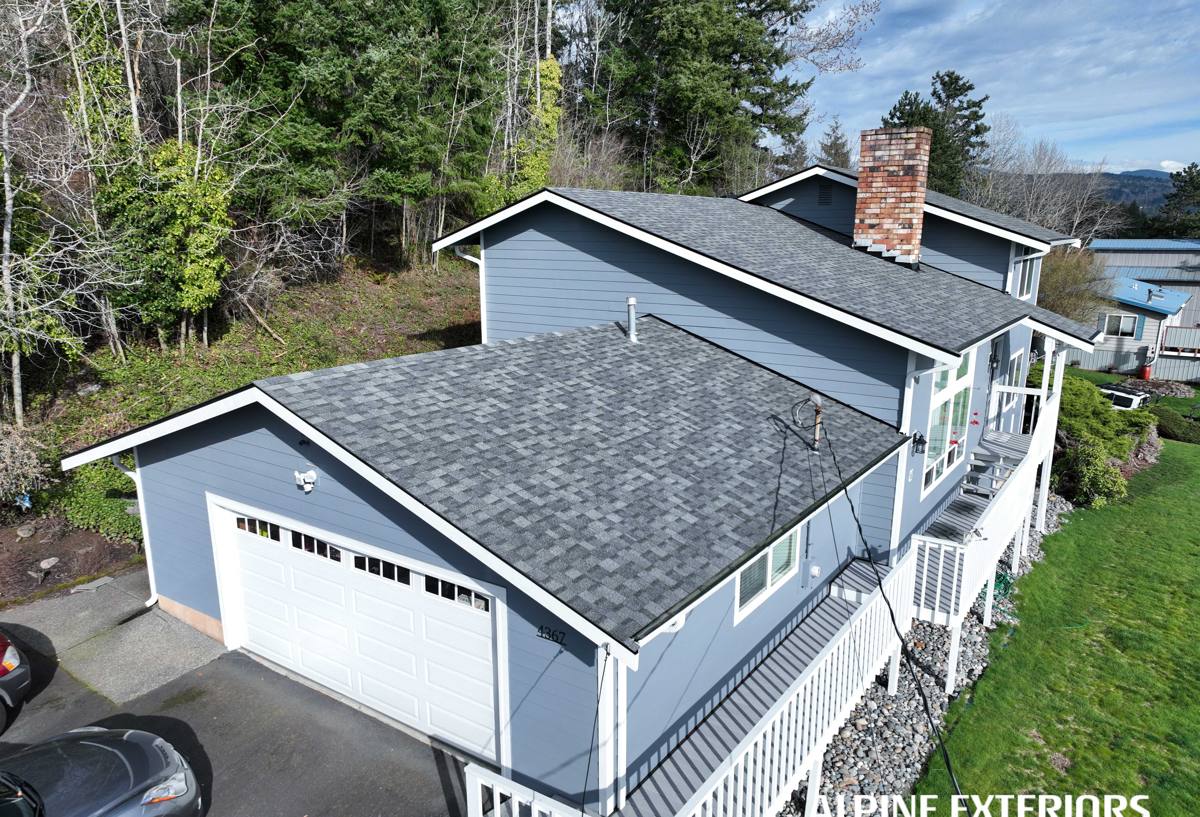
What the Local Climate Does to a Roof
Salt Air and Driving Rain
Homes closer to the bluff and the water get a steady, low-level dose of salt-laden air. Over years, that air accelerates corrosion on exposed metal — flashing, fasteners, gutter hardware, and any lower-grade metal roofing components. It's a slow process, which is exactly why it's easy to overlook until a flashing seam starts leaking or a fastener head rusts through. Combine that with Bellingham's driving, wind-pushed rain — which doesn't fall straight down the way a lot of homeowners assume — and you get water finding its way into laps, seams, and transitions that were never designed to handle rain moving sideways.
Moss Season That Doesn't Really End
Whatcom County's moss season is long, and Edgemoor's tree cover makes it longer. Shaded roof sections, especially north-facing slopes and anything tucked under conifers, stay damp for extended stretches even between storms. That moisture, combined with organic debris — needles, cones, leaf litter — creates ideal conditions for moss and moss-adjacent growth to take hold. Left alone, moss doesn't just sit on top of shingles; it works its way under tabs and granules, holding moisture against the roofing material and, over time, lifting and separating layers that are supposed to stay tightly bonded.
Tree Debris and Gutter Load
Large, established trees are part of what makes Edgemoor desirable, but they also mean more debris load on roofs and gutters than a lot of other Bellingham neighborhoods see. Clogged gutters and valleys back water up under shingles rather than letting it drain, which is one of the more common causes of hidden leaks we find on wooded lots.
Common Roofing Issues We See on Edgemoor Homes
- Moss and algae buildup on shaded slopes, especially north- and east-facing roof planes
- Corroded or failing flashing around chimneys, skylights, and roof-wall intersections, often accelerated by salt air
- Clogged valleys and gutters from needle and leaf debris, leading to water backup under shingle edges
- Granule loss on older composition roofs from years of damp conditions and moss root intrusion
- Hidden deck rot under roofing material where moisture has been trapped for an extended period without visible surface signs
- Ventilation issues in older homes, where poor attic airflow combines with persistent dampness to encourage condensation and mold on the underside of the roof deck
Individually, most of these are manageable. The problem is that they tend to compound — moss holds moisture, moisture accelerates flashing corrosion, and poor ventilation makes the whole assembly slower to dry out between rain events. On a lot of Edgemoor properties, by the time a stain shows up on an interior ceiling, the underlying issue has usually been developing for a while.
Roofing Materials That Actually Hold Up Here
Not every roofing material performs the same way under heavy tree cover and coastal air, and we try to be straightforward with homeowners about the trade-offs rather than just pushing whatever's easiest to install.
| Material | Typical Lifespan | Performance in Shade/Moss Conditions | Maintenance Needs |
|---|---|---|---|
| Architectural (dimensional) asphalt shingles | 25–30 years | Good with proper ventilation and periodic moss treatment; algae-resistant granule options help | Moderate — periodic moss/debris removal recommended |
| Standing seam metal | 40–50+ years | Sheds moisture and debris well; sheds moss more effectively than shingles due to smooth surface | Low, but coastal-grade fasteners and coatings matter to resist salt-air corrosion |
| Cedar shake | 20–30 years with upkeep | Attractive but more sensitive to sustained moisture and shade; requires diligent maintenance to avoid rot | Higher — regular treatment and inspection needed in damp, shaded settings |
| Synthetic/composite shingle | 30–50 years | Resistant to moisture absorption and moss root intrusion better than natural wood | Low to moderate |
For heavily wooded, shaded lots like a lot of what you find in Edgemoor, we often steer conversations toward metal or algae-resistant composition products, simply because they hold up better against sustained dampness. Cedar shake can still be the right call for homeowners who want that look and are committed to the maintenance it requires — we're not going to tell someone their preferred material is a bad choice, just make sure they understand the upkeep involved before they commit to it.
Repair or Replace? How We Help You Think It Through
Not every roofing problem on an Edgemoor home means a full replacement, and we don't default to recommending one. A lot of what we do starts with an honest inspection to figure out whether an issue is isolated — a section of failed flashing, a clogged valley, localized moss damage — or whether it's a sign the roofing system as a whole is nearing the end of its service life.
| Factor | Leans Toward Repair | Leans Toward Replacement |
|---|---|---|
| Age of roof | Well within expected lifespan for the material | At or beyond typical lifespan, especially for composition roofing over 20 years old |
| Extent of damage | Isolated to one section, flashing point, or penetration | Widespread granule loss, multiple leak points, or damage across several slopes |
| Moss/moisture history | First occurrence, addressed early | Repeated moss regrowth and moisture intrusion despite past treatment |
| Decking condition | Solid, no soft spots | Soft, spongy, or visibly rotted sheathing underneath |
We'll walk you through what we find, what it means, and what the honest options are — including doing nothing yet if that's genuinely the right call for where the roof is in its life.
Beyond the Roof: Siding, Windows, and Decks in the Same Environment
The same conditions that wear on roofs in Edgemoor — sustained dampness, tree shade, salt air — affect the rest of a home's exterior too. We handle siding, windows, and decks alongside roofing because on a lot of properties in this part of Bellingham, these systems fail for related reasons and are worth looking at together rather than in isolation.
Siding
Shaded, damp siding is prone to the same moss and moisture issues as a roof, particularly on north-facing walls under tree cover. Trapped moisture behind siding, often from failed flashing or caulking at windows and trim, is one of the more common issues we find when we're already on-site for roof work.
Windows
Older windows in wooded, damp settings can develop seal failure and frame deterioration faster than the same windows would in a drier, more exposed location. Proper flashing integration between windows and siding is critical in this climate — it's one of the details that separates a window installation that lasts from one that leads to hidden rot down the line.
Decks
Decks under tree cover deal with the same persistent dampness and debris accumulation as shaded roof slopes. Proper drainage, ledger flashing, and material choice all matter more here than they would on a deck that gets full sun and dries out quickly after rain.
A Practical Maintenance Checklist for Edgemoor Homeowners
- Clear gutters and valleys at least twice a year — more often on lots with heavy conifer cover
- Have shaded roof sections checked for early moss growth before it spreads and takes root
- Inspect flashing around chimneys, skylights, and roof-wall junctions periodically, especially on homes closer to the water where salt-air corrosion is a factor
- Trim back tree limbs that overhang the roof to reduce debris load and improve sun exposure on damp sections
- Check attic ventilation if you notice persistent condensation or musty odors, which can point to moisture buildup under the roof deck
- Address small leaks and stains promptly rather than waiting — hidden moisture problems get more expensive the longer they sit
Why a Local Crew Matters for a Neighborhood Like This
Roofing in a place like Edgemoor isn't the same job as roofing an open, sun-exposed subdivision on the other side of Bellingham. It takes a crew that understands how tree cover, bluff exposure, and coastal air actually behave over a full year of Whatcom County weather — not just how to install a roof to code. We're a local crew, working these conditions regularly, which means we're not guessing at how a given material or detail will hold up here — we've seen it play out on homes with the same exposure, the same tree cover, and the same weather patterns coming off the bay.
That local knowledge also shapes how we sequence and time work. Moss treatment and gutter clearing scheduled around this area's wet season timing, for instance, does more good than the same work done at the wrong time of year.
Get an Honest Look at Your Roof
If you're dealing with moss buildup, a slow leak you can't quite place, or you just want an honest read on where your roof stands before it becomes a bigger problem, we're happy to take a look. We offer free, no-pressure estimates for roofing, siding, window, and deck work — use the form below to get started, and we'll give you a straightforward assessment of what your home actually needs.