 Bellingham Roofing
 Exterior Work Built for Silver Beach Conditions
Silver Beach homes sit close enough to the water and the weather patterns that roll off it that the exterior of a house here works harder than it does in a lot of other Whatcom County neighborhoods. Salt-laden air, wind-driven rain, and a moss season that can stretch for most of the year all chip away at roofing, siding, trim, and any wood surface that isn't properly protected. None of that is unusual for this part of Bellingham — it's just the tradeoff for living close to the water. What matters is building and maintaining a home's exterior with that reality in mind instead of treating it like an afterthought.
We handle roofing, siding, windows, and decks for homeowners throughout this area, and we approach every job the same way: figure out what the local climate is actually doing to the house in front of us, then recommend materials and details that hold up to it. That's a different conversation than a generic "replace like for like" bid, and it's usually the difference between an exterior that needs attention every couple of years and one that quietly does its job for decades.
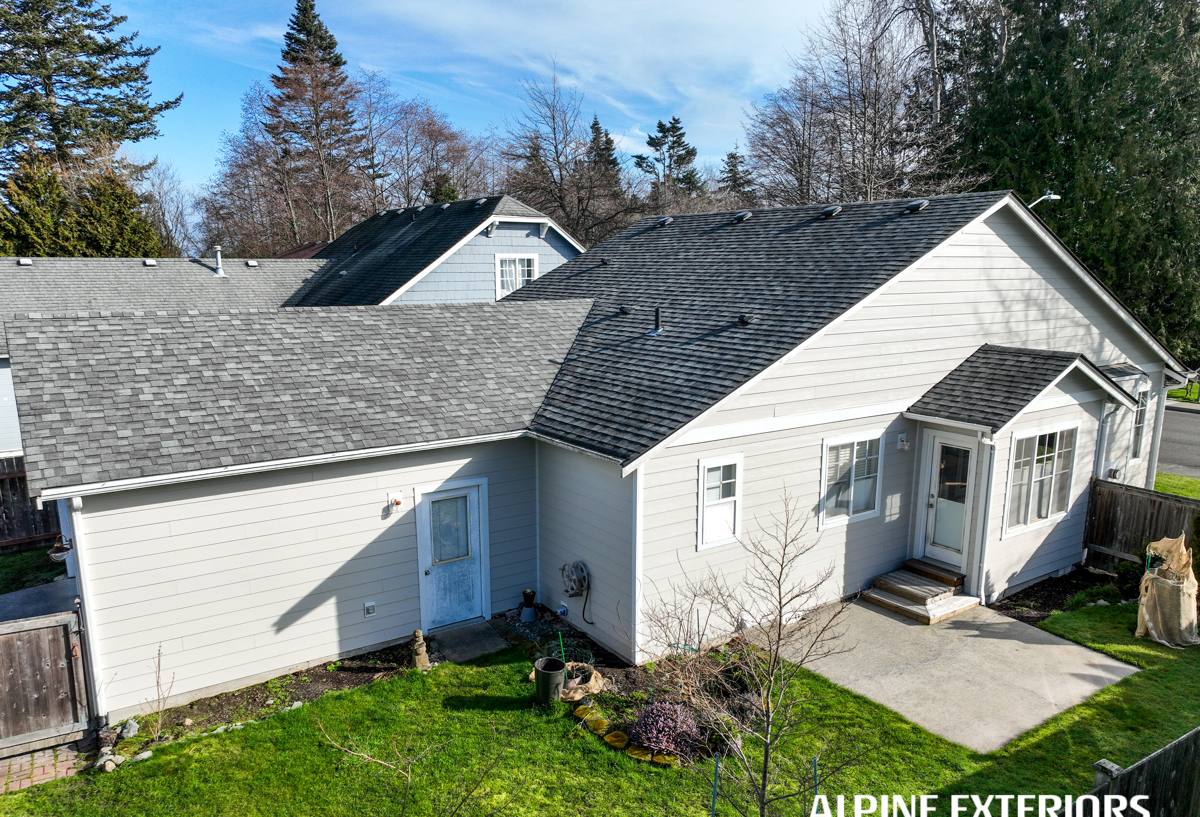
What the Climate Does to a Roof Here
Roofs in Silver Beach deal with three compounding problems: near-constant moisture, salt exposure, and shade from mature trees that keeps surfaces from drying out between rain events. Any one of those on its own is manageable. Together, they accelerate almost every type of roof failure we see.
Moss and Organic Growth
Moss doesn't just look bad — it holds moisture against the roofing material, lifts shingle edges as it grows, and works its way under flashing over time. In a shaded, moist lot, moss can establish itself within a year or two of a roof being cleaned. Left unaddressed for several seasons, it becomes a much bigger job than routine maintenance.
Salt Air and Metal Components
Flashing, fasteners, gutters, and any exposed metal on a roof are the first things to show wear near the water. Salt air speeds up corrosion on lower-grade or unprotected metal, which is why fastener and flashing selection matters as much as the shingle or panel choice itself in this area.
Wind-Driven Rain
Storms coming off the water don't just drop rain straight down — they push it sideways, which finds every weak seam, undersized lap, and poorly sealed penetration on a roof. A roof that would perform fine in a calmer inland setting can leak here if the details around vents, valleys, and edges weren't built for wind-driven exposure.
Roofing Materials That Make Sense for This Area
There's no single "best" roofing material for every Silver Beach home — it depends on the roof's pitch, shading, budget, and how long the homeowner plans to stay in the house. What we do rule out, as a matter of professional standard, are systems that are especially maintenance-heavy or moisture-sensitive in a wet, shaded, salt-air environment, because the long-term cost of upkeep often outweighs any upfront savings.
| Roofing Type | How It Handles Local Conditions | Maintenance Load |
|---|---|---|
| Architectural asphalt shingle | Good moisture and wind resistance when properly ventilated and flashed; widely available warranty support | Moderate — periodic moss treatment recommended |
| Standing seam metal | Sheds moisture and moss buildup very well; performs strongly under wind-driven rain | Low — occasional inspection of fasteners and seams |
| Synthetic/composite shake | Resists moisture absorption better than natural wood shake; consistent appearance over time | Low to moderate |
| Cedar shake (untreated) | Attractive but absorbs moisture readily in a shaded, damp lot; more prone to moss and rot without diligent upkeep | High |
For most Silver Beach re-roofs, we lean toward architectural shingles or metal depending on the home's style and the client's long-term maintenance appetite. Where a homeowner wants the shake look, we'll usually steer toward a synthetic profile rather than natural cedar — not because cedar can't be a fine product elsewhere, but because in a consistently damp, tree-shaded setting it demands more upkeep than most owners realistically want to keep up with.
Siding: The Other Half of Moisture Management
A roof keeps water out from above, but siding is what keeps wind-driven rain and humidity from getting into the wall assembly from the side — and in a neighborhood exposed to storms off the water, that's not a small job. Poorly installed or aging siding is one of the more common sources of hidden moisture damage we find during exterior evaluations, especially around window and door trim, corner boards, and anywhere two materials meet.
Common Signs of Siding Trouble in This Area
- Soft or spongy spots when pressed, especially near the bottom courses or below windows
- Paint or stain that's bubbling, peeling, or failing faster than expected
- Visible gaps at seams, corners, or trim where caulking has shrunk or cracked
- Dark streaking or persistent green tint from algae and moss growth
- Warping or cupping on wood-based siding panels
Fiber cement and quality vinyl systems tend to perform well here because they resist moisture absorption and don't feed organic growth the way untreated wood siding can. Whatever material a homeowner chooses, the installation details — proper flashing behind trim, correct overlap, sealed penetrations for fixtures and vents — matter more in a wet coastal-influenced climate than they would somewhere drier. That's where a lot of siding failures actually start, not with the material itself.
Windows: Sealing Out Wind-Driven Moisture
Older or poorly sealed windows are a frequent source of drafts and slow water intrusion in homes exposed to driving rain. It's rarely the glass itself that fails first — it's the seals, flashing, and frame material around it. In a neighborhood where storms regularly push rain sideways into west- and south-facing walls, window flashing and sill pan details deserve real attention during both new installs and replacements.
When we replace windows in this area, we pay particular attention to:
- Proper sill pan flashing so any water that gets past the outer seal has somewhere to drain, not soak into the framing
- Compatible sealants and flashing tape that won't degrade prematurely under repeated wet-dry cycling
- Frame materials that resist swelling, warping, or corrosion in persistent humidity
- Correct integration with the surrounding siding so water sheds around the window, not behind it
Energy performance matters too, but in this climate, keeping bulk water and wind-driven moisture out of the wall assembly is just as important as the insulating value of the glass.
Decks: Built to Handle Standing Moisture
Decks in Silver Beach face a particular kind of punishment — they're horizontal surfaces that collect standing water, catch falling debris from overhead trees, and rarely get full sun exposure to dry out between storms. That combination is exactly what accelerates rot in structural framing and encourages moss and algae growth on decking boards.
What Holds Up
Composite decking has become a popular choice for exactly this reason — it doesn't absorb moisture the way wood does, and it resists the slick, mossy buildup that makes wood decking a slip hazard through the wet months. For homeowners who prefer real wood, proper spacing, ventilation underneath the deck, and a disciplined refinishing schedule go a long way toward keeping it sound.
What We Check on Every Deck Job
- Ledger board attachment and flashing — a frequent point of hidden rot if not properly sealed
- Joist spacing and any signs of sagging or soft framing underneath
- Drainage below the deck surface so water doesn't pool against structural members
- Railing post connections, which take on outsized stress during wind events
- Board spacing appropriate for the material, allowing airflow and drainage between boards
A Practical Maintenance Rhythm for This Neighborhood
Homeowners here don't need to obsess over their exterior, but a consistent, modest maintenance rhythm prevents most of the expensive problems we get called out for. A reasonable approach looks like:
- Gutter cleaning at least twice a year, more often under heavy tree cover
- Roof moss treatment or gentle cleaning on a schedule matched to the amount of shade the roof gets
- A visual walk-around of siding and trim each spring, checking for soft spots, cracked caulk, or peeling paint
- Deck board and railing inspection before the wet season sets in
- Prompt attention to any interior signs of moisture — stained ceilings, musty smells near exterior walls, or peeling interior paint near windows
Catching a small flashing gap or a patch of established moss early is a maintenance-level fix. Left for a few seasons, the same issue can turn into sheathing replacement or structural repair — which is a much bigger check to write for something that was preventable.
Why a Local Crew Matters Here
Roofing and siding crews that don't work in Whatcom County regularly tend to specify materials and details that are correct in general but not necessarily right for a home exposed to salt air and driving rain off the water. Fastener grade, flashing choice, ventilation strategy, and even paint or stain products all perform differently in this environment than they would inland or in a drier climate. A crew that works this area consistently has already seen what fails here and builds accordingly, rather than learning it on a homeowner's roof.
We also know the practical side of working in this neighborhood — permitting expectations through the City of Bellingham, typical lot layouts and access considerations, and how weather windows here affect scheduling for roofing and exterior work. That local familiarity tends to show up as fewer surprises and fewer change orders once a project is underway.
Getting Started
Whether it's a roof showing its age, siding with a few soft spots you've noticed, windows that let in more draft than they used to, or a deck that needs a honest look before another wet season, we're glad to come take a look. If you're in Silver Beach or anywhere else around Bellingham and Whatcom County, reach out for a free, no-pressure estimate — use the form below to get started.