 Bellingham Roofing
 Roofing and Exteriors in South Hill
South Hill sits on the hillside above downtown Bellingham, close enough to Bellingham Bay that salt air is a real factor in how exteriors age here, and elevated enough that the neighborhood catches wind and driving rain that flatter parts of the city don't see as directly. Add in the tree canopy that gives South Hill its character — big conifers and deciduous trees that shade yards and streets — and you've got a neighborhood where roofs, siding, and trim work harder than the Whatcom County average, if there is such a thing.
We're a local exterior contractor working roofing, siding, windows, and decks across Bellingham, and South Hill is one of the areas we're in regularly. This page is about what actually shows up on homes in this part of town, and how we approach the work when a South Hill homeowner calls us.
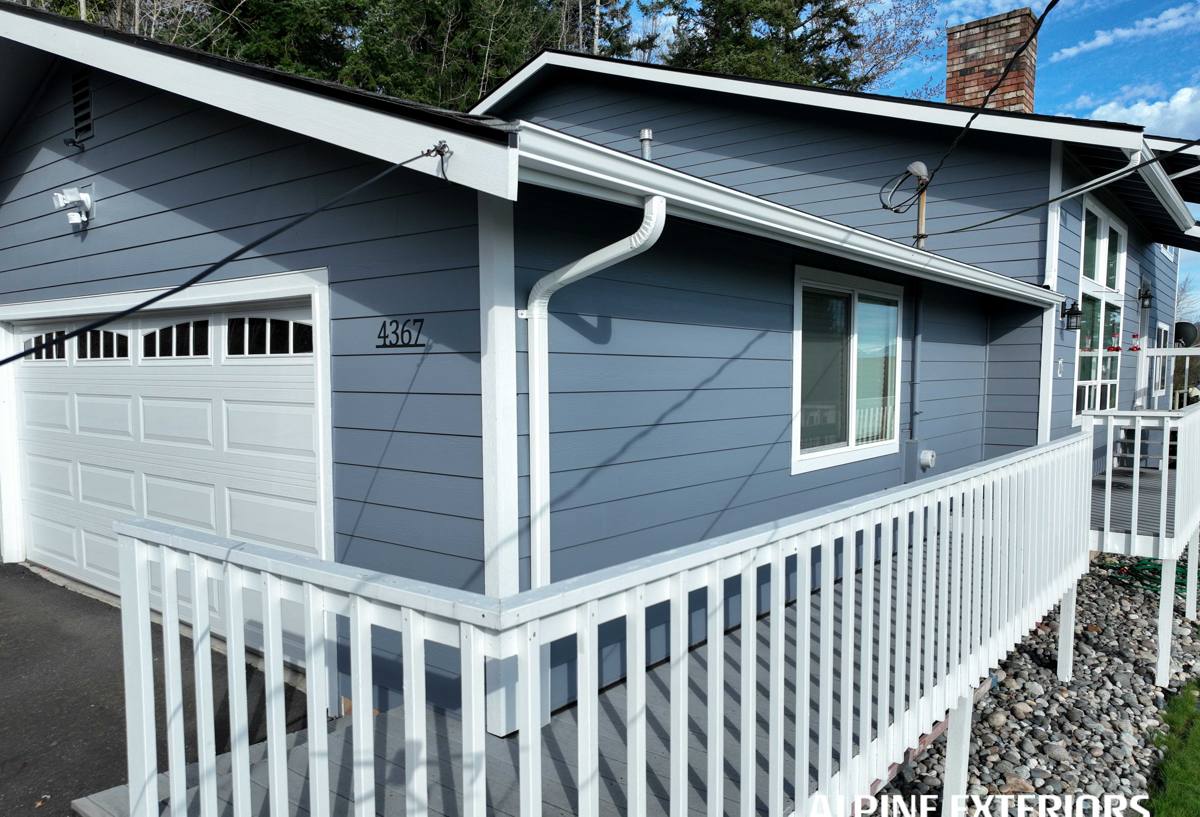
What South Hill's Climate Does to a Roof
Three things drive most of the roofing calls we get from this neighborhood: moisture, moss, and wind-driven rain off the bay.
Moss and Organic Growth
South Hill's mature tree cover is one of its best features and one of the harder things on a roof. Overhanging branches drop needles and leaf litter into valleys and gutters, shade keeps roof surfaces damp longer after a storm, and that combination is exactly what moss and algae need to get established. Once moss takes hold on a composition shingle roof, it lifts the shingle edges and holds water against the surface — which is what actually shortens the roof's life, not the moss itself. On a roof with steady shade, moss can come back within a year or two of a cleaning if there's no plan to slow it down.
Driving Rain and Wind
Being on a hillside near the water means South Hill catches wind-driven rain that pushes horizontally into flashing details, not just straight down onto shingles. That matters most at valleys, chimney flashing, skylight curbs, and anywhere a roof plane meets a wall. Flashing that's fine on a calm, low roof can still leak on an exposed, elevated one if it wasn't detailed for wind-driven moisture.
Salt Air Exposure
Proximity to Bellingham Bay puts a mild but constant salt-air load on exposed metal — roof flashing, gutters, fasteners, and any exposed hardware on siding or decks. It's not the aggressive corrosion you'd see right on the waterfront, but over years it does accelerate wear on lower-grade or unprotected metal components compared to homes further inland.
Roofing Materials: What Holds Up Here
There's no single "right" roof for South Hill, but there are trade-offs worth knowing before you pick a material.
| Material | Typical Lifespan | How It Handles South Hill's Conditions |
|---|---|---|
| Architectural asphalt shingle | 25-30 years | Good all-around choice; needs periodic moss treatment under tree cover |
| Standing seam metal | 40-50+ years | Sheds moisture and moss buildup well; use a coating rated for coastal/salt exposure |
| Cedar shake | 20-30 years with upkeep | Traditional look but needs consistent maintenance to resist moss and rot in shaded, damp spots |
| Synthetic/composite shingle | 30-50 years | Resists moisture absorption well; good option for heavily shaded lots |
For homes with heavy tree cover — which describes a lot of South Hill lots — we lean toward materials and details that shed moisture fast and don't give moss an easy foothold, and we always spec fasteners and flashing metal that can take the area's salt exposure without a premium jump in cost.
Siding for Older and Newer South Hill Homes
South Hill has a real mix of housing stock: older homes with history, along with newer infill and renovated properties. That mix means siding calls here range from full replacement on an aging wood-sided house to repair and matching on a home that's had partial work done over the years.
Wood and older fiber-cement siding in shaded, damp spots on South Hill lots are the most common trouble areas — north-facing walls under tree cover that don't get much sun to dry out after rain. When we're re-siding or repairing in these zones, drainage behind the siding (a proper rainscreen or drainage gap) matters as much as the siding material itself. A good product installed tight against wet sheathing will still fail early; a modest product installed with real drainage behind it will usually outlast it.
We work in fiber cement, engineered wood, and traditional wood siding depending on the home's age, style, and the owner's maintenance preference. We'll walk you through the real trade-offs — upfront cost, paint/stain cycle, and moisture tolerance — rather than pushing one product as a blanket answer.
Windows: Comfort and Moisture Control
On an elevated, exposed lot like much of South Hill, window performance is about more than energy bills. Old, single-pane or poorly sealed windows let wind-driven rain work into the frame over time, and condensation on cold interior glass in winter is a sign the window isn't keeping up with the county's humidity. Replacement windows with proper flashing and a tight air seal address both comfort and the slower moisture damage that shows up years later as rot around the frame.
We size window replacement projects to the house — sometimes it's a full-home upgrade, sometimes it's just the two or three windows on the weather side that are actually failing. We'll tell you honestly which is which.
Decks in a Wet, Shaded Climate
Decks in South Hill's shadier yards face the same moss and moisture pressure as the roofs above them. Wood decks under tree cover need more frequent cleaning and sealing to stay ahead of rot, especially at ledger boards and post bases where water collects. Composite decking cuts down on that maintenance cycle significantly, though it costs more upfront and still needs proper drainage and airflow underneath to perform well long-term — composite resists rot, but the structure underneath it is still wood framing that needs to stay dry.
Whichever direction you go, ledger flashing and proper spacing for drainage are the details that actually determine how long a deck lasts in this climate — not the decking surface alone.
Signs Your South Hill Home Needs Attention
- Green or black streaking on roof shingles, especially on shaded north or east-facing slopes
- Granules collecting in gutters or at downspout outlets
- Soft or spongy siding, especially low on the wall or under overhangs with limited sun exposure
- Condensation or fogging between window panes, or drafts around frames
- Peeling paint or stain that keeps failing in the same spot year after year
- Moss or standing debris building up in roof valleys after storms
- Deck boards that feel soft, or visible gaps opening at ledger connections
None of these on their own means an emergency, but catching them early is almost always cheaper than waiting for them to turn into structural repairs.
Why a Local Crew Matters on a Hillside Property
South Hill's terrain and tree cover create site conditions that don't show up the same way on a flat lot in another part of Bellingham. Steep driveways, mature landscaping close to the house, and grade changes around the foundation all affect how we stage a roofing or siding project — access for materials, where scaffolding or ladders can safely go, and how we protect the yard during the work. A crew that works this neighborhood regularly plans for that instead of running into it on install day.
We're also familiar with how Whatcom County's building requirements apply to exterior work, and we pull the right permits for the scope of the job rather than treating that as an afterthought.
How We Approach a South Hill Project
We start with an honest inspection — roof, siding, windows, or deck, whatever brought you to us — and we tell you what's actually wearing out versus what still has good life left. From there we lay out material options with real trade-offs, not just the highest-margin choice, and we give you a written scope before any work starts. If a project touches more than one system (say, a roof replacement that also means new flashing tie-ins at the siding), we coordinate that as one job instead of leaving gaps between trades.
If you're in South Hill and dealing with moss buildup, a leak you can't quite pin down, siding that's showing its age, or a deck that needs attention, we're happy to take a look and give you a straightforward assessment — no pressure, no upsell. Reach out through the form below to set up a free estimate.