 Bellingham Roofing
 Exterior Contracting for the York Area of Bellingham
Homes in and around York deal with a particular combination of weather that doesn't let up for long. You're close enough to the water to pick up salt-laden air, far enough north to get some of the heaviest driving rain in Whatcom County during fall and winter, and shaded enough by mature trees in many yards that moss and algae get a long runway every year. None of that is unusual for Bellingham. But it does mean exterior systems here age differently than they would in a drier or more open part of the state, and repair or replacement work needs to account for that instead of following a generic playbook.
We work on roofs, siding, windows, and decks throughout the Bellingham area, and York is part of our regular service territory. That matters more than it sounds like it should — a crew that's worked on a few dozen roofs in this specific microclimate will spot things a crew from out of the area might miss, because they've already seen how local conditions play out over a few winters.
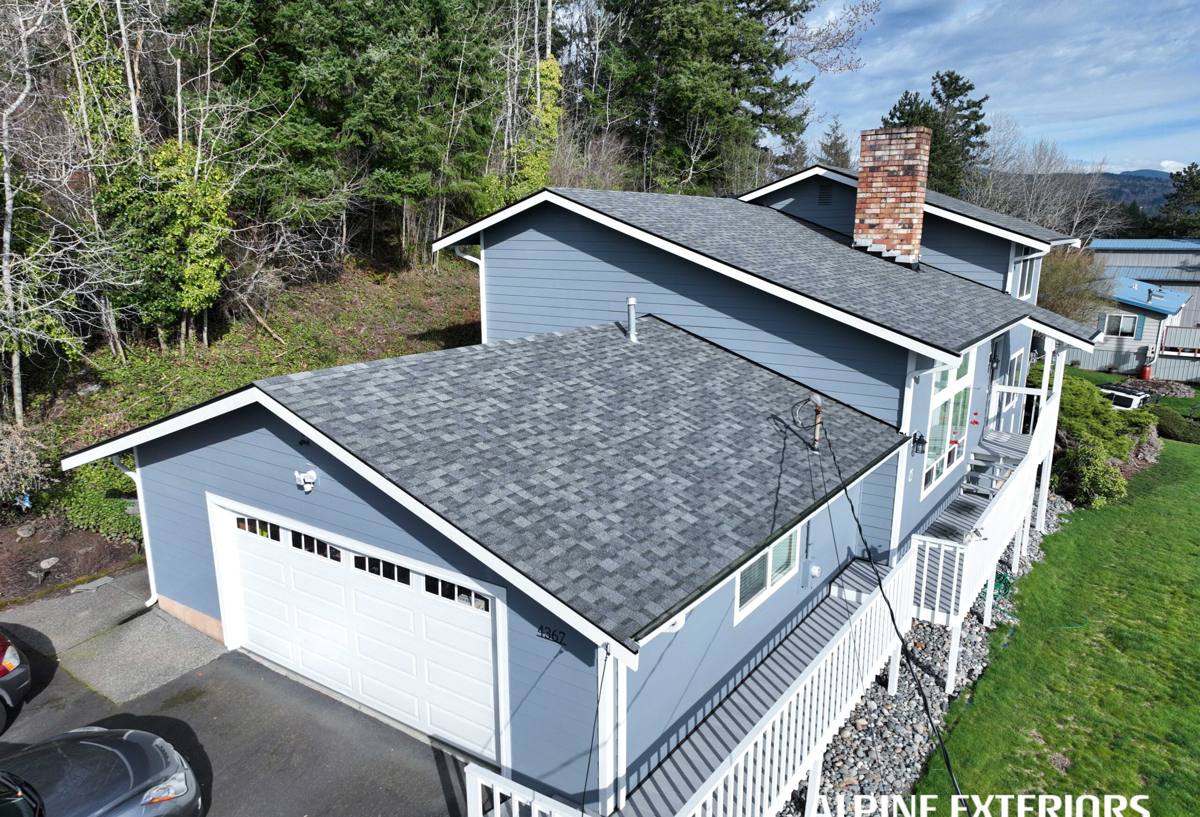
What the Climate Does to Roofs Here
Moss and Organic Growth
Moss is the most visible sign of a roof under long-term stress in this part of Washington. It thrives on north-facing slopes and anywhere tree cover keeps a roof shaded and damp for extended stretches. Left alone, moss holds moisture against the roofing material, works its way under shingle tabs, and lifts edges over time — which is when small leaks start. Regular moss removal and treatment is one of the lowest-cost things a homeowner can do to extend a roof's life here, but it needs to be done carefully. Pressure washing shingles or scraping moss off aggressively can do more damage than the moss itself.
Driving Rain and Wind-Driven Moisture
Whatcom County storms often come in sideways rather than straight down, which pushes water into laps, flashing seams, and vent penetrations that would stay dry in a calmer rain. This is why flashing detail and underlayment quality matter more here than they might in a milder climate — a roof that's "fine" on paper can still take on water at the valleys or around chimneys and skylights if those details weren't installed with wind-driven rain in mind.
Salt Air and Metal Components
Being near the water means airborne salt accelerates corrosion on exposed metal — flashing, fasteners, gutter hardware, and vent caps in particular. Standard-grade metal components can start showing rust years before they would further inland. We factor that into material choices for York-area homes rather than defaulting to whatever's cheapest.
Roof Replacement and Repair
Not every roofing issue means a full replacement. A lot of what we see is isolated: a section of flashing that's failed, a few damaged shingles from wind, or moss damage concentrated on one slope. We'll always tell you honestly whether a targeted repair makes sense or whether the roof's overall condition means a repair is just delaying an inevitable full replacement.
When replacement is the right call, the conversation usually comes down to material choice, ventilation, and how the new roof will handle moss and moisture over the long run — not just how it looks the day it's installed.
| Roofing Option | Typical Lifespan | Considerations for This Area |
|---|---|---|
| Asphalt composition shingle | 20–30 years | Most common choice; algae-resistant shingle lines are worth the upgrade given local moss pressure |
| Metal roofing | 40–60 years | Sheds moss and moisture well; coating quality matters more near salt air |
| Cedar shake | 20–30 years with upkeep | Traditional look but needs consistent maintenance to resist moisture and moss in a wet climate |
| Flat/low-slope membrane | 15–25 years | Common on additions and porches; detailing at seams and drains is critical in heavy rain |
We don't push one material on every homeowner. The right answer depends on your roof's slope, sun exposure, tree cover, and budget — all of which we'll walk through on-site.
Siding That Holds Up to Salt Air and Rain
Siding takes a different kind of beating than roofing, but the same climate factors apply. Wind-driven rain finds gaps at trim, corners, and window flashing before it finds anything else, and repeated wet-dry cycles are what eventually cause siding to warp, delaminate, or let moisture into the wall assembly behind it. Salt air also affects how paint and finishes hold up over time, particularly on the sides of a house that face open exposure.
We install and repair fiber cement, engineered wood, and vinyl siding, and we're upfront about the trade-offs of each:
- Fiber cement holds up well to moisture and doesn't feed moss the way untreated wood products can, but it's heavier and more labor-intensive to install correctly
- Engineered wood siding can look great and install efficiently, but installation quality and consistent maintenance matter a lot in a wet climate — gaps or missed caulking show up as problems faster here than in drier regions
- Vinyl siding is low-maintenance and budget-friendly, but it has less flexibility for correcting underlying moisture issues since it's not a moisture barrier itself
Whatever the material, correct flashing and moisture management behind the siding matters more than the siding brand itself. That's where most long-term problems actually start.
Windows in a Wet, Salt-Air Climate
Older windows in this area often show their age through fogging between panes, soft spots in surrounding trim, or drafts that get noticeably worse in a hard winter storm. Window seals and frame materials degrade faster with constant humidity and salt exposure, and once a seal fails, the insulating value of the window drops even if the glass still looks fine.
When we replace windows, we're looking at more than the window unit itself — proper flashing integration with the surrounding siding or trim is what actually keeps water out over the following years. A good window installed with poor flashing will eventually leak regardless of the window's quality.
Decks: Built for Rain, Not Just Sun
Decks in the York area spend more time wet than dry for a good portion of the year, which changes what "good deck construction" means here. Ledger board flashing, proper drainage away from the house, and gapping between boards to let water shed instead of pool are all details that matter more in a climate like this than they would somewhere drier. Composite decking has become a popular option because it resists moisture absorption and doesn't need the yearly staining or sealing that wood decking does — but wood decking, properly built and maintained, still holds up fine here when it's detailed correctly from the start.
Rot at ledger boards and support posts is the most common deck failure point we see locally, almost always tied back to water intrusion at a connection point rather than the decking material itself.
Maintenance Checklist for York-Area Homes
A lot of exterior problems here are preventable with basic seasonal upkeep. This is a reasonable baseline for most homes in the area:
- Clear moss from roof surfaces before it spreads across a full slope, ideally before the wet season builds up
- Check gutters and downspouts for debris at least twice a year — clogged gutters push water into fascia and soffits fast in heavy rain
- Inspect flashing around chimneys, skylights, and roof-wall intersections annually, since these are the most common leak points in wind-driven rain
- Look at exterior caulking around windows and trim yearly and recaulk where it's cracked or pulling away
- Rinse siding periodically to reduce salt and organic buildup, especially on sides of the house with more wind or shade exposure
- Check deck ledger boards and support posts for soft spots or discoloration, which often signal trapped moisture
Why a Local Crew Matters for This Kind of Work
Exterior work isn't one-size-fits-all, and Bellingham's climate is specific enough that experience here actually counts for something. A crew that's done this work across Whatcom County knows which details fail first in this kind of weather, which materials are worth the extra cost, and which shortcuts show up as callbacks two winters later. We also know how important it is to be responsive when a storm causes damage — a fast, honest assessment matters more than a sales pitch when water's already gotten into a roof or wall.
Getting Started
If you're dealing with a roof that needs attention, siding showing its age, windows that aren't performing the way they should, or a deck with soft spots you'd rather catch early, we're happy to take a look. We provide free, no-pressure estimates for homeowners in York and throughout the Bellingham area — just fill out the form below and we'll get in touch to schedule a time that works for you.