 Bellingham Roofing
 Why Barkley Decks Take a Beating
Decks in the Barkley area of Bellingham deal with a specific combination of weather that's harder on outdoor structures than most homeowners realize. Whatcom County sits in a marine climate zone, and that means near-constant moisture exposure for a good chunk of the year, punctuated by wind-driven rain that doesn't just fall straight down — it gets pushed sideways, up under handrails, and into seams that were never meant to see standing water.
Add in proximity to Bellingham Bay and you get a steady dose of salt-tinged air, which speeds up corrosion on anything metal: nails, screws, joist hangers, railing hardware. A fastener that might last two decades in a dry inland climate can start rusting and staining the wood around it in a fraction of that time here.
Then there's moss. Bellingham's long wet season — often stretching from fall through spring — gives moss and algae plenty of time to establish themselves on any horizontal wood surface that doesn't get much direct sun. Tree cover is common throughout residential neighborhoods like Barkley, which means needles, leaves, and organic debris regularly collect in the gaps between deck boards. That debris holds moisture against the wood long after the surface itself has dried, quietly feeding rot from underneath where you can't see it.
The Result: Damage That Hides Below the Surface
None of this shows up as a single dramatic failure. It shows up as a soft spot near the stairs, a railing post that wiggles a little more than it used to, or a dark stain spreading from a fastener head. By the time it's visible on top, there's usually more going on underneath.
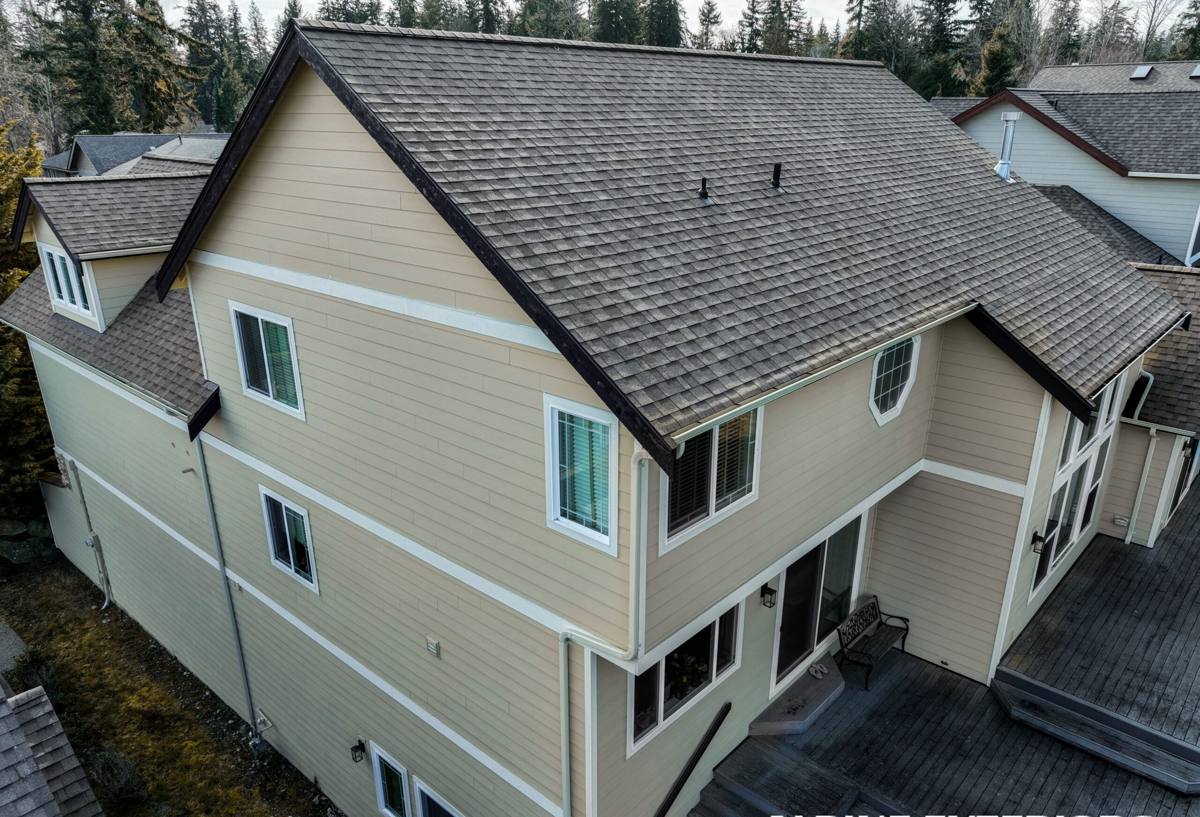
Common Problems We Find on Barkley Deck Repair Calls
After years of working on decks throughout Bellingham and greater Whatcom County, certain failure patterns show up again and again in this climate. Knowing what to look for helps you catch problems while they're still a repair — not a full rebuild.
- Ledger board rot where the deck attaches to the house, usually from failed or missing flashing behind it
- Corroded fasteners — rust streaks, popped screw heads, or nails that have backed out as the wood around them softens
- Moss and algae buildup on the deck surface, which is both a slip hazard and a moisture trap
- Soft or spongy decking boards, most often near ground contact, stair landings, or planter areas
- Rotted railing posts at the base, where they meet the deck frame and collect standing water
- Worn or shifting stair stringers, especially on decks with more than a step or two down to grade
- Rusted or pulling joist hangers that are no longer holding framing members the way they were installed to
What a Proper Deck Repair Actually Involves
A repair that only addresses what's visible from the top is a temporary patch, not a fix. Doing this correctly means starting with an honest look at the structure, not just the surface.
Inspecting Below the Decking
We get underneath the deck whenever it's accessible and check the framing directly — joists, beams, posts, and footings. Surface boards can look fine while the structure supporting them is compromised, and the reverse is also true: a stained or weathered board doesn't always mean the wood underneath has lost integrity.
Probing and Moisture-Checking Suspect Areas
Where rot is suspected, we probe the wood rather than guess from appearance. Wood that's still sound resists a screwdriver or awl; wood that's compromised gives way easily. This tells us how far the damage actually extends before we open anything up.
Checking the Ledger Connection
The ledger board — where the deck ties into the house — is the single most safety-critical connection on most decks, and it's also the spot most exposed to water intrusion if flashing was installed poorly or has failed over time. We check this connection specifically rather than assuming it's fine because the rest of the deck looks okay.
Reviewing Guardrails and Stairs for Basic Safety
Loose railings, undersized stair stringers, and gaps in guardrails come up often enough that we check them as a matter of course, even on jobs that were called in for something else entirely.
Once we've done this, we put together a written scope so you know exactly what's being repaired and why — not a vague line item for "deck repair."
Repair vs. Replacement: How We Decide
Not every damaged deck needs to come out. But some do, and the honest answer depends on how much of the structure is affected versus how much is cosmetic. Here's generally how that decision breaks down:
| Factor | Leans Toward Repair | Leans Toward Replacement |
|---|---|---|
| Framing condition | Joists and beams are solid; damage is localized | Widespread rot across multiple structural members |
| Ledger connection | Sound once flashing is corrected | Ledger itself is deteriorated or improperly attached |
| Decking surface | A handful of boards are soft or worn | Most boards show rot, splitting, or heavy wear |
| Railings and stairs | Isolated loose posts or worn treads | Multiple undersized or failing components throughout |
| Age of structure | Newer deck with an isolated failure point | Older deck already near the end of its service life |
| Overall cost impact | Lower — targeted labor and material | Higher upfront, but resets the clock on the whole structure |
We'll walk you through where your deck falls on this before recommending anything, and we won't push a full replacement when a repair will genuinely hold up.
Our Deck Repair Process, Start to Finish
- On-site inspection and written scope — we document what we find, including anything under the deck, and explain it in plain terms
- Material matching — selecting repair lumber, fasteners, and flashing suited to what's failing and to this climate specifically
- Targeted demo — removing only the compromised material rather than tearing out sound structure unnecessarily
- Structural repair — replacing framing, hangers, or ledger flashing using corrosion-resistant hardware throughout
- Decking replacement — swapping out failed boards, matched as closely as reasonably possible to the existing deck
- Moisture management — redoing flashing and drainage details properly so the same failure doesn't recur in the same spot
- Finish work — sealing or staining repaired wood sections so they weather consistently with the rest of the deck
- Final walkthrough — checking the repair with you before we call the job done
Materials We Use and Why
Material choice matters more here than in drier climates, because the margin for error is smaller. We default to stainless steel or high-grade coated fasteners for anything exposed to weather, rather than standard galvanized hardware that corrodes faster with regular exposure to salt-tinged coastal air. It costs a little more up front and saves you from finding rust stains and loose fasteners again in a few years.
On ledger boards and joist tops, we use self-adhering flashing tape rather than relying on caulk alone. Caulk fails; a properly lapped flashing detail sheds water the way it's supposed to, even after the caulk around it eventually wears out.
Wood vs. Composite for Repair Sections
When only part of a deck needs new boards, you generally have two paths: matching the existing wood, or transitioning that section to composite decking. Wood is easier to match in appearance and usually costs less for a small repair, but it needs regular sealing or staining to hold up — something that's easy to fall behind on given how much of the year is wet here. Composite costs more per board and won't match older wood decking exactly, but it resists moss growth and moisture absorption better and needs far less upkeep. Neither is automatically the right call — it depends on how much of the deck you're replacing and how much maintenance you actually want to keep up with.
Deck Safety and Code Considerations
Guardrail height, baluster spacing, and graspable handrails on stairs aren't optional details — they're there because deck failures and falls are entirely preventable with the right connections and dimensions. We check these as part of every repair, not just on jobs specifically called in for railing work.
Structural repairs — anything touching the ledger connection, framing, or footings — typically require a permit in Bellingham and unincorporated Whatcom County, while cosmetic work like swapping a handful of decking boards usually doesn't. Requirements can vary by jurisdiction and by the scope of the work, so we handle the permit conversation with you directly rather than leaving you to guess whether your project needs one.
Maintenance Checklist to Extend Your Repair's Life
A repair done right will still need some upkeep from you, especially given how long the wet season runs here. This is the short list worth keeping on your calendar:
- Sweep leaves and debris out of board gaps regularly through fall and winter, not just once in the spring
- Confirm gutters and downspouts are directing water away from the deck structure, not onto it
- Check railings and posts for movement at least once a year
- Rinse off moss and algae buildup before it has a chance to establish, rather than letting it accumulate over a full wet season
- Reseal or restain wood decking on a schedule suited to this climate — more frequently than you'd need in a drier region
- Watch for soft spots near stairs, ledger connections, and anywhere planters or standing water tend to collect
- Trim back vegetation that's blocking airflow or sun to the deck surface
Why Hire a Crew That Already Works Barkley
Deck problems in this neighborhood tend to follow patterns tied to tree cover, drainage, and how individual lots handle runoff — details that a crew unfamiliar with the area has to learn on your job, at your expense. A crew that already works in Barkley has seen how decks in this specific part of Bellingham typically age, which means less time spent diagnosing and more time spent fixing the actual problem.
Being local also means a faster response when something needs a look before it gets worse, and a level of accountability that comes from being a crew your neighbors already know, not one that showed up from out of the area for a single job.
If you're noticing a soft spot, a wobbly railing, or moss taking over your deck surface, we're happy to take a look and give you an honest read on what it needs. Reach out for a free, no-pressure estimate using the form below.