 Bellingham Roofing
 Roofing in Birchwood: Built for This Climate, Not Just Any Climate
Birchwood sits within Bellingham, in Whatcom County, and like most of this part of northwest Washington, the homes here spend most of the year wet. That's not a knock on the neighborhood — it's just the reality of a marine climate with mild temperatures, persistent cloud cover, and rainfall spread across most months rather than concentrated in a short season. A roof here doesn't get long dry stretches to shed the moisture it's picked up, and that changes what "good roofing work" actually means compared to a drier inland climate.
Salt air, driving rain, and a long moss season all take their toll on a roof over time, and they don't take it evenly. Some parts of a roof — north-facing slopes, valleys, anywhere shaded by trees or a neighboring roofline — wear out faster than the rest. We install and repair roofing with that reality built into how we work, not as an afterthought. Beyond roofing, we also handle siding, windows, and decks, because on a house in this climate those systems are all managing the same moisture and all fail for related reasons when one of them is neglected.
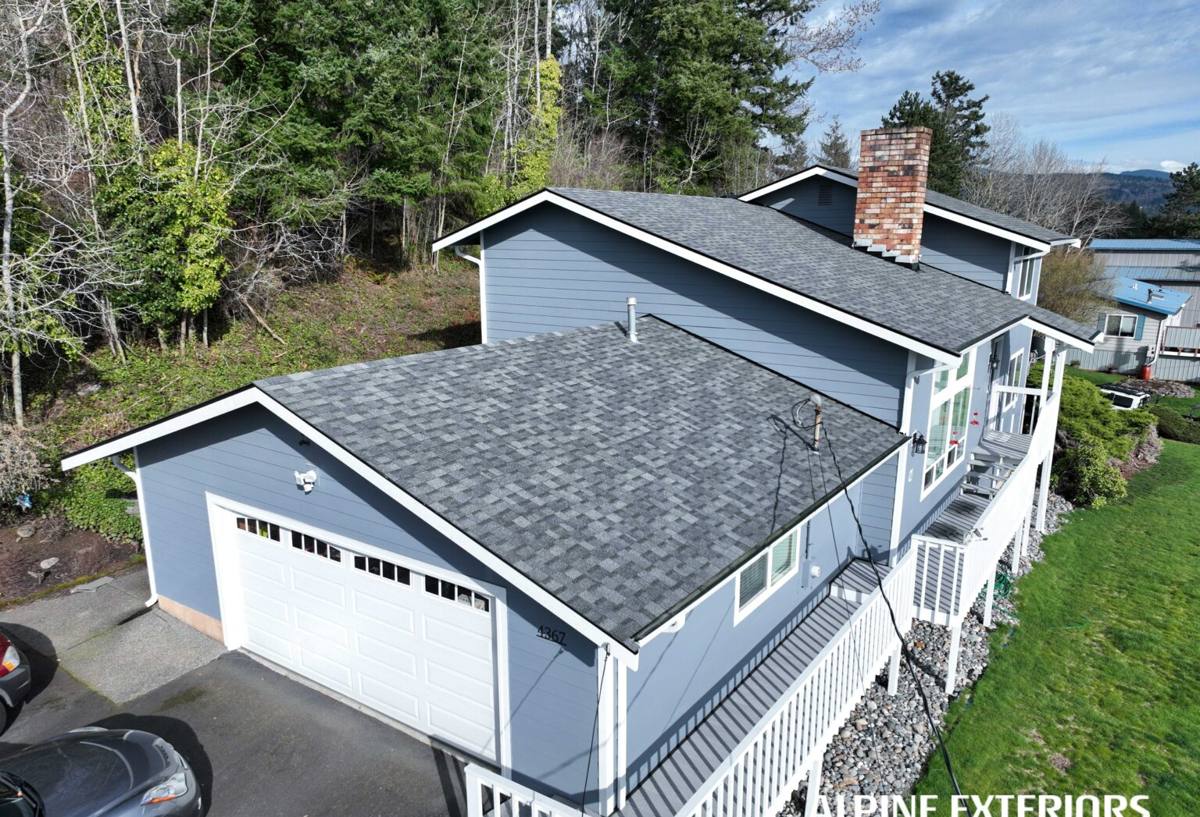
What Salt Air, Rain, and Moss Actually Do to a Birchwood Roof
Marine Air and Slow Corrosion
Bellingham's proximity to the water means the air carries more salt and moisture than a purely inland location would. That doesn't strip a roof overnight, but it steadily accelerates corrosion on lower-grade fasteners, flashing, and any exposed metal trim. Over years, that slow corrosion is what turns a small flashing gap into an active leak. Choosing corrosion-resistant fastener and flashing materials up front is a small cost difference that pays off over the life of the roof.
Driving Rain, Not Just Rainfall
A regional rainfall total doesn't tell the whole story. Storms here often come with real wind behind them, and wind-driven rain doesn't just land on a roof — it gets pushed sideways and can work its way up under shingle edges, around vent boots, and into flashing laps that would stay dry in a calm rain. Roofing details that are adequate in a sheltered, low-wind location can still leak here if they weren't built to handle rain moving in more than one direction.
The Long Moss Season
Mild temperatures, shade, and near-constant dampness add up to a moss and lichen season that can run most of the year on the wrong exposure. Moss holds moisture directly against the shingle or roofing surface, which shortens material life and, if it's allowed to build up in valleys or against flashing, can dam water and push it backward under the roofing rather than off the edge. North-facing slopes and roof sections under tree cover tend to need more frequent attention than sun-exposed areas of the same roof.
Roofing Systems and Materials for This Climate
Most Birchwood homes are well served by a properly installed asphalt shingle roof, and that remains the most cost-effective option for the majority of houses in the neighborhood. The material itself is only part of the equation, though — how it's installed determines whether it performs the way the manufacturer intended.
Asphalt Shingles
Modern architectural shingles with algae resistance built into the granules hold up noticeably better against the dark staining and organic growth that standard shingles develop within a few years in this climate. Wind rating matters too; a shingle rated for higher sustained wind speeds and properly fastened per the manufacturer's pattern resists lifting during the wind-driven storms that come through in fall and winter.
Metal Roofing
Metal roofing is a legitimate option for homeowners looking for a longer service life and better shedding performance, particularly on steeper pitches. It carries a higher upfront cost than asphalt shingles, but it resists moss growth better on shaded slopes and holds up well against wind-driven rain when the panels and flashing are installed correctly. It's not the right fit for every roof or every budget, and we'll say so plainly rather than steering every job toward the more expensive option.
Underlayment and Flashing — Where Roofs Actually Fail
Most roof leaks don't start in the open field of shingles or panels — they start at flashing: valleys, chimneys, skylights, vent penetrations, and wall-to-roof transitions. A synthetic or self-adhered underlayment handles wind-driven rain intrusion far better than older felt products, and correctly lapped, sealed flashing at every penetration is what actually keeps water out over the long run. We treat this as baseline work, not an upgrade you have to ask for.
Signs a Birchwood Roof Needs Attention
Most roofing problems give some warning before they turn into interior damage. Catching them early is almost always cheaper than waiting.
- Moss buildup in valleys or on shaded slopes that keeps coming back after cleaning
- Granules collecting in gutters or at the base of downspouts
- Shingles that look curled, cupped, or are missing outright
- Soft spots or sagging visible from the ground or in the attic
- Water stains on interior ceilings or upper walls, especially after a windy storm
- Flashing around chimneys, skylights, or vents that looks lifted, rusted, or gapped
- Daylight visible through the roof deck when viewed from inside the attic
How We Approach a Roofing Job
We start with an in-person inspection of the roof, not a drive-by estimate from the street. That means getting on the roof or in the attic to look at the deck, ventilation, and flashing condition, not just the shingle surface. From there we put together a written, itemized scope before any work begins, so there's no ambiguity about what's included.
What a Straightforward Roofing Job Looks Like
- On-site inspection of the existing roof, deck, and ventilation
- Written estimate covering material, underlayment, flashing scope, and any deck repair contingencies
- Tear-off (when replacing) so the deck can actually be inspected, not just covered over
- Correct fastening, underlayment, and flashing detail work at every penetration and transition
- Cleanup, including a magnetic sweep for stray nails, and a final walkthrough
On repairs, we're upfront when a targeted fix is the right call instead of pushing a full replacement that isn't yet necessary. A roof doesn't need to be perfect to be sound — it needs the parts that actually keep water out to be done correctly.
What Drives Roofing Costs
Two roofing bids for what looks like the "same" job can differ by a meaningful margin, and the gap is usually about real differences in scope rather than one contractor padding the price.
| Cost Factor | What It Affects | Why It Matters in Birchwood |
|---|---|---|
| Tear-off vs. layover | Labor scope and ability to inspect the deck | Older roofs here often hide moisture damage that only shows up once the old layer comes off |
| Underlayment type | Water resistance beneath the roofing material | Synthetic or self-adhered underlayment resists wind-driven rain far better than older felt |
| Material grade | Algae resistance, wind rating, expected lifespan | Algae-resistant shingles slow the moss and staining this climate produces year-round |
| Flashing scope | Valleys, chimneys, skylights, wall intersections | Most leaks start at flashing, and correct detailing here is what actually keeps a roof dry |
| Ventilation | Attic moisture control and material lifespan | Poor ventilation traps moisture that accelerates deck rot and moss growth from below |
| Roof pitch and access | Labor time, staging, safety equipment | Steeper or harder-to-access roofs on older Bellingham homes add real, legitimate labor cost |
When bids differ significantly, ask each contractor to walk through exactly what's included rather than comparing bottom-line numbers alone. A detailed written bid that names the underlayment brand, flashing scope, and material grade is worth more than a one-line total, even when the number is higher.
Beyond the Roof: Siding, Windows, and Decks
A roof doesn't operate in isolation. Water that gets past a roof edge or a poorly flashed wall-to-roof transition often shows up as a siding or window problem before anyone traces it back to the roof. We handle siding, windows, and decks alongside roofing because treating a house as one connected exterior system — rather than four separate trades — is how problems actually get caught and fixed at the source instead of patched at the symptom.
Siding
Siding takes on the same wind-driven rain and moss exposure as the roof, just on a vertical plane. Correct flashing at windows, doors, and trim transitions is as important to keeping water out of a wall as good roofing flashing is to keeping it out of an attic.
Windows
Window performance in this climate comes down to installation and flashing integration at least as much as the window unit itself. A window installed with poor flashing will leak under sustained wind-driven rain regardless of how good the glass and frame are.
Decks
Decks face repeated wetting and drying along with the same moss and mildew pressure as shaded roof slopes. Fasteners and structural hardware rated for damp, corrosive exposure matter here just as much as they do on a roof.
Why a Local Crew Matters
A roofing crew that works Whatcom County year-round already knows which roof slopes hold moss longest through a wet winter, how wind-driven rain tends to find gaps in improperly lapped flashing, and how salt-tinged marine air wears down cheap fasteners faster than it looks like it should. That's the kind of knowledge that shows up in the details of a job — not in a sales pitch, but in how the flashing gets lapped and which fastener grade actually gets used.
A Simple Checklist Before Hiring for Roofing Work in Birchwood
- Confirm an active Washington state contractor license and current liability insurance
- Ask for a written, itemized bid — not just a total price — naming the material, underlayment, and flashing scope
- Ask how they detail flashing at valleys, chimneys, and wall transitions specifically for wind-driven rain
- Ask what their workmanship warranty covers and for how long, separate from the manufacturer's material warranty
- Be cautious of storm-chasing crews with no local address, high-pressure deadlines, or bids far below everyone else's
Getting an Estimate
If you're dealing with an active leak, planning ahead for a roof that's showing its age, or just want an honest read on where your roof and the rest of your home's exterior actually stand, we're glad to come take a look. Reach out below for a free, no-pressure estimate.