 Bellingham Roofing
 Composite Decking Built for Blaine's Coastal Conditions
Blaine sits right on the water, and that changes what a deck has to deal with compared to a build a few miles inland. Salt-laden air off the Strait of Georgia and Semiahmoo Bay accelerates corrosion on fasteners and hardware, driving rain gets pushed sideways into ledger boards and railing posts, and the long stretch of gray, damp months from fall through spring keeps every horizontal surface wet longer than homeowners expect. A deck built without those specifics in mind will show it early — soft spots at the ledger, streaking and moss on the boards, rust bleeding through fastener heads within a couple seasons.
Composite decking is a strong fit for this environment because it doesn't absorb water the way wood does and won't rot, but "composite" isn't a single product with one install method. The board brand, the core construction, the fastening system, and the substructure underneath all matter, and in a coastal setting like Blaine they matter more than they would in a drier part of the state.
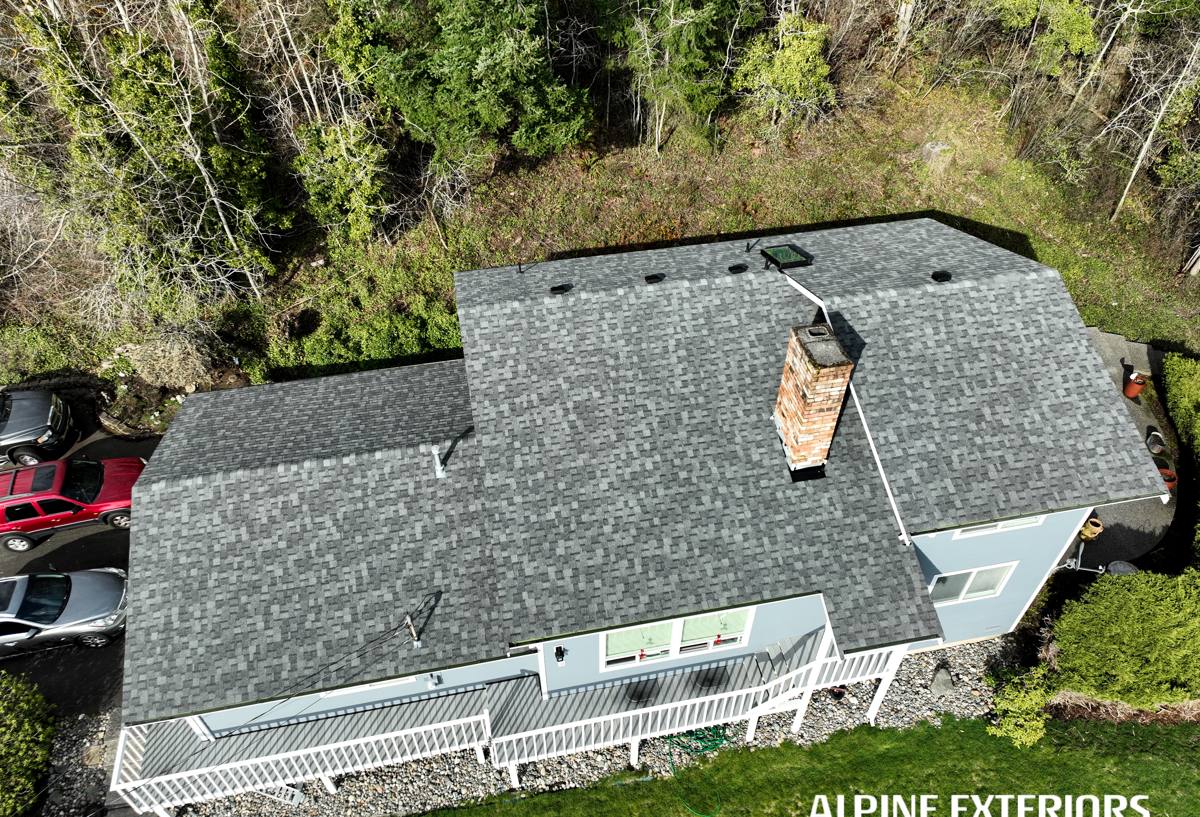
Why Blaine's Climate Puts Extra Stress on a Deck
Salt Air and Metal Hardware
Standard zinc-coated screws and brackets corrode faster this close to salt water. Over a few years that corrosion can weaken the connection at ledger boards, stair stringers, and railing posts — the exact spots where failure matters most. We spec stainless or marine-grade coated fasteners and hardware on decks near the water, which costs a bit more up front but avoids a hardware failure hiding under boards that still look fine on top.
Driving Rain and Wind-Driven Moisture
Blaine gets weather off the water, and that means rain doesn't just fall straight down — it gets pushed sideways into railing posts, fascia, and the house wall behind the ledger. Flashing details at the ledger connection and around post bases aren't optional trim here; they're what keeps water from tracking behind the composite skin and into the framing underneath, which is still real wood on almost every composite deck.
The Long Moss Season
Whatcom County's wet season runs long, and shaded or north-facing decks stay damp for weeks at a stretch. Moss and algae need that sustained moisture, and composite boards — even good ones — will grow a film on the surface if the deck doesn't drain and dry between rain events. Board spacing, joist spacing, and gap-to-grade all affect how fast a deck dries out, and getting those wrong is the single biggest reason composite decks in this area end up slick and green by year three.
What a Correct Composite Deck Install Involves
A composite deck is only as good as the frame underneath it and the details most people never see. For a Blaine build we work through the same core steps every time:
- Ledger flashing and house-wrap integration that sheds water away from the wall, not into it
- Pressure-treated or coastal-rated framing sized and spaced to the composite manufacturer's spec — composite boards often need tighter joist spacing than wood
- Stainless or coated fasteners and structural hardware throughout, not just at visible connections
- A hidden fastener or approved clip system that keeps the board field free of exposed screw heads that can loosen and trap water
- Proper gap-to-grade and airflow underneath so the deck can dry between rain events instead of staying damp
- Board spacing that accounts for composite's thermal expansion, which is more pronounced than with wood
- Railing posts through-bolted to framing, not just screwed to fascia — this is a common shortcut we won't take
Skipping any one of these doesn't usually show up on day one. It shows up as a soft ledger connection, a railing post with play in it, or standing water under the boards two or three winters in.
Choosing Composite Materials for a Coastal Property
Not every composite board is built the same way, and the differences matter more here than inland. Capped composite boards — where a solid polymer shell wraps the wood-plastic core — hold up better against moisture intrusion and staining than uncapped boards, which is worth the extra cost on a property that sits in salt air and long wet seasons. We also pay attention to how a board's color and texture perform in low light and constant moisture; darker boards can heat-cycle harder in the rare sun, and some capped surfaces resist algae film better than others.
We won't push a specific brand as the only answer — several manufacturers make a solid capped composite board, and the right choice often comes down to warranty terms, color options, and what's actually stocked regionally so a repair years from now isn't a special-order headache. What we won't do is install an uncapped or budget composite board in a direct-splash or low-airflow location on a coastal property and call it a long-term fix — that's a maintenance and moisture problem waiting to happen, not a shortcut we're willing to hand a homeowner.
Composite vs. Other Decking Options for Blaine Properties
| Material | Moisture Resistance | Maintenance | Best Fit |
|---|---|---|---|
| Capped composite | High — sealed shell resists water and staining | Occasional wash, no sealing or staining | Coastal decks, shaded or low-airflow areas |
| Uncapped composite | Moderate — core can absorb moisture over time | Low, but more prone to surface mold in wet zones | Drier, sunnier deck areas |
| Pressure-treated wood | Low without upkeep — needs sealing to perform | Annual cleaning and periodic sealing/staining | Budget builds, owners willing to maintain |
| Cedar | Moderate — natural rot resistance, still needs sealing near salt air | Regular sealing to hold color and resist moisture | Homeowners prioritizing natural look over low upkeep |
Our Process for a Composite Deck Build in Blaine
1. On-Site Assessment
We walk the property, check sun and shade exposure, note proximity to water and prevailing wind direction, and look at the existing structure if it's a replacement. This tells us what framing upgrades, flashing details, and fastener spec the specific site needs.
2. Framing and Structural Work
Any existing framing gets inspected for rot or corrosion before new decking goes down — covering up a compromised frame with new composite boards just hides the problem. New or reinforced framing is built to the composite manufacturer's joist spacing requirements, not standard wood-deck spacing.
3. Flashing and Waterproofing Details
Ledger flashing, post base details, and any transitions to the house get sealed and flashed before a single composite board is installed. This is the step that determines whether the structure underneath stays dry for the next twenty years.
4. Composite Installation
Boards go down with the fastening system spec'd for that product, proper expansion gaps, and attention to drainage slope so water moves off the deck instead of pooling.
5. Railings, Stairs, and Finish Details
Posts are through-bolted to structural framing, stair stringers are sized and fastened to code, and all hardware matches the coastal-rated spec used throughout the rest of the build.
6. Walkthrough
We go over the finished deck with the homeowner, point out any maintenance basics specific to the board chosen, and answer questions before calling the job done.
Maintenance in a Marine Climate
Composite decking is low-maintenance, not no-maintenance, and that distinction matters more in Blaine's climate than it does inland. A periodic rinse or light wash keeps salt residue and organic film from building up on the surface, and it's worth checking railing connections and fastener points once a year for any early corrosion — catching a loosening post base early is a five-minute fix, not a rebuild. Keeping gutters and nearby drainage clear also helps, since extra water dumped onto or near the deck extends how long it stays wet after a storm.
Why Local Experience on Blaine Homes Matters
A crew that's worked decks throughout Whatcom County knows which fastener grade holds up a mile from the water, how far Blaine's wind-driven rain actually reaches into a railing post, and where moss takes hold first on a shaded coastal lot. That's not something a general framing spec covers — it's learned from seeing what fails and what doesn't in this specific climate. We build composite decks the same careful way whether the site is right on the water or a few blocks back, because the coastal air and long wet season affect the whole area, not just waterfront lots.
If you're planning a new composite deck or replacing one that's showing its age, we're happy to take a look and put together a straightforward estimate — no pressure, no upsell, just an honest read on what your property needs. Use the form below to get started.