 Bellingham Roofing
 Roofing in Blaine Has Its Own Set of Rules
Blaine sits right on the water at the top of Whatcom County, and that location shapes what a roof has to survive here. Salt-laden air off the Strait of Georgia works differently on shingles, flashing, and fasteners than the drier inland air even a few miles south. Add in long stretches of driving rain that comes in sideways off the water, plus a moss season that can run eight or nine months out of the year in the shade of the evergreens, and you've got a roof environment that punishes shortcuts. A repair that would hold up fine in a drier climate can fail fast here if it isn't done with Blaine's conditions in mind.
That's the difference between a generic roof repair and one built for this specific area. We're not describing exotic problems — just the ordinary wear and tear of a marine climate, handled correctly instead of patched over.
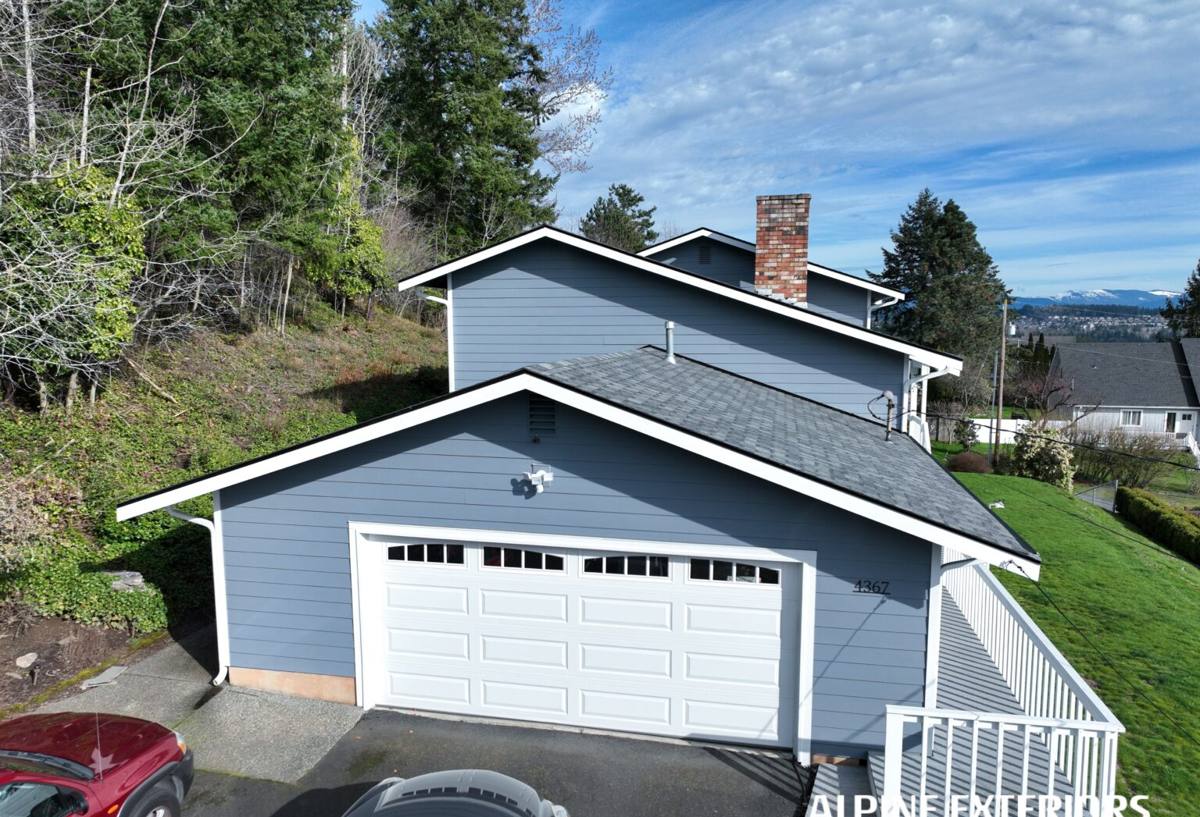
How Salt Air, Rain, and Moss Actually Damage a Roof
Salt Air
Airborne salt accelerates corrosion on anything metal — nail heads, flashing, gutter fasteners, vent caps. Once corrosion starts on a flashing seam, water finds its way underneath long before you'd notice a leak from inside the house. In coastal pockets of Blaine, we see corrosion-related flashing failures well before the shingles themselves are worn out.
Driving Rain
Wind-driven rain doesn't just fall on a roof, it gets pushed sideways and upward under laps, around vents, and into any gap in the flashing. A repair that only addresses the visible shingle damage and ignores the flashing detail underneath tends to leak again in the next windstorm off the water.
Extended Moss Season
Shaded, north-facing slopes and roofs under tree cover stay damp for most of the year here. Moss and algae take root in that moisture, lift shingle edges as they grow, and hold water against the roof deck long after the rain has stopped. Left alone, moss doesn't just look bad — it shortens the life of the roofing material underneath it.
Signs a Blaine Roof Needs Repair
Most roof problems give some warning before they turn into an interior leak. Given our climate, we tell Blaine homeowners to watch for:
- Moss or dark algae streaking on north-facing or shaded slopes
- Granules collecting in gutters or at the base of downspouts
- Curling, cracked, or lifted shingle edges, especially near roof edges and valleys
- Rust staining or visible corrosion around vent pipes, flashing, or exposed fasteners
- Soft or discolored spots on ceilings or in the attic after a heavy rain event
- Daylight visible through the roof deck when viewed from inside the attic
- Gaps or lifted flashing where the roof meets a chimney, wall, or skylight
Catching any of these early is almost always cheaper than waiting for a leak to show up inside the house.
What a Proper Repair Actually Involves
A roof repair done right isn't just swapping out damaged shingles. In a coastal, high-moisture area like Blaine, a repair needs to address the whole system at the damaged area, not just the surface layer.
Diagnosis Before Patching
We start by tracing the actual path water is taking, which is often not directly above where a stain shows up inside. Water can travel along rafters or sheathing for several feet before it drips through drywall, so an honest repair starts with finding the real entry point.
Flashing and Underlayment
Given how much of our damage in this area starts at flashing and seams rather than open shingle field, we treat flashing repair as standard practice around chimneys, skylights, valleys, and wall intersections — not an upsell. Underlayment condition gets checked wherever shingles are pulled, since a compromised underlayment layer will keep leaking even after new shingles go on top.
Matching Materials Correctly
We match shingle type, color, and exposure to what's already on the roof as closely as possible, and we use corrosion-resistant fasteners and flashing appropriate for coastal exposure rather than standard-grade hardware that will rust out again in a few seasons.
Moss and Debris Clearing
Where moss or algae is part of the problem, it gets cleared and treated as part of the repair, not left to keep working under the new material.
Common Blaine Roof Repair Scenarios
| Issue | Typical Cause in Blaine | What the Repair Involves |
|---|---|---|
| Leak at chimney or skylight | Corroded or wind-lifted flashing from salt exposure and driving rain | Remove and replace flashing, check underlayment, reseal properly |
| Granule loss / bald patches | Age combined with constant moisture exposure | Localized shingle replacement, evaluate remaining roof life |
| Moss ridges on shaded slopes | Extended damp season under tree cover | Moss removal, treatment, and repair of any shingles lifted by root growth |
| Rust streaks near vents or fasteners | Coastal salt air corroding exposed metal | Swap in corrosion-resistant hardware and flashing |
| Soft spots on roof deck | Long-term hidden leak, often from a failed seam | Deck repair or replacement of affected sheathing, then correct the source leak |
Our Repair Process
1. Inspection and Honest Assessment
We look at the whole roof, not just the spot you called about, since a leak in one area often points to a broader maintenance issue elsewhere on the same slope.
2. Clear Explanation and Estimate
You get a plain explanation of what's actually wrong, what it will take to fix it correctly, and a written estimate before any work starts. If a repair genuinely isn't the right call — because the roof is past the point where patching makes sense — we'll tell you that too, and explain why.
3. The Repair Itself
Work is done to match your existing roofing material, with attention to flashing, underlayment, and fastener quality appropriate for a marine climate. We clean up debris and old material as we go.
4. Final Check
Before we consider the job done, we verify the repair holds under close inspection — checking seams, flashing laps, and fastening — not just that it looks fine from the ground.
Repair or Replace? What Actually Drives That Decision
Not every damaged roof needs full replacement, and not every roof is a good candidate for another repair. A few honest factors go into that call:
| Factor | Favors Repair | Favors Replacement |
|---|---|---|
| Roof age | Well within expected lifespan for the material | At or near the end of its typical service life |
| Extent of damage | Localized to one or two areas | Widespread granule loss, curling, or multiple leak points |
| Deck condition | Solid sheathing underneath | Soft, rotted, or repeatedly wet decking |
| Repair history | First or second repair on this roof | Roof has needed repeated patching over the years |
| Budget timeline | Need to extend roof life a few more years | Planning to address the roof fully now |
We'll walk you through where your roof lands on this before recommending either path — our goal is the option that actually makes sense for your house, not the bigger invoice.
Why a Crew That Already Works Blaine Matters
Roofing crews that mostly work drier, inland areas don't always account for how much harder salt air and constant moisture work on a roof over time. A crew that's out in Blaine and along the rest of the Whatcom County coastline regularly knows which fastener grades hold up here, which flashing details tend to fail first in this climate, and how aggressive moss growth can get on a shaded roof near the water. That local pattern recognition is what keeps a repair from being a temporary fix.
There's also a practical side: being local means we can typically get out to look at a leak sooner, especially during storm season when driving rain off the water tends to expose weak spots roof-wide, not just in Blaine but across Bellingham and the surrounding county.
After the Repair: Keeping a Blaine Roof Healthy
A good repair lasts longer with a little ongoing attention, especially in a climate that stays damp much of the year:
- Keep gutters and downspouts clear so water isn't backing up under the roof edge
- Trim back overhanging branches to cut down on shade and debris buildup
- Have moss treated before it spreads, rather than after it's covering a slope
- Walk the attic after major windstorms and check for new staining
- Get a roof checked every couple of years even without an obvious problem, since flashing and fastener wear from salt air isn't always visible from the ground
If you're dealing with a leak, moss buildup, or you just want a straight answer on the condition of your roof, we're happy to take a look. We offer free, no-pressure estimates for Blaine homeowners — fill out the form below and we'll get in touch to schedule a time that works.