 Bellingham Roofing
 Roof Replacement in Blaine: A Border Town That's Hard on Roofs
Blaine sits at the northern edge of Whatcom County, right on the water along Semiahmoo Bay and Drayton Harbor, close enough to the Canadian border that the town takes the full brunt of Pacific weather systems coming ashore before they've lost any strength further inland. That position is part of what makes Blaine a distinctive place to live, and it's also exactly why roofs here tend to wear out faster than the same roof would twenty or thirty miles inland. Salt-laden air, rain that gets driven sideways by wind off the water, and a moss season that runs most of the year all add up to real, measurable wear on a roof over time.
This page is specifically about roof replacement in Blaine — not a repair, not a general roofing overview, but what's actually involved in tearing off an aging roof and putting on one that's built to hold up against this exact combination of conditions. If your roof is past the point where another patch makes sense, this is what a correct replacement looks like here.
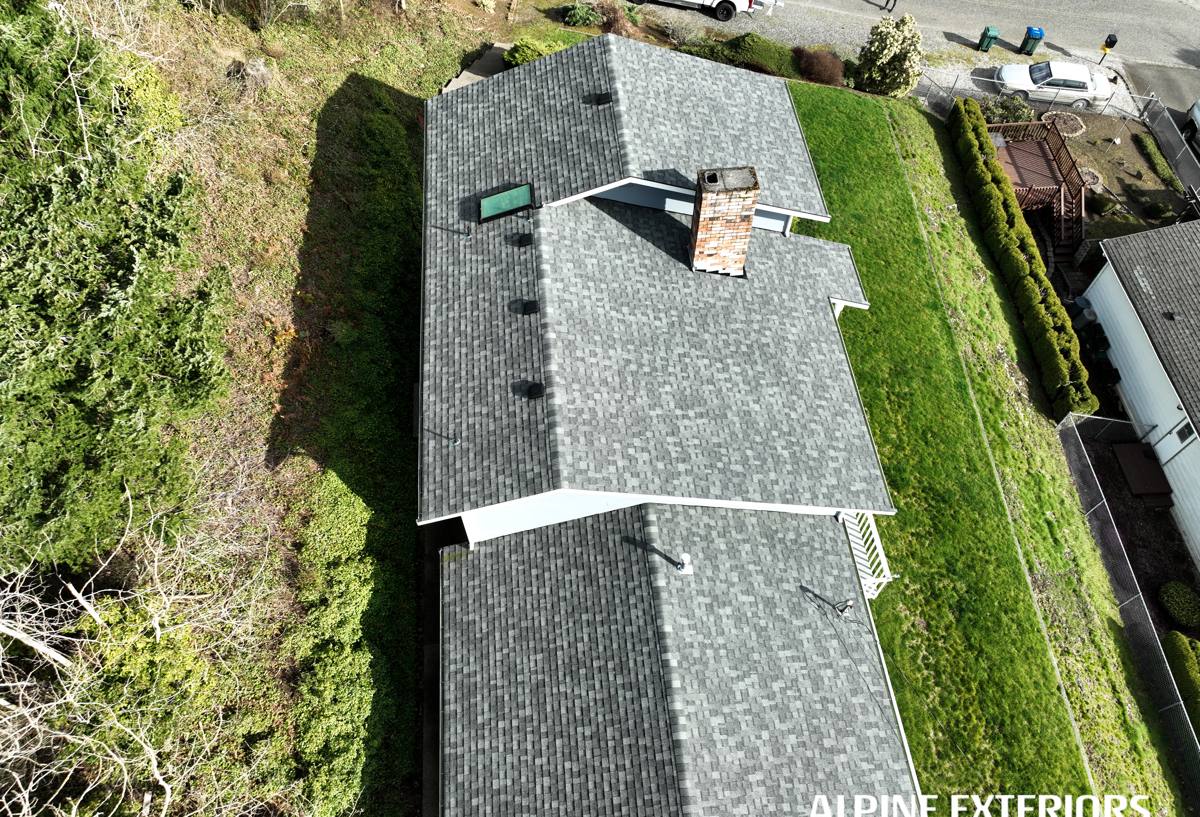
What Blaine's Climate Does to a Roof Over Time
Salt Air and Corrosion
Homes anywhere near Semiahmoo Bay or Drayton Harbor take a steady dose of salt-laden air, and that salt doesn't stay out on the water — it settles on exposed metal, fasteners, and flashing and accelerates corrosion in a way homes further inland simply don't experience. A roofing nail or flashing metal that would last decades in a dry inland climate can start losing strength years early here if it wasn't rated for coastal exposure in the first place. This is one of the biggest reasons a roof replacement done for a Blaine home needs different hardware specs than the same job would need further inland.
Wind-Driven Rain Off the Water
Storms coming off the water rarely just fall straight down. Wind pushes rain sideways and upward, into valleys, under shingle tabs, and around chimney and vent flashing — moisture loads that a roof built only for straight-down rainfall isn't designed to handle. That's a structural detail, not a minor inconvenience: the places wind-driven rain gets in are almost always the same places a poorly detailed roof eventually leaks.
A Long Moss Season
Blaine's mild, damp climate gives moss and algae a growing season that can run nearly year-round on shaded or north-facing roof slopes. Moss does more than look bad — it holds moisture against the roofing material, works under shingle edges, and can lift or loosen roofing if it's left unchecked for a season or two. A roof replacement is the right time to address moss-prone areas properly, rather than fighting the same regrowth year after year on an aging roof.
Signs a Blaine Roof Has Moved Past Repair
Not every roof problem calls for full replacement, and a straightforward leak on an otherwise sound roof is usually still a repair. But certain signs point toward replacement being the more honest recommendation:
- The roof is at or past its material's rated lifespan, especially if it's original to the house
- Moss or algae keeps returning to the same areas within a year or two of cleaning
- Multiple prior repairs haven't resolved recurring leaks in different spots
- Granule loss is heavy enough that bare shingle mat is visible in places
- Decking feels soft, springy, or shows staining when viewed from the attic
- Shingles are curling, cupping, or cracking across large sections rather than isolated spots
- Flashing at valleys, chimneys, or wall transitions is rusted, lifted, or missing sealant in multiple places
One or two of these on their own might still be a repair situation. Several together, especially on a roof already near the end of its expected life, usually mean a replacement is the more cost-effective path — another round of patchwork on a failing roof tends to cost real money without buying much additional time.
What a Correct Roof Replacement Actually Involves
Full Tear-Off and Deck Inspection
A proper replacement starts with removing the existing roofing down to bare decking, not layering new shingles over old ones. That's the only way to actually inspect the plywood or board decking underneath, which can hide moisture damage around old vent penetrations, valleys, and chimneys for years without any visible sign from inside the house. Any soft or delaminated decking gets replaced before anything new goes on — skipping this step just buries a problem under a new roof instead of fixing it.
Underlayment Built for Wind-Driven Rain
Given how often rain gets pushed sideways and upward off the water here, underlayment choice matters more in Blaine than it would in a calmer inland climate. A full synthetic underlayment, with self-adhered ice-and-water shield at eaves, valleys, and around penetrations, functions as the roof's real second line of defense — the layer that keeps a home dry even if wind-driven moisture gets past the shingle surface.
Flashing Detail Work
Most roof leaks don't start in the open field of the roof — they start at flashing: valleys, chimneys, skylights, and anywhere the roof meets a wall. Getting these details right takes more time on install day than a quick, generic approach, but it's the difference between a roof that stays dry through its full expected life and one that needs a callback within a few winters.
Ventilation
Proper intake and exhaust ventilation lets moisture escape from the attic space instead of getting trapped against the underside of the decking. Poor ventilation is a quiet contributor to premature deck rot and can also feed moss growth from underneath the roofing, not just on the visible surface. A replacement is the right time to correct ventilation that was never adequate to begin with.
Corrosion-Resistant Fasteners and Hardware
Given the salt exposure discussed above, fasteners, flashing metal, and any exposed hardware should be specified for coastal durability, not just whatever meets minimum code. This is a small line-item cost relative to the job as a whole, and it's one of the details that separates a roof built specifically for Blaine from one that was simply installed here using standard inland specs.
Choosing a Roofing Material for a Blaine Home
There's no single right material for every home — the right choice depends on your roof's pitch, how much shade it gets, your budget, and how long you plan to stay in the house. Here's how the common options actually compare given this specific coastal, moss-heavy climate:
| Material | Salt Air & Corrosion | Moss & Moisture Behavior | Typical Lifespan Here |
|---|---|---|---|
| Architectural asphalt shingle | Fine with corrosion-rated fasteners and flashing | Good with algae-resistant granules and proper ventilation | 20-30 years |
| 3-tab asphalt shingle | Same corrosion needs, less overall durability | More prone to early moss buildup at edges | 15-20 years |
| Standing seam metal | Needs coastal-grade coating and fasteners; otherwise excellent once specified correctly | Smooth surface sheds moss and moisture well | 40-60 years |
| Composite/synthetic shingle | Generally resistant; verify manufacturer coastal rating | Low moisture absorption; performance varies by product | 30-50 years depending on product |
Architectural asphalt shingles remain the most common, cost-effective choice for most Blaine homes and handle this climate well when the underlayment and flashing behind them are done correctly. Metal roofing costs more upfront but pays that back over a much longer service life for homeowners planning to stay put. Whatever the material, algae-resistant granule options or copper/zinc ridge strips are worth the modest added cost here, given how long the local moss season runs.
How Our Roof Replacement Process Works
We keep the process straightforward and communicate clearly at every step, because a roof replacement is disruptive enough without added surprises:
- In-person inspection: We walk the roof, check the attic and decking where accessible, and document what we find before quoting anything.
- Written estimate: A detailed, itemized bid covering tear-off, underlayment, flashing, ventilation, material, and disposal — not a one-line total.
- Scheduling with weather in mind: We plan around Blaine's rain patterns and build in reasonable flexibility rather than promising a fixed date that weather is likely to break.
- Tear-off and deck inspection: Old roofing comes off down to bare decking, and any damaged sections are shown to you and priced per sheet before replacement.
- Installation: Underlayment, flashing, ventilation, and roofing material go in following manufacturer spec and the coastal details covered above.
- Final walkthrough and cleanup: A full site cleanup, including a magnetic sweep for stray fasteners, and a walkthrough where we answer any remaining questions before calling the job done.
Permits and Working Near the Border
Roof replacements in Blaine typically require a building permit through the city or Whatcom County, depending on the property's location, and a reputable contractor handles that as a routine part of the job rather than an afterthought. Blaine's location right on the border doesn't change the permitting process itself — it's still governed by the same Washington state and local building codes as anywhere else in the county — but it does mean out-of-area crews sometimes pass through after a storm without any real intention of sticking around to handle a permit correctly or stand behind the work later.
Why a Crew That Already Works Blaine Matters
A crew that regularly works roofs in Blaine has already seen how salt air corrodes cheap hardware, how wind off the water finds gaps in undersized flashing, and which roof orientations in town hold moss longest through the wet months. That's the kind of knowledge that shows up in small decisions on install day — how much ice-and-water shield a given valley actually needs, which fastener grade is worth the extra cost, how to detail flashing around a chimney facing the prevailing wind — decisions that a contractor unfamiliar with this specific coastline is more likely to get wrong the first time. It also means a business that's still around, and still reachable, if a warranty question comes up two or three winters after the job is finished.
Get a Free, No-Pressure Estimate
If your Blaine roof is showing its age, or you just want an honest opinion on whether repair or replacement makes more sense, we're glad to take a look and walk you through exactly what we find. Use the form below to schedule a free, no-pressure estimate — no upsell script, just a straightforward read on what your roof actually needs.