 Bellingham Roofing
 Composite Decking Built for Lynden's Wet Season
Lynden sits in the heart of Whatcom County's farmland, but the same weather pattern that soaks the rest of the county — long stretches of drizzle, low winter sun, and moss that seems to grow on anything left alone for more than a season — reaches Lynden just as hard as it reaches Bellingham. A deck built here spends more months of the year damp than dry. That single fact should drive almost every decision on a composite decking project: board selection, substructure spacing, fastener choice, and how the deck sheds water underneath, not just on top.
We install composite decking across Whatcom County, and Lynden jobs come with their own set of considerations — larger lots, more mature trees and shade cover, and homes set back from the road with room for bigger deck footprints than you'd typically see closer to the water. Bigger decks mean more linear feet of framing exposed to moisture, more seams, and more opportunity for a shortcut to show up as a problem five years down the road.
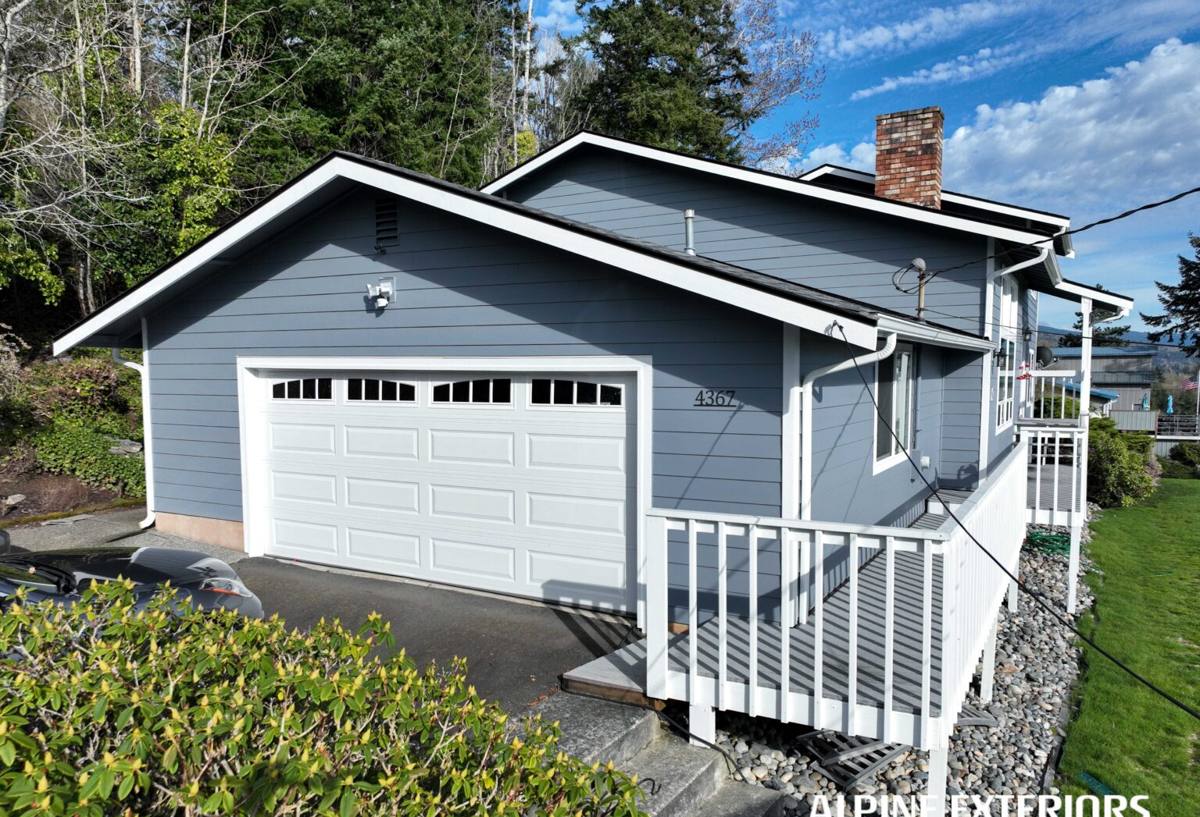
What Lynden's Climate Actually Does to a Deck
It's worth being specific about what "wet climate" means for a deck's lifespan, because it's rarely the rain itself that causes damage — it's what happens after the rain.
- Driving rain gets pushed sideways by wind and finds its way into any gap in flashing, fascia, or ledger connections, not just flat horizontal surfaces.
- Slow drying time means wood framing, fasteners, and even composite board edges stay damp longer between rain events than they would in a drier climate — this is what accelerates rot in hidden framing and corrosion in cheap hardware.
- Moss and algae take hold anywhere moisture sits and sunlight is limited, which describes most north-facing decks and anything under tree cover — common on the larger, more wooded Lynden lots.
- Freeze-thaw swings, while milder here than inland Washington, still happen enough winters to stress fasteners and joints that weren't installed with expansion room.
None of this is unique to composite decking — it's true of any deck material. But it's the reason a composite deck installed without attention to drainage and airflow underneath can still develop problems, even though the boards themselves are engineered to resist rot.
Why Composite Decking Makes Sense for This Climate
Composite decking earns its keep in a climate like ours because the board itself doesn't absorb water the way wood does, doesn't need annual staining or sealing, and resists the surface mildew that wood decks pick up during our long wet stretch. That's a real advantage for Lynden homeowners who want a deck they can actually use without a spring refinishing project every year.
That said, composite isn't a material you can install carelessly and expect to outperform wood. The board is only as good as what's underneath it. A composite deck built on undersized framing, tight-butted boards with no expansion gap, or joists sitting directly on wet ground will still trap moisture, still grow moss in shaded spots, and still fail at the framing level even if the decking surface looks fine. We treat the composite board as one part of a system — framing, ventilation, fasteners, and drainage all have to work together for the material's low-maintenance promise to actually hold up here.
Where Composite Falls Short of a Perfect Fix
We'll say this plainly rather than let a homeowner find out the hard way: composite boards can still grow surface algae or moss in deeply shaded, poorly ventilated areas, just like any other decking surface exposed to standing moisture and low light. It resists it far better than wood, and it cleans off far more easily, but "low-maintenance" doesn't mean "no maintenance." We'll tell you honestly during the estimate if a shaded section of your lot is going to need periodic cleaning regardless of material.
What a Correct Installation Involves
Substructure and Framing
The framing is where most deck problems actually start, composite or not. In our climate, that means joist spacing tight enough to prevent board flex under wet-season swelling, pressure-treated or naturally durable framing lumber, and joist tape or flashing on top of the joists to keep fasteners from sitting in a wet pocket where the board meets the frame.
Drainage and Ground Clearance
Low-clearance decks are common on older Lynden properties, and low clearance is exactly where moss and standing moisture become a long-term problem. We grade and address drainage under the deck itself where clearance allows, rather than just building on top of whatever grade is already there.
Fastening
Hidden fastener systems keep the deck surface clean and reduce the number of penetration points where water can enter a board, but they have to be rated and installed correctly for the specific composite product — mixing systems or using the wrong clip spacing is a common cause of boards that squeak, shift, or gap unevenly after a wet winter.
Ventilation
Airflow underneath the deck is what lets framing actually dry out between rain events. Skirting, planter boxes, or low decks built without vent gaps look finished on installation day but can trap moisture against the framing for the rest of the deck's life. We design skirting and under-deck space with airflow in mind, not just appearance.
Composite Decking Options: A Cost and Material Comparison
Composite decking spans a wide price and performance range. This isn't an exhaustive brand list — it's a general breakdown of the tiers you'll be choosing between, so an estimate makes more sense when you get one.
| Tier | Typical Cost Range (installed, per sq ft) | What You're Paying For | Best Fit |
|---|---|---|---|
| Entry-level capped composite | $$ | Basic moisture resistance, limited color/texture range, shorter warranty | Budget-conscious replacement of an aging wood deck |
| Mid-range capped composite | $$$ | Full-perimeter capping, better fade resistance, wider color and texture options | Most Lynden homeowners wanting long-term, low-upkeep performance |
| Premium composite / PVC blends | $$$$ | Highest scratch and stain resistance, longest warranties, premium finishes | High-visibility decks, larger entertaining spaces, longer ownership horizon |
Cost per square foot only tells part of the story — framing condition, deck height, stair count, and railing style often move the total more than the board tier itself. That's why we walk the actual site rather than quote off square footage alone.
Our Process, From Estimate to Finished Deck
- On-site assessment — we look at existing framing (if replacing a deck), grade, drainage, sun exposure, and how the space will actually be used.
- Material selection — we walk through composite tiers and color/texture options against your budget and the shade/moss exposure specific to your lot.
- Written estimate — clear scope, materials, and pricing before any work starts, no vague allowances.
- Framing and structural work — including any footing, ledger, or joist work needed to meet current code and handle our wet-season loads.
- Decking, railing, and fascia installation — fastened and spaced correctly for the specific product's expansion behavior.
- Final walkthrough — we cover basic care specific to your deck's sun and shade exposure before we consider the job done.
Maintenance: What to Actually Expect
Composite decking cuts maintenance dramatically compared to wood, but a realistic picture matters more than a sales pitch. In this climate, plan on:
- An annual rinse and light scrub, especially on shaded sections, to keep pollen, moss spores, and organic debris from building up on the surface.
- Clearing leaves and debris out of gaps between boards before fall rains set in — trapped organic matter is what actually feeds moss growth on composite surfaces.
- Checking that skirting or under-deck storage hasn't blocked ventilation gaps over time.
- No staining, sealing, or sanding — that's the trade-off composite is built to eliminate.
Why Hire a Crew That Already Works in Lynden
Deck framing that works fine in a drier inland climate isn't necessarily sized or ventilated correctly for a Whatcom County wet season. A crew that installs decks across Bellingham and the surrounding communities, including Lynden, already knows which framing details hold up here and which ones show up as callbacks two winters later. That local pattern recognition — how a specific lot's shade, drainage, and exposure will behave through a Pacific Northwest winter — is something you can't get from a general contractor working from a national installation manual alone.
It also means someone who understands local permitting requirements for deck footings, guardrail height, and stair code in Whatcom County, so the project doesn't stall waiting on a correction after the fact.
Questions Worth Asking Before You Hire
- Will you inspect and, if needed, replace framing — not just the decking surface?
- What fastener system are you using, and is it rated for this specific composite product?
- How will you handle drainage and ventilation given my lot's grade and shade?
- What's actually covered under the manufacturer's warranty versus your workmanship warranty?
- Can you provide a written estimate with materials and scope spelled out, not a rough verbal number?
If you're weighing a new composite deck or replacing a tired wood one, we're happy to walk the property, look at your framing and drainage, and put together a straightforward, no-pressure estimate. Use the form below to get started.