 Bellingham Roofing
 Building Decks for Cordata's Particular Climate
Cordata sits in north Bellingham, close enough to the water and the marine air pattern that moves through Whatcom County to feel its effects year-round, even on a project as simple as a backyard deck. Between the driving rain off the Strait, the salt-tinged air, and a moss season that can stretch from October well into spring, a deck here takes a different kind of beating than one built in a drier inland climate. We've framed and finished enough decks in this part of Bellingham to know which details actually matter and which are just extra cost with no real payoff.
This page is about one job in one place: custom deck construction for homes in and around Cordata. Not a national franchise checklist, not a generic "we build decks" pitch — the specific choices that make a deck last through a Whatcom County winter instead of fighting it every year.
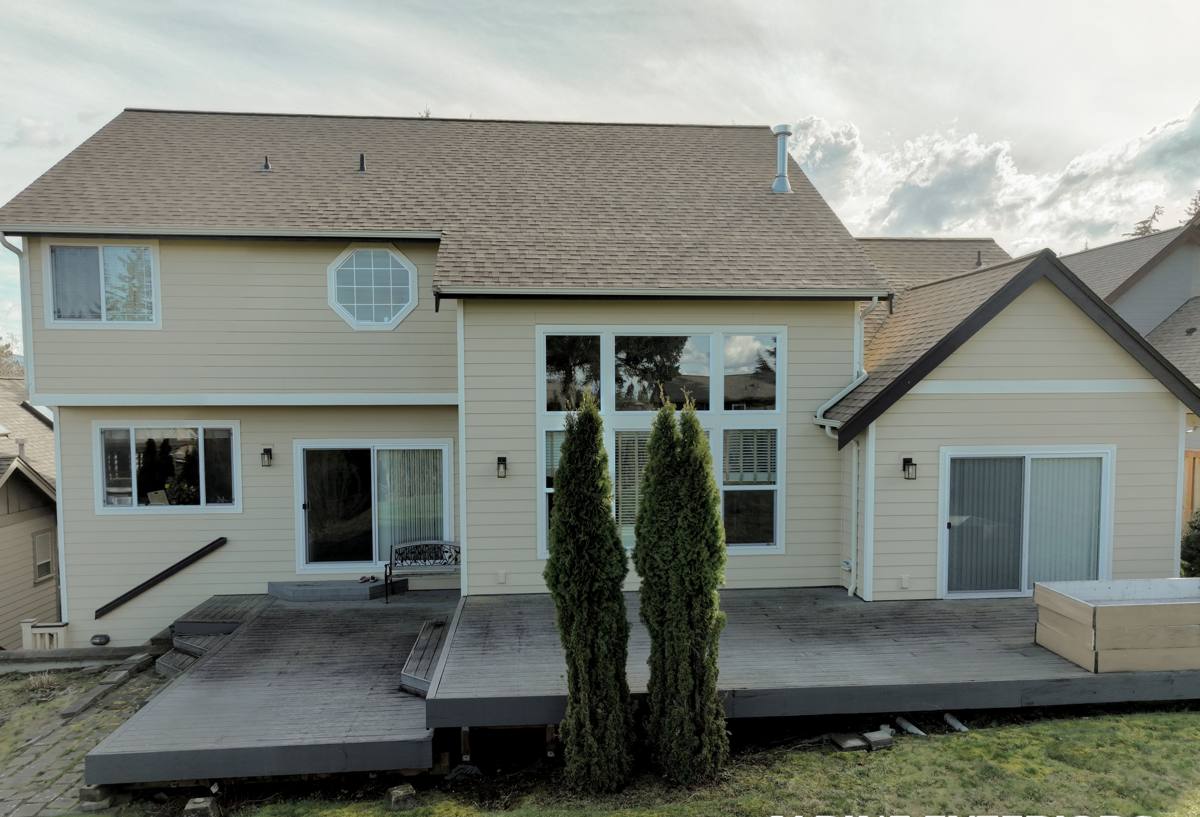
What Cordata's Weather Actually Does to a Deck
It helps to be specific about the failure points we see, because they shape almost every decision in the build:
- Constant dampness keeps wood decking and framing wet longer than a moisture meter would suggest, which is exactly the condition rot fungi need to take hold.
- Moss and algae establish on any horizontal surface that stays shaded and damp — deck boards, especially on the north or east side of a house, are a prime target.
- Salt-carrying air accelerates corrosion on fasteners, hardware, and lower-grade metal connectors, which is why fastener choice matters more here than in a dry climate.
- Freeze-thaw cycles, while milder than inland Washington, still stress footings and ledger connections over a wet winter.
None of this means a deck in Cordata can't last decades — it means the build has to account for these conditions from the footings up, not just at the surface.
What a Correctly Built Deck Requires Here
Ledger Board and House Connection
The ledger board — where the deck attaches to the house — is the single most common failure point on older Northwest decks, because it's the hardest place for water to escape once it gets behind the siding. A correct install uses proper flashing that directs water out and away from the wall assembly, not just a bead of sealant behind the board. We also verify the connection is through-bolted into solid framing, not just lag-screwed into sheathing, since that connection is carrying real structural load in a house full of people during a gathering.
Footings Sized for Local Soil
Whatcom County soil holds water longer than it does in drier regions, which affects how footings are sized and set. We dig to the depth and bearing the local building department requires and don't shortcut footing count to save a day of labor — under-built footings are one of the more expensive mistakes to fix later, since it means pulling up decking to get at them.
Joist Protection
Untreated cut ends and joist tops are where rot starts on a wood-framed deck. We tape joist tops and seal cut ends before decking goes down. It's a small material cost that meaningfully extends the life of the frame underneath, especially given how long joists stay damp here compared to a drier climate.
Fasteners and Hardware
In a coastal-influenced climate, hardware quality is not the place to save money. We use corrosion-resistant, code-rated structural connectors and fasteners rated for exterior and ground-contact use — standard interior-grade screws and brackets corrode faster here and can fail well before the decking itself wears out.
Choosing Decking Material for a Cordata Home
There's no single right answer for every house — it depends on budget, how much maintenance you want to do, and how the deck will be used. Here's how the common options actually compare under our climate conditions:
| Material | Moss/Moisture Behavior | Maintenance | Typical Lifespan |
|---|---|---|---|
| Pressure-treated wood | Absorbs moisture readily; needs sealing to resist moss and rot | Annual cleaning, re-sealing every 2-3 years | 15-20 years with upkeep |
| Cedar | Naturally rot-resistant but still needs upkeep in wet climates | Regular cleaning and periodic finishing | 20-25 years with upkeep |
| Composite decking | Sheds surface moisture well; can still grow surface moss/algae if not cleaned | Periodic washing, no sealing or staining | 25-30+ years |
| PVC/capped composite | Best moisture and moss resistance of the common options | Occasional washing only | 25-30+ years |
We install both quality wood and composite/PVC systems and will tell you honestly which fits your budget and how much upkeep you're realistically willing to do. A wood deck maintained on schedule can look great for decades; a wood deck that gets ignored through a few wet winters will show it fast in this climate. That trade-off is worth being upfront about before you decide, not after.
Hidden Fasteners vs. Face-Screwed Boards
Hidden fastener systems give a cleaner look and eliminate screw heads where water and debris can collect, which matters in a moss-prone climate. They cost a bit more in labor and hardware but reduce the surface points where moisture sits. Face-screwing is more budget-friendly and easier to repair board-by-board down the line. We'll walk through both options based on your deck's use and budget rather than defaulting to one.
Structure, Permits, and Code in Bellingham
Most custom decks of meaningful size require a permit from the City of Bellingham or Whatcom County, depending on where the property sits relative to city limits. Permitting covers footing depth and spacing, guardrail height and baluster spacing, stair geometry, and the ledger connection — all things an inspector will actually check. We handle the permit submission and coordinate inspections as part of the build, so you're not the one tracking down paperwork or scheduling inspection visits.
Guardrails and stair railings in particular get missed or under-built on DIY and low-bid jobs. Correct baluster spacing and rail height aren't optional details — they're safety requirements, and they're one of the first things an inspector checks.
Our Process for a Cordata Deck Build
- On-site assessment — we look at the existing structure (if replacing a deck), grade, drainage, and how the space is used before recommending anything.
- Design and material selection — layout, decking material, railing style, and any features like built-in seating or multi-level design, matched to your budget.
- Permit submission — we prepare and submit the permit package and schedule required inspections.
- Demolition (if applicable) — old decking and framing removed and hauled off, with an eye out for hidden rot or damage before it's covered back up.
- Framing and footings — footings poured to required depth, ledger properly flashed, joists protected before decking goes on.
- Decking, railing, and finish work — final surface, railing installation, and any trim or skirting.
- Final walkthrough — we go over the finished deck with you, including basic maintenance guidance specific to the material you chose.
Living With a Deck in a Moss-Prone Climate
Even a well-built deck needs some seasonal attention here. A short annual routine keeps most problems from ever starting:
- Sweep debris off the decking regularly, especially in fall — trapped leaves hold moisture and feed moss growth.
- Clean the deck surface at least once a year with a wash appropriate for the material (wood vs. composite/PVC require different cleaners).
- Check the ledger flashing and the area where the deck meets the house for any signs of water staining or soft wood.
- Inspect fasteners and hardware for corrosion, particularly on older or lower-grade connectors.
- Re-seal or stain wood decking on the schedule appropriate to the product — don't wait until it looks bad, since by then the wood has already been absorbing water unprotected.
- Keep gutters and downspouts near the deck clear so runoff isn't dumping directly onto or under the structure.
Cost Factors on a Cordata Deck Project
Every deck is different, but the same variables tend to move the price the most. Rough, honest ranges depend heavily on size, material, and site conditions — this is meant to help you think through the decision, not serve as a quote.
| Factor | Lower Cost Direction | Higher Cost Direction |
|---|---|---|
| Decking material | Pressure-treated wood | PVC/capped composite |
| Height off grade | Low, single-level deck | Elevated or multi-level with stairs |
| Site access | Easy equipment/material access | Difficult access requiring hand-carrying materials |
| Railing style | Standard wood or metal baluster rail | Cable rail or glass panel systems |
| Existing structure | New build on clear ground | Full removal of failing old deck first |
Why a Crew That Already Works in Cordata Matters
A contractor who already builds regularly in this part of Bellingham isn't guessing at frost depth requirements, permit expectations, or which decking products actually hold up through a Whatcom County winter — they've already worked through those questions on other homes nearby. That familiarity shows up in small ways: knowing which inspectors want to see what, having a realistic sense of how the site drainage in this area behaves, and not treating moss and moisture as an afterthought instead of a design input from day one.
It also means a shorter learning curve on your project specifically. We're not relearning local permit requirements or discovering the climate's effect on materials mid-build — that groundwork is already done, which keeps the project moving and reduces surprises.
Get a Straight Answer on Your Deck Project
If you're planning a new deck or replacing one that's showing its age, we're happy to come take a look and give you an honest read on what your home needs — no pressure, no upsell. Use the form below to request a free estimate, and we'll walk the site with you and talk through material options that make sense for your budget and this climate.