 Bellingham Roofing
 Siding Installation Built for Cordata's Growing Neighborhoods
Cordata sits in north Bellingham, a mix of newer subdivisions, multi-family developments, and older homes that predate the area's growth. That mix means siding problems here show up differently depending on when a house was built and how it sits on its lot. Newer construction often carries builder-grade vinyl or OSB-based siding chosen to hit a price point, not to last three decades in Whatcom County weather. Older homes may be on their second or third siding job already. Either way, the siding on a Cordata home has to deal with the same three things year after year: salt-tinged air moving inland from Bellingham Bay, long stretches of driving rain, and a moss season that can stretch from October well into spring on shaded, north-facing walls.
This page focuses on one service, in one place: installing James Hardie fiber cement siding on homes in Cordata. Not a general overview of siding options, not a citywide pitch — just what it actually takes to do this job right on a Cordata property, and why the installation details matter as much as the material itself.
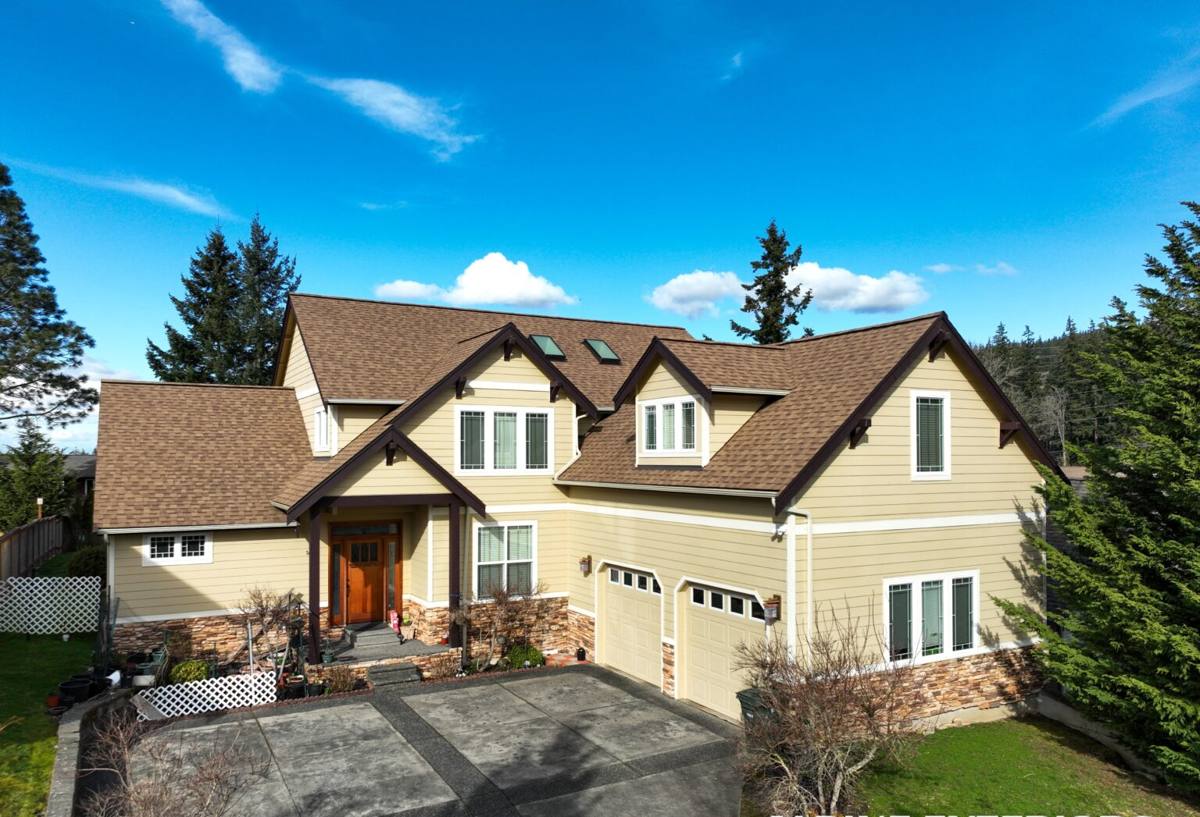
What Cordata's Climate Actually Does to Siding
Salt Air and Metal Fatigue
Bellingham Bay is close enough that airborne salt reaches inland neighborhoods, including Cordata, especially during winter storm systems that push moist air off the water. Salt-laden moisture accelerates corrosion on exposed fasteners, flashing, and any siding component with a metal core or coating. Vinyl siding doesn't corrode, but the nails, trim coil, and flashing behind and around it do — and once that hardware fails, water finds a way behind the cladding regardless of what the surface material is.
Driving Rain and Wind-Driven Moisture
Whatcom County storms rarely come straight down. Wind off the Salish Sea drives rain sideways into wall assemblies, which is a very different load than a vertical downpour. Siding systems and installation details that work fine in drier climates — minimal flashing, tight-butted seams, no drainage gap — let wind-driven rain track behind the cladding here. Once moisture is behind the siding, sheathing and framing take the damage long before anyone notices a problem from the street.
Moss Season
Cordata's tree cover and the region's short winter daylight hours mean many walls — particularly north- and east-facing elevations — stay damp for months without direct sun to dry them out. That's exactly the environment moss and algae need to take hold. Moss on a wall isn't just cosmetic; it holds moisture against the surface, which is a much bigger problem for materials that swell, rot, or delaminate than it is for something dimensionally stable.
Why This Matters More in Cordata Than It Might Elsewhere
A lot of siding failure isn't really a "bad product" problem — it's a mismatch between the material, the installation, and the actual climate load on that wall. Cordata's combination of salt exposure, wind-driven rain, and long damp shade seasons is a tougher environment than a lot of siding products were designed or installed for. Homes on the shadier, tree-lined lots common in parts of Cordata see moss and moisture retention that sunnier southern-exposure homes in the same city don't have to deal with nearly as much. That's why we look at each wall's actual sun and wind exposure before we talk about product or installation details — a north wall backed by mature trees needs a different level of care than a south wall in the open.
Why We Only Install James Hardie Fiber Cement
We standardized on James Hardie fiber cement siding for every installation we do, including in Cordata, for a specific set of reasons that hold up under this region's conditions:
- Non-combustible core: fiber cement doesn't feed a fire the way wood-based products can, which matters given regional wildfire smoke and ember exposure in recent dry summers.
- Dimensionally stable: it doesn't swell, cup, or rot the way engineered wood siding can when it stays damp for extended periods — a real factor during Cordata's moss season.
- ColorPlus factory finish: a baked-on finish that resists fading and chipping far better than field-applied paint, and it's warranted separately from the substrate.
- Climate-engineered HZ product lines: Hardie manufactures different formulations for different climate zones, so the material specified for our region is built for sustained moisture exposure, not just general use.
- Strong transferable warranty: coverage that holds value if the home changes hands, which matters in an area with as much residential turnover as Cordata has seen in recent years.
We don't install LP SmartSide, vinyl, Cemplank, Allura, primed spruce, or cedar. Each of those has legitimate uses and each has real trade-offs — moisture sensitivity, maintenance burden, installation tolerances, or warranty structure — that we're not willing to install and then be responsible for servicing on a home in this climate. Hardie fiber cement is what we've settled on as the product we can stand behind for the long term.
What a Correct James Hardie Installation Involves
The material is only half the equation. Most siding failures we get called out to investigate — regardless of brand — trace back to installation shortcuts, not the product itself. On every Cordata job, correct installation means:
Drainage Plane and Rain Screen Gap
A weather-resistive barrier goes on first, lapped correctly from the bottom up so water sheds outward, not into the wall. We install furring or a rain screen product behind the siding to create a drainage gap, so any moisture that does get behind the cladding has somewhere to go instead of sitting against the sheathing — critical in a climate where walls can stay damp for days at a time.
Flashing at Every Penetration
Windows, doors, hose bibs, light fixtures, and roof-to-wall intersections all need proper flashing, including kick-out flashing where a roofline meets a wall to divert water away from the siding instead of letting it run down behind it. This is one of the most commonly skipped details in budget installations, and it's one of the first things we check on any home we're re-siding.
Fastening and Joint Treatment
Hardie specifies fastener type, spacing, and placement for a reason — under-fastened or improperly nailed boards can work loose or crack under wind load. Butt joints get treated and sealed per manufacturer spec, not just butted tight and caulked over.
Caulking and Sealant Standards
We use sealants rated for the exposure and movement at each joint, not a single generic caulk everywhere. Sealant failure is a slow, invisible process until it isn't — usually discovered as a water stain months or years later.
Our Process on a Cordata Job
| Stage | What Happens |
|---|---|
| Assessment | On-site walk of every elevation, noting sun/shade exposure, existing moss or moisture staining, and current siding condition |
| Tear-off and inspection | Remove existing siding, inspect sheathing and framing underneath for rot or prior water damage before anything new goes on |
| Repair | Replace any compromised sheathing or framing found — this gets documented and discussed with the homeowner before we proceed |
| Weather barrier and drainage plane | Install house wrap and rain screen furring, properly lapped and taped |
| Flashing | Install or replace flashing at all windows, doors, and roof-wall intersections |
| Hardie installation | Install siding, trim, and fascia per manufacturer fastening and clearance specs |
| Final detailing | Caulk, touch-up paint on cut edges, final walkthrough with the homeowner |
Signs a Cordata Home Needs New Siding
Some of these are obvious from the street; others take a closer look, especially on shaded elevations.
- Moss or dark streaking that keeps returning after cleaning
- Soft spots or visible warping, especially on north-facing walls
- Paint that's peeling or bubbling rather than just fading
- Visible gaps at trim, corners, or window edges
- A musty smell near exterior walls inside the home
- Siding that's original to a home built more than 20-25 years ago
- Previous patch repairs that don't match the surrounding material or color
Cost Factors for a Cordata Siding Installation
Every home is different, but the variables that move the price on a Cordata job are consistent:
| Factor | Why It Matters |
|---|---|
| Home size and wall complexity | More corners, gables, and dormers mean more cutting, flashing, and labor time |
| Existing sheathing condition | Rot or water damage found during tear-off adds repair work before new siding goes on |
| Siding profile and trim selection | Lap width, trim style, and accessory choices affect material cost |
| Access and lot conditions | Tree cover, slope, and tight side yards common in parts of Cordata can affect staging and labor |
| Tear-off vs. new construction | Removing and disposing of old siding adds a labor step that new builds skip |
We give a firm, itemized quote after the on-site assessment — not a phone estimate — because the sheathing condition and flashing needs aren't knowable until we can see the walls and, in most cases, get behind the existing siding.
Why a Crew That Already Works Cordata Makes a Difference
A contractor who's worked multiple homes in this specific neighborhood already knows which elevations tend to hold moss, how the local permitting process runs through the City of Bellingham or Whatcom County depending on the property, and what HOA or covenant requirements apply in some of Cordata's newer developments. That's not a substitute for a proper on-site assessment of your home, but it does mean fewer surprises and a crew that isn't learning the area's quirks on your project.
If your Cordata home's siding is showing moss, staining, soft spots, or is simply original and aging out, we'll walk every elevation with you, tell you honestly what we find, and put together a clear quote for James Hardie fiber cement installation done to spec for this climate. Reach out for a free, no-pressure estimate using the form below.