 Bellingham Roofing
 Siding Replacement in Cordata: Built for This Corner of Whatcom County
Cordata sits on the north side of Bellingham, close enough to the water and the marine weather patterns that roll in off Bellingham Bay to feel every bit of what Whatcom County winters bring. Homes here deal with a steady mix of salt-tinged air, driving horizontal rain, and long stretches of shade and dampness that keep moss and algae active for most of the year. Siding in this neighborhood isn't decorative — it's the first line of defense between that weather and the framing underneath it, and it needs to be treated that way.
We work on homes throughout Cordata and the surrounding Bellingham area, and the siding failures we get called out for follow a pattern: moisture that got behind the cladding, paint that couldn't keep up with the freeze-thaw and moss cycle, or a product that simply wasn't engineered for this climate in the first place. A correct siding replacement addresses all three, not just the surface appearance.
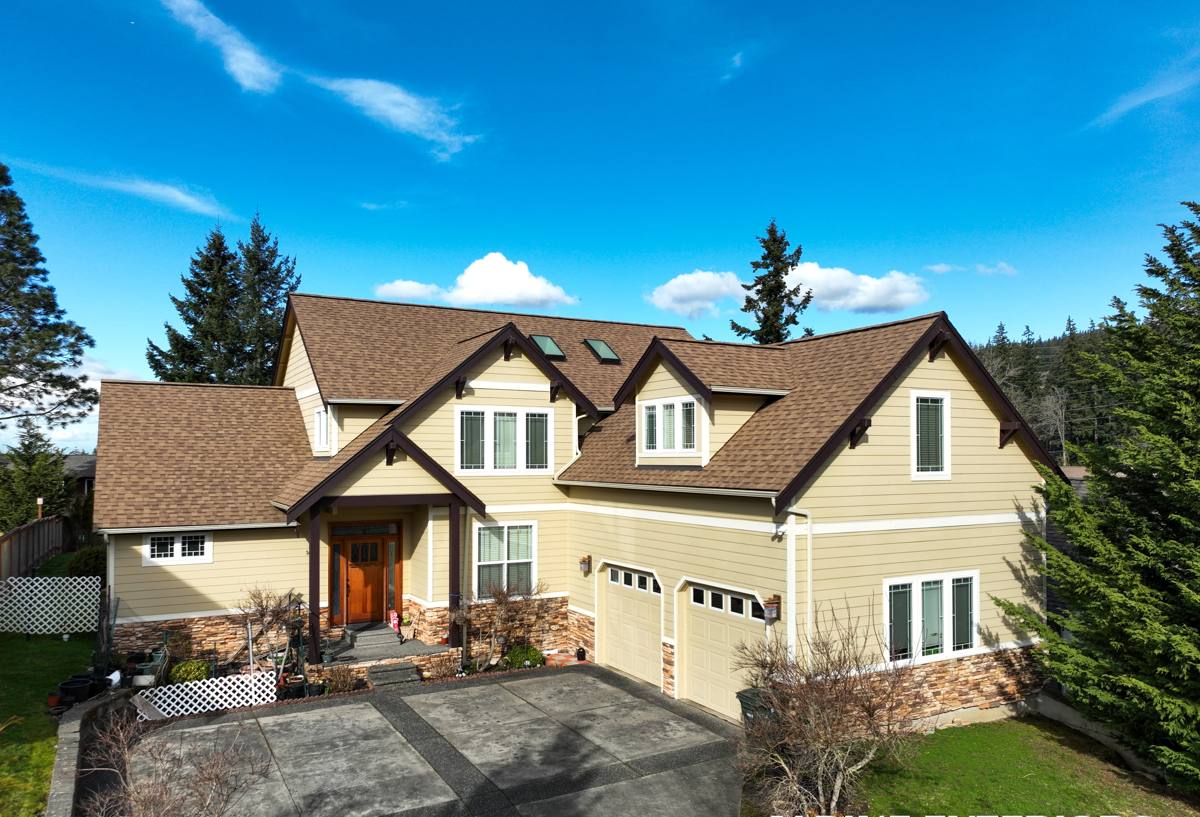
What Cordata's Climate Actually Does to Siding
Salt Air and Moisture Load
Proximity to Bellingham Bay means homes in Cordata carry a light but constant salt content in the air, especially on west- and south-facing walls. Combined with regular rain, that salt load accelerates the breakdown of paint films and finishes that aren't formulated to resist it, and it's harder on fasteners and trim that aren't corrosion-resistant.
Driving Rain and Wind-Driven Exposure
Bellingham storms rarely come straight down. Wind-driven rain pushes water sideways into seams, laps, and butt joints — the exact places where a siding system either sheds water correctly or lets it find a way behind the cladding. Flashing details and lap technique matter more here than in a calmer climate.
Moss Season
Cordata's tree cover and the region's long, cool, damp stretches from fall through spring create ideal conditions for moss and algae growth on north-facing and shaded walls. Materials that hold moisture at the surface stay damp longer, which feeds that growth and, over years, degrades paint and the substrate underneath it.
Why We Install Only James Hardie Fiber Cement
We made a decision as a company to install James Hardie fiber cement siding exclusively — not vinyl, not LP SmartSide, not Cemplank or Allura, not primed spruce or cedar. That's not a marketing position, it's a response to what we've seen hold up in this exact climate versus what struggles.
Fiber cement is non-combustible and dimensionally stable, meaning it doesn't expand and contract with moisture the way wood-based or engineered-wood products can. James Hardie's HZ5 product line is specifically engineered for climates like ours — cold, wet, and humid for long stretches of the year — and the factory-applied ColorPlus finish is baked on and warrantied against the fading and peeling that field-applied paint struggles with under constant UV and moisture cycling.
We're not going to pretend other products don't have their own merits — vinyl is inexpensive and low-maintenance in mild climates, engineered wood siding can look great when it's new, and cedar has a natural appeal that some homeowners genuinely prefer. But when we weigh installation sensitivity, long-term moisture behavior, and how a product ages against Bellingham's specific weather, Hardie is what we're willing to put our name behind and warranty.
What a Correct Siding Replacement Involves
Tearing off old siding and nailing up new panels is the easy part. The work that actually determines whether a siding job lasts happens underneath it.
- Full removal of old siding and inspection of the sheathing for rot, soft spots, or prior water damage
- Repair or replacement of any compromised sheathing before new material goes up
- Installation of a weather-resistive barrier suited to our rain exposure, lapped and taped correctly at every seam
- Proper flashing at windows, doors, and any wall penetrations — the details that stop wind-driven rain from getting behind the cladding
- Correct fastener spacing, type, and depth per James Hardie's installation specifications
- Proper clearance from grade, decks, and roof lines to avoid moisture wicking
- Caulking and sealing only where Hardie's installation guidelines call for it — over-caulking traps moisture rather than shedding it
Skipping any one of these steps is how a siding job looks fine for a year or two and then starts failing at the seams — which is often what we find when we're called in to look at a house with siding that's only a few years old.
Our Process for Cordata Homeowners
1. On-Site Assessment
We walk the exterior with you, look at sun and shade exposure on each wall, check for existing moisture damage, and talk through what's actually driving the need for replacement.
2. Straightforward Estimate
You get a clear scope of work and pricing before anything starts — no vague allowances, no surprise change orders for work that should have been anticipated from the start.
3. Tear-Off and Substrate Repair
Old material comes off, sheathing gets inspected, and any damage gets addressed before anything new goes up. This is the step that gets rushed on cut-rate jobs and it's the one we won't skip.
4. Weather Barrier and Flashing
This is where a job earns its warranty. Correct lapping, taping, and flashing at every penetration is what actually keeps water out, long after the finish coat stops mattering.
5. Hardie Installation
Panels, lap siding, or trim go up to manufacturer spec, with fastening and clearances that protect the transferable warranty James Hardie backs the product with.
6. Final Walkthrough
We go over the finished work with you directly so you know what was done and why.
Comparing Siding Materials for a Climate Like Cordata's
| Material | Moisture Behavior in Wet Climates | Finish Durability | Long-Term Maintenance |
|---|---|---|---|
| James Hardie fiber cement | Dimensionally stable, engineered HZ5 line for wet climates | Factory ColorPlus finish, warrantied against fading/peeling | Occasional wash to manage moss/algae; no repainting cycle in most cases |
| Vinyl | Can warp or buckle with temperature swings; seams are a moisture path | Color molded in but can fade with UV over time | Low, but damage requires panel replacement, not spot repair |
| LP SmartSide / engineered wood | Wood-based core is more moisture-sensitive if seals fail | Field or factory finish, dependent on correct installation | Moderate; edge sealing and caulking need periodic attention |
| Cedar / primed spruce | Natural wood movement; absorbs and releases moisture with weather | Requires ongoing paint or stain maintenance | Highest; regular refinishing needed to prevent rot in a wet climate |
This isn't a claim that every alternative product fails in Bellingham — plenty of homes around Whatcom County have vinyl or wood siding that's been maintained for years. It's a summary of the trade-offs, and why we've standardized on the option that asks the least ongoing maintenance from homeowners while holding up best to what this climate does over decades, not just the first few seasons.
Why Local Experience in Cordata Matters
A crew that's worked houses throughout Cordata and the rest of Bellingham already knows which walls take the worst of the wind-driven rain, where moss builds up fastest, and how the salt air off the bay affects fasteners and trim over time. That's not something you get from a general installation manual — it comes from doing this work repeatedly in this specific climate. It shows up in small decisions: where extra flashing attention goes, which walls need closer inspection for existing rot, and how aggressively to plan for moss management on the shaded sides of a house.
Signs Your Cordata Home May Need Siding Replacement
- Soft or spongy spots when you press on the siding, especially near the bottom courses
- Paint that's peeling, bubbling, or failing faster than a normal repaint cycle
- Persistent moss or algae staining that pressure washing doesn't fully remove
- Visible warping, buckling, or gaps at seams and corners
- Rising energy bills that suggest air and moisture infiltration through the wall assembly
- Interior signs like musty smells or staining on walls that share an exterior wall
Not every one of these means a full replacement is necessary — sometimes it's a repair or a maintenance issue. But they're worth having looked at before they turn into sheathing damage, which is a much bigger and more expensive fix.
Get a Straightforward Look at Your Siding
If your Cordata home is showing wear from the rain, moss, or salt air that comes with living this close to Bellingham Bay, we're glad to come take a look. We'll give you an honest read on what's going on and what a correct James Hardie siding replacement would involve — no pressure, no inflated scope. Use the form below to request a free estimate.