 Bellingham Roofing
 Building Decks That Hold Up in Lynden
Lynden sits inland from Bellingham Bay but still gets the full package of Whatcom County weather: long stretches of steady rain from fall through spring, humid air that never fully dries out the shady side of a house, and a moss season that seems to start earlier every year. A deck built here isn't just an outdoor living space — it's a structure that has to shed water, resist rot, and stay safe underfoot through months of gray, damp weather. Custom deck work in this area means designing and building with that reality in mind from the first measurement, not adding fixes after the first winter shows the problems.
We build custom decks for homeowners in Lynden and the surrounding parts of Whatcom County, and the biggest difference between a deck that lasts and one that doesn't usually comes down to decisions made before the first board goes down: framing layout, flashing, fastener choice, and how the structure handles water that's going to find its way in eventually, no matter what.
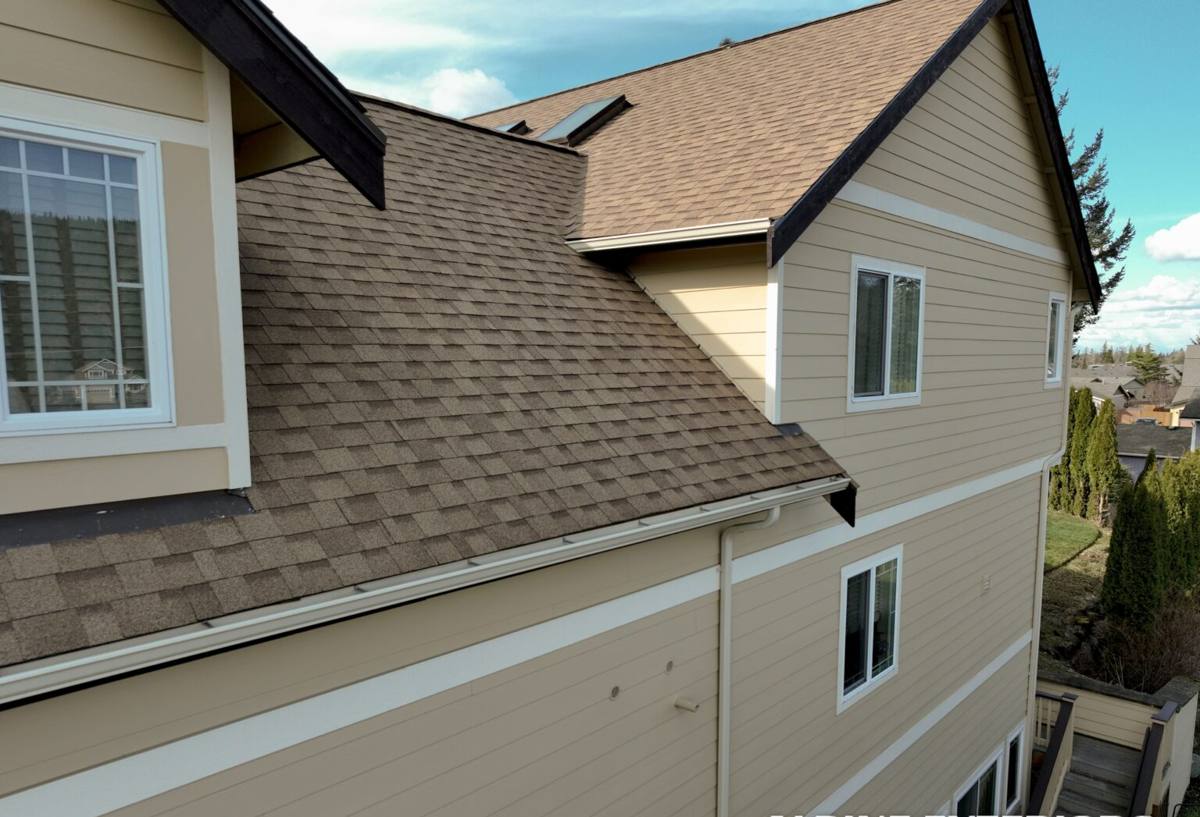
What Lynden's Climate Actually Does to a Deck
It helps to be specific about what "tough climate" means for a deck, rather than just waving at bad weather.
Constant Moisture
Whatcom County doesn't get intense downpours as often as it gets long, slow, saturating rain. That kind of moisture works into end grain, fastener holes, and any spot where two pieces of material meet and don't fully dry between rain events. Over a season, that's where rot and fastener corrosion start.
Moss and Algae
Shaded decks, north-facing decks, and decks under trees stay damp longer, and that's exactly what moss and algae need to take hold. Beyond looking bad, moss holds moisture against the decking surface and turns wood and composite boards alike into a slip hazard when wet.
Salt-Influenced Air
Proximity to the Sound means some fasteners, hardware, and lower-grade metal components corrode faster than they would further inland. It's not as severe as a beachfront property, but it's enough that we don't treat this as an inland-only build.
Freeze-Thaw Cycling
Winters here aren't brutally cold, but temperatures do swing across freezing repeatedly through the season. Water that gets into a crack, joint, or fastener hole and then freezes expands and works that opening wider every cycle.
Decking Material Options for This Area
There's no single "best" decking material — there's a best material for a given budget, look, and how much upkeep a homeowner actually wants to do. Here's how the common choices hold up under Whatcom County conditions.
| Material | Moisture Performance | Moss/Algae Resistance | Maintenance | Typical Lifespan |
|---|---|---|---|---|
| Pressure-treated fir/pine | Good if sealed regularly | Needs cleaning and treatment | Annual cleaning, resealing every 1-2 years | 15-20 years with upkeep |
| Cedar | Naturally decay-resistant | Still needs periodic cleaning | Reseal/stain every 2-3 years | 20-25 years with upkeep |
| Composite decking | Excellent, doesn't absorb water into the board core | Surface can still grow algae/moss if not rinsed | Periodic washing, no staining/sealing | 25-30+ years |
| PVC/capped polymer | Excellent | Surface can still grow algae/moss if not rinsed | Periodic washing | 25-30+ years |
Composite and capped polymer boards have become popular here specifically because they remove wood's biggest weakness in this climate — moisture absorption into the board itself. That said, no decking surface is immune to moss and algae; anything that sits damp in shade will grow something on top of it eventually. The difference is that composite doesn't rot or delaminate from that exposure the way untreated wood can.
We'll walk through real cost and maintenance trade-offs for your specific site — sun exposure, shade, and how the deck will actually be used matter as much as the material spec sheet.
What's Underneath Matters More Than What's On Top
A beautiful deck surface over a poorly built substructure is a problem waiting to surface, usually two or three winters in. This is the part of the job that doesn't show up in photos but determines whether a deck is still solid in fifteen years.
Ledger Board Flashing
Where a deck attaches to the house is the single most common failure point we see on older decks in this region. If the ledger board isn't properly flashed to shed water away from the house's wall assembly, water tracks behind the siding and rots both the ledger and the wall framing behind it — a repair that's far more expensive than doing it right the first time.
Joist Protection
Joist tops take standing water even when the deck surface above sheds it, especially at fastener penetrations. Joist tape or an equivalent protective barrier on top of the joists keeps water from soaking into the end grain and fastener holes where rot starts.
Fastener Grade
Not all deck screws and structural hardware are rated for the moisture and mild salt exposure this area sees. Using corrosion-rated, coated fasteners throughout — not just on the visible decking — is a standard we build to, not an upgrade we charge extra for.
Footings and Drainage
Post footings need to be set below frost depth and positioned so water isn't pooling against them. On sites with clay-heavy or poorly draining soil, which is common around Lynden, we also look at grading around the footings so the deck isn't sitting over standing water after every rain.
Our Custom Deck Process
- On-site assessment. We look at sun/shade exposure, drainage, existing structure (if replacing a deck), and how the space will be used.
- Design and material selection. We talk through layout, railing style, decking material, and any features like built-in seating, stairs, or multi-level design, with honest trade-offs for each option.
- Permitting. We handle the permit process with the appropriate jurisdiction based on your property's location, and build to current code for footings, railings, and guard heights.
- Demolition (if applicable). Old decking, framing, and any rotted structure is removed and hauled off.
- Framing and flashing. This is where the long-term durability of the deck gets decided — proper ledger flashing, joist protection, and correctly rated fasteners throughout.
- Decking, railing, and finish work. Surface material, railing system, stairs, and any trim or skirting go on last.
- Final walkthrough. We go over the finished deck with you, including what maintenance it does and doesn't need going forward.
Permits and Code in Whatcom County
Most new decks and significant deck rebuilds require a building permit, and requirements can vary depending on whether your property falls under the City of Lynden or unincorporated Whatcom County jurisdiction, plus factors like deck height, size, and proximity to property lines. Guardrail height, baluster spacing, and footing depth are all code items that get checked, and skipping the permit process on a deck that requires one can create real problems at resale. We handle this as part of the job rather than leaving it for the homeowner to sort out.
Maintaining a Deck Through Whatcom County Winters
Even the best-built deck needs some seasonal attention in this climate. A little maintenance goes a long way toward avoiding bigger repairs.
- Sweep debris (leaves, needles, seed pods) off the deck regularly — trapped organic matter holds moisture and feeds moss growth
- Rinse or gently pressure-wash the surface at least once or twice a year, especially shaded areas, to knock back algae and moss before it takes hold
- Check gaps between boards periodically to make sure debris isn't blocking drainage
- Inspect ledger board flashing and the area where the deck meets the house for any signs of water staining or soft wood
- Reseal or restain wood decking on the schedule appropriate to the product — don't wait until it's visibly gray and dry
- Look at fasteners and hardware yearly for rust or corrosion, particularly on older builds
- Clear snow promptly if it accumulates, rather than letting it sit and refreeze against the surface
Why Local Experience Matters for This Job
A deck built by a crew that hasn't worked in this climate often looks fine the first year and starts showing problems by the third — moss taking over a shaded corner, a ledger board that was never properly flashed, fasteners rusting through. We build decks around Lynden and greater Bellingham regularly, which means we're not guessing at how a given material or detail performs here; we've seen what holds up through a decade of Whatcom County winters and what doesn't. That experience shapes decisions on materials, flashing, and drainage before the first post hole is dug, not after a callback.
If you're planning a new deck or replacing one that's showing its age, we're happy to take a look and talk through honest options for your property. Reach out for a free, no-pressure estimate using the form below.