 Bellingham Roofing
 Deck Building in Birch Bay's Coastal Climate
Birch Bay sits right on the water in Whatcom County, and that location shapes everything about how a deck should be built there. A deck that would hold up fine a few miles inland can start showing problems within a couple of seasons on the bay — corroding fasteners, soft spots in the framing, slick green boards by November. None of that is bad luck. It's what salt-laden air, wind-driven rain, and a long, damp moss season do to a structure that wasn't built with them in mind.
We build and repair decks throughout the Bellingham area, and Birch Bay projects get treated differently from day one — different fastener specs, different attention to drainage and airflow, different material recommendations. This page covers what actually matters for a deck in this specific environment, not generic deck-building advice.
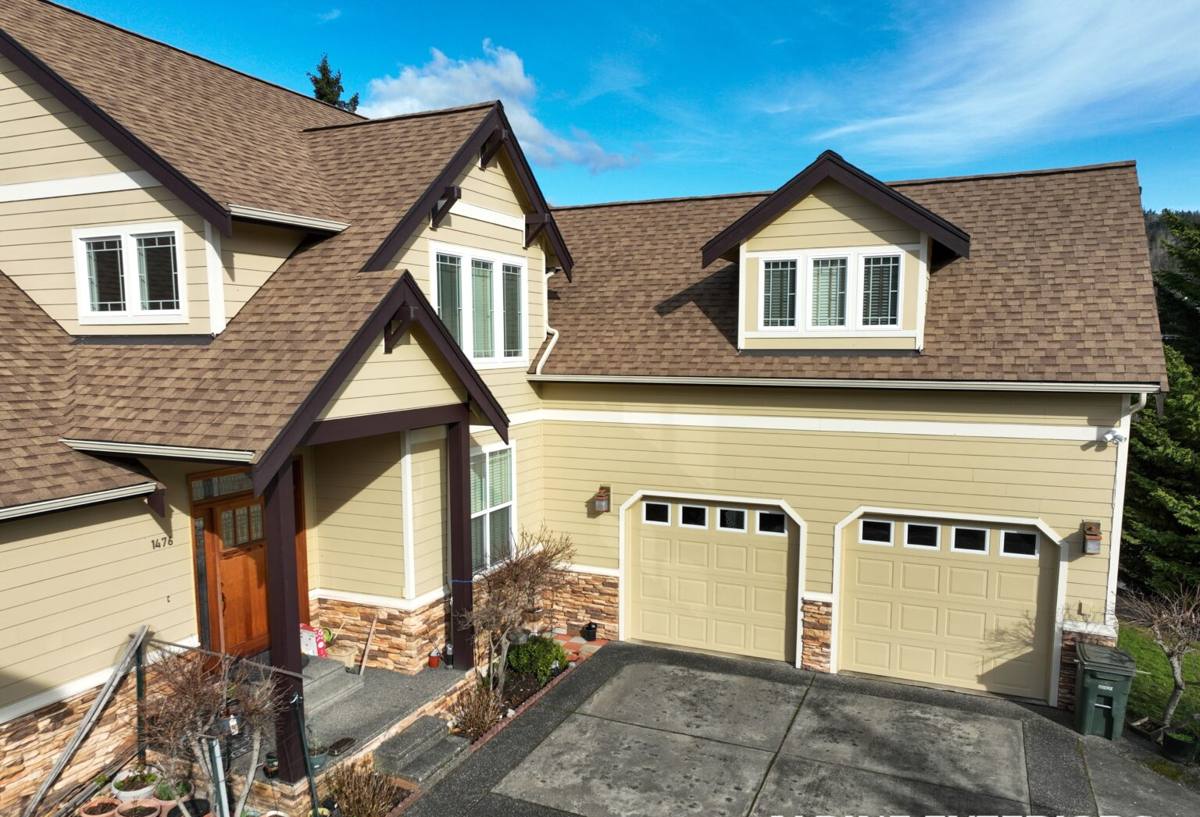
What Salt Air and Driving Rain Actually Do to a Deck
Two forces do most of the damage to decks near Birch Bay, and they work together.
Salt Air and Corrosion
Airborne salt from the bay settles on every exposed surface, including metal. Ordinary galvanized fasteners and connectors that would last decades elsewhere can start corroding within a few years this close to the water. Corrosion doesn't just look bad — a rusted-through joist hanger or ledger bolt is a structural failure waiting to happen, and it's usually hidden underneath the decking where nobody sees it until something gives.
Driving Rain
Storms off the water tend to come in sideways rather than straight down, which means rain gets driven up under rail caps, into end grain, and behind ledger boards in ways that vertical rain doesn't. Wood that's only sealed on its top and bottom faces will still take on water from the sides and ends, and that's where rot typically starts — not on the open, sun-exposed surfaces.
Combine those two things over several winters and you get the classic Birch Bay deck problems: rusted hardware, soft or delaminating framing near the house, and boards that cup or split even though the top surface still looks okay.
Choosing Decking Material for a Bay-Front Property
There's no single "best" decking material — there's a best material for a given budget, maintenance appetite, and exposure. Here's how the common options actually perform in a Birch Bay setting:
| Material | Moisture Behavior | Maintenance | Realistic Lifespan Here |
|---|---|---|---|
| Pressure-treated wood | Absorbs and releases moisture; prone to cupping and checking with repeated wet/dry cycles | Annual cleaning and re-sealing recommended | 10-15 years before major boards need replacing |
| Cedar | Naturally more rot-resistant than treated pine but still absorbs moisture at cuts and fastener holes | Sealing or staining every 1-2 years to hold color and resist checking | 15-20 years with consistent upkeep |
| Capped composite | Sheds water, doesn't absorb moisture into the core, resists cupping | Occasional washing; no sealing or staining | 25+ years, backed by manufacturer warranty |
| Uncapped composite (older generation) | Can absorb some surface moisture and is prone to mold staining in shaded, damp spots | Regular cleaning to prevent surface mold and mildew | 15-20 years |
In a marine environment with a long moss season, we lean toward capped composite for most Birch Bay decks — it doesn't give moss and algae the porous surface they need to take hold, and it doesn't care about salt spray the way wood fibers do. That said, some homeowners want the look and feel of real wood, and cedar built correctly — with good airflow underneath and end grain sealed at every cut — can absolutely hold up. The honest trade-off is maintenance: wood needs a homeowner who will keep up with sealing on schedule, or it will degrade faster here than it would twenty miles inland.
What's Underneath Matters More Than What's On Top
A deck's surface boards get all the attention, but the framing underneath is what determines whether the structure is actually safe and long-lasting. This is where a lot of corners get cut, because it's invisible once the deck is finished.
The Ledger Connection
Where the deck attaches to the house is the single most common failure point on any deck, and it's especially critical here. That connection needs proper flashing to keep water from tracking behind the ledger board and into the house's rim joist. We install ledger flashing that sheds water outward, away from the wall assembly, rather than relying on caulk alone — caulk fails, flashing doesn't.
Footings Sized for the Site
Footing depth and bearing size need to account for the soil conditions and wind exposure of the specific lot, not just a generic minimum. Open, wind-exposed sites near the water can see more lateral load on a deck structure than a sheltered inland yard, and that affects how we brace and anchor the frame.
Airflow Underneath
A deck built low to the ground or over poorly graded soil traps moisture underneath, which speeds up rot in the joists and accelerates moss growth on the underside of the decking. We grade for drainage away from the structure and leave enough clearance for air to actually move through the framing, not just enough to technically meet code.
Hardware and Fasteners: The Detail That Determines Lifespan
This is the single biggest difference between a deck built for Birch Bay and a deck built with standard specs. Fasteners and structural connectors are rated for different exposure levels, and using the wrong rating in a salt-air environment is one of the most common causes of premature deck failure we see.
- Stainless steel fasteners for anything exposed to direct salt spray or standing water — the added upfront cost is small compared to the cost of pulling up decking to replace corroded screws later.
- Hot-dip galvanized or coated structural hardware rated for the exposure category, not just "exterior" — joist hangers, post bases, and ledger bolts all have different corrosion ratings.
- Isolating dissimilar metals where needed, since certain metal-to-metal contact accelerates corrosion in salt air through galvanic reaction.
- Correctly rated post bases that keep post end grain out of standing water, which is both a rot issue and a corrosion issue at the base connector.
None of this is visible in a finished deck photo, which is exactly why it gets skipped by crews trying to hit a low bid. It's also exactly what determines whether a deck is still solid in fifteen years or needs structural repair in five.
Moss, Algae, and Keeping the Surface Safe
Whatcom County's damp, shaded winters grow moss on almost any exterior surface that holds moisture, and decks are no exception — especially decks tucked under trees or on the shaded side of a house near the bay. Moss and algae aren't just cosmetic. A mossy deck surface is genuinely slick and can turn a set of stairs or a rail-less edge into a fall hazard during the wet months.
Design choices that reduce moss buildup:
- Proper board spacing that lets water drain through rather than pool on the surface
- Grooved or ribbed composite profiles that shed water faster than smooth-face boards in shaded areas
- Trimming back overhanging vegetation where practical, so the deck gets some sun and airflow
- Choosing a surface material that doesn't give moss spores a porous place to establish
No deck in this climate will be completely moss-free forever, but the design and material choices above make a real difference in how often it needs attention.
Our Deck Building Process
Every Birch Bay deck we build follows the same sequence, adjusted for the specific lot and exposure:
- On-site assessment — we look at sun exposure, prevailing wind and rain direction, drainage, soil, and how close the site sits to direct salt spray.
- Design and material selection — sized and laid out for how the space will actually be used, with decking and hardware specified for the site's exposure level.
- Permitting — pulling the required permits and meeting Whatcom County building code before any framing goes in.
- Footings and framing — footings sized to the site, ledger flashed and fastened correctly, framing built with corrosion-rated hardware throughout.
- Decking and railing installation — surface material installed with proper gapping for drainage and expansion, railing built to code for height and load.
- Final walkthrough — we go over the finished structure and what maintenance, if any, it will need going forward.
Permits and Local Code Considerations
Decks above a certain height or attached to the house generally require a building permit in Whatcom County, and railing height, guard spacing, and stair requirements are all governed by code — not personal preference. Skipping the permit process might save a little time up front, but it creates real problems at resale, since unpermitted structural work often has to be disclosed and can hold up a sale. We handle the permitting as part of the build so the homeowner isn't left sorting it out later.
Deck Maintenance in a Bay-Front Climate
Even the most durable decking benefits from a bit of seasonal attention here. A simple maintenance rhythm goes a long way toward protecting the investment:
| Task | Frequency | Why It Matters Here |
|---|---|---|
| Sweep debris and standing water off the surface | Monthly through fall/winter | Trapped moisture and leaf litter feed moss growth |
| Inspect ledger flashing and railing connections | Annually | Catches early flashing or connector failure before it becomes a structural issue |
| Wash surface with a deck-safe cleaner | 1-2 times per year | Removes early moss and algae before it establishes |
| Reseal wood decking (if applicable) | Every 1-2 years | Wood loses its water resistance as sealant wears, especially with salt exposure |
| Check underneath for airflow and drainage blockage | Annually | Debris buildup under the deck traps moisture against the framing |
Why a Crew That Already Works Birch Bay Makes a Difference
A lot of deck problems near the water trace back to a crew using standard, inland specs on a coastal site — the wrong fastener rating, a ledger detail that works fine in a dry climate but fails here, decking chosen without accounting for the moss season. We work throughout Bellingham and Whatcom County, and Birch Bay's specific combination of salt exposure, wind-driven rain, and shaded, damp winters is something we plan for from the first site visit rather than treating as an afterthought. That shows up years later as a deck that's still solid, not one that needs hardware replaced or boards pulled up ahead of schedule.
If you're planning a new deck or need an honest look at one that's showing its age, we're happy to come out, take a look, and walk you through the options — no pressure, no obligation. Reach out using the form below to set up a free estimate.