 Bellingham Roofing
 Composite Decking Built for Edgemoor's Climate, Not a Generic Spec Sheet
Edgemoor sits close to the water on the south side of Bellingham, tucked into wooded, hilly lots with heavy tree cover and views out toward the bay. That combination — salt-laden air off the water, shade from mature firs and cedars, and Whatcom County's long wet season — is hard on outdoor structures in ways that a generic decking brochure never covers. A deck built here needs to handle moisture that lingers longer than it would on an open, sunny lot, and it needs hardware and fasteners that won't corrode from the salt air blowing in off Bellingham Bay. This page is about doing that job correctly for this specific neighborhood, not a general pitch for composite decking.
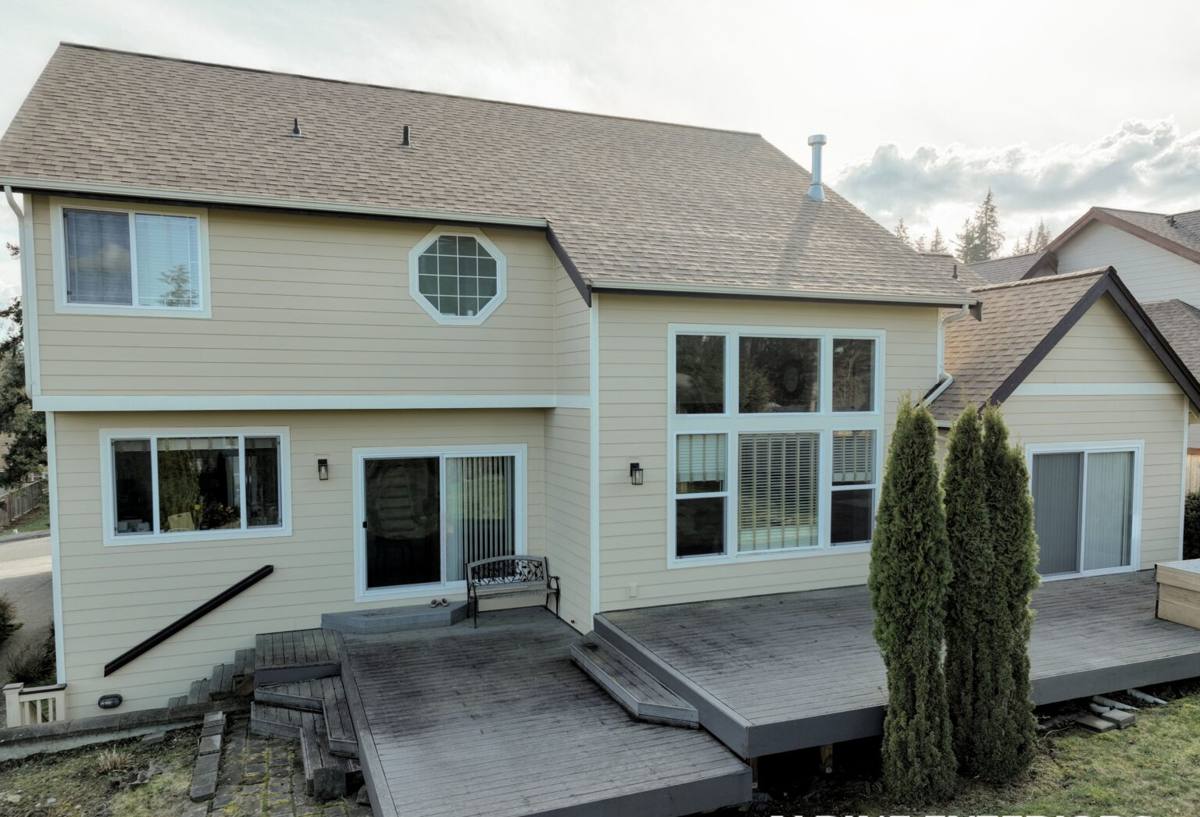
What Bellingham's Marine Climate Does to a Deck
Every material choice on an Edgemoor deck should start with an honest look at what the local environment throws at it year-round.
Salt Air and Fasteners
Proximity to saltwater means airborne salt settles on every exposed surface, including screws, joist hangers, and railing hardware. Standard galvanized fasteners can start showing corrosion years before they should. On a deck this close to the water, stainless steel or coated fasteners rated for coastal exposure aren't an upgrade — they're the baseline.
Driving Rain and Drainage
Bellingham's rain doesn't just fall straight down; wind off the bay pushes it sideways, which means water gets driven under railings, into ledger connections, and along the underside of the deck surface far more than it would in a calmer inland yard. If the substructure doesn't shed that water quickly, it sits — and sitting water is what eventually causes problems, whether the decking itself is wood or composite.
Moss, Shade, and Organic Growth
The tree cover that makes Edgemoor lots attractive also means many decks sit in partial shade most of the day. Shade plus year-round moisture is exactly what moss and algae need to take hold. On wood, that growth eats into the fiber over time. On composite, it's mostly a surface issue — but it still needs to be part of how the deck is designed, oriented, and maintained.
Why Composite Makes Sense for This Neighborhood
Wood decking can look great in Edgemoor, but it asks a lot of a homeowner in this climate: annual sealing, regular moss treatment, and close attention to any board that starts cupping or splitting near fasteners. Skip a season of maintenance in a wet, shaded yard and it shows fast. Composite decking — specifically modern capped composite, not the older uncapped boards from years ago — doesn't absorb water into its fiber the way wood does, doesn't need refinishing, and resists the moss staining that's a constant fight on shaded wood decks near the water. That doesn't mean composite is maintenance-free. It means the maintenance is lighter and more forgiving, which matters on a lot where the sun doesn't reach the deck for half the day.
We're upfront that composite isn't automatically the right call for every homeowner or every budget. Some people prefer real wood and are willing to keep up with it. Our job is to lay out the honest trade-offs — moisture behavior, upkeep, upfront cost, and how each material actually performs in a shaded, salt-air environment like this one — and let you decide with real information instead of a sales pitch.
What a Correct Composite Deck Installation Actually Involves
Composite boards are only as good as what's underneath them. Most deck failures we get called out to inspect trace back to substructure or flashing mistakes, not the decking material itself.
The Substructure Comes First
Joists and beams need to be sized and spaced for the specific composite product being installed — composite has different span ratings than lumber, and using standard wood-deck spacing can lead to a bouncy or sagging deck over time. In a wet climate, we also run protective joist tape over the top of every joist. It's a small step that keeps water from sitting directly on top of the framing lumber where a deck board's fasteners have pierced it.
Ledger Attachment and Flashing
Where the deck attaches to the house is the single most common source of hidden water damage on any deck, and it's where driving rain off the bay does the most damage if it's not handled correctly. Proper flashing, and space for water to drain away from the house rather than behind the ledger board, is non-negotiable on this project — regardless of what decking material sits on top.
Fastening and Board Spacing
Composite boards expand and contract with temperature more than people expect, and Bellingham's temperature swings between a damp winter and a warmer, drier summer make correct gapping important. Boards fastened too tight can buckle; too loose and they look sloppy and collect debris. We also account for airflow underneath the deck — good ventilation is one of the simplest ways to keep moss and mildew from building up on the underside of boards in a shaded yard.
Choosing the Right Board for a Wet, Shaded, Salt-Air Lot
Not all composite decking performs the same way in this environment. The table below covers the practical differences that matter for an Edgemoor property specifically.
| Board Type | Moisture Behavior | Moss/Algae Resistance | Best Fit For |
|---|---|---|---|
| Capped composite (modern standard) | Fully sealed shell resists moisture absorption | Smooth cap sheds surface growth better; still needs occasional cleaning in shade | Shaded, wet lots like most of Edgemoor |
| Uncapped composite (older style) | Wood fiber core can absorb moisture at cut ends and fastener holes | More prone to staining and surface mold in constant shade | Better suited to drier, sunnier sites |
| Solid PVC decking | No wood fiber at all; essentially moisture-proof | Very good resistance, easiest to keep clean | Homeowners prioritizing lowest upkeep over a wood-grain look |
| Pressure-treated wood | Absorbs and releases moisture constantly; needs sealing | Requires active moss/mildew treatment in shade | Homeowners who prefer real wood and will maintain it annually |
Grooved-edge boards with hidden fastener clips give a cleaner look with no visible screw heads, but they're less forgiving of substructure that isn't perfectly straight. Face-screwed boards are more forgiving during installation and easier to remove individually if a board is ever damaged. We'll walk through which fits your deck's layout and your maintenance preferences before any material is ordered.
Our Process, Start to Finish
- Site visit and assessment — we look at sun exposure, existing framing (if any), drainage patterns, and how close the deck sits to salt air exposure from the water.
- Design and material selection — board type, railing style, and fastening approach chosen for your specific lot conditions, not a one-size-fits-all package.
- Permitting — deck permits are typically required in and around Bellingham depending on size and height; we handle the paperwork with the applicable jurisdiction.
- Demo and substructure build — removal of any existing deck, framing correction or replacement, joist tape, and flashing work at the house connection.
- Decking, railing, and finish work — board installation, railing system, stairs, and any trim or fascia.
- Final walkthrough — we check fastener lines, gapping, drainage, and railing stability with you before calling the job done.
Living With a Composite Deck in Edgemoor
Composite cuts down on maintenance significantly, but a shaded, wet lot near the water still needs a seasonal routine. A little consistency goes much further than a big cleanup once a year.
- Sweep leaves, needles, and debris off the deck surface regularly, especially in fall — trapped organic matter under leaves is what feeds moss growth on composite caps
- Rinse the surface with a garden hose and a soft-bristle brush a few times a year to clear salt residue and surface grime before it builds up
- Keep gaps between boards clear of debris so water and airflow can move underneath as designed
- Check railing hardware and fastener points annually for any early corrosion, particularly on decks closest to the water
- Trim back overhanging branches where possible to let more light and airflow reach the deck surface
- Avoid pressure washing at close range or high pressure — it can damage the cap layer on composite boards
What It Costs — and What Actually Drives the Price
Composite decking costs more upfront than pressure-treated wood, but less over the life of the deck once you factor out sealing, staining, and moss treatment labor. Rough material costs for composite decking commonly run from the mid range to the premium range per square foot depending on brand and tier, before labor, substructure work, and railing are added. The bigger cost drivers on any given Edgemoor project are usually the ones below.
| Cost Factor | Why It Matters Here |
|---|---|
| Existing substructure condition | Rot or undersized framing from a prior deck adds rebuild cost before decking can go down |
| Height and grade of the lot | Many Edgemoor lots are sloped, which can mean taller framing, footings, or stairs |
| Board tier and brand | Premium capped boards and specialty colors cost more than standard composite lines |
| Railing style | Composite, aluminum, or cable railing each carry different material and labor costs |
| Access for equipment and material delivery | Wooded, narrow-access lots can add labor time for material staging |
Why a Crew That Already Works Edgemoor Matters
A deck built to a generic spec sheet, without accounting for salt air, shade-driven moss, and Whatcom County's rain patterns, tends to show its age fast in this specific environment. We've built and repaired decks throughout Bellingham long enough to know which fastener grades hold up near the water, how to frame for lots with heavy tree cover, and what the local permitting process actually requires. That local familiarity means fewer surprises during the build and a deck that's specced correctly for your yard from day one, rather than a standard package that happens to get installed here.
If you're weighing a new composite deck or a replacement for one that's struggling with moss, rot, or a shaded, damp corner of the yard, we're happy to walk your property and give you a straight assessment. Reach out for a free, no-pressure estimate using the form below.