 Bellingham Roofing
 Cordata's Climate Is Harder on Windows Than It Looks
Cordata sits inland from Bellingham Bay, but it still gets the full weather pattern that defines this corner of Whatcom County: long stretches of gray, wind-driven rain off the Salish Sea, damp air that lingers for days without real sun to dry things out, and a moss season that can run from October clear through April. None of that is dramatic on its own. What it does over years, quietly, is find every weak point in a window's seal, frame, and flashing and work it loose. By the time a homeowner notices a drafty room or a foggy pane, the damage has usually been building for a while.
That's the backdrop for any window project in this neighborhood. Cordata's mix of housing — from older single-family homes built decades ago to newer construction near the growing commercial corridor — means window condition varies a lot block to block. What doesn't vary is the climate they all have to stand up to.
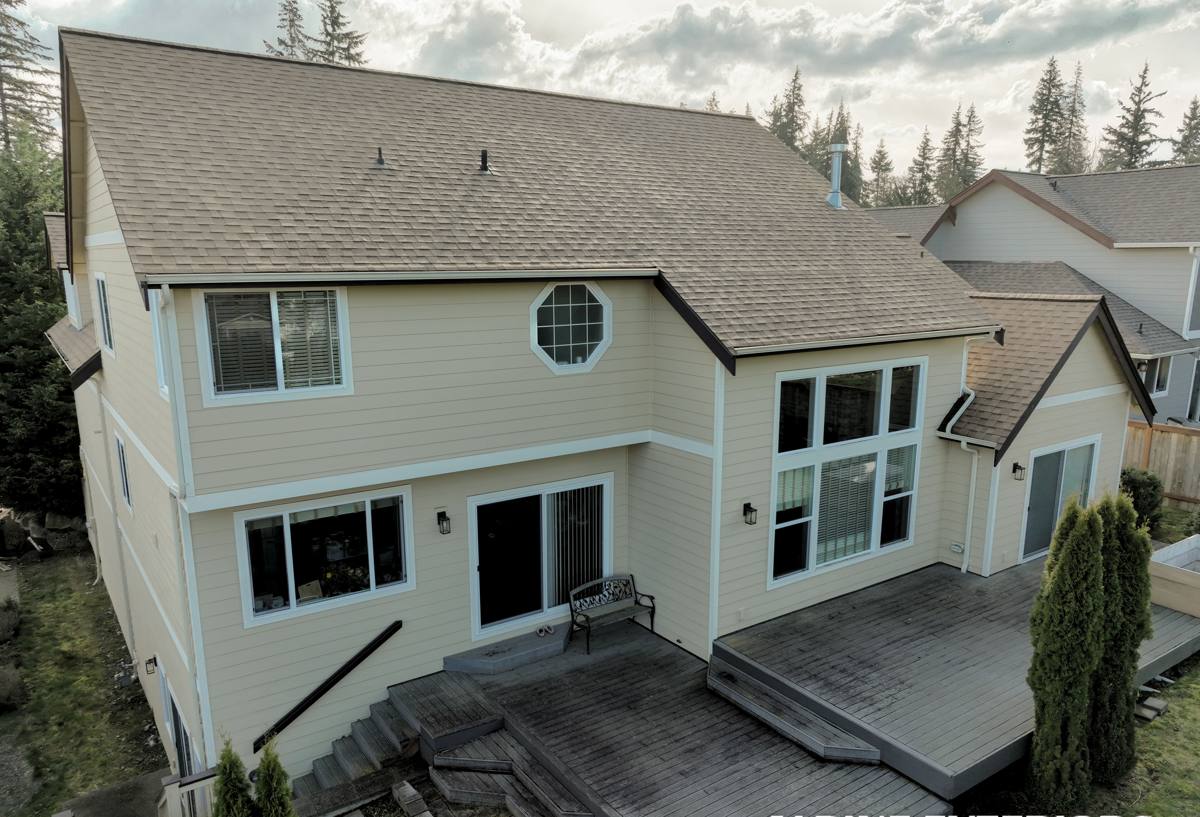
What Constant Damp and Driving Rain Do to Older Windows
Seals and Weatherstripping Go First
Rubber and vinyl seals age faster in a climate that never really dries out. Once a seal compresses and cracks, it stops doing its job — cold air and moisture start working their way in around the sash, and heating bills creep up even though nothing looks visibly wrong.
Wood Frames Take the Long-Term Hit
Older wood-framed windows are common in this area, and wood is the material most affected by sustained moisture. Paint failure, soft spots at the sill, and swelling that keeps a window from closing tight are all signs that water has been getting past the finish for longer than it should have.
Moss and Algae Aren't Just a Roof Problem
The same shaded, damp conditions that grow moss on a roof will grow it in window tracks, on sills, and in the corners of exterior trim. Beyond the cosmetic issue, trapped organic growth holds moisture against wood and painted surfaces, which accelerates rot and paint failure in exactly the spots that are hardest to inspect from the ground.
What "Energy-Efficient" Actually Means Here
The term gets used loosely, but for a Whatcom County home it should mean a specific set of performance choices, not just a sticker on the glass. The factors that matter most in this climate:
- Low U-factor — how well the window resists heat loss through the frame and glass. Lower is better for our cool, wet winters.
- Low-E coatings — a microscopically thin coating that reflects heat back into the room in winter and blocks excess solar heat in summer.
- Gas-filled sealed units — argon or krypton between panes adds insulating value without adding bulk.
- Warm-edge spacers — the material separating the panes affects condensation resistance, which matters in a climate with big humidity swings.
- Frame material — how the frame itself handles years of damp cycling without warping, rotting, or letting water track inward.
A window can be efficient on paper and still perform poorly here if it isn't installed with the right flashing and drainage details. Performance and installation quality are two separate things, and both have to be right.
Frame Material Comparison for This Climate
| Material | Moisture Resistance | Maintenance | Notes for This Area |
|---|---|---|---|
| Vinyl | High — won't rot or corrode | Low | Good all-around choice; consistent performance in damp conditions |
| Fiberglass | Very high — dimensionally stable | Low | Handles temperature and moisture swings with minimal expansion/contraction |
| Wood-clad | Moderate — exterior clad, interior wood | Moderate | Warm interior look; exterior cladding needs to be properly sealed at joints |
| Aluminum | Low thermal performance, prone to condensation | Low | We generally steer clients away from bare aluminum frames for this climate — the conductivity leads to condensation and heat loss that fights against the efficiency goal |
We don't push one brand or material on every home. The right call depends on the home's age, existing trim details, and what the homeowner wants to maintain long-term.
Signs Your Cordata Home's Windows Are Underperforming
- Visible condensation or fogging between panes (a sign the seal has failed)
- Drafts you can feel near the frame even with the window fully closed
- Paint that's peeling, bubbling, or chalky on the exterior trim
- Difficulty opening, closing, or latching a window that used to operate smoothly
- Soft or spongy wood at the sill or lower frame corners
- Moss, algae, or black staining building up in the tracks or on the sill
- A noticeable jump in heating costs without any other explanation
- Rooms that stay noticeably colder than the rest of the house
Any one of these on its own isn't necessarily urgent. Several of them together, especially on windows over 15–20 years old, usually means replacement will cost less over time than continuing to patch and repaint.
What a Correct Installation Actually Involves
It Starts Before the Window Ever Arrives
A proper job begins with checking the rough opening for hidden rot or water damage from the old window's failure. Skipping this step and just dropping a new window into a compromised opening is one of the most common ways a window replacement fails early — the new unit looks fine, but the same water path is still there underneath it.
Flashing and Drainage Are the Real Work
In a climate with as much driving rain as Whatcom County sees, flashing details matter more than almost anything else. Water needs a clear path to shed away from the wall assembly, not toward it. That means correctly lapped flashing tape, a sloped sill pan, and sealant used in the right places — and not used as a substitute for proper flashing, which is a shortcut that tends to fail quietly over a few winters.
Sealing Without Trapping Moisture
There's a balance between sealing a window tight for energy efficiency and allowing the assembly to drain and dry if any moisture does get in. Over-sealing an opening can trap water instead of letting it escape, which causes more damage than a slightly less airtight install. This is a detail that's easy to get wrong if a crew is used to drier climates or moving fast.
Our Process for a Cordata Window Project
- On-site assessment — we look at the existing windows, the condition of the rough openings, and how the home is oriented to wind and rain exposure.
- Straightforward product recommendation — options that fit the home's style and the homeowner's budget, explained in plain terms, not upsold.
- Opening prep — any rot or water damage found gets addressed before a new window goes in, not covered up.
- Installation with proper flashing and drainage — done to hold up through repeated wet seasons, not just look good on install day.
- Final check and cleanup — operation, seal, and finish work confirmed before we consider the job done.
Cost Factors Worth Understanding
| Factor | How It Affects Cost |
|---|---|
| Number of windows | Larger projects generally lower the per-window cost |
| Frame material | Vinyl tends to be the most budget-friendly; fiberglass and wood-clad cost more upfront |
| Opening condition | Rot or water damage found during removal adds repair time before installation |
| Window size and style | Larger units, custom shapes, or specialty operating styles cost more than standard sizes |
| Trim and finish work | Matching existing exterior trim or repainting affected areas adds to the scope |
We give straightforward, written estimates after seeing the actual windows and openings in person — not a ballpark over the phone, since the condition behind the old window matters as much as the new one you choose.
Why a Crew That Already Works This Neighborhood Matters
Window installation isn't one-size-fits-all across a region as varied as Whatcom County. A crew that regularly works Cordata and the surrounding Bellingham neighborhoods already knows how the local moisture cycle behaves, what kind of wear shows up on homes of different ages, and how to sequence a job around the wet season instead of fighting it. That familiarity shows up in details — how flashing is lapped, how long caulk is given to cure before rain, how a crew times exterior work around the forecast — that a homeowner won't see until years later, when the windows either hold up or don't.
It also means someone local to call if a question comes up after the install, rather than chasing down a crew that was only passing through the area for one job.
Ready to Talk About Your Windows?
If your Cordata home has windows showing any of the wear signs above, or you're just tired of cold drafts and rising heating bills every winter, we're happy to take a look. Fill out the form below for a free, no-pressure estimate — we'll walk the exterior, check the openings, and give you an honest read on what your home actually needs.