 Bellingham Roofing
 Why Happy Valley Homes Need Windows Built for This Climate
Happy Valley sits close enough to Bellingham Bay that salt-laden air is a constant, low-grade stress on anything metal, painted, or poorly sealed. Add Whatcom County's long wet season — months of driving rain pushed sideways by wind off the water — and you get a climate that finds every weak point in a window: a gap in the flashing, a tired weatherstrip, a seal that lost its argon fill years ago. Moss doesn't stop at your roofline either. It colonizes north-facing trim, sill horns, and anywhere moisture sits instead of draining, and it will happily take hold in a window frame that stays damp.
None of that means Happy Valley homes need anything exotic. It means the ordinary parts of a window job — frame material, glass package, and especially the installation details — matter more here than they would in a drier, calmer climate. Get those right and a window will handle decades of Pacific Northwest weather without complaint. Get them wrong and you're looking at fogged glass, soft trim, and drafts within a handful of winters.
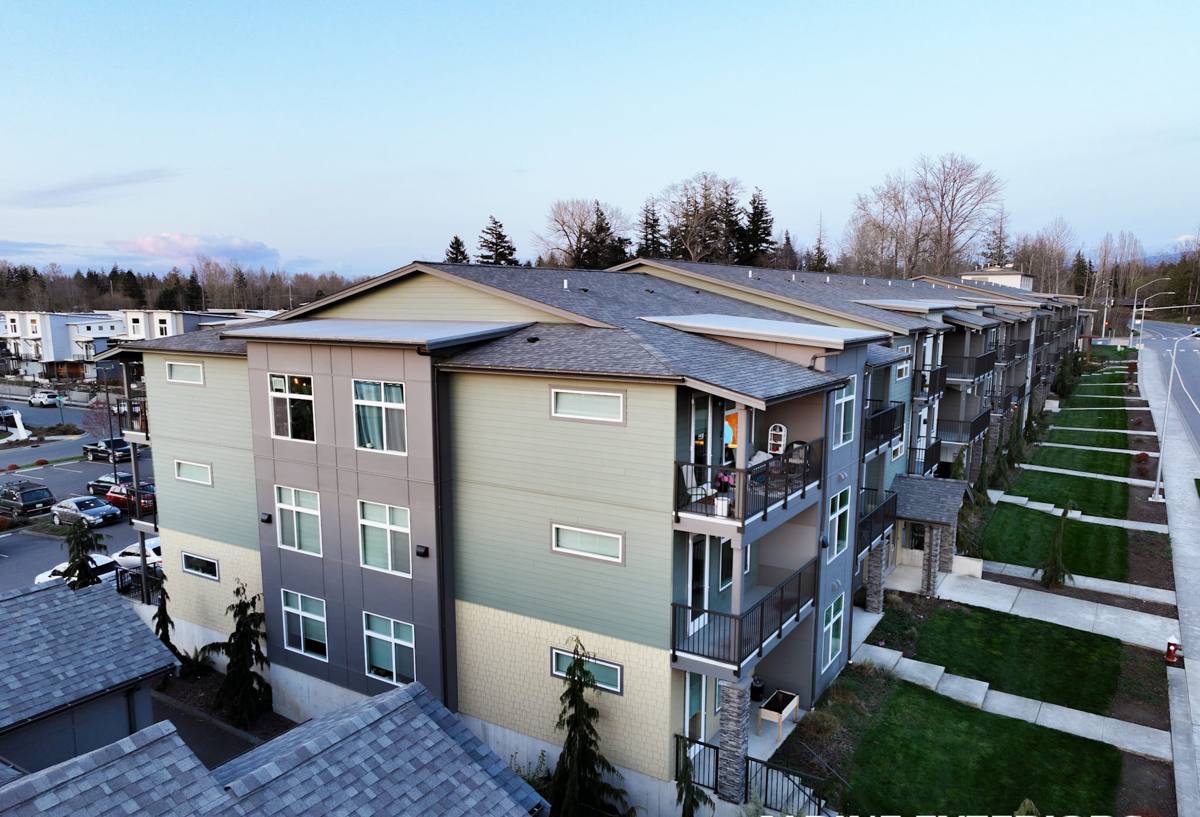
What "Custom" Actually Means for a Window Job
Custom doesn't have to mean an unusual shape or a one-of-a-kind design, though we do that too. Most of the time it means a window built to your home's actual openings rather than forced to fit a stock size. Older Bellingham homes — and a fair number of newer ones — have openings that are slightly out of square after decades of settling, or that were framed for windows no manufacturer still makes. Custom sizing means:
- Exact measurements taken at your home, not estimated from a floor plan
- Frame depth matched to your wall assembly so the window sits flush inside and out
- Glass and hardware chosen for how that specific opening faces the weather
- Trim and casing that match your home's existing lines instead of a generic retrofit look
This matters more on the sides of a house that catch the brunt of the weather. A west- or southwest-facing wall in Happy Valley takes far more wind-driven rain over a year than a sheltered east wall, and the right window for one isn't automatically the right window for the other.
Frame Materials: What Holds Up Near the Water
Frame material is the single biggest factor in how a window ages in a coastal, high-moisture climate. There's no universally "best" material — it's a set of trade-offs, and the right call depends on your home's exposure, your budget, and how much upkeep you want to do.
| Material | How it handles salt air & rain | Maintenance | Typical fit |
|---|---|---|---|
| Vinyl | Won't corrode or rot; seams and welds need to be well made or they can leak over time | Low — occasional cleaning | Most homes, best value |
| Fiberglass | Very stable in wet-dry cycling, minimal expansion/contraction, holds paint well | Low to moderate | Exposed walls, higher-end remodels |
| Wood-clad | Excellent look, but the wood core is the weak point if the exterior cladding is ever breached | Higher — cladding and seals need periodic inspection | Historic or architecturally sensitive homes |
| Aluminum | Strong but conducts heat and cold readily and can pit near salt air without a good finish | Moderate | Limited use in this climate; usually not our first recommendation for exterior walls |
Our default recommendation for most Happy Valley homes is vinyl or fiberglass, specifically because they don't give salt air or standing moisture anything to work on. Where a wood-clad window is the right architectural fit, we'll say so — we just make sure the flashing and sealant details around it are done properly, since that's what actually determines whether it lasts.
A Note on Aluminum
Aluminum-frame windows show up in a lot of older regional construction, and plenty are still functional. We're just honest that aluminum's high thermal conductivity and its tendency to pit or corrode near salt air make it a harder sell for new installs here. It's a maintenance and performance trade-off, not a knock on anyone who has it now.
Glass Packages: Where Moisture Problems Actually Start
Most window failures we see in this area aren't frame failures — they're seal failures. Insulated glass units are sealed at the factory with an inert gas fill (usually argon) between the panes. Once that seal breaks, moisture gets between the panes and you get permanent fogging that no amount of cleaning fixes. In a climate with this much ambient humidity and temperature swing between a cold night and a sun-warmed afternoon, seal quality is not a place to cut corners.
Double-pane with a quality low-E coating is a solid, proven choice for most Happy Valley homes. Triple-pane adds another layer of insulation and sound dampening, which is worth considering on rooms that face wind and traffic noise, but it also adds weight and cost, and on a moderate Bellingham winter the payback period is longer than people expect. We'll walk through the honest math for your specific home rather than upsell triple-pane as a default.
- Low-E coating — reflects heat while letting daylight through; standard on nearly everything we install
- Argon or krypton gas fill — improves insulation between panes; argon is the standard, cost-effective choice
- Warm-edge spacer systems — reduce condensation risk at the edge of the glass, which is where fogging and frost usually start first
- Tempered glass — required by code near doors, low sills, and wet areas; we'll flag where it applies
Installation Details That Matter More Here Than Elsewhere
A window is only as good as the hole it sits in. In a climate that gets sustained, wind-driven rain, the flashing and sealant work around the window is at least as important as the window itself — arguably more important, because a good window installed with poor flashing will still leak, and a mediocre window installed with excellent flashing will usually stay dry.
Our installation process on every custom window job includes:
- Removing the old window and inspecting the framing underneath for hidden rot or moisture damage before anything new goes in
- Repairing any compromised framing or sheathing — this is common on older homes and it's better to find it now than after a new window is sealed over it
- Installing flashing that directs water down and out, layered correctly with your home's existing weather-resistive barrier (house wrap or building paper) so water can't get behind the new window
- Setting the window level, plumb, and square, then insulating the gap around the frame properly — not overpacked, not left empty
- Sealing the exterior with a quality sealant rated for this climate, and finishing interior and exterior trim to match your home
Skipping or rushing any one of these steps is how a brand-new window ends up with a soft sill or a stain on the interior wall two winters later. It's also the most common thing we get called to fix after another contractor's installation — not the window itself, but what was done, or not done, around it.
Why a Crew That Already Works Happy Valley Matters
Every neighborhood in Bellingham has its own microclimate quirks, and Happy Valley's proximity to the bay is one of the more distinct ones. A crew that works this area regularly already knows which walls on a typical Happy Valley home take the worst of the wind and rain, how the moss season affects sill and trim maintenance, and what kind of existing construction is common in the neighborhood's housing stock. That local pattern recognition shortens the assessment phase and helps us catch problems before they're hidden behind new trim.
It also means we're realistic about permits and code requirements for the City of Bellingham and Whatcom County, and we can tell you upfront if your project needs a permit pulled before work starts — most straightforward window replacements that don't alter the structural opening don't, but anything that changes the size or type of opening usually does. If your street or neighborhood has architectural guidelines through an HOA or covenant, that's worth checking before you finalize a style — we're happy to work within whatever those requirements are, we just can't confirm the specifics of every association from the outside.
Signs Your Current Windows Are Losing the Fight
Coastal moisture and moss don't announce themselves — the damage is usually gradual and easy to miss until it's significant. Walk your home's exterior and check for:
- Fogging or a permanent haze between the panes of glass (a broken seal — this cannot be cleaned away)
- Soft, spongy, or discolored wood at the sill or trim, especially on north- or west-facing walls
- Visible moss or dark streaking on the frame or sill, particularly under eaves or in shaded corners
- Noticeable drafts or a cold feeling near the glass on windy, rainy days
- Paint that's bubbling or peeling on wood trim around the window, which often signals moisture trapped underneath
- Difficulty opening, closing, or latching a window that used to operate smoothly
- A musty smell in the room, which can indicate moisture getting into the wall cavity around the frame
Any one of these on its own might not mean urgent trouble. Several together, especially on a wall that faces the weather, are a good reason to have someone take a real look before the next wet season adds to the damage.
Caring for New Windows in a Coastal Climate
Good windows still benefit from a little seasonal attention here. Rinse salt residue and grime off exterior glass and frames a couple of times a year, especially after storms. Keep gutters and nearby drainage clear so water isn't sheeting down across upper windows. Brush moss and organic buildup off sills and trim before it gets a foothold, rather than after — it's far easier to prevent than to remove once established. None of this is heavy maintenance; it's the kind of upkeep that adds years to a window's service life in this climate for very little effort.
Our Process for Happy Valley Homeowners
We keep the process straightforward:
- On-site assessment — we look at your existing windows, the framing condition, and how each wall of your home is actually exposed to weather, not just a generic recommendation
- Honest options — we'll walk through frame material, glass package, and cost trade-offs in plain terms, without steering you toward the most expensive option by default
- Precise measurement — every opening is measured individually; nothing is assumed to match a stock size
- Careful installation — including the framing inspection, flashing, and sealing steps outlined above, done the same way whether it's one window or a whole house
- Walkthrough and cleanup — we confirm every window operates correctly and leave the job site clean before we consider it done
If you're weighing whether it's time to replace windows on your Happy Valley home, or you just want a straight answer about what a specific wall or window needs, we're glad to take a look. Reach out for a free, no-pressure estimate — use the form below to get started.