 Bellingham Roofing
 Deck Building Built for Happy Valley's Weather, Not Against It
Happy Valley sits close enough to Bellingham Bay to catch salt-tinged air off the water, and the neighborhood's mature tree canopy means a lot of homes here live in shade for long stretches of the year. That combination is tough on outdoor structures. A deck built the way it might be built in a dry inland climate will not hold up the same way in Whatcom County, where driving rain off the Sound, high humidity, and a moss season that can run from October through May all work against wood, fasteners, and framing. Building a deck correctly here means designing for water, not just for looks.
We've worked on homes throughout Happy Valley and the surrounding Bellingham neighborhoods long enough to know which details matter and which ones get skipped by crews who aren't used to this climate. This page covers what a Happy Valley deck actually needs, what our process looks like, and what to ask before you hire anyone for the job.
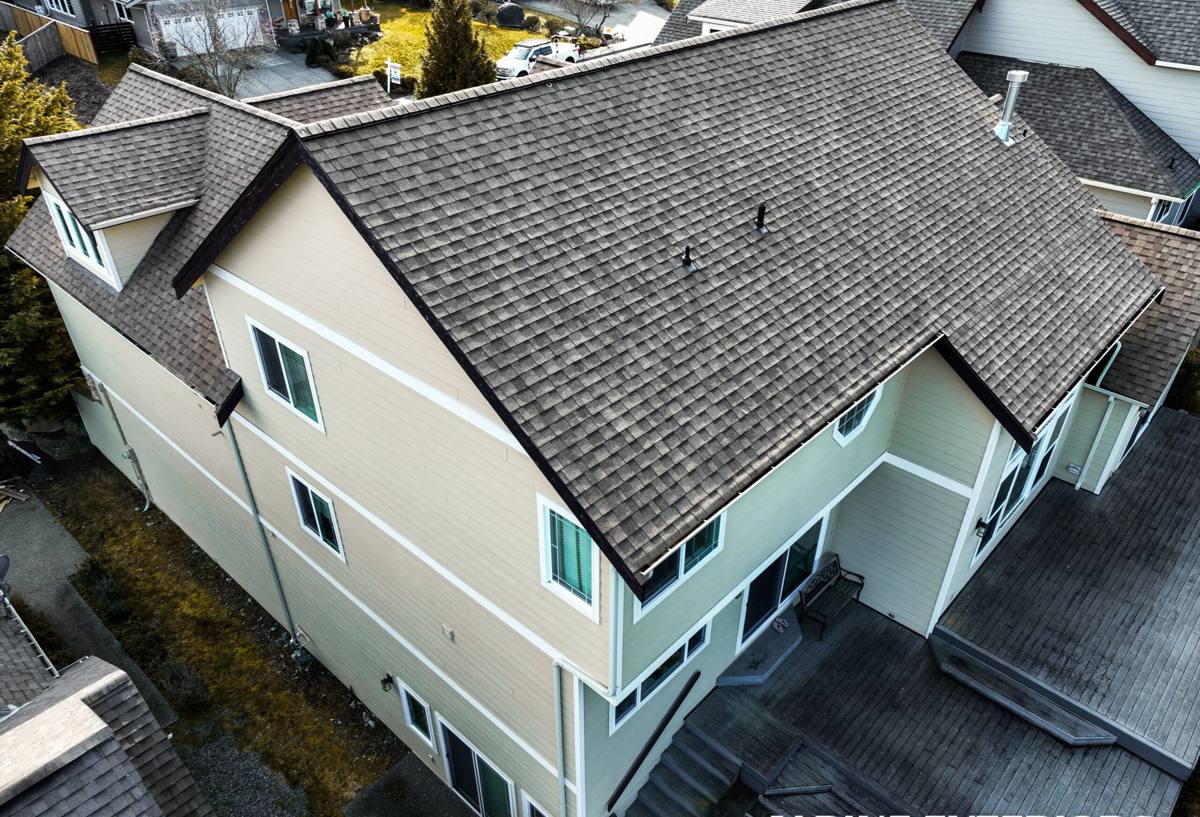
What Happy Valley's Climate Does to a Deck
Three things drive almost every deck problem we see in this part of Bellingham:
Driving Rain
Storms here rarely fall straight down. Wind-driven rain gets pushed sideways into ledger connections, under poorly flashed rim joists, and into any gap where end grain is exposed. Over time, that moisture finds its way into framing lumber that was never meant to stay wet, and rot follows.
Shade and Moss
Happy Valley's tree cover is part of what makes the neighborhood pleasant to live in, but it also means decks here get less direct sun to dry out between rain events. Moss and algae take hold fast on shaded, damp surfaces, and once established they hold moisture against the decking, which accelerates decay and turns boards slick and dangerous underfoot.
Salt Air
Proximity to the bay means airborne salt reaches fasteners, flashing, and any exposed metal hardware. Standard fasteners that would be fine further inland can corrode faster here, which is why fastener selection is not a place to cut corners on a coastal Bellingham build.
What a Correct Deck Build Involves Here
A deck that lasts in this climate is built in layers, with water management as the organizing principle from the footings up.
Footings and Framing
Whatcom County soils and slope conditions vary block by block, and Happy Valley has its share of grade changes. Footings need to go below frost depth and bear on solid, undisturbed soil, per the local building code. We size and space framing members for real Western Washington snow and live-load requirements, not the bare minimum.
Ledger Attachment and Flashing
Where a deck attaches to the house, the ledger board and its flashing are the single most important detail on the entire structure. This is the joint that takes the brunt of driving rain and, if it's flashed poorly, the point where water gets behind siding and into wall framing. We flash ledgers with proper step flashing and a drainage gap, not just a bead of sealant.
Fastener and Hardware Choice
Given the salt air, we use fasteners and structural hardware rated for coastal or treated-lumber exposure. Mixing incompatible metals, or using standard interior-grade screws outdoors, is one of the most common shortcuts we see on decks that fail early — and it's an easy one to avoid.
Decking Material
Material choice matters as much as the framing underneath it. Here's how the common options perform under Happy Valley conditions:
| Material | How It Handles Rain & Shade | Moss/Algae Resistance | Maintenance |
|---|---|---|---|
| Pressure-treated fir/hem-fir | Handles moisture well when properly sealed; needs consistent upkeep | Low — grows moss quickly if not cleaned and sealed | Annual cleaning, periodic sealing |
| Cedar | Naturally moisture-resistant, ages gracefully | Moderate — still needs cleaning in shaded areas | Regular cleaning, occasional oil/stain |
| Composite decking | Very stable in wet conditions, won't rot | Higher resistance, but can still grow surface algae in deep shade | Low — periodic washing, no sealing/staining |
| PVC decking | Fully moisture-proof core | Good, though surface cleaning is still needed in shade | Lowest — occasional wash-down |
There's no single "best" material for every yard — a sun-exposed deck and a deeply shaded one under Happy Valley's tree canopy have different needs. We walk through the trade-offs with you rather than pushing one product line.
Drainage and Airflow Under the Deck
One of the most overlooked parts of a deck build is what happens underneath it. If water can't drain away from footings and framing, and air can't move underneath the structure, moisture gets trapped and rot starts from below where it's hardest to spot. For ground-level and low-clearance decks especially, we grade the area beneath the deck to shed water away from the house and leave enough clearance for airflow. This single step prevents a lot of the hidden rot we find when we're called out to repair someone else's deck years later.
Railings, Stairs, and Code Compliance
Railings and stair guards aren't optional extras — they're structural and code-governed elements, and Whatcom County inspectors check them closely on permitted work. Beyond meeting code height and baluster spacing requirements, railing posts need to be attached in a way that resists lateral load, since a railing that loosens over time is a safety issue, not just a cosmetic one. We build railings to hold up under regular use, not just pass inspection on day one.
Our Process for a Happy Valley Deck Project
- On-site walkthrough: We look at sun exposure, tree cover, grade, and how water currently moves across your yard before we design anything.
- Design and material selection: We talk through decking material, railing style, and layout based on how you'll use the space and how much upkeep you want to take on.
- Permitting: We handle the permit process with the City of Bellingham or Whatcom County, depending on your property's jurisdiction.
- Footings and framing: Built to code depth and spacing, with attention to the ledger flashing detail from day one.
- Decking, railings, and finish work: Installed with fasteners and hardware rated for our coastal, high-moisture conditions.
- Final walkthrough: We go over maintenance expectations specific to your deck's material and sun exposure before we consider the job done.
Signs an Existing Deck in Happy Valley Needs Attention
- Soft, spongy, or spring-feeling boards, especially near the ledger or in shaded areas
- Persistent moss or dark staining that comes back quickly after cleaning
- Rust streaking around fasteners or visible hardware corrosion
- Gaps or separation where the deck meets the house siding
- Railings or posts that feel loose or flex under normal pressure
- Standing water or slow drainage underneath a low-clearance deck
If you're seeing any of these on a deck that's a few years old, it's worth having it looked at before small problems turn into a full rebuild.
Cost Factors Homeowners Should Know
Every deck project is different, but a few factors consistently move the price up or down more than anything else:
| Factor | Why It Matters |
|---|---|
| Decking material | Pressure-treated lumber costs less up front; composite and PVC cost more initially but less over time in upkeep |
| Deck height and stairs | Elevated decks need more substantial framing, footings, and code-required stair/railing work |
| Site access and slope | Sloped or tree-crowded lots, common in Happy Valley, can add labor time for excavation and material staging |
| Ledger and flashing complexity | Complicated house-to-deck connections take more time to flash correctly, and it's not a step worth rushing |
| Railing style | Cable, glass, or custom railing systems cost more than standard baluster railings |
We give straightforward, itemized estimates so you can see where the money is going and make informed trade-offs — not just a single bottom-line number.
Why a Crew That Already Works Happy Valley Matters
Building codes, permit timelines, and inspection expectations shift between the City of Bellingham and unincorporated Whatcom County, and a crew unfamiliar with the local process can lose you weeks. Beyond paperwork, a contractor who's already built and repaired decks in this specific pocket of Bellingham has seen firsthand how the shade patterns, drainage tendencies, and salt exposure here differ from a deck built ten miles inland. That local track record shows up in fewer callbacks and fewer surprises once the project is underway.
Get a Straightforward Estimate
If you're planning a new deck or need an honest look at one that's showing its age, we're happy to come take a look. There's no pressure and no obligation — just a straight assessment of what your Happy Valley property actually needs, using the form below.