 Bellingham Roofing
 Roof Repair Built for Happy Valley's Weather
Happy Valley sits close enough to the water and the tree line that its roofs take a different kind of beating than roofs on the east side of Bellingham. Homes here deal with a steady mix of salt-tinged air rolling in off Bellingham Bay, wind-driven rain that finds its way under loose flashing and worn shingle edges, and a moss season that can run eight or nine months out of the year under the fir and cedar canopy that shades so many of these lots. None of that is exotic information to anyone who has lived in Whatcom County for a while, but it matters a lot when you're deciding how to repair a roof rather than just patch it.
A repair that works in a dry inland climate can fail fast here if it doesn't account for constant moisture, shade, and salt air corrosion on metal components. We've repaired enough roofs in this part of Bellingham to know which failure patterns show up again and again in this neighborhood, and we build our repairs around those patterns instead of treating every roof the same.
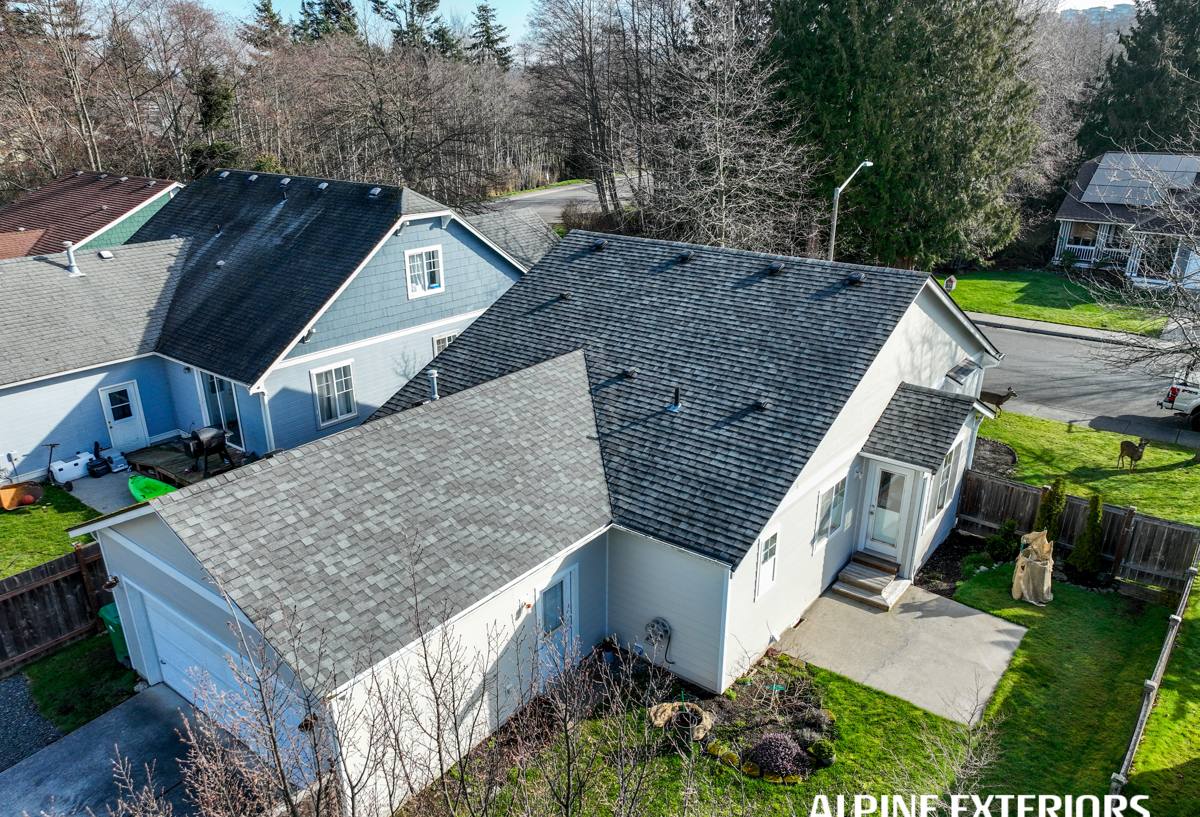
What Bellingham's Climate Does to a Happy Valley Roof
Moss and Organic Growth
Tree cover keeps a lot of Happy Valley roofs shaded for large parts of the day, which sounds nice until you realize shade means slow drying. Moss, lichen, and algae take hold on north-facing slopes and anywhere debris collects, and once established they hold moisture directly against the roofing material. Over time that moisture works granules loose on asphalt shingles, rots the wood underneath cedar shakes, and lifts shingle tabs enough for wind and rain to get underneath them.
Wind-Driven Rain
Storms off the Strait and the Sound don't just drop rain straight down — they push it sideways under flashing, around chimneys, and into any gap where two roofing materials meet. Valleys, skylight curbs, and vent boots are the usual entry points. A leak that shows up inside the house is very often a symptom of a flashing or sealant failure that started somewhere else on the roof.
Salt Air and Metal Fatigue
Being near the bay means metal components — flashing, fasteners, gutter hardware, and vent caps — corrode faster here than they would further inland. Galvanized fasteners can rust and back out over the years, and cheaper flashing metal pits and thins. When we repair a roof in this area we pay close attention to what the existing metal is made of and whether it's still doing its job, not just whether the shingles look fine.
Signs a Happy Valley Roof Needs Repair
- Granules collecting in gutters or at downspout outlets
- Dark streaking or a green-black tint on north-facing or shaded slopes
- Curling, cracked, or lifted shingle tabs, especially near valleys and edges
- Rust staining below flashing, vents, or nail heads
- Soft or spongy decking felt underfoot in the attic near valleys or chimneys
- Water stains on interior ceilings that appear or worsen during wind-driven storms
- Daylight visible through the roof deck from inside the attic
- Moss growth thick enough to hold visible standing moisture after a dry day or two
Any one of these on its own might just mean routine maintenance. A few of them together, especially interior staining combined with visible moss or lifted shingles, usually means it's time for a real inspection rather than a guess.
What a Correct Repair Actually Involves
A lot of "roof repairs" amount to smearing sealant over a visible crack and calling it done. That buys a little time, but it doesn't address why the failure happened, and in a wet, mossy climate it tends to fail again within a season or two. Our approach is to find the actual cause before we touch anything.
Our Process
- Inspection. We walk the roof and the attic, checking decking, flashing, vent boots, valleys, and the underside of the roof for moisture, rot, or daylight, not just the surface for obvious damage.
- Diagnosis. We trace leaks back to their actual source. Water often travels along the decking before it drips through the ceiling, so the interior stain and the roof-level problem aren't always in the same spot.
- Scope and options. We explain what we found in plain terms — what's failing, why, and what it will take to fix it properly, including whether a targeted repair is enough or whether a section needs more work.
- Repair. Damaged decking gets replaced, not just covered. Flashing and vent boots get reset or replaced with materials suited to this climate. Shingles or shakes are matched and tied into the existing roof correctly, not just laid over the problem.
- Moss and debris cleanup. If moss contributed to the failure, we clear it and talk through options for slowing regrowth, since removing moss without addressing why it's there just means doing the job again in a year or two.
Repair vs. Replacement: What Actually Decides It
| Factor | Leans Toward Repair | Leans Toward Replacement |
|---|---|---|
| Age of roofing material | Under roughly 15 years, in otherwise sound condition | Near or past its expected service life |
| Decking condition | Solid, dry, no rot found during inspection | Soft, delaminated, or rotted in multiple areas |
| Extent of moss/algae damage | Surface growth without granule loss or rot | Widespread moss with underlying material breakdown |
| Leak pattern | Isolated to one flashing point, valley, or penetration | Multiple, unrelated leak points across the roof |
| Shingle/shake condition | Localized curling or cracking | Widespread brittleness, cracking, or granule loss |
We'll never push a full replacement when a repair will genuinely hold up. We'll also never recommend a "quick fix" if the roof's underlying condition means it's likely to fail again soon — we'd rather tell you that up front than have you pay twice.
Materials and Our Standards on Repairs
We use flashing, fasteners, and sealants rated for the moisture and salt exposure typical of this part of Bellingham rather than whatever is cheapest at a supply house. Galvanized steel that isn't rated for coastal exposure tends to rust prematurely here, so we favor corrosion-resistant metal for flashing and fasteners on Happy Valley jobs. On shingle repairs, we match the existing product as closely as possible so the repaired section weathers at the same rate as the rest of the roof instead of standing out or aging unevenly. Where wood shake roofs are involved, we're upfront that shake requires more regular maintenance in a shaded, moss-prone climate than asphalt does — that's simply a maintenance reality of the material, not a knock on it, and it's worth knowing before deciding how to move forward with a repair versus a longer-term material change.
Why Local Experience in Happy Valley Matters
A roofer who mostly works drier, more open parts of Whatcom County can still do fine work, but they may not immediately recognize how much tree cover and bay proximity change the calculus on a Happy Valley roof. We've worked enough roofs in this specific pocket of Bellingham to know which slopes typically hold moss longest, which flashing details tend to fail first under driving rain, and how fast metal components corrode this close to the water. That familiarity means less time spent diagnosing and more time spent fixing the actual problem.
It also means we can give you a realistic sense, based on what we see on similar roofs nearby, of how long a repair should hold before you need to think about the next step — rather than a generic estimate that doesn't account for your specific microclimate.
Maintaining a Repaired Roof in This Climate
- Keep gutters and valleys clear of needles and debris, especially under fir and cedar cover
- Have moss treated or removed before it spreads across a full slope, not after
- Trim back overhanging branches where practical to reduce shade and debris buildup
- Schedule a roof check after major windstorms, since that's when flashing and shingle damage most often starts
- Address small leaks early — in this climate, moisture problems compound quickly rather than staying static
A repair done right, combined with basic seasonal upkeep, holds up well against what Bellingham's climate throws at it. Neglecting the small stuff is what turns a minor flashing fix into a full deck replacement two years later.
Get a Straight Answer About Your Roof
If you're seeing moss buildup, granule loss, or a stain creeping across a ceiling in your Happy Valley home, it's worth having someone look before it gets worse. We'll give you a free, no-pressure estimate and an honest read on whether you're looking at a repair or something bigger — just fill out the form below and we'll take it from there.