 Bellingham Roofing
 Roofing in Puget: What the Local Climate Actually Does to a Roof
Homes in the Puget area of Bellingham sit close enough to the water and the tree cover that roofs here age differently than roofs a few hundred miles inland. Salt-laden air off the Sound accelerates corrosion on exposed metal fasteners, flashing, and vent stacks. Driving rain, pushed sideways by wind off the water, finds every weak seam and worn lap instead of just running off a clean, sound roof. And the long moss season that comes with Whatcom County's mild, wet winters means organic growth is working on your shingles nearly year-round, not just for a few weeks in spring.
None of that means Puget homeowners need exotic materials or a fundamentally different roof than the rest of Bellingham. It means the details — underlayment choice, fastener grade, flashing work, and ventilation — matter more here than they would in a drier climate, and cutting corners on any of them shows up faster.
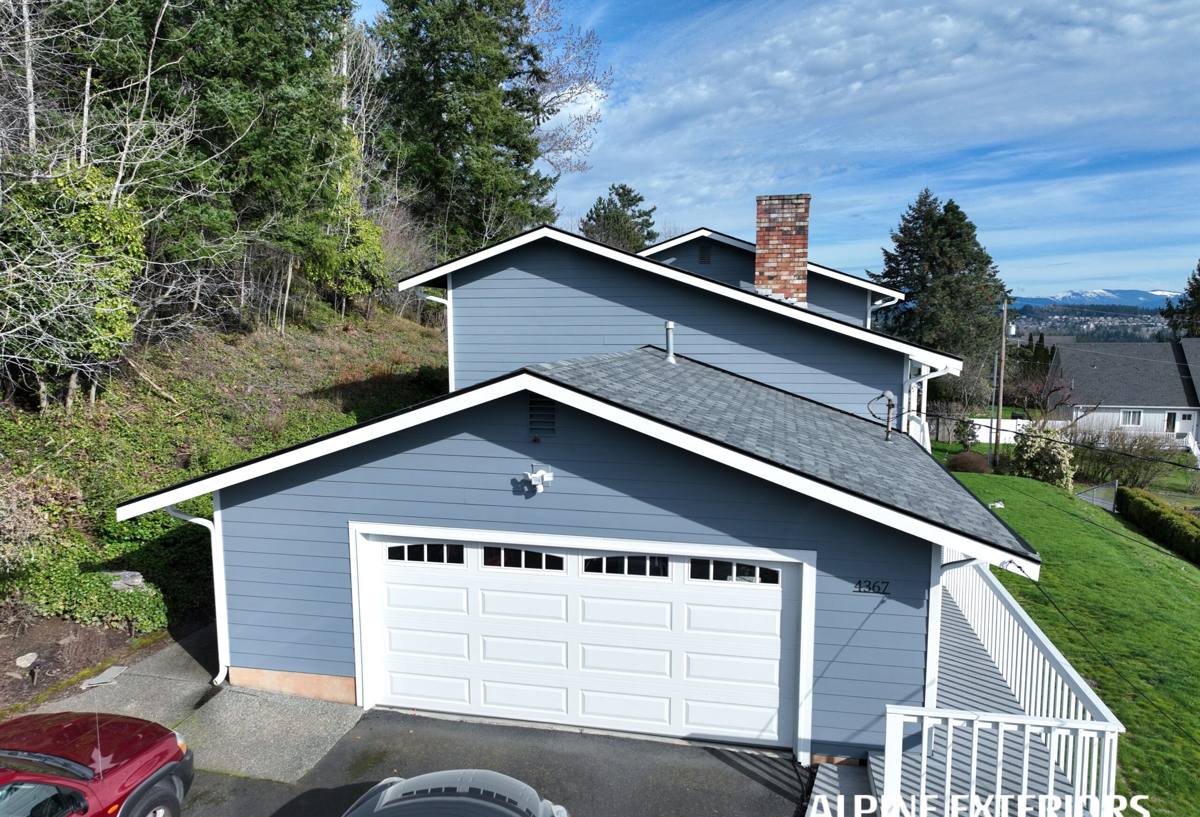
Signs a Puget Roof Is Ready for Replacement, Not Another Repair
Repairs make sense when a roof has years of usable life left and the damage is localized. Replacement makes sense once the roof's ability to shed water is compromised broadly, not just in one spot. In this climate, a few signs tend to show up together:
- Granule loss heavy enough that you can see bare, shiny patches of asphalt on multiple slopes, not just one weathered section
- Moss that keeps returning within a season or two of cleaning, especially on north-facing slopes that stay shaded and damp
- Soft spots or give underfoot on the sheathing when walked during an inspection
- Curling, cupping, or cracking shingles concentrated on the slopes that take the most wind-driven rain
- Rust staining or visible corrosion at flashing, vent boots, or exposed fasteners
- Interior signs — ceiling staining, musty attic smell, or daylight visible through the roof deck
- A roof already past 20-25 years old with two or more of the above present
If only one of these shows up in isolation, a repair is often the honest answer. When several show up together, patching becomes a short-term fix on a roof that's already losing the fight against the weather.
Why Moss Deserves Special Attention Here
Moss isn't just cosmetic. Its root structure lifts shingle edges and holds moisture against the roofing material long after a storm has passed, which is exactly the kind of prolonged dampness that breaks down asphalt shingles and rots wood decking over time. In a neighborhood with mature tree cover and consistent shade on parts of the roof, moss can outpace a homeowner's ability to keep it under control with periodic cleaning alone. A roof replacement is the point where you can build moss resistance into the system itself, rather than fighting it slope by slope every year.
What a Correct Roof Replacement Involves in This Climate
A roof replacement done right for a Puget-area home isn't just stripping old shingles and nailing down new ones. The sequence and the materials both matter.
Tear-Off and Deck Inspection
Full tear-off lets us see the actual condition of the sheathing underneath, which is where wind-driven rain and old moss damage tends to do its real work. Any soft, delaminated, or rotted decking gets replaced before anything new goes down — installing new roofing over a compromised deck just hides the problem for a few more years.
Underlayment Built for Wind-Driven Rain
Standard felt underlayment is not what we'd choose for a home exposed to driving rain off the Sound. A synthetic or self-adhered underlayment with strong water resistance at seams and fastener penetrations gives the roof a real second line of defense if wind pushes water up under the shingle edge, which happens more often here than in sheltered inland lots.
Ice-and-Water Protection at Vulnerable Points
Eaves, valleys, and roof-to-wall transitions are where water concentrates and where wind can force rain backward under the shingle line. Self-adhered ice-and-water membrane at these locations is cheap insurance against the specific way this climate delivers moisture.
Flashing and Fasteners That Won't Corrode
Salt air shortens the life of low-grade galvanized flashing and fasteners. We use corrosion-resistant flashing and fastener grades appropriate for coastal exposure, particularly at chimneys, skylights, and any metal-to-metal transitions where rust would otherwise start first.
Ventilation Sized to Reduce Moisture and Moss
Balanced intake and exhaust ventilation keeps the underside of the roof deck drier and closer to outdoor temperature, which does two things: it protects the sheathing from condensation-driven rot, and it reduces the cool, damp microclimate at the roof surface that moss thrives in. A roof that breathes properly is measurably harder for moss to colonize.
Material Options for Puget Homes
Most homes in this area are well served by architectural asphalt shingles rated for high wind and algae resistance, but the right choice depends on the home, the budget, and how much long-term maintenance the owner wants to take on.
| Material | How It Handles This Climate | Maintenance Reality |
|---|---|---|
| Architectural asphalt (algae-resistant) | Good wind rating, granules treated to resist moss/algae growth, wide color range | Periodic soft-wash cleaning recommended; 25-30 year typical lifespan here with correct install |
| Standing seam metal | Sheds wind-driven rain and moss buildup extremely well; minimal horizontal surface for moss to root | Low ongoing maintenance; higher upfront cost; requires correct fastener and underlayment detailing to avoid coastal corrosion |
| Synthetic/composite shingle | Resists moisture absorption better than wood shakes; consistent performance in wet, shaded areas | Moderate maintenance; good option where wood-shake appearance is wanted without wood's moisture issues |
| Cedar shake | Traditional look, but wood is the most moisture- and moss-susceptible option in a shaded, damp lot | Highest maintenance burden here — regular treatment and cleaning needed to manage rot and moss; we're upfront about this trade-off with clients considering it |
We'll walk through these trade-offs against your specific lot — how much shade the roof gets, which slopes face the prevailing wind and rain, and what your maintenance appetite realistically is — rather than defaulting to one product for every home.
Our Roof Replacement Process
- On-site inspection and estimate. We look at the whole roof system — shingles, decking, flashing, ventilation — not just the surface, and give you a clear written estimate with no pressure to decide on the spot.
- Material selection. We review options suited to your home's exposure and budget, explaining the real trade-offs rather than upselling.
- Scheduling around the weather. Whatcom County's wet season means timing matters. We plan installation windows to minimize the chance of an open deck getting caught by rain.
- Tear-off, deck repair, and installation. Full removal, sheathing inspection and repair as needed, then underlayment, flashing, and roofing installed in the sequence described above.
- Site cleanup and final walkthrough. Magnetic sweep for debris, gutter check, and a walkthrough so you understand what was done and why.
Why Hiring a Crew That Already Works Puget Matters
A roofing crew that works this specific stretch of Bellingham knows which slopes on a given lot layout tend to hold moss, which flashing details fail first under coastal wind, and how local permitting and inspection actually works — not just what a general trade manual says. That local pattern recognition shows up in small decisions: where to add extra ice-and-water membrane even if it's not strictly required, which fastener grade to spec by default rather than upgrade only on request, and how to sequence a tear-off around a week of unpredictable Puget Sound weather instead of a generic forecast.
It also matters for accountability. A contractor who works this neighborhood regularly has a reputation to protect with your actual neighbors, which tends to show up in the quality of the work and the honesty of the estimate.
What to Check Before Hiring Anyone for a Roof Replacement
- Current Washington state contractor license and liability insurance, verifiable and current
- A written estimate that itemizes materials, not just a lump-sum number
- Manufacturer certification for the specific shingle or metal system being installed, if warranty coverage matters to you
- A clear explanation of what happens if deck damage is found during tear-off, and how that's priced
- Willingness to explain ventilation and underlayment choices, not just shingle color options
- Local references or a local track record, not just national marketing
If your roof in the Puget area is showing moss that keeps coming back, granule loss, or any of the wear signs above, we're happy to take a look and give you a straightforward, no-pressure assessment. Use the form below to request a free estimate.