 Bellingham Roofing
 Windows Built for Sehome's Climate, Not Just Its Style
Sehome sits on a hillside close to downtown Bellingham and Western Washington University, and that mix of elevation, tree cover, and proximity to the water shapes what windows have to deal with here. Salt-tinged air off Bellingham Bay works into aluminum and steel components over time. Driving rain off the Sound pushes water sideways into gaps that would stay dry in a calmer climate. And the long, wet moss season coats north-facing sills, frames, and trim in organic growth that holds moisture against the glass and wood for months at a stretch. None of that is dramatic on its own, but stacked year after year, it's exactly what wears out an underperforming window from the inside out.
A lot of the housing stock in and around Sehome includes older bungalows, craftsman-style homes, and multi-family buildings with original or early-replacement windows that were never sealed or flashed for this specific combination of conditions. When we talk about "energy-efficient windows" for this neighborhood, we're not just talking about a lower U-factor on a spec sheet — we're talking about a window and installation system that can shed water, resist condensation, and keep performing through a Whatcom County winter without babysitting.
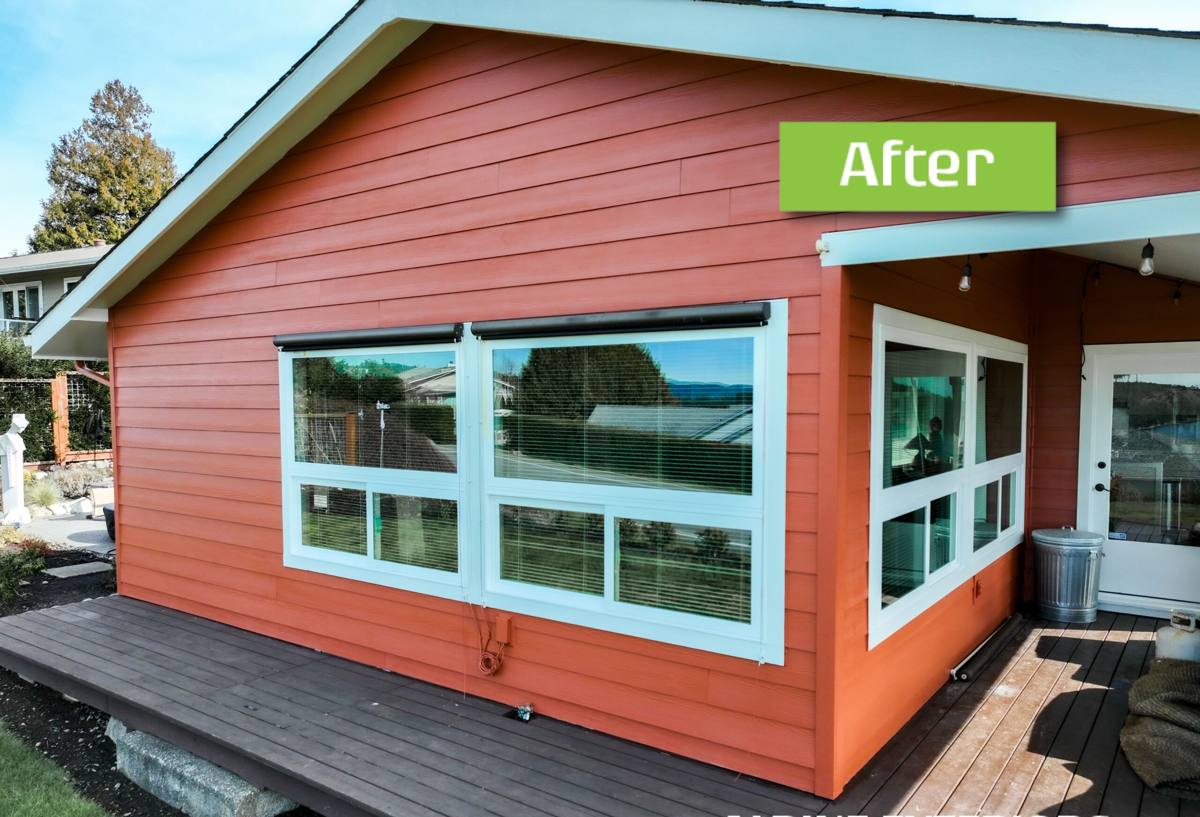
What "Energy-Efficient" Actually Means Here
Energy efficiency in a window comes down to a handful of measurable properties, and in Bellingham's marine climate, some matter more than others.
U-Factor
This measures how much heat escapes through the window — lower is better. Given how many gray, damp days Bellingham gets, a low U-factor pays off through the whole heating season, not just a few cold snaps.
Condensation Resistance
This one gets overlooked but matters enormously in Sehome's humid, moisture-heavy air. A window with poor condensation resistance will fog and drip on the interior side during cold, damp mornings, which over time can damage sills, trim, and drywall.
Air Leakage Rating
Lower is better. In a neighborhood exposed to wind-driven rain, a window with a poor air leakage rating is also often the one that lets water intrusion happen at the same weak points.
Solar Heat Gain Coefficient (SHGC)
Less critical here than in sunnier climates, but still worth getting right depending on which direction a room faces and how much natural light the homeowner wants to keep.
What a Correct Installation Looks Like
The window unit itself is only part of the equation. We see more energy loss and moisture problems caused by installation shortcuts than by the windows themselves. A correct job in this climate includes:
- Removing the old window fully and inspecting the rough opening for rot, soft wood, or prior water damage before anything new goes in
- Installing proper flashing that directs water out and away from the wall assembly, not just caulk over the gap
- Using a continuous sill pan so any water that does get past the exterior cladding drains out instead of sitting against the framing
- Sealing and insulating the gap between the window frame and rough opening correctly — not overpacked with fiberglass, not left with big voids
- Confirming level, plumb, and square before final fastening so the sash operates smoothly and seals evenly for years, not just on day one
- Finishing exterior trim and caulk joints in a way that sheds water rather than trapping it against the frame
Skip any one of these steps and you can end up with a window that has a great energy rating on paper but still leaks, sweats, or lets in drafts within a couple of years — especially once moss and organic debris start collecting around the frame during the wetter months.
Signs a Sehome Home Needs Window Attention
Homeowners usually notice a problem before they can name it. Some of the more common signs we hear about in this neighborhood:
- Interior condensation or fogging between panes, especially in bedrooms and bathrooms during colder months
- Visible moss or dark staining building up on the exterior sill or lower frame
- Drafts near the window frame even when the sash is fully closed and locked
- Difficulty opening, closing, or locking older wood or aluminum-frame windows
- Soft or discolored wood trim around the window, which can point to water getting behind the frame
- Noticeably higher heating bills in a home with mostly original single-pane or early double-pane windows
Comparing Common Window Options
There's no single "best" window for every home — it depends on the home's age, exposure, and the homeowner's priorities. Here's how the common options stack up for a marine climate like Bellingham's.
| Frame Material | How It Handles Local Climate | Maintenance Considerations |
|---|---|---|
| Vinyl | Handles moisture and salt air well; doesn't corrode or rot | Low maintenance; limited color/finish options in some lines |
| Fiberglass | Very stable in temperature swings and damp conditions; strong long-term performance | Low maintenance; higher upfront cost than vinyl |
| Wood (clad exterior) | Good insulating properties; exterior cladding protects against rain and salt exposure | Interior wood still needs periodic attention; cladding integrity matters |
| Aluminum | Prone to corrosion near salt air and conducts heat/cold readily unless thermally broken | We generally steer homeowners away from bare aluminum in this location for those reasons |
We're not tied to one brand or material — our job is to match the window to the specific wall, exposure, and budget in front of us, and to be straight about the trade-offs of each option rather than push whatever has the best margin.
Our Process for Sehome Projects
Every window job starts with an in-person look at the home, not a phone estimate. We check the condition of the existing frames and sills, look for signs of past water intrusion, and talk through what the homeowner actually wants out of the upgrade — lower bills, less condensation, quieter rooms, or just windows that open and close properly again.
From there we put together a straightforward proposal: which windows, what the installation involves, and a realistic timeline. Once work starts, we protect the interior and landscaping, remove and dispose of the old units, and handle flashing, sealing, and trim the way we described above — not shortcuts to hit a faster install time. We walk the finished work with the homeowner before we consider the job done, and we stand behind the installation, not just the manufacturer's product warranty.
What to Ask Before Hiring Anyone for This Work
| Question | Why It Matters |
|---|---|
| Do you remove and inspect the full opening, or just the sash? | Full removal is the only way to catch hidden rot or water damage |
| What flashing and sill pan method do you use? | This is the difference between a window that sheds water and one that traps it |
| Is your crew insured and are you pulling permits when required? | Protects the homeowner if something goes wrong during or after the job |
| What's covered under your workmanship warranty, separate from the manufacturer's? | Manufacturer warranties don't cover installation errors |
Why Local Experience in This Neighborhood Matters
A crew that's worked hillside homes in Sehome already knows what to expect before they show up: older rough openings that aren't perfectly square, framing that may have seen decades of moisture exposure, and exterior details that need to account for wind-driven rain off the bay rather than just vertical rainfall. That's not something you learn from a training manual — it's something you learn by doing the work in this specific place, on this specific type of housing stock, through more than one wet season.
It also means fewer surprises during the job. When a crew has already dealt with the kind of moss buildup, sill rot, or old flashing failures common in this part of Bellingham, they know what to look for before it turns into a change order or a callback six months later.
Ongoing Care After Installation
New windows still need a little seasonal attention in this climate, and it's minimal compared to what old, failing windows demand:
- Clear moss and debris from sills and tracks a couple of times a year, especially going into fall
- Check exterior caulk lines annually for cracking or separation and touch up as needed
- Keep weep holes clear so water can drain out rather than pool at the bottom of the frame
- Operate locks and hardware periodically through the winter so mechanisms don't seize from disuse
If you're dealing with drafty, foggy, or hard-to-operate windows in Sehome and want a straight assessment of what's actually going on, we're happy to take a look. Reach out for a free, no-pressure estimate using the form below.