 Bellingham Roofing
 Why Sehome's Climate Is Hard on Siding
Sehome sits close enough to Bellingham Bay that salt-laden air is a real factor in how exterior materials age, and it shares the tree cover and hillside terrain that makes a lot of this part of Whatcom County shaded, damp, and slow to dry out after a storm. That combination is tougher on siding than most homeowners realize. Salt air accelerates corrosion on fasteners and trim, driving rain off the Sound pushes moisture sideways into seams and laps that were never meant to take on water horizontally, and the long moss season that runs from fall through spring keeps north-facing and shaded walls wet for weeks at a stretch.
None of this is unusual for Bellingham. It's just what siding on this side of Washington has to deal with, year after year. The materials and installation details that work fine in a dry climate often fall short here, and the failures show up slowly — a soft spot near a window, a stain that won't wash off, a seam that starts to gap — long before most homeowners think to call anyone.
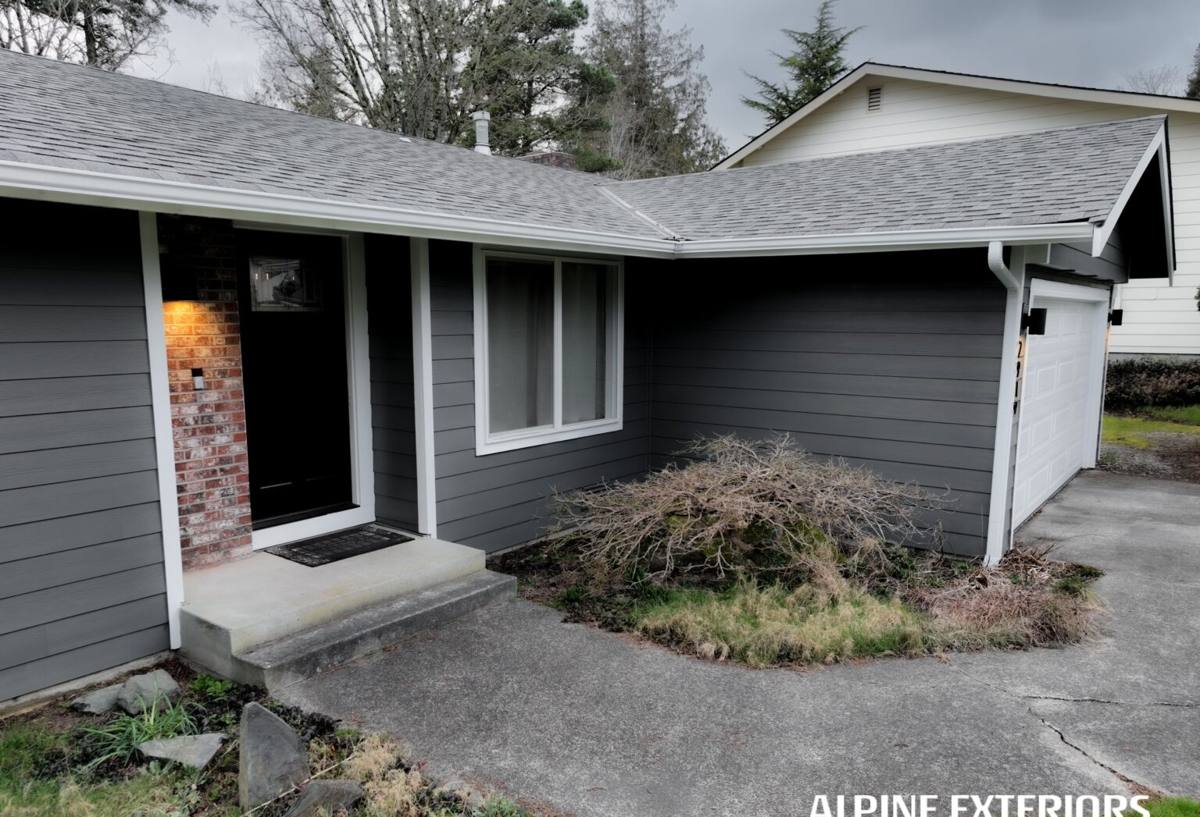
What Sehome Homes Actually Need From Their Siding
Given the conditions, siding in this neighborhood needs to do three things well: shed water instead of absorbing it, resist the moss and mildew growth that shaded, damp walls invite, and hold its fasteners and finish under repeated wet-dry cycling without swelling, cracking, or corroding. A product that looks good on a sunny showroom sample doesn't tell you much about how it will perform after a decade of Pacific Northwest winters.
This is also why installation quality matters as much as the product itself. Fiber cement siding installed with the wrong gaps, missing flashing, or fasteners driven in the wrong spot will fail in this climate regardless of the brand on the box. The material and the install have to be right together.
What a Correct Fiber Cement Installation Involves
A siding job that's built to last in Sehome's conditions isn't just nailing boards to the wall. The details that separate a correct install from a problem waiting to happen include:
- A drainable weather-resistive barrier behind the siding, with proper lapping so water is directed out and down, not trapped against the sheathing.
- Correct flashing at every window, door, deck ledger, and roof-to-wall transition — the places where most real-world leaks actually start.
- Manufacturer-specified gaps between siding and any hard surface (roofing, decks, walkways) so the bottom edge of the siding never sits in standing water or gets wicked moisture.
- Proper fastener placement and spacing, matched to the substrate, so panels stay secure through wind and seasonal movement without over-driving or under-driving nails.
- Correct joint treatment at butt seams and corners, sealed and caulked per spec rather than just butted together and hoped for the best.
- Factory-finished color and coating carried all the way to cut edges, with touch-up sealant applied where the material is field-cut.
Skip any one of these and you don't get an immediate failure — you get a slow one. That's the trap with siding: a rushed install can look perfect on installation day and still cause problems five or ten years down the road.
Why We Install Only James Hardie
We standardized on James Hardie fiber cement siding and don't install vinyl, LP SmartSide, Cemplank, Allura, primed spruce, or cedar. That's a deliberate choice, not a brand preference for its own sake. Hardie's fiber cement is non-combustible, which matters increasingly in Washington as wildfire-adjacent building considerations become more common even on the wet side of the state. It's engineered specifically for climate — Hardie's HZ5 product line is formulated for the Pacific Northwest's wet, moderate-temperature conditions rather than a one-size-fits-all national spec, and the factory-applied ColorPlus finish resists the fading and chalking that field-painted products are prone to under years of UV and rain exposure.
We're not going to tell you other products are junk — they're not, and each one has homeowners who are happy with it. What we will say is that after years of installing and standing behind siding work in this climate, fiber cement from a manufacturer that engineers specifically for wet coastal conditions, backs it with a strong transferable warranty, and finishes it at the factory rather than in the field is what we're willing to put our name on. That's the whole reason we don't install the alternatives — not because they can't work, but because we've chosen to specialize in one system we trust completely rather than install several we'd have reservations about.
How Fiber Cement Compares to Other Common Choices
| Material | Moisture Behavior in Wet Climates | Maintenance Burden | Typical Lifespan Factor |
|---|---|---|---|
| James Hardie fiber cement | Dimensionally stable, engineered HZ5 formula for wet regions | Occasional wash; factory finish resists fading | Long-term with correct install and upkeep |
| Vinyl siding | Can warp or buckle with temperature swings; seams can allow water behind panels | Low, but panels can't be repainted if faded | Moderate; brittle over time in cold snaps |
| LP SmartSide (engineered wood) | Wood-based core is more sensitive to sustained moisture exposure than cement | Requires vigilant caulk and paint maintenance | Moderate; installation quality is critical |
| Cedar or primed spruce | Natural wood; absorbs moisture, prone to moss and rot in shaded, damp areas | High — regular sealing, staining, and moss treatment | Shorter without diligent, ongoing maintenance |
Our Process for a Sehome Siding Job
Every job starts with a walk-around of the home to look at the current siding condition, the state of the water-resistive barrier and flashing underneath (where accessible), and any specific trouble spots — north-facing walls with heavy moss, areas near grade level, spots where trim meets siding awkwardly. From there:
- Assessment and estimate. We look at square footage, trim complexity, window and door count, and existing damage to give you an honest, itemized estimate — no surprise change orders for things we could have caught up front.
- Tear-off and inspection. Once old siding comes off, we inspect the sheathing underneath for rot or damage before anything new goes up. This is often where hidden problems from a prior installation surface.
- Barrier and flashing work. We install or repair the weather-resistive barrier and flashing at every penetration before a single piece of siding goes on. This step is invisible once the job is done, which is exactly why it's the step most likely to get rushed by crews that don't specialize in it.
- Siding installation. Hardie panels or lap siding go up to manufacturer spec — correct gapping, fastening, and joint treatment as described above.
- Trim, caulk, and touch-up. Cut edges get sealed, joints get caulked, and touch-up paint matched to the ColorPlus finish is applied where needed.
- Final walkthrough. We go over the finished job with you before calling it complete.
Cost Factors for a Sehome Fiber Cement Project
Every home is different, so we won't quote a number without seeing the job, but the factors that move the price on a typical siding project are consistent:
| Factor | Why It Matters |
|---|---|
| Home size and wall complexity | More corners, dormers, and roof-to-wall transitions mean more flashing and cutting labor |
| Current siding condition | Rotted sheathing found during tear-off adds repair work before new siding can go up |
| Siding profile and trim style | Lap siding, panel systems, and trim boards vary in material and labor cost |
| Access and site conditions | Steep or heavily landscaped lots, common on hillside sites, can affect staging and scaffolding needs |
| Color and finish selection | Factory ColorPlus finishes vs. field-painted options affect material cost and long-term upkeep |
Living With Fiber Cement in Sehome's Moss Season
Fiber cement doesn't feed moss the way wood does, but no siding is completely immune to buildup in a shaded, damp environment. The difference is what moss growth means for the material underneath. On wood siding, sustained moss and moisture contact can lead to rot. On correctly installed fiber cement, moss growth is a cosmetic issue you can rinse off — it's not eating into the substrate. A gentle rinse with a garden hose or soft wash once or twice a year, especially on north-facing and tree-shaded walls, keeps things looking clean without needing pressure washing, which can damage caulk lines and finishes if used carelessly.
Signs Your Current Siding May Need Attention
- Soft or spongy spots when pressed, especially near the bottom courses or under windows
- Persistent staining or dark streaking that returns quickly after cleaning
- Visible gaps opening up at seams, corners, or trim joints
- Paint that's peeling, bubbling, or chalking heavily to the touch
- Warping, bowing, or panels that no longer sit flat against the wall
Why Local Installation Experience Matters
Manufacturer specifications tell you the baseline — gap sizes, fastener spacing, clearance requirements. What they don't tell you is how those specs need to be applied on a specific hillside lot with mature tree cover, or which walls in a given neighborhood take the worst of the wind-driven rain off the Sound. A crew that's already worked on homes in and around Sehome has seen how the local terrain, tree canopy, and weather patterns actually play out on a wall over time, not just in a manual. That translates into better judgment calls on flashing details, drainage planning, and material handling in Whatcom County's damp working conditions — judgment that only comes from doing the work here repeatedly, not from reading a spec sheet once.
It also means faster, more realistic scheduling. Bellingham's wet season narrows the installation window every year, and a crew that plans around that reality — rather than discovering it mid-project — is less likely to leave a home with exposed sheathing during a stretch of driving rain.
Get a Straightforward Estimate
If your siding is showing its age, or you're planning ahead before the next wet season sets in, we're happy to take a look and give you an honest read on what your home needs — no pressure, no inflated scope. Use the form below to request a free estimate for fiber cement siding on your Sehome home.