 Bellingham Roofing
 Siding Installation for Lynden Homes
Lynden sits inland in the Nooksack River valley, in the far northern reach of Whatcom County near the Canadian border. It doesn't get the same headline coastal storms as waterfront towns closer to the Sound, but it sits squarely inside the same marine-influenced weather pattern that shapes exterior work across this whole corner of Washington. Moist air moves up the valley from the coast, rain through the fall and winter months arrives wind-driven more often than straight-down, and mild year-round temperatures give moss and mildew a growing season that barely takes a break. Siding installed without those specific loads in mind tends to show its age here faster than a homeowner expects, no matter what the product label promises.
This page is about one job on one type of home: installing new siding on a Lynden house, done to a standard that actually holds up against this climate. We install James Hardie fiber cement exclusively — not vinyl, not LP SmartSide, not Cemplank, Allura, primed spruce, or cedar — and everything below explains both what the climate demands and how the installation itself needs to go for that material choice to actually pay off.
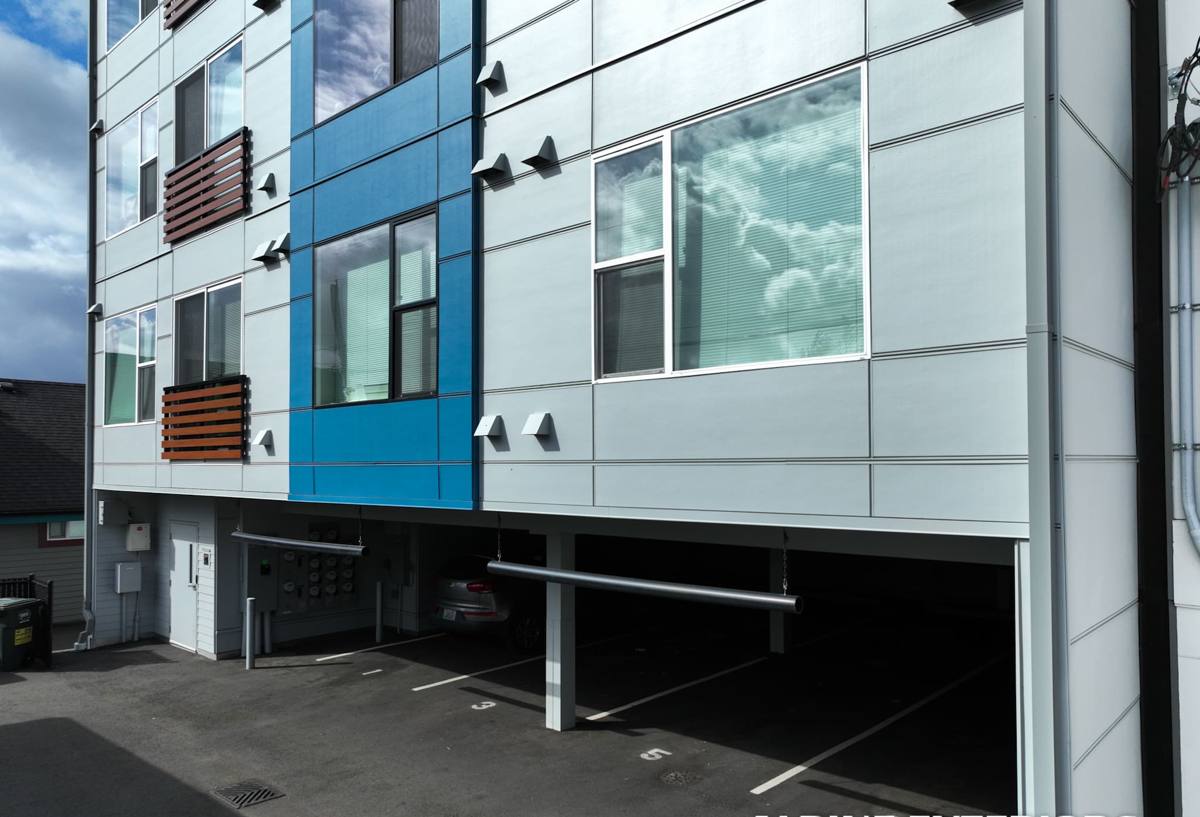
What Lynden's Climate Puts a New Siding Job Through
Salt Air, Even This Far Inland
Lynden is far enough from the immediate shoreline that it's easy to assume salt exposure isn't a real factor. It still is. Marine air carries inland across this whole part of Whatcom County, and over years it accelerates corrosion on fasteners, flashing, and lower-grade trim hardware. It's a slower process than at the immediate coast, but it's real enough that fastener and flashing material shouldn't be chosen as though this were a dry inland climate.
Wind-Driven, Sideways Rain
Rain through the wet months in this valley rarely falls straight down. Wind pushes it sideways into wall assemblies, window and door flashing, and the joints where trim meets siding. That sideways load is the detail that separates an installation that holds up for decades from one that starts letting water in behind the cladding within a few wet seasons — regardless of how good the siding material itself is rated to be.
A Long Moss and Mildew Season
Mild temperatures, tree cover, and near-constant moisture add up to a moss and mildew season that can run close to year-round on shaded walls. Any siding material that's porous, or that holds moisture against the substrate instead of shedding it, becomes a growth surface over time. Lynden's mix of open farmland and tree-sheltered residential lots means this plays out differently house to house — an open, field-facing wall dries out fast between rains; a shaded wall backed up against a tree line often doesn't dry out at all in winter.
What a Correct Siding Installation Actually Involves
Siding is a system, not a single layer of boards. A house can have the right material on the outside and still fail early if what's underneath it is wrong. On every installation, correct work means:
The Weather-Resistive Barrier
A continuous, properly lapped weather-resistive barrier goes on the wall sheathing before any siding touches it. Seams get taped or lapped shingle-style so water runs down and out, never into a seam. This layer is invisible once the job is done, which is exactly why it's the layer most likely to get shortcut on a rushed or underbid job.
Flashing at Every Penetration
Every window, door, hose bib, vent, and light fixture that punches through the wall needs flashing that directs water back out, not into the wall cavity. In a climate with sideways rain, flashing quality at these penetrations matters more than almost anything else in the whole installation — most siding failures we get called out to inspect trace back to a flashing detail that was skipped or done wrong years earlier, not to the siding material itself.
Proper Clearances and Fastening
Siding needs clearance off the ground, off roof lines, and off decks and patios so water and debris don't sit against the bottom edge. Fasteners need to be the right length and material, driven at the manufacturer's specified spacing and location on the board — not just wherever's convenient. Hardie publishes exact fastening and clearance specs, and following them is what keeps the warranty valid.
Correct Joint and Trim Work
Butt joints, corners, and trim-to-siding transitions all need to be detailed so water sheds away from the house rather than wicking into a cut edge. Cut edges on fiber cement need to be sealed or primed per the manufacturer's instructions — an exposed, unsealed cut edge is one of the more common ways moisture gets into an otherwise good installation.
Why We Install Only James Hardie Fiber Cement
We used to install a wider range of siding products. We narrowed that down to one system after seeing, repeatedly, what actually holds up in this climate over years versus what looks good on a spec sheet and struggles on a real wall a few winters in.
- Non-combustible core: Fiber cement doesn't feed a fire the way wood-based siding products can — a real factor for both safety and insurance underwriting.
- Factory-applied ColorPlus finish: The finish is baked on in a controlled factory process rather than brushed on in the field, holding color and adhesion far longer under sustained moisture and UV exposure than field-applied paint.
- Climate-engineered HZ product lines: Hardie's HZ5 formulation is built specifically for regions with significant moisture exposure and freeze-thaw cycling — which describes Lynden and the surrounding valley well.
- Dimensional stability: Fiber cement doesn't swell, cup, or warp the way engineered wood siding can after repeated wetting cycles over a wet season.
- A strong transferable warranty: Hardie backs the product with one of the more robust warranty structures in the industry, provided the installation follows their published specs — which is exactly why the installation details above matter as much as the material choice itself.
We don't install LP SmartSide, vinyl siding, Cemplank, Allura, primed spruce, or cedar. Each of those has a place in the market, and plenty of homeowners are satisfied with them. Our call is a professional one: in a climate with this much sustained moisture and salt exposure, we'd rather stand fully behind one system than offer a cheaper option that quietly shifts maintenance risk onto the homeowner a few years down the line.
How Common Siding Options Compare in This Climate
| Material | Moisture Behavior | Maintenance Burden | Typical Lifespan Here |
|---|---|---|---|
| James Hardie fiber cement | Sheds water, doesn't swell or rot; factory finish resists moss staining | Low; occasional wash-down | 30-50+ years installed to spec |
| Vinyl | Doesn't rot but can warp/crack in temperature swings; seams can let water behind panels | Low, but limited repair options if damaged | 20-30 years |
| LP SmartSide (engineered wood) | Wood-based core is more moisture-sensitive; edge sealing is critical | Moderate; edge and joint inspection needed | 20-30 years with diligent upkeep |
| Cedar | Absorbs moisture readily; needs airflow and regular treatment to perform in this climate | High; refinishing and moss control on a recurring cycle | 20-30 years with consistent maintenance |
| Primed spruce | Softwood core, moisture-sensitive at cuts and joints if maintenance lapses | High; repainting and joint monitoring | 15-25 years, heavily maintenance-dependent |
How the Job Runs, Start to Finish
1. Site Assessment
We look at wall orientation, tree cover, and how much shade and standing moisture each side of the house deals with — a shaded, north-facing wall in Lynden isn't dealing with the same conditions as a south-facing wall in an open field, and that affects both prep work and product finish recommendations.
2. Removal and Substrate Check
Old siding comes off and the sheathing underneath gets inspected for rot or water damage before anything new goes up. Covering a compromised wall with new siding just hides a problem that gets worse out of sight — any damaged sheathing gets repaired before the weather barrier goes on.
3. Weather Barrier and Flashing
New weather-resistive barrier goes on with proper laps, and flashing gets installed or replaced at every window, door, and penetration. This is the step that matters most for long-term performance and the one we won't rush regardless of schedule pressure.
4. Siding Installation
Hardie boards or panels go up per manufacturer fastening spec — correct nail type, spacing, and clearance at every course. Joints and corners get detailed to shed water, and cut edges get sealed as specified.
5. Trim, Caulk, and Final Detailing
Trim goes in around windows, doors, and corners, with caulking limited to the joints Hardie's specs actually call for — over-caulking can trap moisture just as easily as under-caulking lets it in.
6. Final Walkthrough
We walk the finished job with the homeowner, checking sightlines, color consistency, and clearances before calling it done.
Signs of a Rushed or Incorrect Siding Job
Homeowners comparing bids in Lynden are usually comparing price, but the details below are what actually determine whether that price holds up over the next twenty years:
- Siding installed tight to grade, decks, or roof lines with no clearance gap
- No visible flashing detail called out around windows and doors in the bid
- Cut ends of boards left unsealed or unprimed
- Fastener spacing left vague, or nail guns set to a single pressure for every course regardless of manufacturer spec
- A quote that doesn't mention the weather-resistive barrier at all
Any one of these can look fine on installation day and still cause a real problem within a few wet seasons — which is exactly why we spell them out here instead of assuming they're understood.
What Cost Actually Depends On
| Factor | Why It Moves the Number |
|---|---|
| Wall square footage and home shape | More corners, gables, and cutouts mean more cutting, trim, and labor time |
| Condition of the existing sheathing | Rot repair found during tear-off adds real cost but isn't optional to skip |
| Siding profile chosen | Lap siding, shingle-style panels, and board-and-batten each price differently in labor |
| Trim and detail work | More windows, dormers, and architectural detail mean more precise trim carpentry |
| Access and site conditions | Steep lots, tight setbacks, or extensive landscaping near the walls affect staging and labor time |
We won't quote a firm number without seeing the house, but we'll walk you through which of these factors is actually driving your estimate rather than handing you a number with no explanation behind it.
Why a Crew That Already Works Lynden Matters
Siding contractors who bid a Lynden job once and move on tend to specify and install as though this were a generic, dry-climate house. A crew that already works this valley regularly has already seen which walls hold moisture longest, which flashing shortcuts show up as callbacks two winters later, and which fastener choices actually corrode faster under sustained marine air. That local pattern recognition doesn't show up on a spec sheet — it shows up in fewer callbacks and a siding job that's still doing its job a decade in.
If you're planning a siding project for a Lynden home, we're glad to walk the house with you, explain what your specific walls are dealing with, and put together a clear, no-pressure estimate — just fill out the form below to get started.