 Bellingham Roofing
 Storm Damage on Silver Beach Roofs Isn't Like Storm Damage Anywhere Else in Bellingham
Silver Beach sits close enough to Bellingham Bay that homes there deal with a different mix of weather stress than roofs a few miles inland. You get the same Pacific storm systems that hit the rest of Whatcom County, but layered on top of that is salt-laden air off the water, wind that drives rain sideways under shingle edges and flashing laps, and a moss season that runs longer than most homeowners expect. None of these are dramatic on their own. Together, over years, they wear a roof down faster than the same roof would age in a drier, less exposed part of town.
When we get called out to Silver Beach after a windstorm or a heavy rain event, the damage pattern is usually recognizable before we even get on the ladder: lifted or creased shingles on the water-facing slopes, staining or soft spots where moss has been holding moisture against the roof deck, and flashing that's corroded faster than its age would suggest. Storm damage repair here isn't just "fix what blew off" — it's fixing what blew off in a way that accounts for why it blew off, so the next storm doesn't undo the repair.
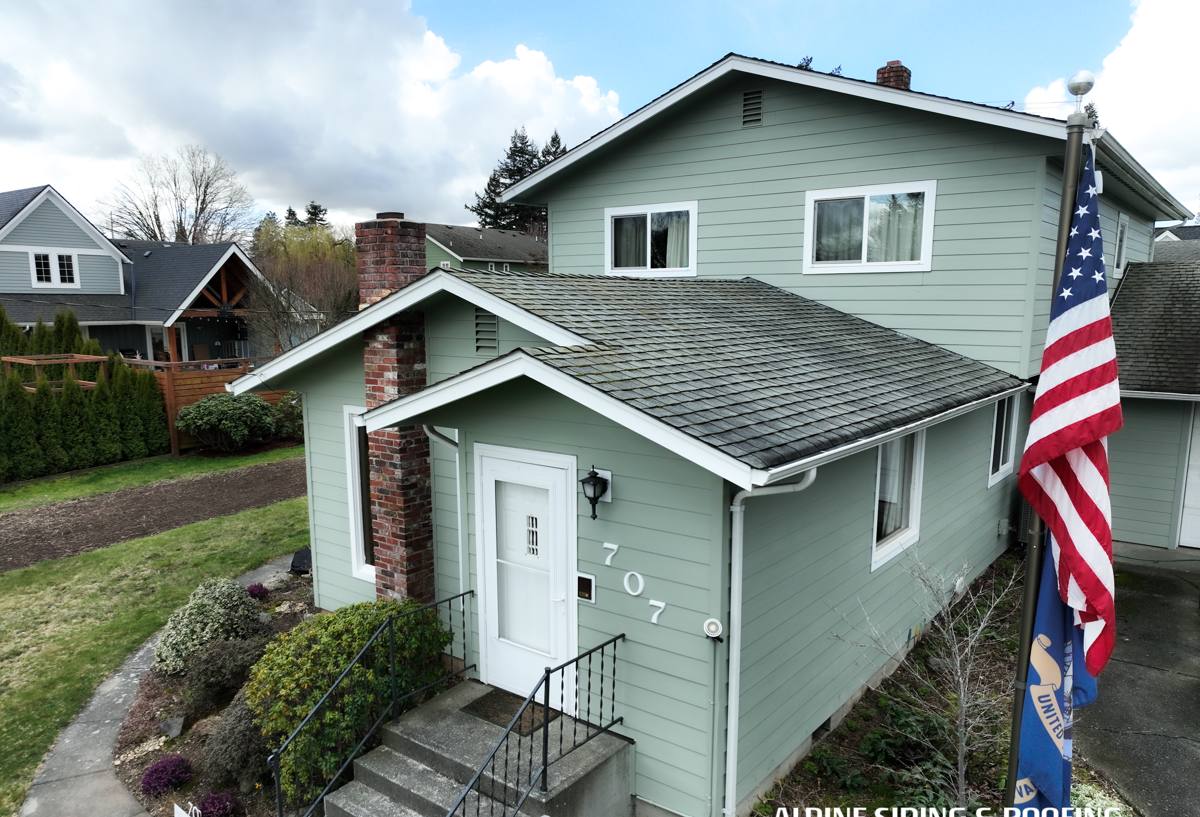
What Salt Air, Wind-Driven Rain, and Moss Actually Do to a Roof
Salt Air
Airborne salt from the bay settles on roofing materials and speeds up corrosion on anything metal — nails, flashing, gutter hardware, vent stacks. A fastener that would hold for decades inland can start showing rust streaks and losing grip years earlier this close to the water. Once fasteners weaken, shingles and flashing have less to hold them down when wind picks up.
Wind-Driven Rain
Storms coming off the water don't just drop rain straight down — they push it sideways and upward, under shingle tabs and behind flashing that's designed to shed water moving downhill, not water moving sideways. This is why storm damage on a Silver Beach roof often shows up as interior leaks near chimneys, skylights, and wall-roof intersections rather than as obvious missing shingles.
Extended Moss Season
The combination of shade, moisture, and mild temperatures around Bellingham keeps moss active longer here than in drier parts of the state. Moss holds water against shingles and decking, and it works its way under shingle edges, lifting them slightly and giving wind something to grab onto during the next storm. A roof with heavy moss going into storm season is at higher risk of storm damage than a clean one, even if the shingles themselves are otherwise sound.
What a Correct Storm Damage Repair Actually Involves
A rushed repair after a storm often means a tarp, a few replacement shingles, and a caulk gun. That buys time but doesn't address why the damage happened. A correct repair for a Silver Beach home generally includes:
- A full roof inspection, not just a spot-check of the obviously damaged area — wind and salt exposure rarely stay confined to one spot
- Checking the roof deck itself for soft spots or moisture damage where shingles lifted or moss sat too long
- Replacing damaged shingles with matching material, properly nailed and sealed for the exposure this location gets
- Inspecting and, where needed, replacing flashing around chimneys, vents, skylights, and wall intersections — these are the most common source of wind-driven rain leaks
- Checking fastener condition nearby, since corroded nails near the repair area are likely to fail again soon
- Clearing moss and debris from the surrounding roof surface so the repair isn't undermined by trapped moisture
- Checking gutters and downspouts for storm debris that can back water up under the roof edge
Skipping any of these steps doesn't necessarily cause an immediate problem — it just means the roof is likely to need the same repair again after the next significant storm.
Signs a Silver Beach Roof Has Storm Damage
- Shingles that look lifted, curled, or creased, especially on the side of the roof that faces the water
- Granules collecting in gutters or at downspout outlets after a storm
- New or worsening water stains on ceilings or upper interior walls
- Visible gaps in flashing around chimneys or vent pipes
- Moss buildup combined with any of the above — moss doesn't cause a leak by itself, but it makes existing weak points worse
Our Process for Silver Beach Storm Repairs
1. Assessment
We inspect the full roof, not just the area a homeowner points to, since wind damage often affects more of the roof than what's visible from the ground. We also check the deck and interior where leaks have shown up.
2. Honest Scope
We tell you plainly whether you're looking at a targeted repair, a larger section replacement, or — if the roof is older and this storm just exposed problems that were already there — a conversation about full replacement timing. We're not going to sell repair work on a roof that's genuinely past the point of it making financial sense, and we're not going to push replacement on a roof that a proper repair will handle for years.
3. Repair Matched to the Exposure
Because of the salt air and wind-driven rain here, we pay particular attention to fastener choice and flashing detail on Silver Beach jobs — details that matter less on a more sheltered roof inland but matter a lot on a bay-facing one.
4. Cleanup and Documentation
We clear debris, remove moss from the repaired area and its surroundings, and document the work and materials used so you have a record for insurance or future reference.
Repair vs. Replacement After Storm Damage
Not every storm-damaged roof needs full replacement, and not every roof that "just needs a patch" should be patched. The right call depends on the roof's age, how much of it is affected, and what condition the rest of it is in.
| Factor | Favors Repair | Favors Replacement |
|---|---|---|
| Roof age | Under 12–15 years, otherwise in good shape | Near or past expected lifespan for the material |
| Damage extent | Isolated to one section or a few areas | Widespread across multiple slopes |
| Deck condition | Solid, no rot found during inspection | Soft spots or moisture damage found in decking |
| Prior repair history | First significant repair needed | Repeated repairs to the same areas over recent years |
| Moss/moisture history | Managed, minimal buildup | Long-term heavy moss with underlying shingle wear |
If we find a roof that's borderline, we'll walk through the tradeoffs with you rather than default to the more expensive option. A well-executed repair on a roof with reasonable life left is usually the better value; replacing shingles patch after patch on a roof that's genuinely at end of life usually isn't.
Cost Factors for Storm Damage Repair
Costs for storm damage repair vary a lot based on scope, and we'd rather give you an accurate number after a real inspection than a broad estimate that doesn't reflect your roof. In general, the biggest cost drivers are:
- How much roof area is affected and how many separate spots need attention
- Whether flashing needs to be replaced, not just resealed
- Whether the deck underneath needs repair, which adds material and labor beyond the shingle layer
- Roof pitch and accessibility
- Matching existing shingle color and profile, which can be harder on older roofs
Small, contained repairs are typically a few hundred to low thousands of dollars; larger storm-related sections or repeated flashing failures across the roof push toward the higher end of repair pricing, and that's usually the point where we'll also talk through whether replacement makes more sense long-term.
Why It Matters That We Already Work in Silver Beach
A crew that mostly works inland neighborhoods can still do competent shingle work, but they may not think to check fastener corrosion the way a crew that works bay-adjacent properties does automatically. Storm damage repair near the water calls for the same core skill set as anywhere else, plus a working knowledge of how salt exposure, wind direction off the bay, and this area's moss season change what "done right" looks like. That's the kind of thing you pick up from doing the work here repeatedly, not from a general roofing checklist.
We also know that storm damage repairs are often time-sensitive — a compromised roof lets more water in with every additional storm that passes before it's fixed. Being familiar with this neighborhood means less time spent figuring out the situation and more time spent actually fixing it.
Get a Free, No-Pressure Estimate
If a recent storm has left your Silver Beach roof with lifted shingles, a new leak, or damage you're not sure how serious it is, we're happy to take a look. There's no cost and no pressure — just an honest read on what happened and what it'll take to fix it right. Use the form below to request your free estimate.