 Bellingham Roofing
 Composite Decking Built for South Hill's Climate
South Hill sits on elevated, tree-shaded ground close to downtown Bellingham and Fairhaven, and that combination shapes what a deck needs to survive here. You're getting salt-laden air drifting up from Bellingham Bay, driving rain off the Sound through the fall and winter, and a long stretch of the year when shade, moisture, and cool temperatures add up to steady moss and algae growth on any horizontal surface. A deck built without that in mind will show it within a couple of seasons — soft spots, green staining, slick footing, and fasteners that bleed rust through the boards.
Composite decking, installed correctly, holds up to that combination better than most alternatives. But "composite decking" covers a wide range of products and installation approaches, and the difference between a deck that looks good for twenty years and one that needs early repairs almost always comes down to what's underneath the boards and how the whole system was put together, not just the brand printed on the box.
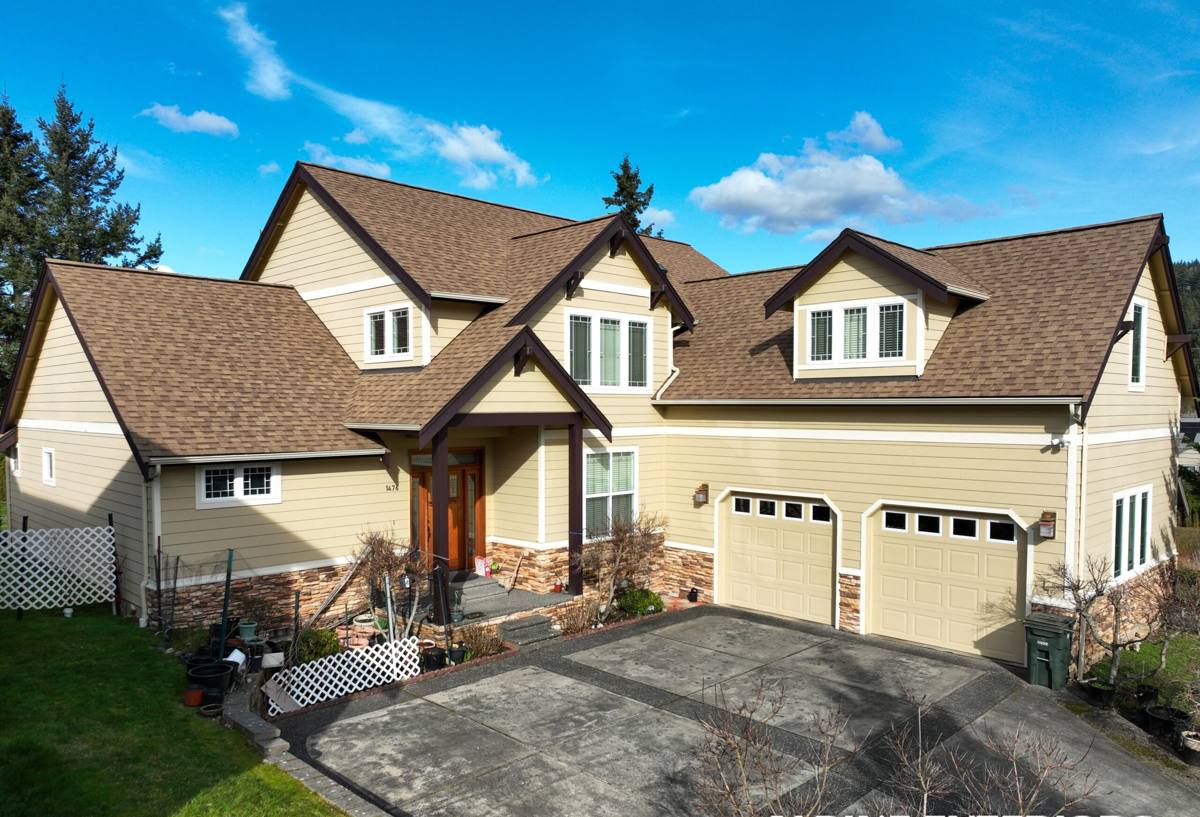
What South Hill Homes Actually Need From a Deck
Whatcom County's climate doesn't hit every deck the same way. A few things come up again and again on South Hill jobs specifically:
- Shade and moisture together. Mature trees are common on South Hill lots, and shaded decking stays damp far longer after rain than a deck in open sun — which is exactly the condition moss and algae need.
- Elevated, sloped lots. Hillside framing often means taller support posts, more complex footings, and drainage that has to be planned rather than left to chance.
- Salt air corrosion. Proximity to Bellingham Bay means metal hardware — screws, joist hangers, post bases — corrodes faster than it would inland, even under a roof or overhang.
- Older homes, newer additions. A lot of South Hill housing stock is older, which means decks are frequently tied into ledger boards, siding, and framing that weren't built to modern flashing standards and need extra attention at the point of attachment.
None of this makes composite decking a bad fit for South Hill — it's actually one of the better options for this exact set of conditions. It just means the installation has to account for these things instead of using a generic approach.
Why Composite Makes More Sense Here Than Wood
We still install wood decking when a homeowner wants that look and understands the upkeep. But for South Hill's shade-and-rain pattern, composite is the more honest recommendation for most homeowners who want to spend their weekends doing something other than deck maintenance.
| Factor | Wood Decking | Composite Decking |
|---|---|---|
| Moss and algae resistance | Needs regular cleaning and re-treating | Cap layer resists staining and growth much longer |
| Moisture absorption | Absorbs and releases moisture, driving cupping and splitting | Minimal absorption with a properly capped board |
| Refinishing | Sanding, staining, or sealing every 1–3 years | No staining or sealing required |
| Splintering underfoot | Common as wood ages, especially barefoot decks | Not an issue with intact capped boards |
| Upfront material cost | Lower | Higher |
| Long-term cost over 15–20 years | Higher, once refinishing labor is counted | Lower, mainly periodic cleaning |
The trade-off is real: composite costs more upfront. For a deck that sits under trees on a shaded South Hill lot, though, the maintenance savings and moss resistance usually make up the difference well before the deck is due for replacement.
What a Correct Composite Deck Installation Involves
Framing and Structure
Composite boards are only as good as what they're screwed to. We frame to the joist spacing the manufacturer specifies for the board profile — often tighter than standard wood-deck spacing — because composite behaves differently than lumber under load and heat. On sloped South Hill lots, that also means footings and post heights are set to match the actual grade, not a flat-lot assumption, so the structure doesn't shift as the ground settles or drains.
Flashing and Ledger Attachment
Where a deck ties into the house, the ledger board and flashing are the single most important detail for keeping water out of the wall assembly behind it. This is especially true on older South Hill homes where the original siding and sheathing weren't detailed for a deck attachment. We flash the ledger properly and use a code-compliant fastening pattern rather than relying on the siding to shed water on its own.
Hidden Fasteners and Board Layout
Most composite decking today uses a hidden fastener system that clips boards from the side rather than screwing through the face. Done right, this gives a clean surface with no exposed screw heads to trap moisture or corrode, and it lets boards expand and contract with temperature changes without cracking. Board runs are laid out to minimize seams and end-cuts in high-visibility areas, and every cut end gets sealed or capped per the manufacturer's requirements — an easy step to skip, and one of the first places rot and staining start if it's skipped.
Drainage Underneath
On a shaded, rain-heavy lot, what happens under the deck matters almost as much as the surface. We grade and, where needed, add drainage beneath the structure so water isn't sitting against posts, beams, or the underside of the decking through the wet months. A deck that drains well underneath stays drier on top, too.
Our Process From Estimate to Finished Deck
- On-site assessment. We look at the existing structure or bare site, the slope, tree cover, and how the deck ties into the house before quoting anything.
- Honest scope and estimate. You get a clear breakdown of what's structural work versus decking material, so you know what you're paying for.
- Material selection. We walk through board options suited to a shaded, salt-air lot — color, cap type, and grip texture all factor in.
- Permitting. Deck work that changes structure or height typically requires a permit through the City of Bellingham or Whatcom County depending on your location; we handle that process.
- Demo and framing. Old decking and, if needed, old framing come out; new structure goes in to spec, including flashing at the house.
- Decking installation. Boards go down with the correct fastener system, spacing, and sealed cut ends.
- Final walkthrough. We go over the finished deck with you, including basic care, before calling the job done.
Choosing the Right Board for a Salt-Air, Moss-Prone Lot
Not all composite decking is built the same, and the differences matter more in a climate like this one than they do in drier parts of the country.
Capped vs. Uncapped Composite
Capped composite boards have a protective outer shell wrapped around a wood-plastic core. That cap is what actually resists moisture absorption, staining, and fading. Uncapped composite, which is less common now, is more exposed to the wood fibers in its core and tends to hold moisture and stain more readily — a real disadvantage in a shaded, wet climate. For South Hill jobs, we steer homeowners toward fully capped boards because the extra upfront cost is where the real weather resistance comes from.
Surface Texture and Grip
A slick deck surface is a real hazard once moss film and winter rain are in the mix. Most composite lines now offer a textured, low-sheen finish designed for wet-climate grip rather than a smooth, glossy look. We factor slip resistance into the recommendation, not just color and price.
Color and Heat Considerations
Darker boards show less dirt and streaking but can run noticeably warmer underfoot in direct sun. On a mostly shaded South Hill lot, that's less of a concern than it would be on an open, south-facing deck — one more reason the right choice depends on your specific site, not a one-size answer.
Maintenance: What Composite Actually Needs on South Hill
Composite decking is low-maintenance, not no-maintenance. In a climate with a long moss season, a little regular attention keeps a deck looking new for its full warranty life instead of just the first few years.
- Sweep off leaves, needles, and debris regularly, especially in fall — trapped organic material is what feeds moss and algae growth.
- Rinse the deck with a garden hose every few weeks during wet months to keep spores from settling into the board texture.
- Clean with a soft-bristle brush and a cleaner rated for composite decking once or twice a year; skip pressure washers on the highest settings, which can damage the cap layer.
- Keep planters, mats, and furniture feet from sitting in one spot too long, since trapped moisture underneath them is a common spot for early staining.
- Check fastener hardware and railing connections annually for corrosion, particularly on decks with more direct bay exposure.
- Clear gutters and downspouts near the deck so runoff isn't draining directly onto or under the decking.
What Composite Decking Costs on South Hill
Every deck is different once you account for slope, structure, size, and railing, but these are the main factors that move the price up or down on a typical South Hill project.
| Cost Factor | Why It Matters |
|---|---|
| Board tier (capped vs. entry-level composite) | Higher-cap boards cost more per square foot but resist moisture and staining longer |
| Substructure condition | Sloped lots or rotted existing framing add structural work beyond surface decking |
| Footings and post height | Elevated South Hill lots often need deeper footings and taller posts than a flat-lot deck |
| Railing system | Composite or metal railing adds cost over a simple wood rail but matches the low-maintenance goal |
| Fastener and flashing details | Corrosion-resistant hardware and proper ledger flashing cost more but prevent early failures |
| Permit requirements | Structural changes or height thresholds may require permitting, adding time and a fee |
Broad ranges for a straightforward composite deck rebuild run from the low thousands for a small, simple deck to well into five figures for a large, elevated deck with railing and structural rework. The only way to get an accurate number is to see your specific lot and existing structure.
Why Hiring a Crew That Already Works South Hill Matters
A lot of what makes a deck last here isn't visible once the project is done — it's the flashing behind the ledger, the fastener grade chosen for salt-air exposure, the footing depth set for a sloped lot, and the drainage planned underneath. Crews that regularly work South Hill and the surrounding Bellingham neighborhoods have already seen how these older homes are built, how the local grade and drainage typically behave, and where decks in this specific climate tend to fail if corners get cut. That local pattern recognition is what keeps a bid honest and a build correct the first time, instead of a callback two winters later.
If you're planning a new composite deck or replacing an aging one on South Hill, we're happy to take a look and give you a straightforward, no-pressure estimate — just fill out the form below to get started.