 Bellingham Roofing
 Building Decks for South Hill's Conditions
South Hill sits above downtown Bellingham with mature tree cover, older established homes, and the kind of Pacific Northwest weather that treats an outdoor structure very differently than it would in a drier climate. Driving rain off Bellingham Bay, salt-laden air, and a moss season that can run most of the year all work against a deck that wasn't built with this specific environment in mind. A deck that looks great the day it's finished but wasn't detailed for wind-driven moisture, hardware corrosion, and shade-driven moss growth will start showing problems within a few seasons — soft spots, black staining, loose fasteners, and slick walking surfaces.
Building decks correctly for South Hill isn't about using different tools than anywhere else. It's about making a handful of decisions differently at every stage — flashing details, fastener grade, board spacing, drainage slope, and material selection — because the climate here punishes shortcuts faster than it does in most parts of the country.
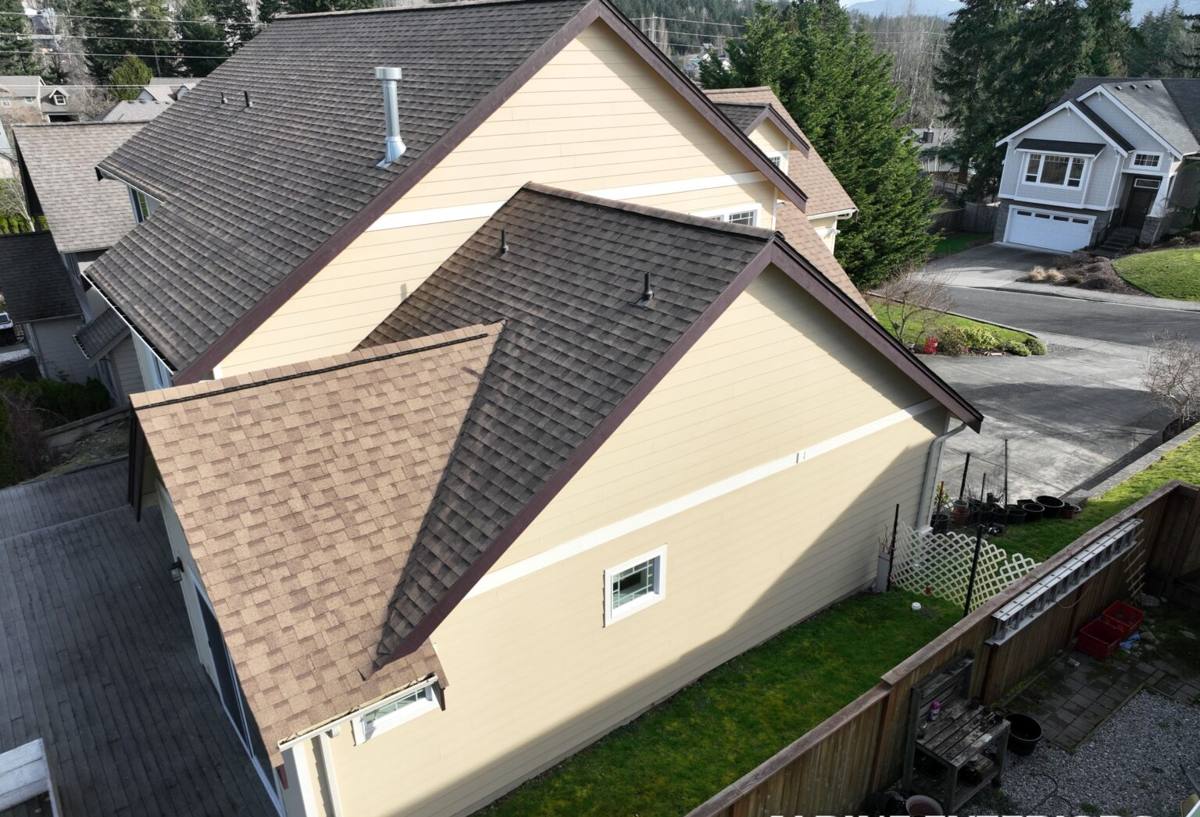
What South Hill Homes Actually Need From a Deck
Whatcom County's combination of heavy seasonal rainfall, coastal humidity, and shaded lots (common on hillside streets with tree canopy) creates a specific set of demands:
- Fast-draining surfaces so water doesn't pool and feed moss or algae growth
- Corrosion-resistant fasteners and hardware, since salt air accelerates rust on standard-grade metal
- Proper ledger flashing where the deck attaches to the house, since this is the single most common failure point on Pacific Northwest decks
- Footings set to the correct depth for local soil and frost conditions, not just a generic minimum
- Board spacing and orientation that account for shade patterns and slower drying times
None of these are exotic requirements. They're standard good practice — but they're the details that get skipped when a crew is used to building in a drier climate or is rushing through a job without local experience.
Choosing the Right Decking Material
There's no single "best" decking material for every South Hill home — the right choice depends on how much sun the deck gets, how much upkeep the homeowner wants to do, and budget. Here's how the common options actually perform in this climate.
Pressure-Treated Wood
Still the most affordable option and a solid choice when properly maintained. It needs regular cleaning and re-sealing to resist moss and moisture staining, especially on shaded sections of the deck. Skipping maintenance is the main reason wood decks in this area age poorly.
Cedar
Naturally more rot- and insect-resistant than standard framing lumber, with a look many homeowners prefer. It's still an organic material, though, and will gray and require periodic cleaning and finishing to hold its appearance and shed moisture well.
Composite Decking
Composite boards resist rot and don't require staining, which appeals to homeowners tired of the maintenance cycle. The trade-off is that composite can still grow surface mold or algae in persistently shaded, damp spots if it isn't cleaned occasionally — it resists rot, not organic growth on the surface.
Capped Composite / PVC
A capped or fully PVC board adds a protective outer layer that sheds moisture better and resists staining more effectively than uncapped composite. It costs more up front but generally needs the least intervention over time, which matters on a shaded lot where moss pressure is constant.
| Material | Moisture & Salt Air Performance | Moss/Algae Resistance | Maintenance Needed |
|---|---|---|---|
| Pressure-Treated Wood | Good if sealed regularly | Low without upkeep | Annual cleaning & re-sealing |
| Cedar | Good, naturally rot-resistant | Moderate | Periodic cleaning & finishing |
| Composite | Very good, won't rot | Moderate — surface growth possible in shade | Occasional washing |
| Capped Composite/PVC | Excellent | Good | Minimal, occasional washing |
The Structural Details That Actually Matter Here
The decking surface is what homeowners see, but the structure underneath is what determines whether a deck lasts. In a climate like this, a few details separate a deck that holds up from one that doesn't:
Ledger Flashing
Where the deck framing bolts into the house is the most vulnerable point for water intrusion. Proper flashing — installed in the right layered sequence with the house's existing weather barrier — keeps water from working its way behind siding and into framing over time. This detail is invisible once the deck is finished, which is exactly why it's the detail worth asking about.
Fasteners and Hardware
Standard galvanized hardware can corrode faster near the coast than inland. Stainless or heavy-duty coated fasteners and structural connectors cost more but hold up substantially longer under Whatcom County's combination of rain and salt air.
Footings and Framing
Footings need to be sized and set to local frost and soil conditions, not a one-size-fits-all minimum. On sloped South Hill lots, this often means additional engineering thought around footing placement and post height that a flat-lot deck wouldn't need.
Drainage and Slope
A deck surface should have a slight slope away from the house so water sheds instead of pooling. Combined with proper joist spacing and, where used, joist tape to protect the framing from standing moisture, this is what keeps the structure dry underneath the boards for the long haul.
Our Deck Building Process
Every deck we build goes through the same sequence, adjusted for the specific site:
- Site visit and design conversation — we look at sun exposure, drainage, tree cover, and how the space will actually be used before talking materials.
- Material and layout selection — matched to budget, maintenance preference, and the shade/moisture conditions of that specific spot on the property.
- Permitting — new decks typically require a permit; we handle the paperwork and inspections that go with it.
- Site prep and footings — set to proper depth for the soil and load conditions on site.
- Framing and ledger installation — including full ledger flashing detail, not a shortcut version.
- Decking, railing, and finish work — installed with attention to drainage slope and board spacing.
- Final walkthrough — we go over care and maintenance specific to the material you chose.
Cost Factors for a South Hill Deck
Every deck is priced around its own specifics, but the same handful of factors drive cost up or down on most projects:
| Factor | How It Affects the Project |
|---|---|
| Size and layout | Larger footprints, multiple levels, or built-in features add material and labor |
| Decking material | Pressure-treated wood is the most affordable; capped composite/PVC costs more up front but less over time |
| Site access and slope | Hillside lots common in South Hill can require more work getting materials and equipment to the build site |
| Footings and substructure | Soil conditions and frost depth requirements affect how footings are sized and placed |
| Railing style | Cable, glass, and custom railing systems cost more than standard baluster railing |
| Permitting requirements | Deck height, attachment to the house, and location can all affect the permitting process |
A general contractor deck can range widely depending on these factors — the only way to get a real number is a site visit, which is exactly what a free estimate is for.
Living With a Deck in This Climate: Maintenance That Matters
No deck material is maintenance-free in Whatcom County — some just need less than others. A short seasonal routine goes a long way toward preventing the moss buildup and moisture damage that shorten a deck's life here:
- Sweep leaves and debris off the surface regularly, especially in fall when tree cover sheds onto shaded decks
- Clean the deck surface at least once a year to remove moss, algae, and organic buildup before it stains or gets slick
- Check and re-seal wood or cedar decking on the schedule recommended for that finish — don't wait until it's visibly failing
- Keep gutters and downspouts near the deck clear so runoff isn't draining directly onto or under it
- Inspect ledger flashing, fasteners, and railing connections annually for early signs of corrosion or movement
- Trim back overhanging branches where practical to reduce shade and speed up drying between rains
Why Hire a Crew That Already Works South Hill
Deck building looks straightforward from the outside, but the details that matter most — flashing sequence, fastener grade, footing depth, drainage slope — are exactly the details that don't show up in a photo and are easy to shortcut. A crew that regularly works South Hill and the greater Bellingham area already knows how local permitting works, how shaded hillside lots drain, and how fast moss takes hold on a surface that isn't detailed to shed water. That familiarity shows up later, in a deck that's still solid and low-maintenance years after it's built, instead of one that needs early repairs because it was built to a generic standard instead of a Whatcom County one.
If you're planning a new deck or replacing one that's showing its age, we're happy to take a look and talk through what makes sense for your property. Reach out for a free, no-pressure estimate using the form below — we'll walk the site, answer your questions, and give you a straight answer on what the project involves.