 Bellingham Roofing
 Why South Hill Homes Put Extra Demands on a Roof
South Hill sits close enough to the water and high enough on the slope that it catches weather most inland Bellingham neighborhoods don't deal with in the same combination. Homes here take on salt-laden air off Bellingham Bay, driving rain that comes in sideways during winter storms, and a moss season that can run eight months or longer under the tree cover common to the area. None of these are dealbreakers for a roof, but together they narrow down what actually holds up long-term versus what looks fine for the first few years and then starts causing problems.
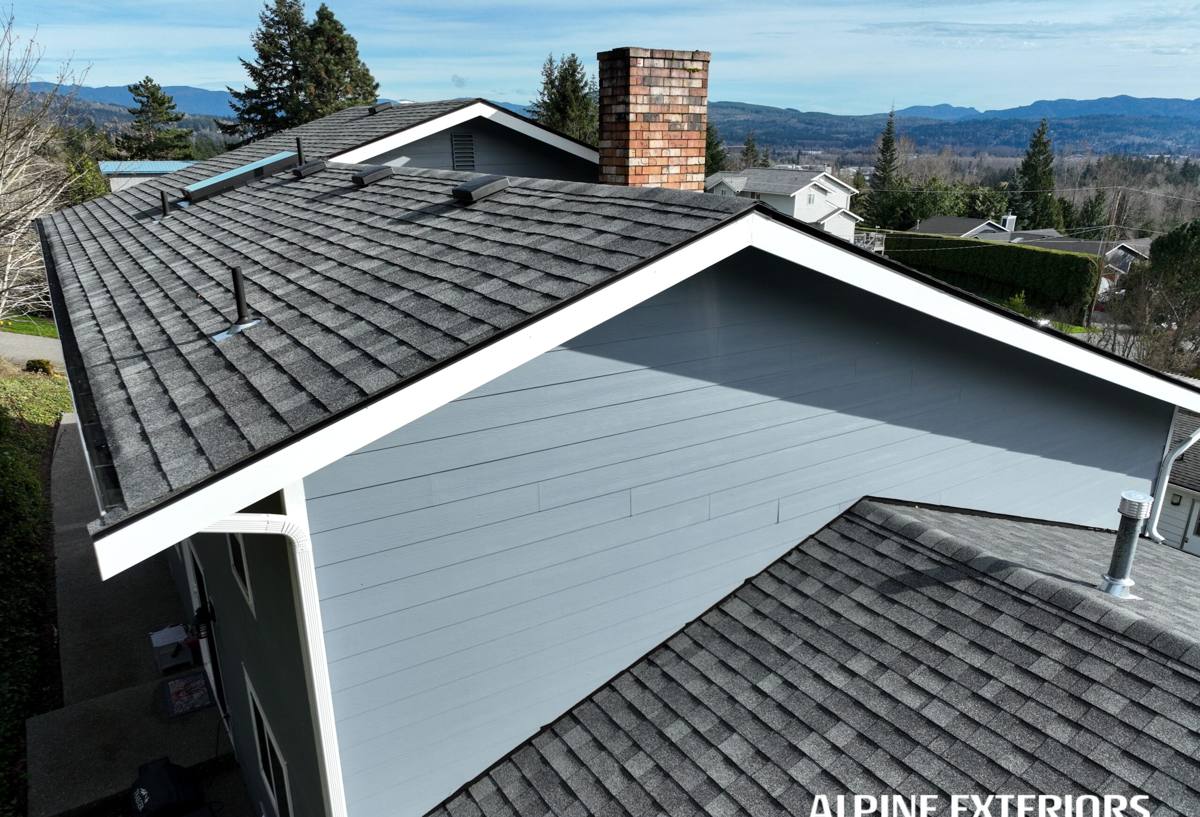
A roof in South Hill isn't just shedding water in a straight vertical line off a flat lot. Wind-driven rain gets pushed up under laps and around penetrations, especially on the exposed west- and south-facing slopes that catch storms coming off the Strait. Add in the shade from mature trees on many South Hill lots, and you've got the two ingredients moss needs most: moisture that lingers and surfaces that stay damp. Asphalt shingles give moss something to grip onto and grow roots into. Metal doesn't offer that same foothold, which is a big part of why we get asked about metal roofing more in this neighborhood than almost anywhere else we work in Whatcom County.
Why Metal Roofing Fits South Hill's Conditions
Metal roofing isn't the right call for every home or every budget, and we'll say that plainly during an estimate. But for South Hill's specific mix of salt air, rain, and shade, it solves more of the recurring problems than most other roofing materials on the market.
- Moss resistance: The smooth, hard surface of a metal panel gives moss spores nowhere to anchor the way granulated shingle surfaces do, which cuts down dramatically on the moss treatments and gutter clogging that shaded South Hill roofs deal with every fall.
- Water shedding: Standing seam and properly lapped panel systems move water off the roof fast, which matters when driving rain is hitting the slope at an angle instead of falling straight down.
- Wind performance: Panels mechanically fastened or seamed together handle gusts off the water better than materials that rely on adhesive strips or individual tabs.
- Longevity against salt exposure: Coated steel and aluminum panels are built to resist the corrosion that salt air accelerates, as long as the coating system and fasteners are matched correctly — more on that below.
Standing Seam vs. Exposed Fastener Panels
Most of what we install in South Hill falls into one of two categories. Standing seam panels use hidden clips and interlocking seams, with no exposed screws punching through the panel face. That makes them the stronger choice for coastal exposure, since every exposed fastener is a potential point where a rain-driven wind can work water backward under the head over time. Exposed fastener panels (sometimes called corrugated or ag-panel style) cost less up front and install faster, and they're a legitimate option for shops, garages, and secondary structures. For the primary house roof in a salt-air, high-wind pocket like South Hill, we generally steer homeowners toward standing seam unless budget rules it out — and if it does, we'll tell you honestly what the trade-off looks like rather than talk you into it anyway.
What a Correct Metal Roof Installation Actually Involves
The material is only part of the equation. A metal roof that fails early almost never fails because the panels themselves were bad — it fails because of what's underneath or around them. This is where South Hill's climate makes the details non-negotiable.
Underlayment and Water Protection
Metal panels expand and contract with temperature swings, and in a wet climate the underlayment beneath them is doing more work than most homeowners realize. We use synthetic underlayment rated for the panel type, with self-adhered ice-and-water membrane at eaves, valleys, and anywhere water tends to pool or back up — the same spots that cause the most trouble on older asphalt roofs in this area.
Fasteners, Flashing, and Penetrations
Every screw, seam, and flashing detail is a spot where the roof can either shed water correctly or invite it in. In a salt-air environment, fastener material matters as much as panel material — mismatched metals can set up galvanic corrosion that eats away at fasteners years before the panels themselves would fail. We match fastener and flashing metal to the panel system, and every roof penetration — vents, chimneys, skylights — gets flashed and sealed as a distinct step, not an afterthought.
Ventilation
A metal roof still needs a properly ventilated attic underneath it. Trapped moisture from poor ventilation doesn't care what material is on top — it condenses, sits, and causes rot and mold from the inside, which is a completely separate problem from anything the roof surface is dealing with outside. We check existing ventilation on every South Hill project and correct it when it's inadequate, because a beautiful new roof over a poorly vented attic just moves the moisture problem instead of solving it.
Comparing Metal Roofing Options for South Hill Homes
Homeowners usually come to us already knowing they want metal, but not sure which system or coating makes sense for their situation. Here's how the common options stack up for this specific climate:
| Option | Best For | Coastal/Moss Performance | Trade-Off |
|---|---|---|---|
| Standing seam steel | Primary house roofs, long-term ownership | Excellent — no exposed fasteners, sheds water fast | Higher upfront cost, needs experienced install crew |
| Standing seam aluminum | Homes closest to salt spray or with steel corrosion history | Excellent — naturally corrosion resistant | Costs more than steel, softer material |
| Exposed fastener steel | Shops, garages, secondary structures | Good, but fastener seals need periodic checking | Lower upfront cost, more maintenance over time |
| Stone-coated steel | Homeowners wanting a shake or tile look | Good — textured surface sheds moss buildup better than shingles | Costs more than standard panel, more installation steps |
What Actually Affects the Cost
We don't quote metal roofing off a flat per-square-foot number, because too many variables change the real cost from one South Hill home to the next. Broadly, homeowners in this area should expect metal roofing to run higher than an asphalt replacement — often by a meaningful multiple — but the range within "metal roofing" itself is wide depending on these factors:
| Factor | Why It Matters |
|---|---|
| Panel material (steel vs. aluminum) | Aluminum carries a material cost premium but resists salt corrosion longer |
| Roof pitch and complexity | Steeper pitches, multiple valleys, and dormers all add labor and flashing work |
| Tear-off vs. overlay | Removing old roofing adds cost but lets us inspect and fix the deck underneath — something we recommend given how moisture-prone this area is |
| Panel profile | Standing seam runs higher than exposed fastener due to the specialized clips, seaming labor, and equipment |
| Existing ventilation and deck condition | Rot repair or added ventilation is common on older South Hill homes and gets priced once we're up there |
How Our Process Works on a South Hill Project
The steps are the same on every metal roofing job, but the details we're checking for are tuned to this neighborhood's conditions.
- On-site assessment: We look at the existing roof deck, current ventilation, moss and moisture patterns, and how exposed the home is to prevailing wind and rain direction — not just the roof's age.
- Tear-off decision: In most cases we recommend full tear-off rather than overlay, since it's the only way to check deck condition and correct any hidden moisture damage before it's sealed under a new roof for the next several decades.
- Underlayment and ice/water protection: Installed before a single panel goes down, with extra attention to eaves and valleys.
- Panel installation: Panels, seams, and fasteners installed to manufacturer spec, matched to the coastal environment.
- Flashing and penetration detailing: Every vent, chimney, and transition sealed as its own step.
- Final walkthrough: We go over the finished roof with you, explain what maintenance (if any) it needs, and answer questions before we consider the job done.
Maintenance in a Salt Air, Moss-Prone Climate
One of the real selling points of metal roofing in South Hill is how little it asks of you afterward compared to asphalt. That doesn't mean zero maintenance — it means different, lighter maintenance. A short annual checklist covers most of it:
- Clear debris and needles from valleys and gutters, especially under tree cover, so water keeps moving instead of pooling against panel edges
- Do a visual check of flashing around chimneys, vents, and skylights after the first heavy storm season each year
- Watch for any streaking or discoloration near fasteners, which can be an early sign of a coating or fastener issue worth catching early
- Keep overhanging branches trimmed back where practical to reduce shade, debris, and moisture retention on the roof surface
- After major windstorms, a quick visual scan from the ground for any lifted or shifted panels is worth the five minutes
Why a Crew That Already Works South Hill Matters
Metal roofing done wrong doesn't fail gracefully — a sealant or flashing shortcut on a standing seam roof can mean water intrusion that isn't obvious until it's already caused deck or framing damage. That's true anywhere, but it's a bigger risk in a neighborhood dealing with sustained salt exposure and rain that doesn't fall straight down. A crew that's worked other South Hill roofs already knows which slopes take the worst of the weather, how the tree cover on typical lots affects moss and moisture patterns, and what fastener and flashing choices actually hold up here versus what looks fine on paper. That local pattern recognition is hard to substitute with a generic install checklist, no matter how experienced a crew is elsewhere.
Is Metal Roofing the Right Call for Your Home?
It usually is if you're planning to stay in the home long-term, you're tired of moss and gutter maintenance, or your current roof is on a slope that takes a beating from wind-driven rain. It's a tougher call if budget is tight and you need a shorter-term fix, or if your roof structure has specific weight or pitch limitations worth reviewing first. We'll give you a straight answer either way rather than push a sale that doesn't fit your situation — including telling you if asphalt or another material is honestly the more sensible choice for your home right now.
If you're in South Hill and thinking about metal roofing, we're happy to come take a look, walk the roof, and give you a straightforward, no-pressure estimate — including whether it's actually the right fit for your home before we talk numbers. There's a form below to get that scheduled.