 Bellingham Roofing
 Edgemoor's Roofs Take a Different Kind of Beating
Edgemoor sits close to the water, and that proximity shapes everything about how a roof ages here. Salt-laden air off Bellingham Bay works on exposed metal fasteners, flashing, and drip edges year-round, slowly breaking down coatings and inviting corrosion in places a roof inland would never see it. Add driving rain that comes in sideways during winter frontal systems, plus the long moss season that Whatcom County is known for, and you have a roof that's under more or less constant low-grade stress even when no single storm has done obvious damage.
Storm damage repair in a neighborhood like this isn't just about patching what a windstorm tore loose. It's about understanding that the same storm hits a shaded, moss-prone, salt-exposed roof differently than it hits a roof in a drier, more open part of Bellingham. A repair that doesn't account for that context tends to fail again within a season or two.
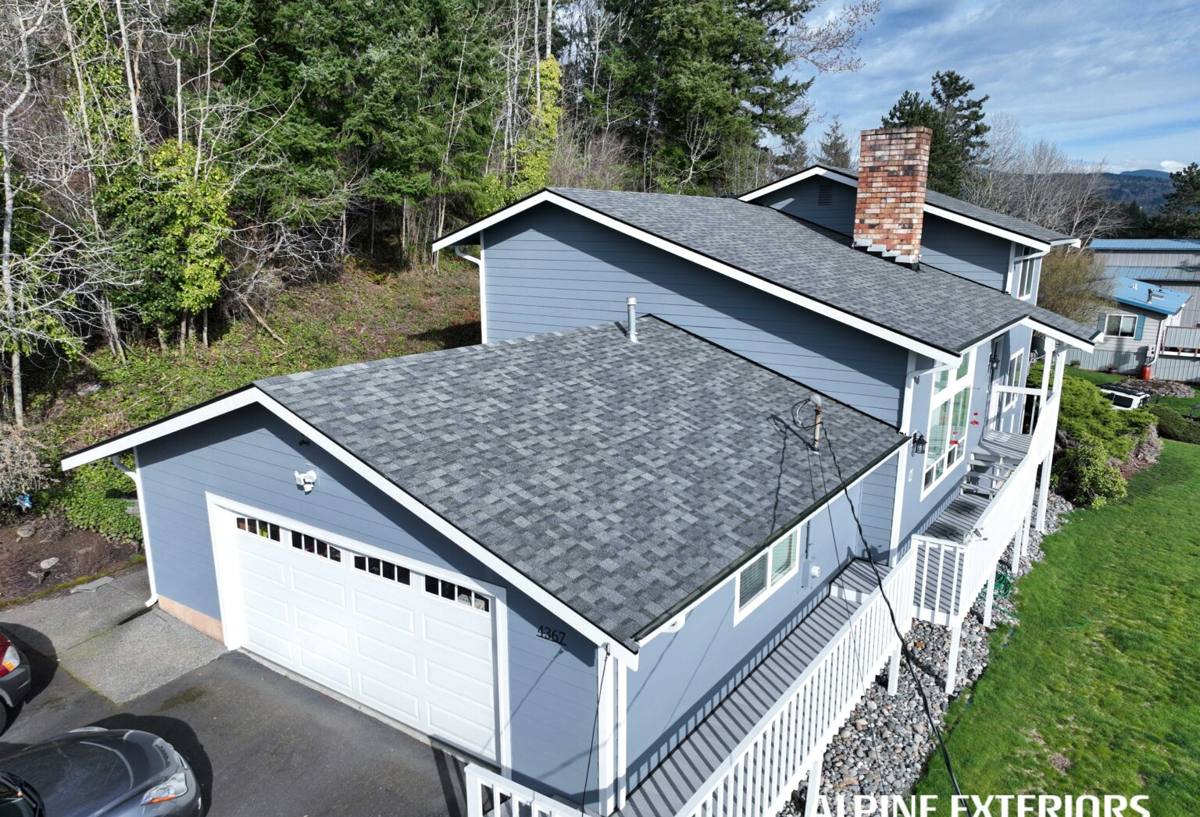
What Actually Counts as Storm Damage
Homeowners often assume storm damage means missing shingles or a visible hole. In practice, most storm damage we find in Edgemoor is less dramatic and easier to miss from the ground.
- Wind-lifted shingle tabs that look intact but have broken seals underneath
- Flashing pulled loose or bent at chimneys, skylights, and roof-to-wall transitions
- Granule loss from wind-driven rain and hail, which shows up as bald spots or debris in gutters
- Fastener backing-out on metal roofing or trim, often accelerated by salt air corrosion
- Bruised or fractured shingles that don't leak immediately but will within a year
- Debris impact damage from tree limbs during a windstorm, sometimes only a few displaced shingles
- Ice-dam-related lifting after a cold snap followed by rain, which mimics storm damage but has a different cause
None of these require a full roof replacement on their own. But left alone, each one is an entry point for the driving rain this area gets, and once water gets under a roof system it rarely stays where it started.
Why Waiting Costs More Than the Repair
A small storm-related opening doesn't announce itself with a dripping ceiling right away. Water tends to travel along the underlayment or decking before it finds a path into living space, which means by the time you see a stain indoors, the damage has usually been active for weeks or months. In a climate with as much annual rainfall as Bellingham gets, that lag time matters. A repair that would have taken a few hours right after the storm can turn into decking replacement, insulation removal, and interior drywall work if it sits through even one more soaking winter.
Moss compounds this. Once moisture sits under a compromised shingle edge in a shaded Edgemoor yard, moss and algae get a head start growing in exactly the wrong spot, holding even more water against the roof deck. That's part of why we treat storm damage repair and moss/debris clearing as connected jobs, not separate line items, whenever both are present.
Our Storm Damage Repair Process
1. Inspection, Not Assumption
We start on the roof, not just from a ladder at the eave. Wind and hail damage is frequently invisible from the ground, and an honest inspection means checking every slope, all flashing points, and the attic side of the deck where visible, looking for daylight, staining, or soft spots. We tell you what we actually find — including when the damage is minor and doesn't justify a large repair.
2. Emergency Protection If Needed
If a storm has left an active leak or an open section of roof, our first priority is stopping water intrusion, not selling a permanent fix on the spot. A properly installed tarp or temporary patch buys time to plan the right repair instead of rushing one.
3. A Written Repair Plan
Before any work starts, you get a clear explanation of what's damaged, what it takes to fix it correctly, and what materials we'll use and why. This is also the point where we flag anything an insurance adjuster will want documented.
4. The Repair
Storm repairs are matched to the existing roofing system wherever possible — same shingle profile and comparable weight, correctly lapped flashing, and fasteners rated for coastal exposure. Underlayment integrity gets checked at every opened section, since a shingle repair over compromised underlayment is a repair that doesn't hold.
5. Cleanup and Documentation
We clear debris, check gutters and downspouts for granule buildup that can back up water at the eave, and provide photo documentation of both the damage and the completed repair — useful for your records and for any insurance claim.
Materials: What We Use and Why
Material choice in a salt-air, high-moss environment isn't just about matching what's already on the roof. It's about picking hardware and underlayment that will actually hold up to the specific conditions Edgemoor sees.
| Component | Standard Choice | Why It Matters Here |
|---|---|---|
| Fasteners | Corrosion-resistant, coated roofing nails | Salt air accelerates rusting of standard fasteners, leading to fastener back-out and loosened shingles over time |
| Flashing | Properly lapped metal flashing, correct gauge | Driving rain finds any shortcut in flashing overlap; correct lapping matters more here than in drier areas |
| Underlayment | Synthetic or self-adhered at vulnerable points | A second line of defense when wind-driven rain gets past the surface layer |
| Shingles/patches | Matched profile and weight to existing roof | Mismatched materials age at different rates and create visible, uneven wear |
| Sealants | Roofing-grade, UV and moisture stable | General-purpose caulk breaks down faster under constant damp conditions |
We avoid shortcuts like relying on sealant alone to close a flashing gap, or reusing fasteners that have already started corroding. Those choices might close a repair invoice faster, but they don't hold up through a second or third winter storm cycle, and we'd rather explain the slightly longer repair than have you calling us back for the same leak.
Working With Insurance
Most storm damage claims come down to documentation: clear photos of the damage, a description of the likely cause (wind, hail, or impact), and an itemized scope of repair. We provide that documentation as a standard part of the inspection, whether or not you end up filing a claim. If you do file, having a contractor's assessment that matches what an adjuster will independently find on the roof makes the process faster and reduces back-and-forth. We don't inflate scopes to match a deductible, and we won't tell you damage exists where it doesn't — that approach protects you if the claim is ever questioned.
What Storm Damage Repair Typically Costs
Costs vary a lot depending on what's actually damaged, but the factors below are the ones that move the number most for Edgemoor homes specifically.
| Factor | Why It Affects Cost |
|---|---|
| Extent of the damaged area | A handful of lifted shingles costs far less than a section with underlayment or decking exposure |
| Roof pitch and access | Steeper slopes and limited access points slow the work and affect labor time |
| Flashing complexity | Chimneys, skylights, and multiple roof planes require more careful, time-intensive flashing work |
| Decking condition | Water that reached the deck may require plywood replacement, not just a surface repair |
| Material matching | Older or discontinued shingle profiles can be harder to match and may cost more to source |
| Moss/debris removal | Roofs with heavy moss buildup often need clearing before an accurate repair scope can be set |
Simple, localized repairs are often a modest expense measured in a few hundred dollars; repairs involving deck replacement or extensive flashing work run higher. We give you a firm number after the inspection, not a guess before we've seen the roof.
Reducing Repeat Storm Damage
A repair fixes what's broken. A few maintenance habits reduce how often storms find something new to break, especially in a shaded, coastal neighborhood like Edgemoor.
- Clear gutters and downspouts before the fall storm season so water has somewhere to go
- Trim back tree limbs that overhang the roof, a common source of impact damage in wind events
- Address moss growth before it lifts shingle edges, not after
- Have flashing points checked annually — chimneys, vents, and valleys are where leaks usually start
- Walk the attic after major storms if it's accessible, looking for new staining or daylight
- Don't ignore small granule loss in gutters after a windstorm — it's often the first visible sign
Why a Crew That Already Works Edgemoor Matters
A roofer who works across Bellingham and Whatcom County regularly sees how the same storm affects different microclimates within a few miles. A crew that's already spent time on Edgemoor roofs knows to check flashing and fasteners for salt-air wear even when a homeowner only called about a single storm-damaged section, because that context changes what "correct" looks like for this specific location. That local pattern recognition is the difference between a repair that addresses the storm damage and one that also catches the slower-moving problem sitting next to it.
It also means faster response. Storm damage rarely waits for a convenient day, and a crew already working in the area can typically get an inspection scheduled sooner than one dispatching from farther out, which matters most when there's an active leak.
If a recent storm has left you with lifted shingles, a small leak, or just a nagging feeling something's not right up there, we're glad to take a look. Request a free, no-pressure estimate using the form below and we'll give you an honest read on what your roof actually needs.