 Bellingham Roofing
 Building a Deck That Holds Up in Sudden Valley
Sudden Valley sits in a different microclimate than a lot in downtown Bellingham or out on the flats. It's wooded, it's hilly, and much of it sits close to Lake Whatcom, which means more shade, more standing moisture, and a longer moss season than a deck out in the open sun would ever see. A deck built with a generic, one-size-fits-all approach tends to show its age fast out here — soft spots at the ledger board, green film on the boards by spring, railings that loosen a year or two before they should. A deck built for this specific setting looks and performs the same way five, ten, fifteen years out.
This page is about that one job — building a deck for a Sudden Valley property — not a general overview of decks everywhere in Whatcom County. If you're weighing a new deck, a replacement, or a rebuild on an existing footprint, here's what actually matters for a home in this community.
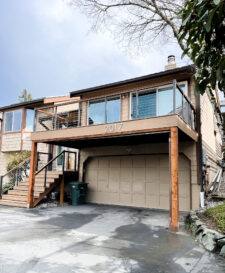
What This Site Does to a Deck
Whatcom County's coastal climate brings driving rain and salt-tinged air off the bay to the region as a whole, and that regional pattern shows up here too — but on a Sudden Valley lot, the bigger day-to-day factor is usually the tree canopy and the lake-adjacent air. A lot of homes here sit under fir and cedar cover, which is part of what makes the neighborhood, but it also means decks get less direct sun to dry out after a storm. Moisture sits longer on the boards, in the gaps between them, and underneath the frame. That's the recipe for moss, algae, and eventually rot, and it's why a deck built the same way you'd build one on an open, sunny lot in town will weather differently here — usually faster, and usually starting in the shaded corners and under the railing posts first.
Sloped lots are also common in Sudden Valley, which changes how a deck gets supported and how water moves underneath and around it. A deck built flush to grade on a flat lot and a deck built off the back of a home stepping down a hillside are different structural problems, even if they look similar from the top.
The three things we design around here
- Shade and standing moisture — slower drying means we can't rely on materials or fastener choices that assume regular sun exposure
- Slope — footing depth, post height, and drainage all change on a graded or hillside lot
- Moss and organic buildup — decking, hidden framing, and ledger connections all need details that resist it, not just surface treatments that hide it for a season
Getting the Structure Right
The part of a deck nobody sees is the part that fails first if it's built wrong. The most common failure point on decks in this kind of environment is the ledger board — where the deck attaches to the house — because that's where water gets trapped against the structure if it isn't flashed correctly. We flash that connection properly and keep it away from direct water contact, rather than relying on caulk or sealant alone, which breaks down long before the deck's structural lumber would otherwise need replacing.
Below the ledger, footings need to sit at the correct depth for frost and bearing, and on a sloped lot that often means engineered post heights and additional bracing that a flat-lot deck wouldn't need. We use fasteners and hardware rated for wet, shaded exposure — not just galvanized, but coated or stainless where the connection sees regular moisture — because standard fasteners corrode faster under a tree canopy than they do in open sun, and a corroded fastener at a structural connection is a safety issue, not just a cosmetic one.
Joist protection — a membrane or coating over the top of the framing lumber — matters more here than it would on a dry, sunny lot, because it's the difference between framing that sheds water and framing that slowly absorbs it under the decking for years before anyone notices.
Choosing a Decking Material for This Kind of Lot
There's no single "best" decking material — there's the right material for a shaded, moisture-heavy, slope-adjacent site, weighed against what a homeowner wants to maintain and spend. Here's how the common options actually compare for a property like this:
| Material | Moisture behavior | Moss/algae resistance | Maintenance | Typical lifespan |
|---|---|---|---|---|
| Pressure-treated wood | Absorbs and releases moisture; prone to cupping if not sealed regularly in shade | Needs periodic cleaning and re-sealing to stay ahead of growth | Annual or biennial cleaning/sealing | 15–20 years with upkeep |
| Cedar | Naturally moisture-resistant but still needs sealing in a shaded setting | Better natural resistance than treated wood, still needs cleaning | Periodic cleaning and oiling | 15–20 years with upkeep |
| Composite | Doesn't absorb water into the board itself; surface moisture is the main concern | Can still grow surface algae/moss film in heavy shade if never cleaned | Occasional washing; no sealing or staining | 25–30+ years |
| PVC/capped composite | Fully sealed surface, best resistance to standing moisture | Least prone to surface growth, easiest to keep clean | Occasional washing | 25–30+ years |
For a sunny, open lot, pressure-treated wood or cedar can be a perfectly reasonable, lower-cost choice. For a shaded, moisture-prone Sudden Valley lot, we generally steer homeowners toward composite or capped composite decking, because the ongoing maintenance burden of a wood deck goes up significantly when the boards rarely get a full day of sun to dry. That's a trade-off, not a verdict — some homeowners prefer the look and feel of real wood and are willing to keep up with the sealing schedule, and we'll build that just as carefully. What we won't do is put a wood deck in deep shade and tell you it'll behave like it's out in the open.
Sloped and Wooded Lots: Design Considerations
A lot of Sudden Valley properties step down toward the lake or sit on graded hillside terrain, which means the deck is often doing more than providing outdoor space — it's bridging a grade change. That brings a few design questions into play that a flat-lot deck doesn't have to answer:
- How high off grade is the deck, and does that height trigger different guardrail and stair requirements?
- Where does water go once it runs off the deck surface — does it drain toward the house, or away from it?
- Do support posts need engineered footings because of the slope, rather than standard pier blocks?
- Is there enough clearance and airflow underneath the deck to let the ground and framing dry out between rain events?
Tree cover adds a second layer to that planning. Overhanging branches keep the deck surface wet longer and drop debris that traps moisture in board gaps, so we think about spacing, board orientation, and sometimes trimming recommendations as part of the design — not as an afterthought once the deck is built.
Permits and Community Requirements
Sudden Valley is unincorporated Whatcom County, so permitting runs through the county rather than the City of Bellingham, and the community's own association may have design or setback guidelines on top of that. Neither of those is complicated, but both need to be handled correctly and in the right order — pulling a county permit doesn't clear an association requirement, and vice versa. We handle that coordination as part of the job rather than leaving it for the homeowner to sort out mid-project.
How We Approach a Sudden Valley Deck Project
- Site walk — we look at grade, tree cover, sun exposure, and how the deck ties into the house before we talk materials
- Design and engineering — footing layout, post heights, and framing plan sized to the actual slope and load, not a generic template
- Permitting — county permit and any association requirements handled up front
- Demolition and prep — removing an old deck (if applicable) and inspecting the ledger and house connection before anything new goes up
- Framing — footings, posts, beams, joists, ledger flashing, and joist protection installed to hold up in shade and moisture
- Decking and railing — installed with the drainage and airflow the site needs, in the material that fits the homeowner's priorities
- Final walkthrough — we go over the deck with the homeowner, including basic upkeep specific to the site's shade and moisture conditions
Signs an Existing Deck Needs Attention
If you already have a deck in Sudden Valley, a few warning signs show up earlier here than they would on a sunnier lot, mostly around the ledger connection and any shaded corners:
- Soft or spongy spots anywhere on the decking surface, especially near the house
- Green or black film that comes back quickly after cleaning
- Gaps opening up around the ledger board where it meets the house siding
- Railing posts that flex or feel loose when pushed
- Standing water that doesn't drain within a few hours of rain stopping
- Rust streaks around fasteners or hardware
None of those mean the whole deck needs to be torn out — sometimes it's a repair, sometimes it points to a structural issue worth a proper look before it's hidden under another summer of use.
Why It Matters That We Work in This Community
A crew that mainly builds decks on open, sunny lots in town isn't wrong about deck building in general — they're just solving a different problem than the one a shaded, sloped Sudden Valley lot presents. Knowing how fast moss shows up on a north-facing deck under fir cover, how the county and association permitting pieces fit together, and how a hillside footing plan needs to be engineered for this kind of terrain isn't something you pick up building decks somewhere flat and open. It comes from having done the work here, on lots like this one, more than once.
If you're thinking about a new deck, a rebuild, or you're just not sure whether what you've got is still sound, we're glad to come take a look. The estimate is free, there's no pressure attached to it, and you can use the form below to get started.