 Bellingham Roofing
 Why Sunnyland Roofs Wear Differently Than Roofs Inland
Sunnyland sits close enough to Bellingham Bay that homes here deal with a specific combination of stresses: salt-laden air moving off the water, long stretches of driving rain, and a moss season that can run from October well into spring. None of these problems is unique to this neighborhood on its own, but together, over years, they wear roofing systems in a pattern that's fairly predictable once you've seen enough of them. Salt air accelerates corrosion on exposed metal fasteners and flashing faster than it does a few miles inland. Driving rain — wind-driven, not just falling straight down — finds its way under shingle tabs and around flashing laps that would stay dry in a gentler climate. And moss doesn't just look bad; its root structure lifts shingle edges and holds moisture against the roof deck for months at a time.
A repair that ignores this local pattern tends to fail again within a season or two. A repair that accounts for it holds up. That's the difference we aim for on every Sunnyland roof we work on.
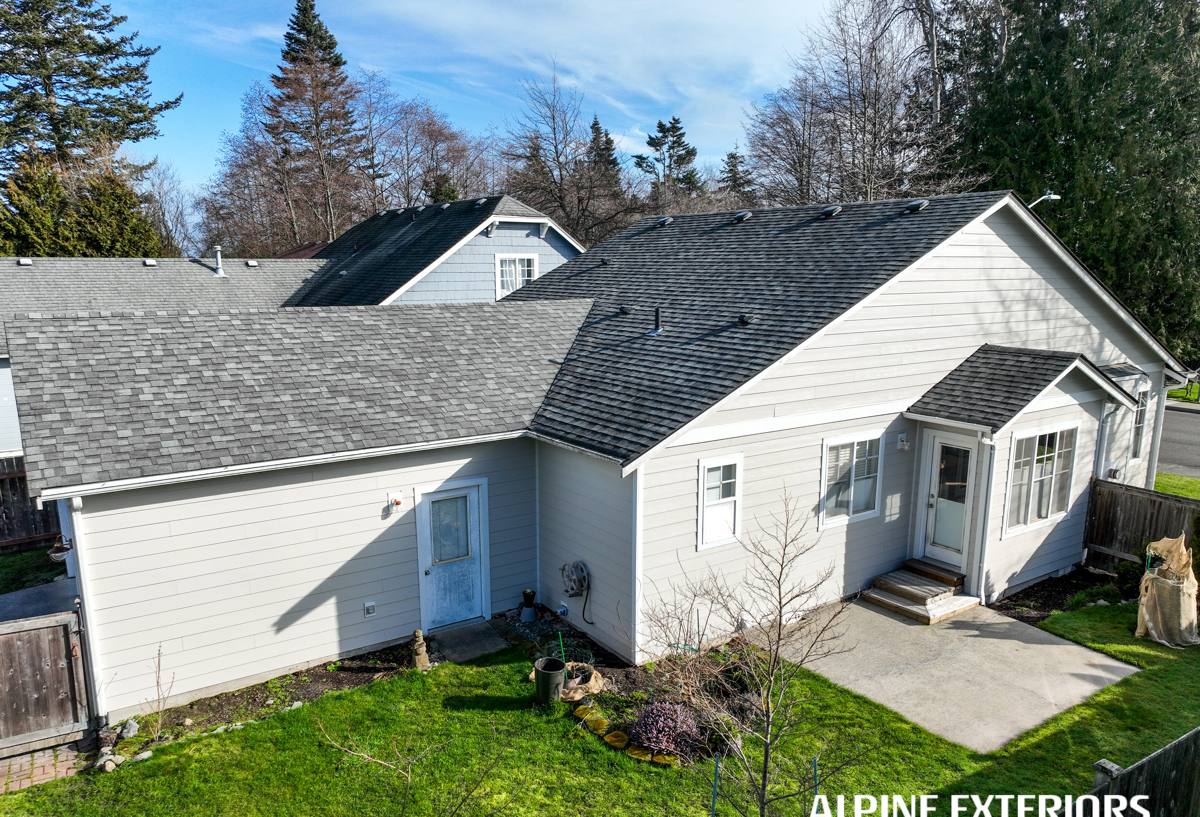
Signs a Sunnyland Roof Needs Repair, Not Just a Look
Most roof problems in this area show themselves gradually. Catching them early is the difference between a contained repair and a much larger project. Walk your roofline and gutters periodically and watch for:
- Moss or thick lichen buildup, especially on north-facing slopes that stay shaded and damp
- Granules collecting in gutters or at downspout outlets — a sign shingles are wearing thin
- Curling, cupping, or lifted shingle edges, particularly where wind exposure is highest
- Rust streaking or green-tinged staining near flashing, vents, or metal valleys
- Water stains on interior ceilings, especially after a stretch of wind-driven rain
- Soft or spongy spots when walking the roof, indicating a saturated or rotting deck below
- Daylight visible through the attic roof deck, or damp insulation near the eaves
Any one of these on its own might be minor. Two or three together usually mean water has already found a path in and the repair needs to address both the surface damage and whatever let the moisture through in the first place.
What a Correct Repair Actually Involves
There's a real difference between a quick patch and a repair done to hold up through another Bellingham winter. Homeowners are sometimes surprised at how much more is involved in doing it right, but the extra steps are exactly what keeps water out long-term.
| Quick Patch Approach | Correct Repair Approach |
|---|---|
| Caulk or roofing cement smeared over the visible leak point | Source of the leak traced back to its actual entry point, which is often several feet from the stain |
| New shingles laid over old, still-wet decking | Decking checked for rot and moisture, dried or replaced before new material goes down |
| Existing flashing reused even if corroded | Flashing inspected and replaced where salt air or age has compromised it |
| Moss scraped off and left as-is | Moss removed, roof gently cleaned, and treatment applied to slow regrowth |
| Repair matched loosely by eye | Shingle color, profile, and exposure matched as closely as the existing product allows |
The patch approach is cheaper up front and sometimes appropriate for a very minor, isolated issue. But on a roof that's already showing multiple wear signs, a patch just delays the real fix — and often costs more in the long run once the deck underneath has had more time to absorb moisture.
The Underlayment Question
Older Sunnyland homes were often built with felt underlayment or, in some cases, none of the synthetic ice-and-water membranes that are now common in valleys and along eaves. When we open up a section for repair, we look at what's underneath the shingles, not just the shingles themselves. Where it makes sense, we add or upgrade underlayment in the repaired section — it's a small added cost during a repair that's expensive to add later without tearing off the whole roof.
Common Repair Types We Handle in Sunnyland
Flashing Repair and Replacement
Flashing around chimneys, skylights, and roof-to-wall junctions is usually the first thing to fail in a salt-air environment. Thin galvanized flashing corrodes faster here than heavier-gauge steel or aluminum, and once it's compromised, water tracks along the flashing lap and into the wall or attic cavity rather than showing up as an obvious roof leak.
Valley Repair
Valleys carry more water volume than any other part of a roof, and they're where driving rain does the most damage during a real storm. Worn valley metal or degraded valley shingles are a common repair call after a windy winter.
Moss and Debris Damage
Moss that's been left too long doesn't just sit on the surface — it works into the shingle mat and lifts tabs enough for wind-driven rain to get underneath. Repairing this properly means removing the moss, assessing the shingles it damaged, and replacing what's compromised rather than just cleaning the surface.
Wind and Storm Damage
Missing, cracked, or lifted shingles after a windstorm are one of the most common repair calls in this part of Whatcom County. These need attention quickly — an exposed section of deck left through even one more heavy rain can turn a shingle repair into a deck repair.
Our Repair Process
We keep the process straightforward because a homeowner shouldn't have to guess what's happening on their own roof.
- Inspection first. We walk the roof (or use a ladder and binoculars for steep or fragile roofs) and check the attic from the inside where accessible, since interior signs often tell us more than the surface.
- Honest assessment. We explain what we found in plain terms — what's actually wrong, what's cosmetic, and what needs attention now versus what can wait.
- A written scope and estimate. No surprise add-ons once work starts; if we find something new once we open up a section, we stop and talk to you before proceeding.
- The repair itself. Deck checked and dried or replaced as needed, flashing addressed, matching shingle material installed, and the area cleaned up.
- Final check. We confirm the repair from both the roof surface and, where possible, the attic side before calling the job done.
Repair or Replace? How We Help You Decide
Not every roof problem calls for a full replacement, but not every roof is worth continuing to repair, either. We look at a few honest factors before making a recommendation:
| Factor | Leans Toward Repair | Leans Toward Replacement |
|---|---|---|
| Age of roofing material | Under roughly two-thirds of its expected lifespan | Near or past its expected lifespan |
| Extent of damage | Isolated to one section or a few spots | Spread across multiple slopes |
| Deck condition | Solid, dry decking under the damaged area | Widespread soft spots or rot |
| Repair history | First or second repair on this roof | Repeated repairs to the same areas |
| Moss/algae staining | Surface-level, recently developed | Long-term staining across most of the roof |
We'd rather do an honest repair that saves you money today than push a replacement you don't need yet — and we'll say so plainly if that's what the roof actually needs.
Material Choices That Hold Up in This Climate
When a repair calls for new shingles, flashing, or fasteners, we choose materials with Bellingham's salt air and rainfall in mind rather than defaulting to whatever is cheapest. Stainless or heavier-gauge galvanized fasteners resist corrosion longer near the bay. Aluminum or heavier-gauge steel flashing outlasts thin galvanized flashing in salt exposure. Where moss has been a recurring problem, we can install zinc or copper strips near the ridge as a preventive measure — rain washing over these metals releases trace amounts that slow moss and algae regrowth on the slopes below. It's a modest step, not a cure-all, but it buys time between cleanings.
Why a Crew That Already Works Sunnyland Matters
Roofing crews who work this neighborhood regularly know which slopes stay shaded and damp long enough to grow moss fastest, which roof ages and styles are common on these blocks, and what kind of wind exposure a given lot typically sees. That familiarity shows up in small but real ways — knowing to check a north-facing slope more closely, or recognizing a flashing style common on older Sunnyland homes and having the right replacement on the truck instead of ordering it after the fact. It also means straight answers grounded in what actually happens to roofs in this specific pocket of Bellingham, not generic advice pulled from a national playbook.
Maintaining Your Roof Between Repairs
A repair holds up longer when it's not fighting the same conditions that caused the original damage. Between service calls, a few habits go a long way:
- Clear gutters and downspouts at least twice a year, more often under overhanging trees
- Have moss and lichen removed before it thickens, ideally before the wettest months set in
- Trim back branches that keep a section of roof shaded and slow to dry
- Check the attic after major windstorms for new water stains or daylight through the deck
- Don't ignore a small stain — a repair done early is almost always smaller and cheaper than one done late
Let's Take a Look
If you're seeing moss buildup, a stain on the ceiling, or storm damage on a Sunnyland roof, it's worth having someone take an honest look before it turns into a bigger repair. We offer a free, no-pressure estimate — just fill out the form below and we'll walk through what your roof actually needs.