 Bellingham Roofing
 Windows in York Work Harder Than People Realize
If you live in the York neighborhood, your windows aren't just letting light in — they're the first line of defense against everything Bellingham weather throws at a house. Wind off Bellingham Bay carries salt that pits metal and dulls finishes over time. Long stretches of driving rain test every seal and sill. And the mild, damp winters that make Whatcom County so livable also mean moss, algae, and standing moisture have months to work on anything that isn't sealed and drained correctly. Windows that were fine when the house was built in a drier decade can quietly become the weakest point in the building envelope.
Energy-efficient windows aren't a luxury upgrade here — they're a practical response to a climate that stays cool and wet for most of the year. Done right, they cut drafts, reduce condensation on the glass, and take pressure off heating systems that already run long seasons. Done wrong, a "window replacement" can trap moisture behind new trim and cause problems that don't show up for a year or two.
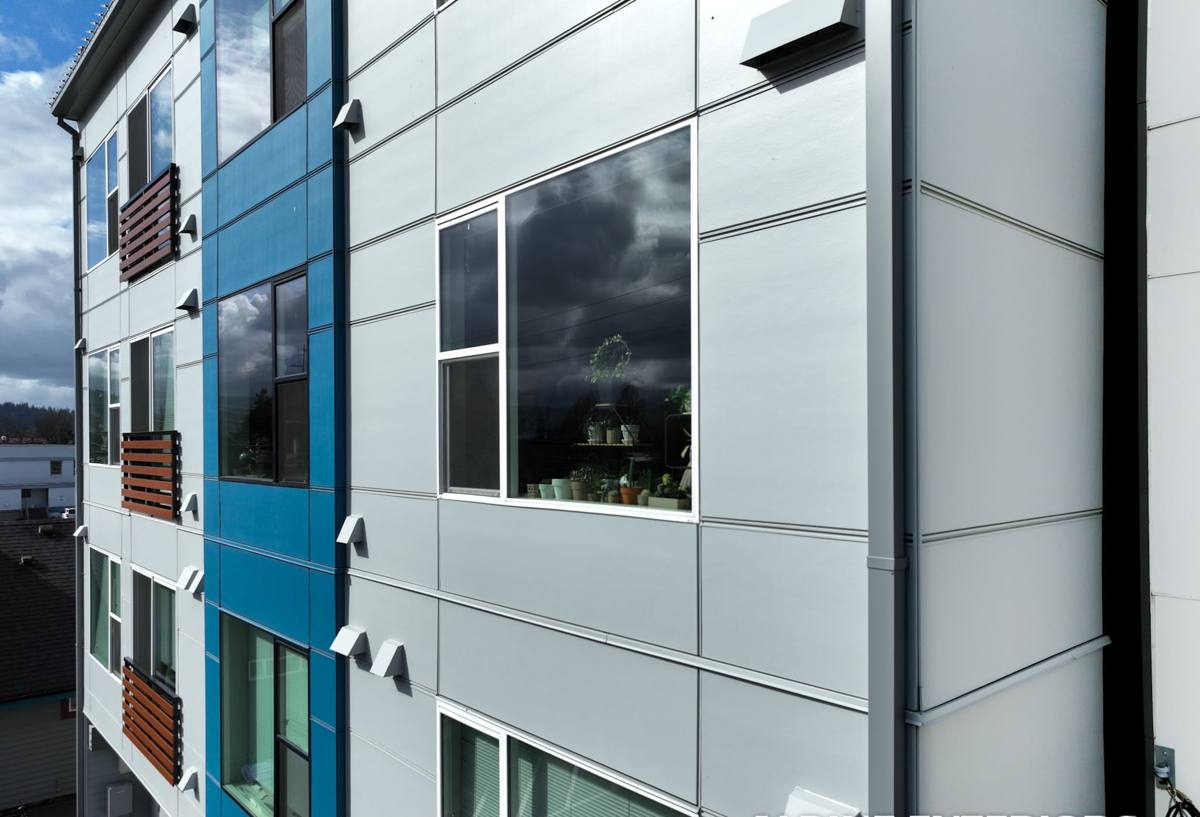
What Bellingham's Climate Actually Does to Windows
York sits close enough to the water that salt-laden air is a real factor, not a theoretical one. Combine that with Whatcom County's rainfall pattern — frequent, low-intensity rain rather than short heavy storms — and you get conditions that reward good design over flashy marketing:
- Salt air accelerates corrosion on unprotected metal hardware, hinges, and lower-quality aluminum components.
- Driving rain, pushed by wind off the bay, finds any gap in flashing or caulk and drives water sideways, not just down.
- Moss season keeps humidity elevated around window sills, sashes, and trim for months at a time, which is exactly the environment wood rot and mildew need.
- Mild but persistent cold means single-pane and older double-pane windows lose heat steadily all winter rather than in a few sharp cold snaps — the losses add up.
None of this means a homeowner in York needs anything exotic. It means the details — glazing spec, frame material, and especially the installation itself — matter more here than they would in a drier, calmer climate.
What "Energy-Efficient" Actually Means
The term gets used loosely, so it's worth breaking down. A genuinely efficient window in our climate usually combines three things: insulated glazing (double or triple pane with gas fill between the panes), a low-E coating that reflects heat back into the room in winter, and a frame material that won't warp, corrode, or absorb moisture over years of wet exposure.
Frame Materials, Compared for This Climate
| Frame Material | Moisture / Salt-Air Resistance | Insulation Value | Typical Maintenance |
|---|---|---|---|
| Vinyl | Good — won't rot or corrode | Good, especially with multi-chamber design | Low; occasional cleaning |
| Fiberglass | Very good — stable in wet/dry cycling | Very good, low expansion/contraction | Low |
| Wood-clad | Fair — depends entirely on cladding integrity | Very good, natural insulator | Higher; cladding seams need monitoring |
| Aluminum | Poor without thermal break; prone to salt corrosion and condensation | Poor unless thermally broken | Moderate; watch for pitting near the bay |
We steer most York homeowners away from bare aluminum frames for this reason — not because the material is bad in general, but because unbroken aluminum conducts cold straight through and corrodes faster in salt-influenced air. That's a maintenance and comfort trade-off worth knowing before you buy, not a knock on any manufacturer.
Glass and Coatings
For most homes in this area, dual-pane glass with a low-E coating and argon fill hits the sweet spot of cost and performance. Triple-pane glass adds real value in a few specific situations — north-facing rooms, homes right along the water with more wind exposure, or owners prioritizing sound reduction near busier streets — but it's not automatically the right call for every window on every house.
Signs Your Windows Are Underperforming
Homeowners often assume windows are "fine" until something breaks, but energy loss and moisture damage build up quietly first. Worth checking for:
- Condensation or fog between the panes (a failed seal — the insulating gas is gone)
- Visible drafts felt by hand near the frame on a windy day
- Sashes that are hard to open, close, or lock — often a sign of frame warping
- Soft or discolored wood on sills, especially lower corners where water pools
- Noticeably cold glass to the touch even when the heat is running
- Rising heating bills without a clear cause elsewhere in the house
- Visible corrosion or pitting on metal hardware or frames
Any one of these can usually be repaired. Several at once, especially on an older single- or dual-pane window, is usually the point where replacement pays for itself faster than continued patching.
What a Correct Installation Actually Involves
The window unit itself is only part of the job. In a climate like ours, how the window ties into the wall is what determines whether it stays dry for the next twenty years. A correct installation includes:
- Removing the old unit without damaging the surrounding framing or sheathing
- Inspecting the opening for hidden rot or moisture damage before anything new goes in
- Installing flashing that directs water out, layered correctly with the house wrap or building paper — not just caulked over
- Setting the new window level, square, and properly shimmed so it operates smoothly for years
- Sealing and insulating the gap between the frame and the rough opening — a gap that's too tight or too loose both cause problems
- Finishing interior and exterior trim so it sheds water rather than collecting it
Skipping the flashing and moisture-barrier detail is the single most common shortcut in window replacement, and it's the one that causes the most expensive damage later — hidden rot behind trim that isn't visible until a wall is opened up. It's also why window replacement is genuinely an exterior-envelope job, not just a glass-and-frame swap.
Our Process, Start to Finish
- On-site assessment — we look at your existing windows, framing condition, and exposure (sun, wind, water) window by window, since not every opening on a house needs the same solution.
- Straightforward estimate — clear pricing by window, with frame material and glazing options explained in plain terms, no pressure to upgrade everything at once.
- Scheduling around the weather — we plan installs to keep openings protected during Whatcom County's wetter stretches, minimizing how long any opening sits exposed.
- Removal and inspection — old units come out carefully, and we flag any hidden moisture damage before closing anything up.
- Installation with proper flashing and sealing — done to shed water outward, not trap it behind new trim.
- Final check and cleanup — operation, seals, and trim are checked before we consider the job done, and the site is left clean.
What Affects the Cost
| Factor | Why It Matters |
|---|---|
| Number and size of windows | Larger openings and full-house replacements naturally cost more than a handful of units |
| Frame material | Vinyl is typically the most budget-friendly; fiberglass and wood-clad cost more upfront but can last longer in wet climates |
| Glazing spec | Triple-pane and specialty coatings add cost but may be worth it on exposed or noise-sensitive walls |
| Condition of the existing opening | Hidden rot or damaged framing found during removal adds repair work before the new window goes in |
| Access and site conditions | Upper-story or hard-to-reach windows take more time and equipment |
We'd rather walk your home and give you real numbers than throw out a broad range that doesn't mean much. Most projects fall somewhere between a modest per-window swap and a full-house upgrade, and we'll tell you honestly where a repair still makes sense versus where replacement is the better long-term move.
Why a Crew That Already Works in York Matters
York has a mix of housing ages and styles, which means window openings, framing details, and past renovation quality vary a lot from one house to the next — sometimes within the same block. A crew that regularly works in this specific pocket of Bellingham has already seen how local houses were built, what past repairs tend to look like, and where moisture problems typically start given the neighborhood's exposure to weather off the bay. That familiarity shows up in faster, more accurate estimates and fewer surprises once a wall is opened up.
It also means shorter response times if something needs a follow-up look, and a crew that isn't learning Bellingham's climate quirks on your project. When a contractor already understands how Whatcom County rain and salt air behave against a house, they design the installation around that reality instead of applying a generic approach that works fine somewhere drier.
Ready When You Are
If your windows are drafty, fogged, hard to operate, or just old enough that you're wondering whether repair or replacement makes more sense, we're happy to take a look. Fill out the form below for a free, no-pressure estimate — we'll walk the house, answer your questions honestly, and give you options that fit your budget and your home.