 Bellingham Roofing
 Roof Replacement for York, Bellingham
York is one of Bellingham's older, established neighborhoods, and that shows up on the roofs. A lot of homes here were built well before today's roofing materials and ventilation standards existed, and many sit under mature tree canopy that keeps the shade — and the moisture — around longer than roofs in more open parts of Whatcom County. Add in the salt air rolling off Bellingham Bay, driving rain off the Sound through fall and winter, and a moss season that can run eight months or more, and you've got a climate that is genuinely harder on a roof than most people realize until they're dealing with a leak.
A roof replacement in York isn't a generic job. It's a job that has to account for tree cover and shade patterns on individual lots, older framing and decking that may need attention once the old roof comes off, and a moisture cycle that punishes any shortcut in ventilation or flashing. This page covers what that actually looks like — the local factors, what a correct job involves, our process, and what to expect from a crew that already works in this part of Bellingham.
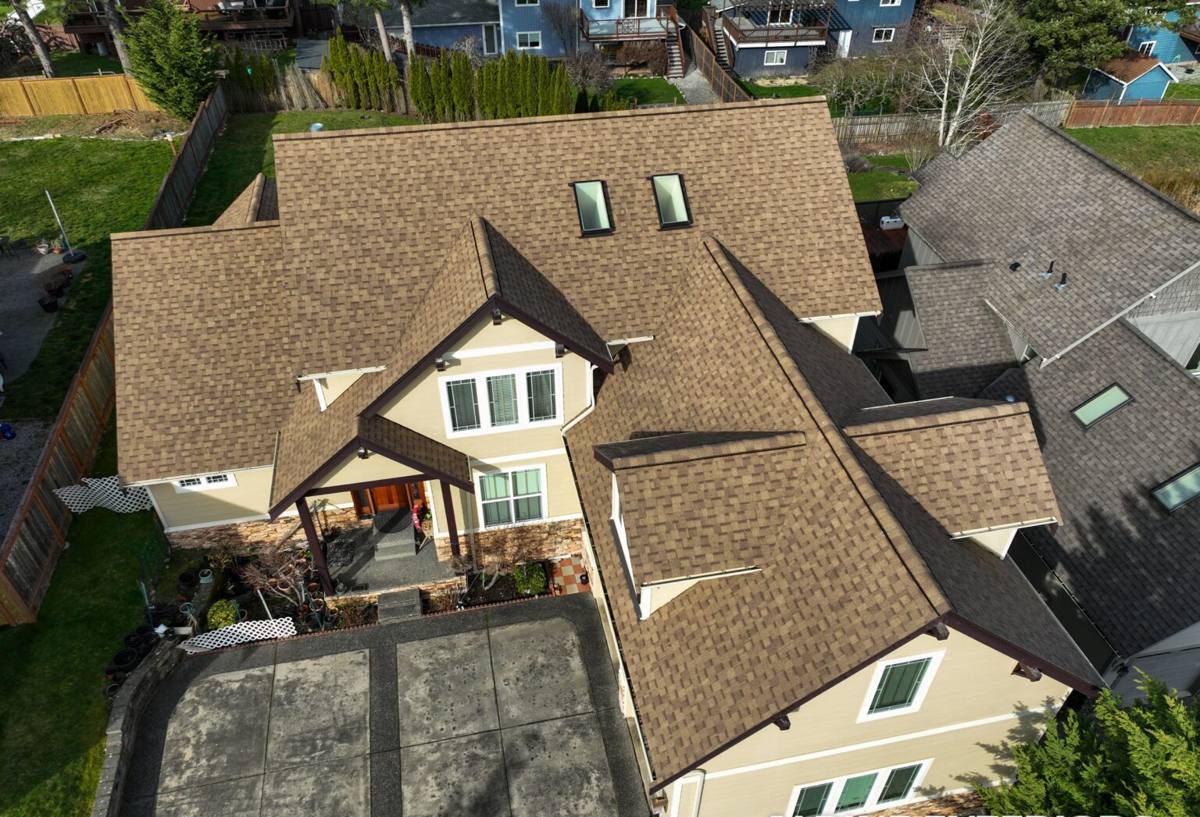
What Bellingham's Climate Does to a York Roof
Salt Air and Corrosion
York isn't right on the water, but it's close enough that salt-laden air moves through the neighborhood, especially on windier days. Salt air accelerates corrosion on exposed metal — flashing, fasteners, vents, and gutter hardware — faster than it would inland. Over a roof's life, that means galvanized or lower-grade metal components can start rusting years before they should, which is why material choice and fastener quality matter more here than in a dry inland climate.
Driving Rain
Storms coming off the Strait of Georgia and Bellingham Bay don't just fall straight down — wind pushes rain sideways into roof edges, valleys, and wall-roof intersections. That's where poor flashing and underlayment choices show up as leaks, sometimes years after installation, once a small gap or a nail placed a half-inch off has had enough seasons of wind-driven rain to find its way in.
Moss and Shade
Tree cover is one of the things that makes York a pleasant place to live, but shaded roof sections stay damp longer after every rain, and that's exactly what moss needs to establish. Once moss gets a foothold, it lifts shingle edges, holds moisture against the roof deck, and speeds up granule loss. A roof that's shaded most of the day will simply age faster than one in full sun, and that needs to factor into both material choice and how often the roof gets checked.
Signs a York Home Needs Roof Replacement, Not Another Repair
Repairs make sense when the problem is isolated. Replacement makes sense when the roof as a system is wearing out. Common signs we look for on older York homes:
- Granule loss heavy enough that shingles look patchy or bald in sun-exposed sections
- Moss or algae staining that keeps coming back within months of cleaning
- Soft spots or visible sagging when walking the roof or viewing the deck from the attic
- Curling, cracking, or cupped shingles, especially on south- and west-facing slopes
- Flashing around chimneys, skylights, or roof-wall intersections that's rusted, lifted, or patched with sealant instead of properly re-flashed
- Daylight visible through the roof deck from inside the attic
- A roof already past 20-25 years old with no major work done, regardless of how it looks from the ground
What a Correct Roof Replacement Actually Involves
A roof replacement is more than swapping old shingles for new ones. Done right, on a home in this climate, it involves several layers working together:
Tear-Off and Deck Inspection
We remove the old roofing down to the deck rather than layering over it. That's the only way to actually see what's underneath — soft or rotted decking, especially common on older York homes where past leaks went unnoticed for a while, gets replaced before anything new goes down. Covering over a compromised deck just hides the problem for the next owner.
Underlayment and Ice-and-Water Protection
Given how much wind-driven rain this area sees, underlayment isn't a place to cut corners. We use synthetic underlayment across the field of the roof and self-adhered ice-and-water membrane at the vulnerable spots — eaves, valleys, and around penetrations — where wind can drive water sideways under standard shingle laps.
Flashing
Chimneys, skylights, sidewalls, and valleys all get new step and counter-flashing, not sealant patches over the old metal. This is the single biggest source of roof leaks on older homes, and it's also the step that gets skipped most often by crews trying to save time.
Ventilation
Balanced intake and exhaust ventilation keeps the attic dry and temperature-regulated, which matters for both the roof deck and the shingles above it. Under-ventilated attics trap moisture, which accelerates deck rot and can void material warranties — a real risk on shaded, damp lots like a lot of what you find in York.
Field Installation
Shingles or panels go down to manufacturer spec — correct nail placement, exposure, and fastening pattern. This sounds basic, but it's the difference between a roof that holds up to wind and one that doesn't.
Material Options for This Climate
There's no single "best" roofing material — it depends on the home, the budget, and how much shade and moss exposure the roof deals with. Here's how the common options compare for a York-area home:
| Material | Typical Lifespan | Moss/Moisture Behavior | Best Fit |
|---|---|---|---|
| Architectural asphalt shingle | 25-30 years | Good with proper ventilation and periodic cleaning; moderate moss resistance | Most York homes; balance of cost and durability |
| Standing seam metal | 40-50+ years | Sheds moisture fast, minimal moss buildup, but needs quality fasteners given salt air | Homeowners planning to stay long-term or wanting low maintenance |
| Synthetic/composite shingle | 30-50 years | Strong moisture resistance, holds up well in shaded, damp conditions | Homes with heavy tree cover where moss is a recurring issue |
| Wood shake (traditional) | 20-30 years with upkeep | Higher maintenance burden in a wet, shaded climate; needs regular treatment | Historic-style homes where appearance is a priority and upkeep is expected |
We'll walk through these trade-offs honestly during the estimate — including where a given product's maintenance requirements or installation sensitivity make it a poor fit for a specific lot's shade and drainage pattern, not just a sales pitch for the most expensive option.
Our Process
- On-site assessment. We walk the roof and attic, check the deck condition, note shade exposure and drainage, and look at flashing and ventilation as a system, not just the shingles.
- Written estimate. A clear scope and price — what's being replaced, what materials are specified, and why, with no vague allowances buried in the fine print.
- Scheduling around weather. Given how much rain this area gets, we plan the tear-off and dry-in around forecast windows so your home isn't exposed longer than necessary.
- Tear-off and deck repair. Old roofing comes off, the deck gets inspected, and any soft or damaged sections get replaced before anything new goes on.
- Underlayment, flashing, and ventilation installed to spec. This is where most of the long-term performance of the roof actually gets decided.
- Final installation and cleanup. New roofing goes down, site is cleaned of debris and nails, and we walk you through what was done.
Why a Crew That Already Works York Matters
A roofing crew that regularly works in and around this part of Bellingham has already dealt with the specific problems York's mix of older homes and mature tree cover creates — how to spot deck damage on a roof that's been holding moisture under moss for years, which flashing details actually hold up against wind-driven rain off the bay, and how shade patterns on a given lot affect moss regrowth after a replacement. That local pattern recognition is different from general roofing experience, and it usually means fewer surprises once the tear-off starts.
It also matters for practical things: knowing City of Bellingham and Whatcom County permitting requirements for the neighborhood, being able to respond quickly if weather turns mid-project, and being reachable afterward if a question comes up rather than having done one job in the area and moved on.
After Replacement: Keeping a York Roof Performing
A correctly installed roof still benefits from some basic upkeep in this climate:
- Keep gutters and downspouts clear, especially in fall when trees drop the most debris
- Have moss growth addressed early rather than letting it establish for a full season
- Trim back overhanging branches where practical to reduce shade and debris buildup
- Schedule a roof check after any major windstorm to catch lifted flashing or shingles early
- Watch the attic for any signs of moisture or reduced airflow, which can signal a ventilation issue developing
Get a Straightforward Estimate
If you're weighing a repair against a full replacement, or just want an honest read on where your roof stands, we're happy to take a look. The estimate is free, there's no pressure attached to it, and you'll get a clear explanation of what we find and what your real options are — use the form below to get started.