 Bellingham Roofing
 Asphalt Shingle Roofing Built for Lynden's Weather
Lynden sits inland from Bellingham Bay in the farmland and river-bottom country of Whatcom County, and that setting shapes what a roof has to deal with here. Wind-driven salt isn't the dominant issue this far from the water the way it can be closer to the coastline — but the same marine weather system that soaks the whole county still delivers long stretches of driving rain, low grey skies, and heavy shade from mature trees around older properties. Put those together and you get a moss season that can run eight or nine months out of the year on north-facing slopes and shaded roof sections. An asphalt shingle roof that's installed correctly for this climate holds up well for decades. One that's installed to a generic spec, without attention to ventilation and moisture detailing, tends to show its age early — curling shingles, dark streaking, and soft spots at the edges long before the shingles themselves are actually worn out.
What "Correct" Means Here, Specifically
A roof built for Lynden isn't a different product than a roof built anywhere else — it's the same asphalt shingle system, but installed with more attention paid to the details that matter when a roof stays damp for days at a stretch: intake and exhaust ventilation that actually moves air, ice-and-water membrane at the vulnerable transitions, and flashing that's cut and lapped to shed water rather than just cover a gap. Skipping any of these doesn't show up on day one. It shows up in year six or seven, as a leak at a valley or a rotted section of decking under shingles that still look fine from the ground.
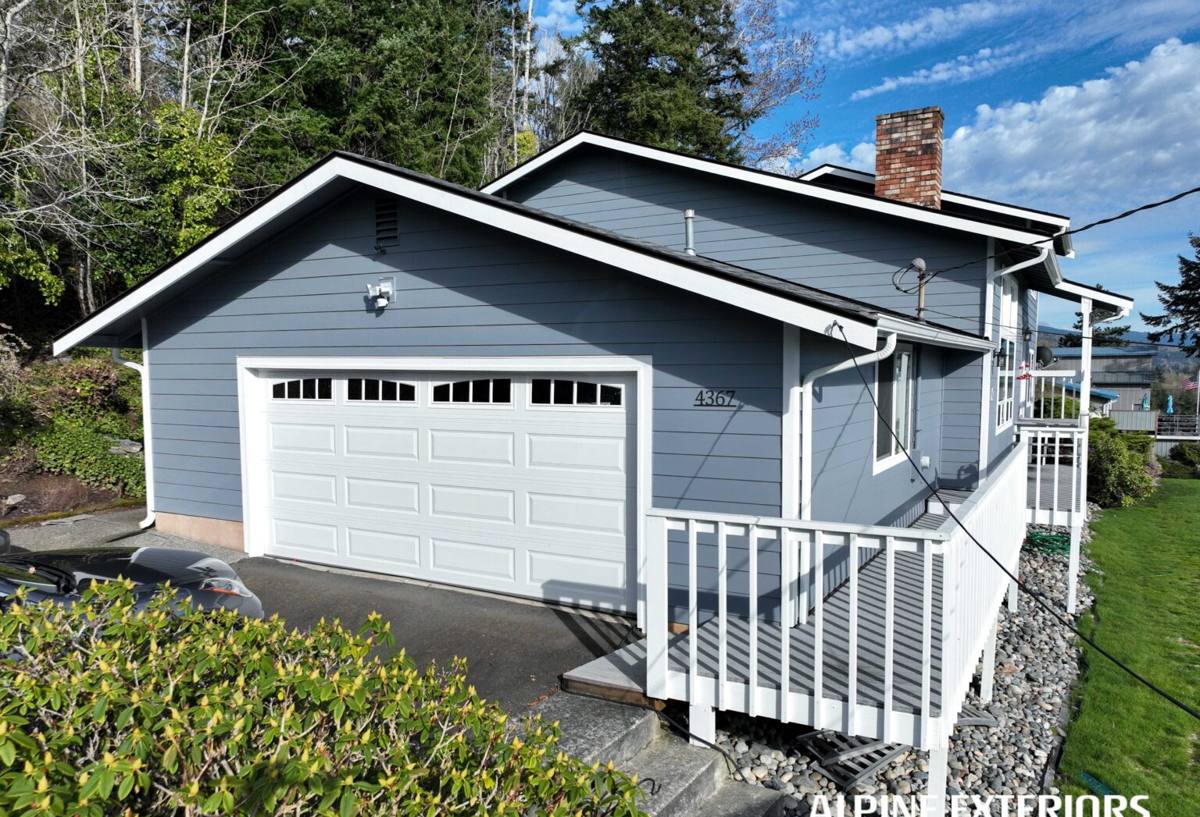
Why Moss and Moisture Are the Real Enemy in Lynden
Asphalt shingles fail in this region for a handful of predictable reasons, and almost all of them trace back to trapped moisture rather than simple wear. Moss holds water against the shingle surface, and as it spreads it lifts shingle edges and works its way under tabs, granules, and flashing. Once moss gains a foothold on a shaded north slope, it rarely goes away on its own — it spreads season over season until the roof underneath is chronically wet.
Shaded Lots and Tree Cover
Many Lynden properties, especially older lots with established trees, have roof sections that see little direct sun for most of the year. Those sections dry out slowest after a storm, which is exactly why moss and algae streaking concentrate there first. Roof design and ventilation matter more on these homes than on an open, sun-exposed lot.
Open Farmland Wind and Driving Rain
Away from the trees, Lynden's open agricultural land gives storms a clear run at a roof, and wind-driven rain finds its way under poorly lapped shingles and loose flashing far more easily than a straight-down rain would. Roof penetrations — vent pipes, chimneys, skylights — take the brunt of this and are where we find the most water damage on older roofs.
Signs a Lynden Roof Needs Attention
Most asphalt shingle roofs give warning signs well before a leak shows up inside the house. Worth checking for, or asking a roofer to check for, at least once a year:
- Dark streaking or a greenish-black tint, especially on north-facing or shaded slopes
- Visible moss, even a thin mat, at valleys, ridges, or shingle edges
- Granules collecting in gutters or at the base of downspouts
- Curling, cupping, or lifted shingle edges
- Soft or spongy feel underfoot near valleys or penetrations (a sign to call a professional, not to keep walking)
- Daylight visible through the roof deck from inside the attic
- Rusted or lifted flashing around chimneys, skylights, and vent pipes
Choosing the Right Shingle for a Lynden Home
Not every asphalt shingle product is a good match for a damp, shaded, moss-prone climate. The right choice depends on the roof's exposure, pitch, and how much shade it gets, more than on personal style preference alone.
| Shingle Type | Best Fit For | Trade-offs to Know |
|---|---|---|
| Standard 3-tab | Lower-budget replacements, simple roof lines, sun-exposed slopes | Shorter lifespan, less resistant to wind uplift, no built-in algae protection |
| Architectural (laminate) | Most Lynden homes — better wind rating, thicker profile | Higher upfront cost than 3-tab, but far less maintenance over its life |
| Algae-resistant (copper/zinc-granule) | Shaded, north-facing, or tree-covered roof sections | Slightly higher cost; granules wear down gradually, so protection fades over decades, not overnight |
| Impact-rated | Homes wanting extra durability against hail and wind-driven debris | Premium cost; benefit is durability, not moss resistance |
For most Lynden homes with any tree cover or shaded slopes, we lean toward a mid-to-upper-tier architectural shingle with algae-resistant granules on those specific sections, rather than upgrading the whole roof to a premium product that doesn't address the actual moss problem.
Our Installation Process
Tear-Off and Deck Inspection
We remove the existing roofing down to the deck rather than layering over old shingles. That's the only way to actually see the plywood or plank decking underneath — which matters on older Lynden homes where a slow leak may have gone unnoticed for years. Any soft, delaminated, or rotted decking gets replaced before anything new goes down; installing new shingles over compromised decking just hides the problem.
Underlayment and Ice-and-Water Protection
Given how long this area stays wet, we run ice-and-water shield membrane at eaves, valleys, and around every penetration — the spots most likely to see standing water or wind-driven rain — with synthetic underlayment across the rest of the deck.
Flashing and Penetration Detail
Chimneys, skylights, and vent pipes are where most leaks actually start, not the open field of shingles. We install new flashing rather than reusing old, corroded pieces, and detail it to shed water downhill at every lap.
Ventilation
Balanced intake and exhaust ventilation keeps the attic space dry and temperature-stable, which slows moss growth from underneath and protects the shingle warranty, since most manufacturers require adequate ventilation for their coverage to apply in the first place.
Final Inspection and Cleanup
We walk the finished roof, check every flashing detail and ridge line, and do a magnetic sweep of the yard and driveway for stray nails and debris before we consider the job done.
Maintenance That Actually Matters Here
A well-installed roof still benefits from a bit of upkeep in a climate like this one. The goal isn't constant maintenance — it's a short list of things done at the right time:
- Clear gutters and downspouts each fall so water isn't backing up under the eave line over winter
- Have moss physically removed rather than pressure-washed, which can strip granules and shorten shingle life
- Consider zinc or copper strips near the ridge on heavily shaded slopes, which reduce moss regrowth over time
- Trim back overhanging branches where practical to let more light and air reach shaded roof sections
- Have the roof looked at after any major windstorm, not just on a fixed annual schedule
Why a Crew That Already Works in Lynden Makes a Difference
A roofing crew based in and around Bellingham that regularly works Lynden and the rest of Whatcom County isn't guessing at how this climate behaves — they've seen which slopes moss out first, which older neighborhoods tend to have undersized attic ventilation, and how a farmland-exposed roof takes wind differently than one tucked into trees. That familiarity shows up in small but real ways: knowing which weather windows are actually reliable for a tear-off in this region, understanding Whatcom County permitting and inspection expectations, and having material suppliers and crews close enough that a callback or warranty issue doesn't sit on a truck for a week.
What Affects the Cost of a Shingle Roof Replacement
| Cost Factor | Why It Matters |
|---|---|
| Roof size and number of layers to remove | Larger roofs and multiple tear-off layers add labor and disposal time |
| Roof pitch and complexity | Steep or cut-up rooflines with many valleys and penetrations take longer to flash correctly |
| Decking condition | Rotted or delaminated plywood found during tear-off needs replacement before new shingles go down |
| Shingle tier selected | 3-tab, standard architectural, and algae-resistant or impact-rated products carry different material costs |
| Ventilation upgrades | Adding proper intake/exhaust venting on an older home may require new vents or baffles |
We give homeowners a real number after actually seeing the roof, not a phone estimate — a roof that looks straightforward from the driveway can turn up deck damage or ventilation problems once we're up there, and we'd rather tell you honestly than lowball a number and revise it mid-job.
If you're weighing a repair against a full replacement, or just want a straight answer on what your Lynden roof actually needs, we're glad to take a look and put together a free, no-pressure estimate — use the form below to get started.