 Bellingham Roofing
 Asphalt Shingle Roofing Built for Barkley's Weather
Barkley sits close enough to the water and to Lake Whatcom's tree cover that roofs here take a specific kind of beating. It isn't one big storm that wears out a roof in this part of Bellingham — it's the steady combination of salt-tinged air off Bellingham Bay, driving rain that comes in sideways during fall and winter fronts, and a moss season that can run eight months or longer under the shade of mature conifers. Asphalt shingles handle all of that well when they're installed correctly. The trouble is that "correctly" means something different here than it does in a drier, sunnier part of the state, and a lot of roofing problems we get called out for in Barkley trace back to a roof that was built to a generic spec instead of a Whatcom County one.
This page is about asphalt shingle roofing specifically for homes in and around Barkley — what the climate demands, what a proper job looks like, and how we approach it.
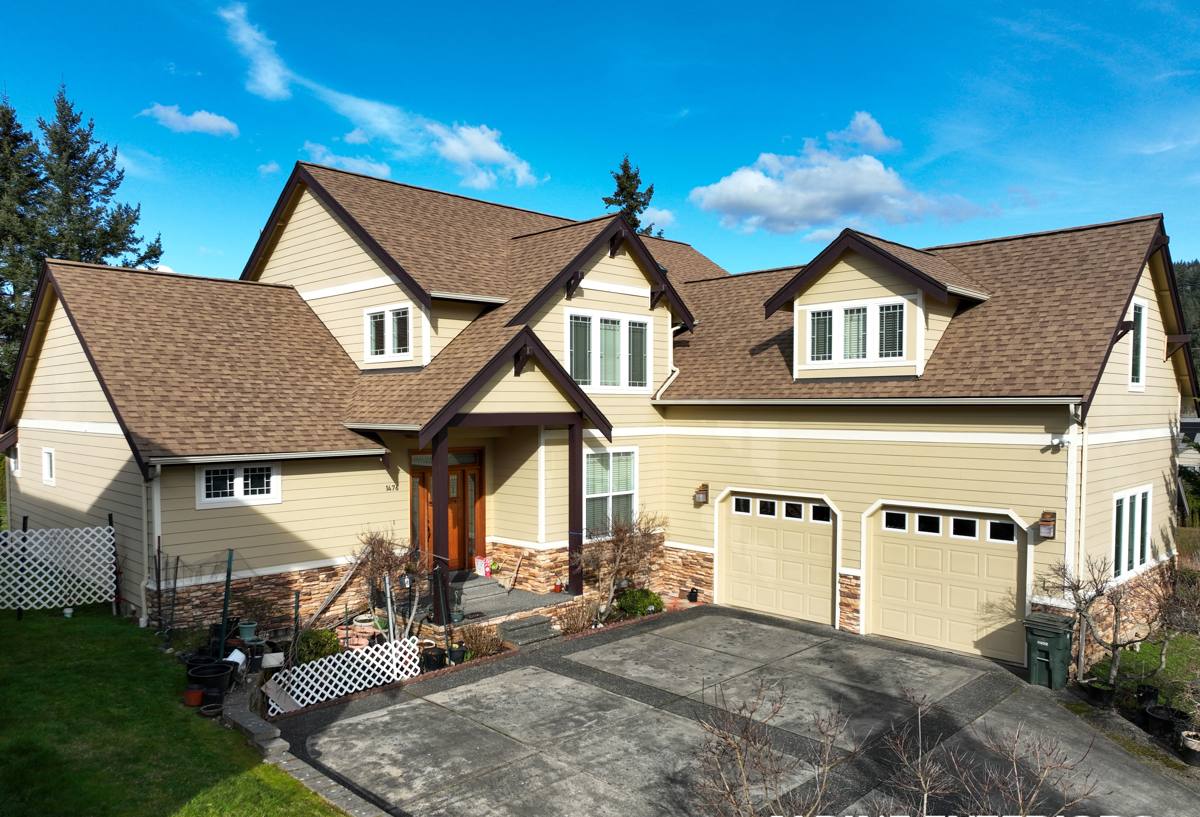
Why Asphalt Shingles Still Make Sense Here
Asphalt shingles remain the most common roofing material in Bellingham for good reason. They're proven in wet marine climates, they come in wind ratings that hold up to the gusts that blow through Whatcom County off the Strait of Georgia, and they're far easier to repair in sections than materials like tile or standing-seam metal panels with concealed fasteners. When a single area of a shingle roof is damaged — by a fallen branch, a flashing failure, or age — we can usually address that section without disturbing the rest of the roof.
Wind and Impact Ratings That Matter Locally
Barkley isn't a high-wind coastal zone like the outer coast, but winter windstorms do move through the area, and gusts funneling down from the foothills can be sharper than people expect. We install shingles rated for the wind exposure the roof actually faces, with the fastening pattern the manufacturer specifies for that rating — not the minimum nail count that happens to be fastest to install.
Where Asphalt Isn't the Right Call
Honesty matters more than a sale. On a very low-slope section, or a roof with unusual heat or moisture conditions, asphalt shingles aren't always the best fit, and we'll say so rather than install a product where it's likely to underperform. That's a professional judgment call based on the specific roof, not a knock on the material.
What a Correct Installation Actually Involves
The shingles themselves are the visible part of the job, but most of what determines whether a roof lasts 20 years or 12 happens underneath them. In a wet climate like Bellingham's, the layers below the shingle do as much work as the shingle itself.
Underlayment and Ice-and-Water Barrier
We use synthetic underlayment as the primary water-resistant layer across the field of the roof, and we install a self-adhered ice-and-water barrier at the eaves, valleys, and any roof penetrations — the spots where wind-driven rain is most likely to find a way in. Valleys in particular concentrate a huge volume of water during a heavy Pacific storm, and skipping or shorting this layer is one of the most common causes of hidden leaks we find on older Barkley roofs.
Flashing at Every Transition
Chimneys, skylights, sidewalls, and roof-to-wall transitions all need step flashing, counterflashing, or kickout flashing done correctly — not just caulked and covered. Caulk is a maintenance item, not a waterproofing strategy, and in a climate that sees rain in nearly every month of the year, a flashing detail that relies on sealant alone will eventually fail.
Ventilation That Matches the Attic
Balanced intake and exhaust ventilation keeps the underside of the roof deck dry and helps prevent the kind of trapped moisture that leads to sheathing rot and premature shingle failure from underneath. We check existing ventilation on every reroof rather than assuming what's there is adequate — a lot of older homes in this area were built with less airflow than a modern shingle warranty expects.
Moss, Algae, and Bellingham's Long Wet Season
This is the issue that separates roofing in Whatcom County from roofing in most of the country. Shaded, north-facing slopes in Barkley — especially under fir and cedar cover — stay damp for months at a stretch, and that's exactly the environment moss needs to take hold. Once moss establishes on a shingle roof, it does more than look bad: it holds moisture against the shingle surface, lifts shingle edges as it grows, and can work its way under tabs and flashing.
We install shingle products with algae-resistant granules on roofs where shade and moisture make that a real factor, and we can add or verify zinc or copper strips near the ridge on new installations, which helps limit regrowth over time as rain washes trace metal down the roof plane. No treatment makes a shaded roof moss-proof forever, but the right shingle choice combined with some periodic upkeep meaningfully extends the time between cleanings.
What We Recommend Homeowners Avoid
Pressure washing a shingle roof is one of the fastest ways to strip granules and shorten its life — it's a common mistake we see when homeowners try to deal with moss themselves. Gentle removal methods and proper gutter maintenance do far more good with far less risk to the shingles.
Choosing the Right Shingle for a Barkley Roof
Not every asphalt shingle is built the same way, and the right tier depends on the roof's exposure, slope, and how long the homeowner plans to stay in the home. We walk through these tradeoffs on-site rather than defaulting to one product for every job.
| Shingle Tier | Typical Lifespan | Best Fit For | Considerations |
|---|---|---|---|
| 3-Tab (Standard) | 15–20 years | Budget-conscious reroofs, rental properties | Lower wind rating, less impact resistance, thinner profile |
| Architectural / Dimensional | 25–30 years | Most Barkley homes | Better wind rating, heavier mat, stronger algae-resistant granule options |
| Premium / Designer | 30+ years | Steep-slope, high-visibility roofs | Higher upfront cost, strongest warranty terms, heaviest wind and impact ratings |
For most homes in this area, architectural shingles are the sweet spot — the jump in durability and algae resistance over 3-tab is significant, and the cost difference is smaller than most homeowners expect relative to the added lifespan.
Our Process, Start to Finish
- On-site assessment — we inspect the roof deck, existing ventilation, flashing points, and any moss or moisture damage before quoting anything.
- Written estimate — clear scope, materials, and pricing, with options at different shingle tiers when relevant.
- Deck inspection during tear-off — any soft or damaged sheathing is identified and repaired before new underlayment goes down; we don't cover up a bad deck.
- Underlayment, flashing, and ventilation work — the layers that determine long-term performance, done to manufacturer spec.
- Shingle installation — correct nailing pattern, exposure, and starter course for the wind rating of the product.
- Cleanup and magnetic sweep — job site and surrounding yard cleared of debris and stray nails.
- Final walk-through — we go over the finished roof with the homeowner before calling the job done.
Signs a Barkley Roof Needs a Closer Look
A lot of shingle roof problems in this climate develop slowly, hidden by moss or tree cover, until they show up as an interior leak. Watch for:
- Moss or dark streaking concentrated on shaded or north-facing slopes
- Granules collecting in gutters or at downspout outlets
- Curling, cupping, or lifted shingle edges, especially after a windstorm
- Soft or spongy spots when walking the roof
- Daylight visible through the attic roof deck
- Water stains on interior ceilings near valleys, chimneys, or skylights
- Shingle granule loss leaving bald or shiny patches on the roof surface
Any one of these is worth a look before it turns into a deck repair or interior damage. Catching flashing or ventilation issues early is almost always cheaper than fixing what they cause later.
Why It Matters That We Already Work in Barkley
Roofing crews that work across a wide, varied region tend to default to whatever spec works everywhere — which usually means underbuilding for a specific microclimate like Barkley's shaded, damp slopes. A crew that regularly works this neighborhood knows which streets sit under heavy tree cover, which roofs face the wind coming off the bay, and which moss and algae issues are common enough here to plan for up front rather than treat as a surprise. That local pattern recognition shows up in small decisions — where we add extra ice-and-water barrier, which valleys need extra attention, whether a roof's existing ventilation is enough — that a generic install wouldn't catch.
It also means faster response if something needs a look after a storm, and a crew that stands behind its work because it isn't leaving the area once the job is done.
After Installation: Keeping a Shingle Roof Healthy Here
A well-installed asphalt shingle roof in Bellingham's climate still benefits from periodic attention. Keeping gutters clear so water doesn't back up under the eave edge, having moss addressed before it spreads rather than after, and getting an occasional inspection after major windstorms all add real years to a roof's service life. None of this needs to be elaborate — it just needs to happen on a regular basis, and we're happy to advise on a simple schedule that fits the specific roof.
If you're weighing a shingle repair, a full reroof, or just want an honest read on where your roof stands, we're glad to take a look. Use the form below to request a free, no-pressure estimate for your Barkley home.