 Bellingham Roofing
 Why Birch Bay Roofs Wear Differently Than Roofs Inland
Birch Bay sits right on the water in Whatcom County, and that location shapes everything about how a roof ages here. Homes just a few miles inland in Bellingham deal with a lot of rain, but they aren't fighting salt-laden air coming straight off the water. In Birch Bay, that salt air settles on metal flashing, fasteners, and vent components year-round, speeding up corrosion in anything that isn't rated for a marine-influenced environment. Add in wind-driven rain that gets pushed sideways into eaves, valleys, and wall-roof transitions, and you have a climate that finds every weak point in a roofing system faster than a typical Whatcom County lot would.
Then there's moss. The long, wet, mild-temperature stretch from fall through spring is ideal moss-growing weather, and Birch Bay's tree cover and coastal humidity make it worse than drier pockets of the county. Moss isn't just a cosmetic problem — it holds moisture against the roofing surface, lifts shingle edges, and works its way under flashing over time. A roof installed without accounting for these three things — salt exposure, wind-driven rain, and moss pressure — will show problems years before it should.
What a Correct New Roof Installation Actually Involves
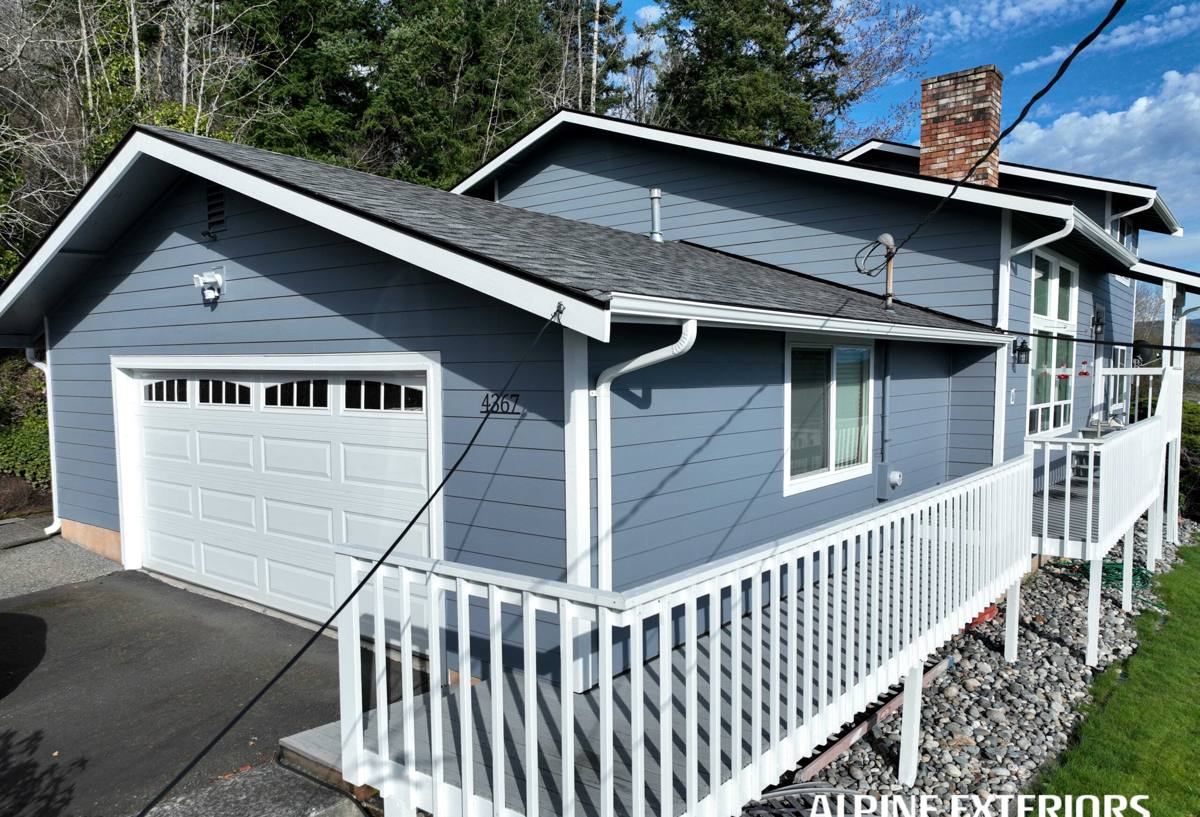
"New roof" sounds simple, but the difference between a roof that lasts and one that fails early almost always comes down to what happens underneath the visible surface. A correct installation on a Birch Bay home includes:
- Full tear-off to bare decking — never a layover on top of old roofing, which traps moisture and hides deck damage
- Inspection and repair of the roof deck itself, since coastal humidity and old leaks often mean soft or delaminated sheathing that has to be replaced before anything new goes down
- Ice-and-water shield or a high-quality synthetic underlayment at eaves, valleys, and any low-slope transitions, not just where code minimums require it
- Corrosion-resistant flashing and fasteners suited to a salt-air environment, especially at chimneys, skylights, and wall intersections
- Balanced intake and exhaust ventilation so the attic can actually dry out between wet stretches
- Proper starter strip and edge detail so wind-driven rain can't work its way up under the first course
Skip any one of these and you're not really getting a "new roof" — you're getting new shingles over old problems. That's the single biggest mistake we see when we're called out to look at a roof that failed well before its expected lifespan.
Decking Condition Comes First
We don't quote a roof sight-unseen and we don't finalize pricing until the old roofing is off and the deck is visible. Coastal moisture means a home that looks fine from the ground can still have sections of soft or rotted sheathing, particularly near valleys, chimneys, and old vent penetrations. Replacing bad decking during the tear-off is far cheaper and far less disruptive than dealing with a sagging or leaking roof two years later because it was covered up.
Choosing Materials for a Waterfront Climate
There's no single "best" roofing material for every home — it depends on the roof's slope, the home's style, and how much long-term maintenance the owner wants to take on. What matters in Birch Bay specifically is how a material handles salt exposure, wind, and sustained moisture. Here's how the common options compare for this location:
| Material | Coastal Durability | Moss Resistance | Maintenance |
|---|---|---|---|
| Architectural asphalt shingles | Good, especially with corrosion-resistant fasteners and flashing | Moderate — benefits from periodic cleaning | Low to moderate |
| Standing seam metal | Very good when properly coated fasteners and flashing are used | Good — sheds debris and dries fast | Low |
| Wood shake | Poor to fair — absorbs and holds coastal moisture | Poor — high moss and moisture retention | High |
| Composite/synthetic shake | Good — doesn't absorb moisture like real wood | Moderate | Low |
We steer most Birch Bay homeowners toward architectural asphalt or standing seam metal, not because other materials can't work, but because both hold up well against salt air and wind when installed correctly, and neither demands the ongoing upkeep that wood shake needs in a climate this wet. If you're set on a specific look, we'll walk through the honest trade-offs — including what it means for warranty terms and long-term maintenance — before you commit.
Ventilation: The Part Most Homeowners Never See
A new roof with poor attic ventilation is one of the most common causes of early failure we run into, and it's almost invisible from the outside. Without balanced intake at the eaves and exhaust at the ridge, moist air gets trapped in the attic. In a climate as wet as Birch Bay's, that trapped moisture condenses, soaks into the underside of the decking, and shortens the life of the new roofing from the inside out — no leak required. It also feeds the exact conditions moss and moss-adjacent growth need to take hold.
When we install a new roof, we evaluate the existing ventilation as part of the job, not as an upsell after the fact. If intake or exhaust is undersized or blocked, we address it as part of the installation so the new roof actually gets the service life it's rated for.
Our Installation Process
Homeowners want to know what's actually going to happen at their house, so here's the sequence we follow on a Birch Bay new roof installation:
- On-site inspection and measurement, including a look at attic ventilation and any visible interior signs of past leaks
- Written estimate covering material options, scope, and a realistic timeline
- Delivery and staging of materials, with protection for landscaping and driveways
- Full tear-off to bare decking, with debris removed as we go rather than left to pile up
- Deck inspection and repair of any damaged sheathing
- Installation of underlayment, ice-and-water shield at vulnerable areas, and new flashing
- Installation of the roofing material per manufacturer specifications, including proper nailing pattern and exposure — details that directly affect wind and warranty performance
- Ventilation correction if needed
- Final walkthrough, cleanup, and magnetic sweep for stray fasteners
Weather windows matter here more than in drier parts of the state. We plan tear-off and dry-in around the forecast so decking isn't left exposed to a Whatcom County rain system any longer than necessary.
Signs a Birch Bay Roof Needs Replacement, Not Another Repair
Not every roofing problem means a full replacement, but coastal wear tends to show up in patterns worth knowing:
- Granule loss heavy enough that shingles look patchy or bald in sun-and-wind-exposed areas
- Persistent moss growth that comes back within a season or two of cleaning
- Soft spots or noticeable give when walking the roof
- Rusting or deteriorating flashing around chimneys, vents, or wall transitions
- Interior staining on ceilings near exterior walls, which often points to wind-driven rain intrusion rather than a simple leak
- A roof approaching or past its material's expected lifespan, especially if it was installed without coastal-grade detailing
If you're seeing one or two of these, a repair may still make sense. If you're seeing several at once, or the roof is already past the age where a major repair is worth the money, replacement is usually the more honest recommendation — and we'll tell you which situation you're actually in.
What New Roof Installation Typically Costs
Every roof is different, but the biggest cost drivers on a Birch Bay project tend to be the same handful of factors:
| Factor | Why It Affects Cost |
|---|---|
| Roof size and complexity | More valleys, dormers, and penetrations mean more labor and flashing detail |
| Decking condition | Rot or delamination found during tear-off requires sheathing replacement |
| Material choice | Asphalt, metal, and composite options carry different material and labor costs |
| Ventilation corrections | Adding or upgrading intake/exhaust vents is often necessary but not always visible in an initial estimate |
| Access and site conditions | Steep pitches, limited driveway access, or waterfront setbacks can add time |
We won't quote a firm number without seeing the roof — anyone who does is guessing, and coastal decking surprises are common enough that a sight-unseen quote usually isn't worth much. What we will do is give you a clear, itemized estimate after inspection, and explain exactly what's driving the number.
Why Local Birch Bay Experience Matters
A roofing crew that mostly works drier, inland jobs can still do competent work, but they won't necessarily think about salt-air fastener corrosion or wind-driven rain at eave edges as a default — because it isn't a default problem where they usually work. A crew that regularly works Birch Bay and the surrounding Whatcom County coastline treats those details as standard practice, not an afterthought, because we've seen what happens when they're skipped. That includes knowing which flashing and fastener grades hold up here, how to sequence a tear-off around coastal weather windows, and what ventilation correction actually looks like on the kind of roof framing common in this area.
Local experience also means straightforward answers about permitting and inspection timelines specific to the county, rather than guesses carried over from a different jurisdiction.
Get a Straightforward Estimate
If your Birch Bay roof is showing its age — or you just want an honest read on whether repair or replacement makes more sense — we're glad to take a look. The estimate is free, there's no pressure, and you'll get a clear explanation of what your roof actually needs. Use the form below to get started.