 Bellingham Roofing
 Siding Replacement in Birch Bay: A Different Job Than a Patch
Siding replacement is a different project than a repair, and homeowners in Birch Bay often reach the decision point between the two sooner than they expect. Sitting right on the water in northern Whatcom County, Birch Bay homes take on more salt-laden marine air, more wind-driven rain, and a longer moss and mildew season than homes set back further inland. That combination wears down siding from the outside and, more importantly, can let moisture work its way in behind it. When that's happened, patching a section doesn't fix the underlying problem — the whole wall needs to come off, get inspected, and go back together correctly.
This page is about full siding replacement specifically: what tells you a home needs it rather than a repair, what the tear-off usually reveals, how the job gets done right, and why we replace exclusively with James Hardie fiber cement rather than offering a menu of cheaper alternatives.
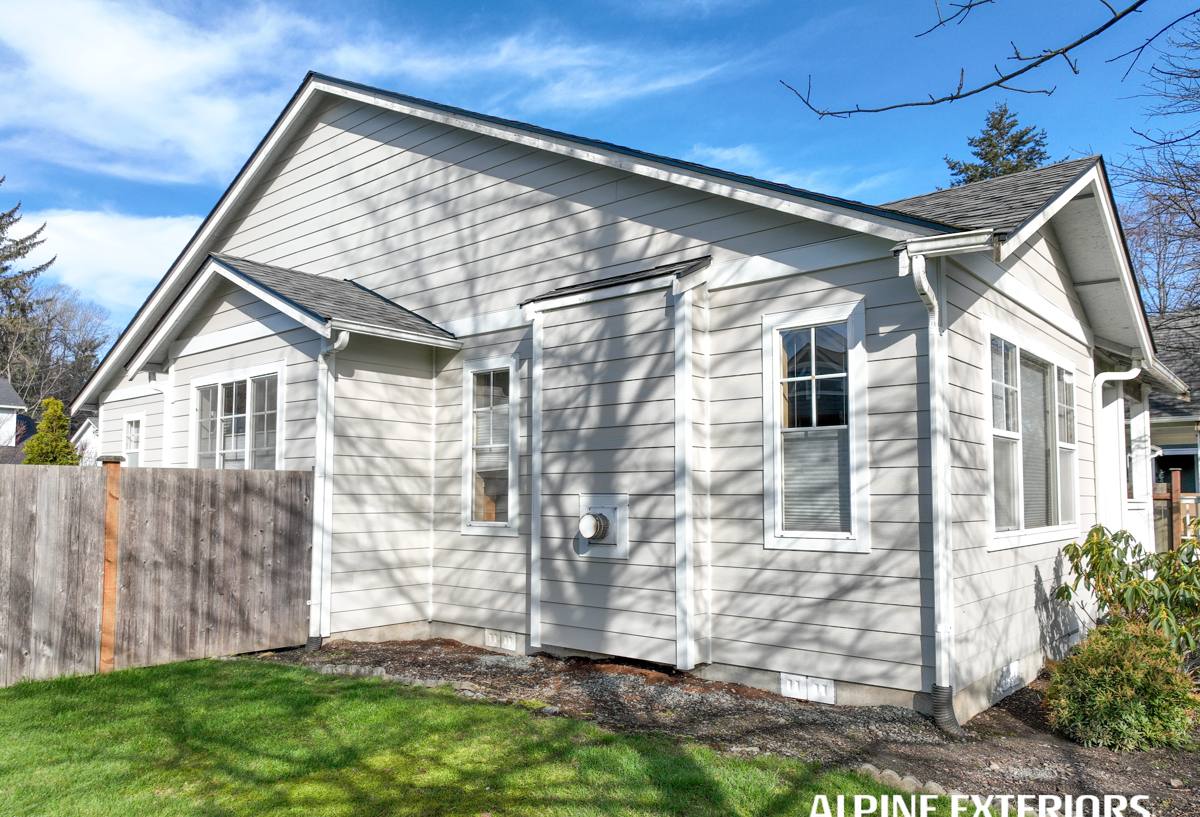
Why Replacement, Not Repair, Is Often the Right Call Here
Repairs make sense when damage is isolated — a cracked panel from storm impact, a section of trim that failed around one window. Replacement becomes the right call when the problem isn't isolated anymore: when moisture has been getting behind the siding broadly, when the material itself has reached the end of its useful life, or when enough of the wall is compromised that patching would just mean doing the same job again in a few years, at a higher labor cost each time.
Signs You're Past the Point of Repair
- Soft, spongy, or crumbling siding in multiple areas, not just one spot
- Paint or finish failure across most of the wall rather than a single board
- Persistent moss or dark staining on shaded and north-facing walls that returns quickly after cleaning
- Visible warping, cupping, or separation at seams across several courses of siding
- A musty smell or soft drywall on interior walls that back up to exterior siding
- Siding that's original to an older home and made of a material — cedar, older vinyl, or aging engineered wood — that's simply outlived its service life in this climate
If you're only seeing one or two of these in a small area, a repair may genuinely be the more sensible option, and we'll say so. Replacement is the right recommendation when the pattern shows a wall-wide problem, not when it's convenient for us to sell a bigger job.
What Birch Bay's Climate Does to Siding Over Time
Being on the bay means more direct salt exposure than most of Whatcom County sees, and salt accelerates corrosion in fasteners, flashing, and lower-grade finishes faster than a drier or more inland location would. Wind off the water also means rain rarely falls straight down here — it gets pushed sideways into lap joints, trim, and seams, which is a heavier and more persistent moisture load than annual rainfall totals suggest. Add in a moss season that can run most of the year on shaded walls, and you get a climate that finds and exploits any weak point in a siding system faster than gentler conditions would. That's the backdrop for almost every full-replacement job we do out here — not one dramatic failure, but years of steady exposure finding the gaps.
What Tear-Off Usually Reveals
Removing old siding is the point where a replacement project stops being guesswork. Underneath failing siding, especially on a waterfront property, it's common to find deteriorated house wrap or building paper, damp or rotted sheathing at the bottom courses and around window openings, and fastener corrosion that wasn't visible from outside. None of that is unusual for a home that's been absorbing salt air and wind-driven rain for years — it's exactly why full replacement matters more than a surface-level repair. A repair leaves that hidden damage in place. A proper replacement exposes it, so it can actually be fixed before new siding goes back on.
What We Check Once the Old Siding Is Off
- Sheathing condition — any soft, delaminated, or rotted panels get identified and repaired or replaced, not covered over
- Framing at window and door openings, where water intrusion tends to concentrate
- Existing flashing at roof-to-wall transitions, penetrations, and trim
- Whether the weather-resistive barrier (house wrap) is intact, torn, or missing sections
- Insulation condition where it's exposed during the tear-off
Why We Replace With James Hardie Fiber Cement Only
We used to install a broader range of siding products. We stopped, and the reason came from what tear-offs like the ones above kept showing us in this specific climate — not from a supplier relationship or a marketing angle.
- Non-combustible core: Fiber cement doesn't feed a fire the way wood-based siding can, which matters for safety and can matter for insurance as well.
- Factory-applied ColorPlus finish: The color is baked on under controlled factory conditions instead of brushed on in the field, so it resists fading, chalking, and moisture damage far longer than site-applied paint — a real advantage in salt air.
- Climate-engineered HZ product lines: Hardie's HZ5 formulation is built for regions with heavy moisture exposure and freeze-thaw cycling, which fits waterfront Whatcom County well.
- Dimensional stability: Fiber cement doesn't swell, cup, or warp the way wood-based or engineered wood products can after repeated wet-season moisture cycles.
- Strong transferable warranty: Hardie backs the product with one of the more robust warranty structures in the industry, provided the installation follows spec.
We won't install LP SmartSide, vinyl siding, Cemplank, Allura, primed spruce, or cedar as part of a replacement project. Each has a legitimate place in the market, and plenty of homeowners elsewhere are satisfied with them. But when we're the ones tearing off a wall, finding the damage, and putting it back together, we've made the professional call that we'd rather stand fully behind one system than install a cheaper option that quietly shifts more long-term maintenance and moisture risk back onto the homeowner.
What a Correct Replacement Involves
The material only performs as designed if the installation behind it is done right. On a full replacement, that means:
The Sequence That Matters
- Tear-off of the existing siding and trim, with debris hauled off site
- Inspection and repair of sheathing and framing before anything new goes on
- Installation of a new weather-resistive barrier, lapped and sealed correctly at every seam and penetration
- Correctly detailed flashing at windows, doors, and roof-to-wall transitions — the transition points most likely to leak under wind-driven rain
- Hardie panels or lap siding installed to manufacturer fastening spacing and clearance requirements, including proper clearance from grade and roof lines
- Factory-mitered or properly caulked joints, with trim and finish work completed to match
Skipping or rushing any one of those steps is one of the more common ways a good material ends up performing poorly. A Hardie product installed loosely, with gaps in the weather barrier or flashing that doesn't tie in correctly, will still develop moisture problems in a climate like this one — the installation is just as important as the material choice.
Our Replacement Process
We start with an on-site assessment of the existing siding, looking specifically at how it's handled moisture and salt exposure over time, not just how it looks from the curb. From there we put together a clear, written scope covering what we expect to find, what the material and labor involve, and a realistic timeline — before any tear-off begins. Once work starts, sheathing and framing repairs get addressed as they're found rather than hidden, and flashing, drainage, and fastener details get handled as standard practice, not optional upgrades. We walk the finished job with you before calling it done.
Replacement Cost Factors
| Factor | What It Affects | Why It Matters in Birch Bay |
|---|---|---|
| Extent of hidden damage found at tear-off | Sheathing and framing repair costs | Years of salt air and wind-driven rain make hidden moisture damage more common here than inland |
| Home size and wall complexity | Total material and labor | More trim, corners, and openings mean more joints where water can intrude |
| Siding profile and trim selection | Material cost and finish look | ColorPlus factory finishes hold up longer against salt air and UV than field-applied paint |
| Weather barrier and flashing scope | Labor time and material | Waterfront exposure calls for more careful sealing at every seam and transition |
| Site access and staging | Labor time and equipment | Waterfront lots and tree cover can add setup time compared to open inland sites |
Exact numbers depend on what the tear-off actually reveals, which is why we give a real estimate after walking the property rather than quoting off a generic price sheet.
Why a Crew That Already Works Birch Bay Matters
A contractor who replaces siding on this stretch of coastline regularly already knows what tear-off tends to reveal here — where moisture damage concentrates, which wall orientations stay wet the longest, and how much extra attention flashing and drainage detailing need compared to a more sheltered inland job. That experience shows up in decisions made on site, not just in the proposal: how much time gets allotted for sheathing repair, which fastener grade gets specified, where the weather barrier gets extra lapping. A crew without that local pattern recognition can still do competent work, but they're more likely to be surprised by what's behind the old siding instead of planning for it.
Before You Hire for a Siding Replacement in Birch Bay
- Ask whether they're quoting a repair or a full replacement, and why — the reasoning should make sense for what they saw, not just what they sell
- Confirm current Washington contractor licensing and active insurance
- Ask what happens if they find rotted sheathing during tear-off, and how that's priced
- Ask what siding material they install and whether they stand behind it with a written warranty
- Get a clear, written scope of work — including tear-off, disposal, and flashing details — before signing anything
If your Birch Bay home's siding is showing wear across more than a spot or two, we're happy to take a real look and give you an honest read on whether it calls for repair or full replacement. Reach out below for a free, no-pressure estimate.