 Bellingham Roofing
 Deck Repair Built for Sehome's Weather
Sehome sits close enough to the water and high enough on the hillside that its decks catch a little of everything Whatcom County weather has to offer. Salt-tinged air off Bellingham Bay works on fasteners and metal connectors year-round. Driving rain off the water finds every gap in flashing and decking boards. And the long, damp moss season that runs from fall through spring keeps horizontal wood surfaces wet far longer than most homeowners realize. None of that is unusual for this part of Washington, but it does mean a deck in Sehome ages differently than the same deck would in a drier inland climate, and it needs repair work that accounts for that.
We work on decks throughout Bellingham, and Sehome's mix of older homes and newer infill construction gives us a good cross-section of what actually fails first, what's cosmetic versus structural, and what's worth fixing versus replacing outright. This page covers what we look for, what a correct repair involves, and how we approach the job.
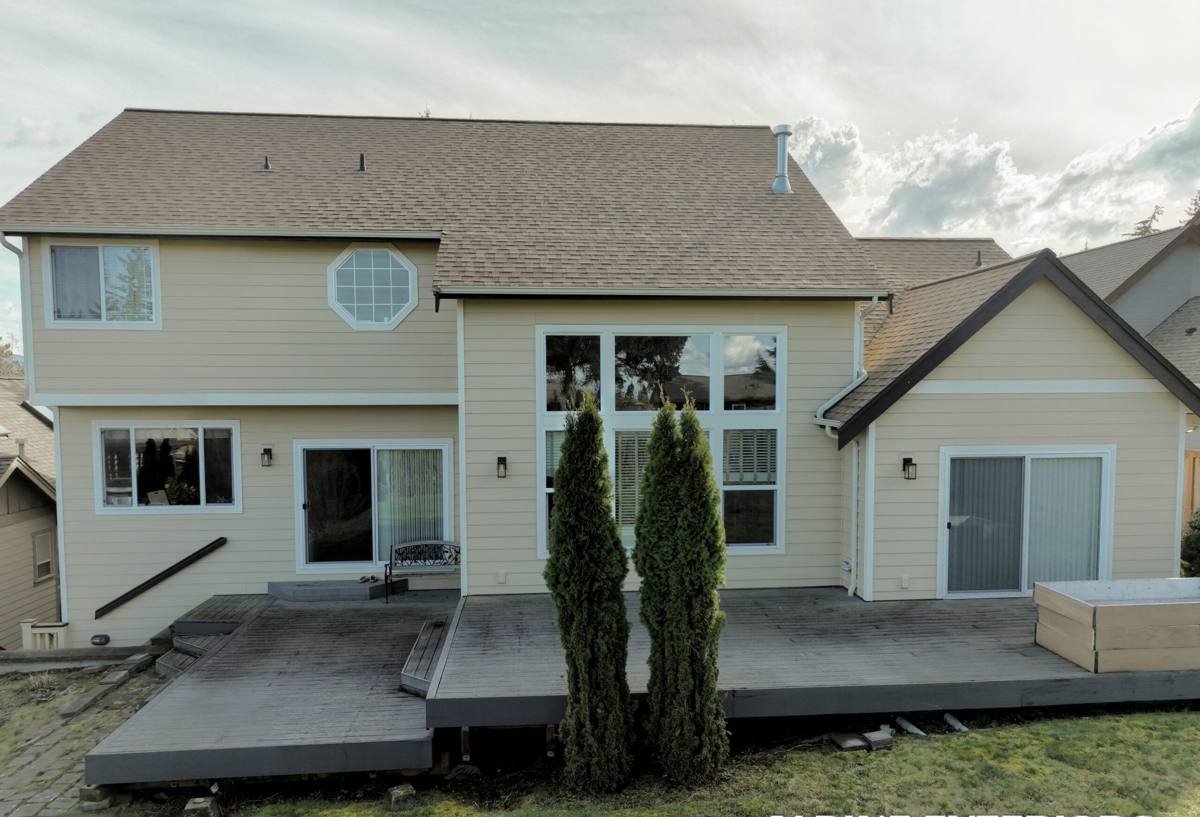
How the Local Climate Wears Down a Deck
Three things drive most of the deck repair calls we get in this neighborhood:
- Salt air corrosion. Even a few miles inland, airborne salt accelerates rust on lower-grade fasteners, joist hangers, and railing hardware. Once a fastener starts rusting, it loses holding power long before it looks obviously bad.
- Driving rain and wind-driven moisture. Storms coming off the water don't just fall straight down — they push water sideways into ledger boards, under flashing, and into end grain on decking boards, which is the most absorbent part of any board.
- Extended moss and algae season. Shaded decks, north-facing decks, and decks under tree cover stay damp for months at a time. Moss holds moisture against the wood surface, which speeds up rot in a way dry debris doesn't.
Individually, none of these are dramatic. Together, over years, they're why a 15 to 20 year old deck in Sehome often needs more than a fresh coat of stain.
Signs Your Deck Needs Repair
Most deck problems start small and stay hidden until someone actually gets underneath the structure or tests the wood directly. Here's what we check, and what you can check yourself before calling anyone:
- Soft or spongy spots when you press on decking boards, especially near the house or in shaded areas
- Boards that feel damp days after the last rain, when the rest of the deck has dried out
- Rust streaks below fasteners or joist hangers
- Railings or posts that flex or wiggle more than they used to
- Gaps opening up where the deck meets the house (ledger board separation)
- Stairs that feel less solid underfoot than the rest of the deck
- Visible mold, algae, or moss buildup that comes back quickly after cleaning
- Nails backing out or popping above the board surface
Any one of these on its own might be minor. Several together, or anything involving the ledger board or main support posts, is worth a proper inspection before it becomes a safety issue.
What a Correct Deck Repair Actually Involves
Structural Repairs vs. Cosmetic Fixes
There's an important difference between a deck that looks tired and a deck that's structurally compromised, and it's not always obvious from the surface. Cosmetic issues — graying wood, surface mildew, loose balusters — are quick fixes. Structural issues involve the ledger board connection to the house, the beams and posts carrying the load, the joists, and the hardware tying it all together. We check both, but we don't sell cosmetic work as if it solves a structural problem, and we don't recommend tearing out a deck that just needs targeted repairs.
What We Actually Inspect
A real inspection means getting underneath the deck, not just walking the surface. We look at the ledger flashing (or lack of it, which is common on older builds), joist condition where they meet the ledger and the beam, post bases for standing water or rot, and the condition of any hardware. On older Sehome decks we sometimes find ledger boards attached with nails instead of proper lag bolts or through-bolts — that was common practice decades ago and it's one of the most frequent structural upgrades we make during a repair.
Fastener and Flashing Upgrades
Given the salt air in this area, we don't replace failed fasteners with the same grade that failed. Stainless steel or hot-dip galvanized fasteners cost more up front but hold up substantially longer near the coast. Same with flashing — if a deck's ledger board doesn't have proper flashing directing water away from the house, that's often the root cause of rot we find during a repair, and we address it while we're already in there rather than patching over the symptom.
Repair or Replace? Weighing the Real Cost Factors
Homeowners often assume any deck problem means full replacement. Usually it doesn't. Here's how we think through it:
| Factor | Favors Repair | Favors Replacement |
|---|---|---|
| Framing condition | Joists and beams are solid, only isolated rot | Widespread soft spots in structural framing |
| Ledger connection | Sound, or fixable with bolts and flashing | Severely rotted or separating from the house |
| Decking boards | Scattered bad boards, rest is solid | Most boards are cupping, splitting, or soft |
| Deck age | Under 15-20 years, built to a reasonable standard | Older deck with outdated framing or spacing |
| Design changes wanted | No, keep current footprint and layout | Yes, want a different size, shape, or material |
| Budget goal | Extend usable life at lower cost | Long-term, lower-maintenance solution |
As a general rule: if the framing is sound, repair is almost always the more economical path and can add many more years of service. If the framing itself is failing in multiple places, patching individual boards is a short-term fix that will keep costing money until the underlying structure gets addressed.
Our Deck Repair Process
- On-site inspection. We get underneath the deck, check the ledger, framing, posts, and hardware, not just the surface boards.
- Honest scope and estimate. We tell you what's actually wrong, what's optional, and what we'd prioritize if budget is a factor.
- Structural work first. Any framing, ledger, post, or hardware repairs happen before cosmetic work, since surface repairs on a weak structure don't hold.
- Board replacement and fastener upgrades. Damaged decking and railing components get replaced with appropriately rated materials and corrosion-resistant fasteners.
- Flashing and drainage check. We confirm water is being directed away from the house and off the deck surface, not pooling against ledger boards or posts.
- Final walkthrough. We go over what was repaired, what to expect going forward, and any maintenance that will extend the life of the work.
Materials We Use and Why
Material choice matters more in a climate like this than in drier parts of the state. For framing and structural repairs, we use pressure-treated lumber rated for ground contact where it's in contact with soil or persistent moisture, and we're careful about fastener compatibility — some treated lumber chemicals corrode standard fasteners faster, which is another reason we default to stainless or hot-dip galvanized hardware.
For decking surfaces, both wood and composite have a place. Wood decking is more affordable and repairable board-by-board, which fits a repair-focused job well. Composite decking resists moss and moisture better over time but comes at a higher material cost and isn't always a direct match if you're patching into an existing wood deck. We'll walk through the tradeoffs honestly based on what you're trying to accomplish rather than pushing one option by default.
Moss, Mildew, and Ongoing Maintenance
Repair work solves the immediate problem, but Whatcom County's damp stretches mean moss and mildew will come back on shaded or north-facing decks without some ongoing attention. A few habits go a long way between service visits:
- Sweep debris off the deck regularly, especially in fall when leaves and needles trap moisture against the boards
- Keep gutters and downspouts clear so water isn't dumping directly onto the deck or ledger area
- Reapply sealant or stain on the schedule recommended for the product, not just when it looks worn
- Trim back vegetation that's shading the deck and keeping it damp longer than the rest of the yard
- Check the ledger board area once a year for early signs of water intrusion
Why a Crew That Already Works in Sehome Matters
Deck repair in this part of Bellingham benefits from familiarity with how homes here were built and what the local moisture patterns actually do to them over time. We know which decades of construction tended to skip ledger flashing, which fastener grades hold up and which don't near the water, and how much moss buildup is normal versus a sign of a bigger drainage problem. That local pattern recognition means less time spent diagnosing and more time spent fixing the actual issue, along with a repair that accounts for this county's climate instead of a generic approach that ignores it.
If you're noticing soft boards, rust stains, a wobbly railing, or a deck that just feels less solid than it used to, we're happy to take a look. Reach out for a free, no-pressure estimate and we'll tell you honestly what your deck needs.