 Bellingham Roofing
 Decks Built for Birchwood's Marine Climate
Birchwood sits close enough to Bellingham Bay that homes here deal with a specific combination of weather: salt-tinged air, long stretches of driving rain, and a moss season that can run most of the year. A deck built without those three factors in mind will look fine for a season or two and then start failing from the inside — swollen boards, rusted fasteners, slick surfaces, and rot hiding under a coat of stain. A deck built for this specific climate holds up because every material and detail was chosen with Whatcom County's weather in mind, not because it's a nicer-looking product.
What Salt Air and Rain Actually Do to a Deck
Salt in the air accelerates corrosion on anything metal — screws, joist hangers, post bases, railing hardware. Cheap or mismatched fasteners can start rusting within a couple of years near the water, and once a fastener corrodes it loses grip strength long before it looks obviously bad. Driving rain, meanwhile, doesn't just fall straight down — wind-driven rain gets pushed sideways into ledger connections, under railing posts, and into any gap where water shouldn't be able to sit. Add in shade from mature trees common in this part of Bellingham, and you get surfaces that stay damp for days after a storm, which is exactly what moss and algae need to take hold.
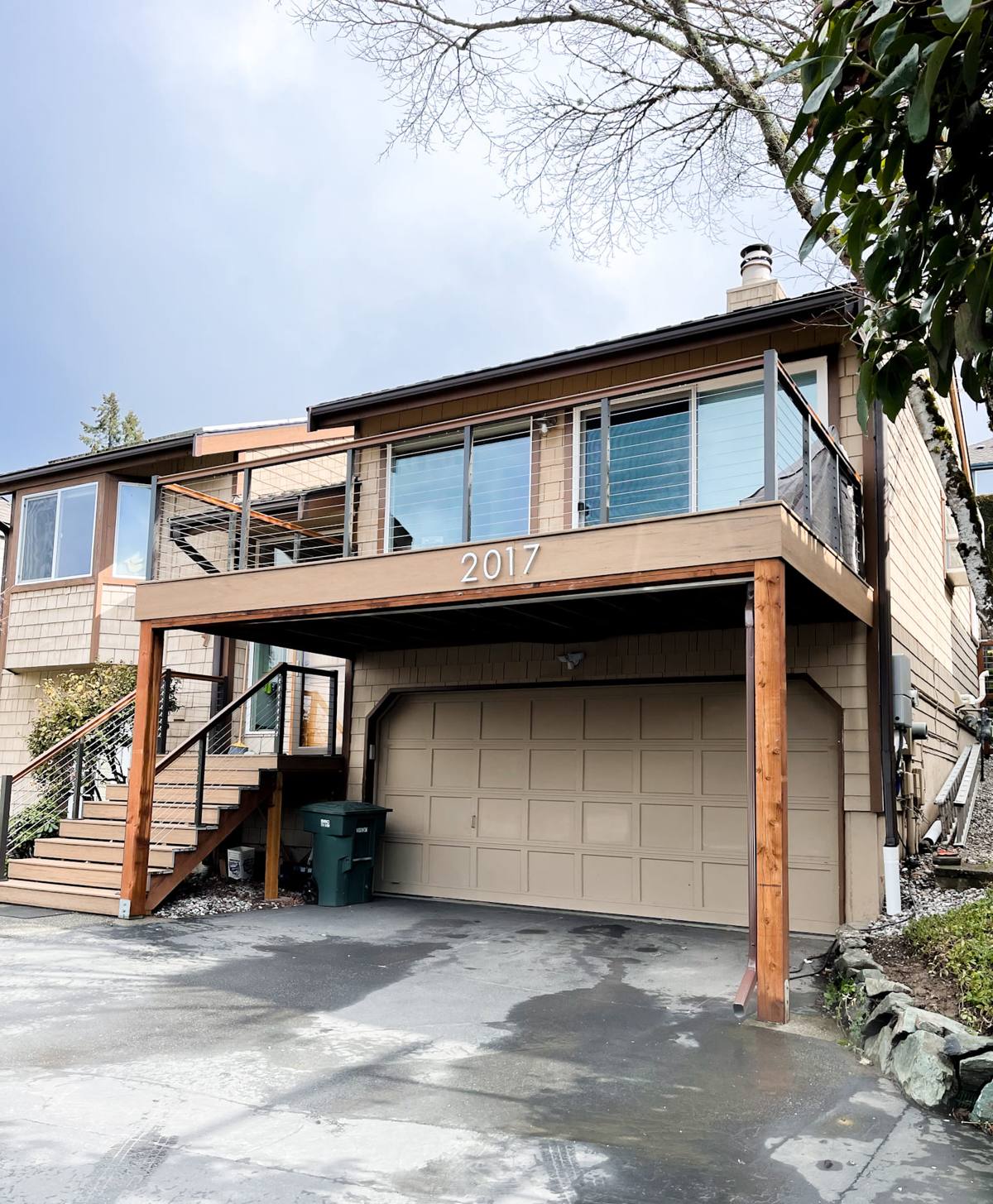
What a Correctly Built Custom Deck Involves Here
"Custom" doesn't just mean the shape or size of the deck — it means the structure and details are matched to the site, the house, and the exposure. That matters more in Birchwood than in a drier inland location because the margin for error is smaller.
Framing and Structural Considerations
Framing lumber needs to be rated for ground contact or exterior exposure depending on where it sits, and every cut end needs to be sealed before it goes up — not after. Joist tape or a comparable flashing membrane over the tops of joists keeps standing water from soaking into end grain, which is one of the most common places we find hidden rot on older decks in this area. Post footings need to be sized and set below frost depth and clear of standing water, since saturated soil around a footing is a slow but steady threat to structural stability.
Decking Material Choices for Wet, Salt-Exposed Sites
The decking surface itself takes the brunt of the weather. Whatever material is chosen, it needs consistent drainage gaps between boards so water sheds instead of pooling, and it needs a finish or cap that actually resists the local combination of UV, moisture, and organic growth rather than just looking good in a showroom.
Fasteners, Flashing, and Ledger Connections
The ledger board — where the deck attaches to the house — is the single most important flashing detail on the whole structure. A poorly flashed ledger lets water track behind the siding and into the wall framing, which is a much more expensive problem than anything happening on the deck surface. We use stainless or heavily coated fasteners rated for coastal exposure throughout, not just at the ledger, because a deck is only as strong as its weakest connection.
Choosing the Right Decking Material
There's no single "best" decking material for every home in Birchwood — it depends on budget, how much upkeep you want to do, and how much sun or shade the deck gets. Here's an honest comparison of what we typically install or recommend, based on how each material actually performs in a wet, salt-exposed, moss-prone climate.
| Material | Upfront Cost | Maintenance in This Climate | Typical Lifespan | Best For |
|---|---|---|---|---|
| Pressure-treated wood | Lowest | Annual cleaning and re-staining or sealing to prevent moss and graying | 10-15 years | Budget-conscious projects, homeowners who don't mind regular upkeep |
| Cedar | Moderate | Regular sealing needed to resist moisture and moss; naturally more rot-resistant than PT wood | 15-20 years | Homeowners who want a natural wood look and are willing to maintain it |
| Capped composite | Higher | Occasional washing; no staining or sealing; capped surface resists moisture absorption | 25-30+ years | Homeowners who want low upkeep and consistent long-term performance |
| PVC decking | Highest | Lowest maintenance of any option; fully synthetic, no wood fiber to hold moisture | 30+ years | Shaded, damp, or high-moss-risk sites where wood-based products struggle most |
As a general rule, the more shade and moisture a site gets, the more we lean homeowners toward a capped composite or PVC product — not because wood is a bad material, but because wood-based decking in a persistently damp, shaded spot needs more consistent maintenance to avoid moss buildup and surface wear. That's a maintenance-burden tradeoff worth being upfront about, not a knock on any one manufacturer.
Moss, Drainage, and Long-Term Maintenance
Moss on a deck isn't just cosmetic — it holds moisture against the surface and makes boards genuinely slick and dangerous underfoot, especially on stairs. In Birchwood's tree cover and rain pattern, moss pressure is a year-round consideration rather than a seasonal one. A few design choices make a real difference over the life of the deck:
- Consistent board spacing and proper slope so water actually drains instead of collecting in low spots
- Substructure ventilation so air can move underneath the deck and dry it out between rain events
- Keeping the deck surface clear of overhanging branches and debris where practical, since leaf litter traps moisture and feeds moss growth
- A simple annual cleaning routine — even just a stiff brush and a deck-safe cleaner — goes a long way toward preventing moss from getting established in the first place
None of this eliminates maintenance entirely, but it's the difference between a deck that needs a quick yearly cleaning and one that needs board replacement every few years because moisture never had anywhere to go.
Railings, Stairs, and Code Requirements
Any deck built to code in Whatcom County needs to meet current state building code requirements for railing height, baluster spacing, stair rise and run, and guard strength — these aren't optional details, they're safety requirements that also come up during permitting and any future home sale. Depending on the height of the deck above grade and its size, a permit is often required, and inspections confirm that footings, framing, and railings meet code before the project is signed off. We handle the permitting and inspection process as part of the job rather than leaving it for the homeowner to sort out.
Our Process From Estimate to Finished Deck
A custom deck project runs smoother when the process is clear from the start. Here's how we typically approach a Birchwood deck project:
- On-site assessment — we look at sun and shade exposure, drainage patterns, existing structure (if this is a replacement), and how the deck will connect to the house.
- Material and design discussion — we walk through decking material tradeoffs, railing style, and layout based on how you'll actually use the space and your maintenance preferences.
- Written estimate — a clear scope of work and pricing before anything is signed, with no vague allowances hiding the real cost.
- Permitting — we prepare and submit what's needed for approval so the project meets Whatcom County requirements.
- Construction — proper flashing, fastener selection, and framing details handled correctly the first time, since these are the details that determine how the deck performs in five or ten years, not just how it looks on day one.
- Final walkthrough — we go over the finished deck together and cover basic care so it holds up the way it's supposed to.
Why a Crew That Already Works Birchwood Matters
A contractor who works regularly in this specific area already knows how the local exposure to Bellingham Bay's salt air affects material and fastener choices, how much shade the mature tree cover typically creates, and what kind of drainage and moss pressure to expect on a given lot orientation. That's not something you get from a general decking catalog — it comes from building and repairing decks in this exact climate and seeing, over time, which details hold up and which ones don't. It also means faster, more accurate estimates, because we're not guessing at how a site will behave through a Whatcom County winter — we've already seen it.
Signs Your Current Deck Needs Replacing, Not Just Repair
Homeowners often ask whether an aging deck can be patched up or whether it's time to start over. A few warning signs usually mean full replacement is the more honest recommendation:
- Soft or spongy spots in the decking boards, especially near the house or in shaded areas
- Visible rust streaking or corroded fasteners and hardware
- A ledger board connection that shows water staining or gaps against the house
- Persistent moss or algae that returns quickly even after cleaning
- Railings or posts that feel loose or wobble under normal use
- Widespread graying, splintering, or checking across most of the boards rather than just a few
If only one or two of these apply, targeted repair is often the more sensible route. When several show up together, it's usually a sign the structure has been absorbing moisture for years and a rebuild will save money over repeated patch jobs.
If you're in Birchwood and thinking about a new deck or wondering whether your current one has more life left in it, we're happy to take a look and give you a straight answer. Use the form below to request a free, no-pressure estimate.