 Bellingham Roofing
 Asphalt Shingle Roofing Built for Blaine's Conditions
Blaine sits close to the water at the far northern edge of Whatcom County, and that location shapes what a roof has to survive year after year. Salt-laden air off the strait, wind-driven rain that comes in sideways rather than straight down, and a long, damp moss season combine to put more stress on a shingle roof here than on a similar home fifty miles inland. Asphalt shingle roofing remains one of the most practical, cost-effective choices for this area, but only when it's specified and installed with those conditions in mind. A roof that would hold up fine in a drier climate can fail early here if corners get cut on underlayment, flashing, or ventilation.
This page focuses specifically on asphalt shingle roofing for homes in and around Blaine. The goal isn't to sell a generic roofing package — it's to explain what actually matters for a shingle roof in this part of Whatcom County, what a correct installation looks like, and how our process addresses the local climate instead of ignoring it.
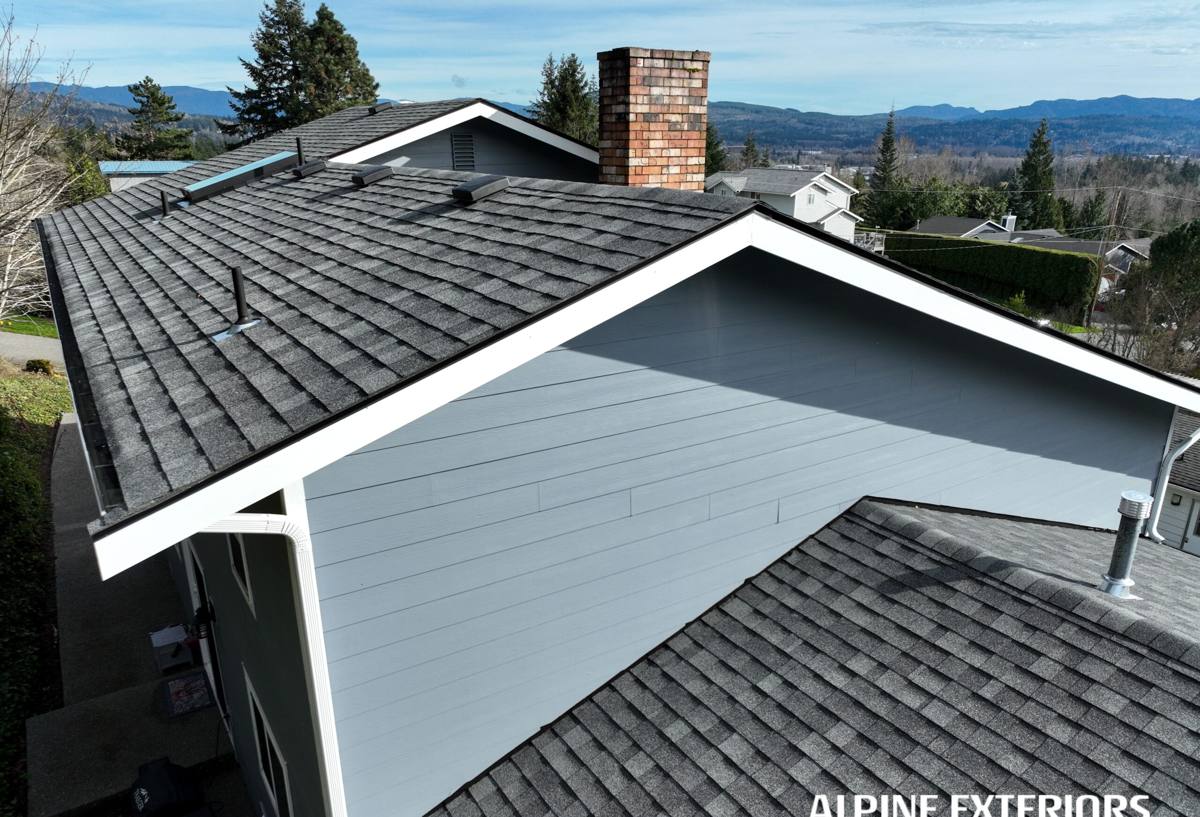
What Salt Air, Driving Rain, and Moss Actually Do to a Roof
Salt Air and Metal Fatigue
Homes near the water deal with airborne salt that settles on every exposed surface, including roofing. Over time, salt exposure accelerates corrosion on unprotected metal components — nail heads, flashing, and vent stacks in particular. A roof detailed with standard-grade fasteners and thin flashing will show rust and premature wear well before a roof built with corrosion-resistant materials in the same spot.
Driving Rain and Wind-Driven Water
Rain that comes in at an angle behaves differently than a straight downpour. It can work its way under shingle tabs, around chimney flashing, and into valleys if those areas aren't sealed and layered correctly. This is one of the most common sources of hidden leaks on shingle roofs in this region — the shingles themselves look intact, but water finds a path through a weak seam or an underlayment gap during a windy storm.
Moss and Sustained Moisture
A long moss season means shaded, north-facing slopes and areas near overhanging trees stay damp for extended stretches. Moss holds moisture against the shingle surface, and over years that moisture retention breaks down the granules that protect the asphalt mat underneath. Left unaddressed, moss growth shortens the effective life of an otherwise sound roof.
What a Correct Asphalt Shingle Installation Includes
A shingle roof is a layered system, not just the visible shingles. In a climate like Blaine's, every layer earns its place.
- Deck inspection and repair — any soft, delaminated, or water-damaged sheathing gets replaced before anything else goes down
- Ice and water shield — self-adhering waterproof membrane at eaves, valleys, and around every penetration, not just where code requires it
- Synthetic underlayment — a full water-resistive barrier across the entire deck, sized and lapped to shed wind-driven rain
- Corrosion-resistant flashing — step flashing, valley flashing, and chimney flashing suited to salt-air exposure
- Proper nailing pattern — correct nail placement and count matters more in high-wind coastal exposure than most homeowners realize
- Balanced attic ventilation — intake and exhaust that keeps moisture from condensing under the deck, which protects shingles from underneath
- Quality shingle selection — matched to the home's exposure, roof pitch, and shade pattern
Skipping or underbuilding any one of these doesn't necessarily show up as a problem in year one. It shows up in year five or six, as a leak that seems to come from nowhere or granule loss that's faster than it should be.
Our Asphalt Shingle Roofing Process
1. On-Site Assessment
We walk the roof and the attic, not just the roof. Attic ventilation, existing moisture staining, and deck condition tell us as much as what we can see from a ladder outside.
2. Written Scope and Straight Answers
Before any work starts, you get a clear description of what's being replaced, what materials are specified, and why — including the parts of the job that are easy to skip and shouldn't be.
3. Tear-Off and Deck Repair
Old roofing comes off down to the deck so we can actually see what's underneath. Any damaged sheathing gets flagged and replaced, not covered over.
4. Waterproofing Layers First
Ice and water shield and underlayment go down before a single shingle is installed. This is the layer that does the real work during a wind-driven rain event, and it's the layer that's invisible once the job is finished — which is exactly why we don't shortcut it.
5. Shingle Installation and Detail Work
Shingles go on with attention to nailing pattern, valley treatment, and flashing at every penetration — chimneys, vent stacks, skylights. These transition points are where the large majority of shingle roof leaks originate.
6. Ventilation Check and Final Walkthrough
We confirm intake and exhaust ventilation is balanced, clean up the site, and walk the finished roof with you before we consider the job done.
Choosing a Shingle for Blaine's Exposure
Not every asphalt shingle product performs the same way in a coastal, moss-prone climate. The table below outlines the practical trade-offs homeowners in this area typically weigh.
| Shingle Type | Wind Performance | Algae/Moss Resistance | Typical Lifespan Here |
|---|---|---|---|
| 3-Tab (standard) | Lower wind rating; more exposed tab edges | Only with algae-resistant granules added | Shorter end of range in coastal exposure |
| Architectural / Laminated | Higher wind rating from thicker, layered construction | Widely available with algae-resistant granules | Longer end of range with proper install |
| Impact-Resistant Architectural | Highest wind and impact rating | Available with algae-resistant granules | Longest, with corresponding material cost |
For most homes near Blaine, an architectural shingle with algae-resistant (copper-infused) granules is the practical middle ground — it holds up to wind better than a 3-tab and resists the moss and algae staining that's common on shaded, damp roof sections in this climate. We'll walk through the specific options and warranty terms for whichever manufacturer line fits your home and budget; we don't push a single brand as a one-size-fits-all answer, because roof pitch, sun exposure, and tree cover all factor into what actually performs best on a given house.
What Affects the Cost of a Shingle Roof in Blaine
| Factor | Why It Matters Here |
|---|---|
| Roof size and pitch | Steeper roofs take longer and require more fall protection setup |
| Deck condition | Damp climate means a higher chance of hidden sheathing damage under old roofing |
| Shingle grade | Algae-resistant, higher wind-rated shingles cost more but last longer near the water |
| Flashing and penetrations | Chimneys, skylights, and multiple vent stacks add labor and material |
| Ventilation upgrades | Adding or correcting intake/exhaust vents protects the new roof's lifespan |
| Access and tear-off complexity | Multiple layers of old roofing or difficult site access add time |
Because of these variables, honest pricing only comes from an actual on-site look — anyone quoting a firm number over the phone without seeing the roof is guessing. What we can say broadly is that a properly built shingle roof, with the waterproofing and ventilation detail this climate requires, will cost more up front than a stripped-down installation — and will cost you far less over its lifespan in avoided leak repairs and premature replacement.
Maintenance Checklist for Blaine Homeowners
Asphalt shingle roofs are relatively low-maintenance, but a little attention goes a long way in this climate.
- Clear gutters and downspouts before the fall rains build up, so water isn't backing up under eaves
- Have moss treated or gently removed before it spreads across shaded slopes, rather than after
- Trim back branches that keep sections of the roof shaded and damp longer than the rest
- Watch for granules collecting in gutters, which can signal a shingle nearing the end of its service life
- Check attic insulation and ventilation periodically — trapped moisture damages a roof from underneath
- After major wind events, do a visual check for lifted or missing shingles rather than waiting for a leak to appear
Why a Crew That Already Works Blaine Matters
Roofing crews that work across many different climates tend to build to a generic standard. A crew that regularly works Blaine and the surrounding Whatcom County coastline knows which details actually get tested by this specific combination of salt air, wind-driven rain, and moss — and builds to that standard as a default, not an upsell. That familiarity shows up in decisions like which flashing metal to specify, how much ice and water shield to run beyond the code minimum, and where ventilation tends to fall short on homes with this area's typical roof designs and tree cover.
It also means faster, more realistic scheduling around this region's weather windows, and a crew that isn't learning the local conditions on your roof for the first time.
Signs Your Blaine Roof May Need Attention
A few warning signs are worth acting on before they become an interior repair:
- Granules accumulating in gutters or at the base of downspouts
- Shingles that look curled, cracked, or lifted at the edges
- Dark streaking or moss patches on north-facing or shaded slopes
- Daylight visible through the attic roof deck
- Soft spots or sagging noticeable when walking the roofline visually from the ground
- Water stains on interior ceilings after a wind-driven rain event, even if they dry out and disappear
Any one of these on its own isn't necessarily an emergency, but they're worth a professional look rather than a wait-and-see approach, especially heading into another wet season.
If you're weighing a repair, a full replacement, or just want a straight opinion on where your roof stands, we're happy to take a look and give you an honest answer — no pressure, no obligation. Use the form below to request a free estimate for your Blaine property.