 Bellingham Roofing
 Blaine's Coastline Is Tough on Exterior Siding
Blaine sits right on the water, tucked against Semiahmoo Bay and Drayton Harbor at the northern edge of Whatcom County. That location is a big part of what makes the town beautiful, and it's also exactly why siding fails faster here than it does twenty miles inland. Homes in Blaine deal with a combination most Western Washington contractors only see occasionally: salt-laden air blowing off the water, wind-driven rain that gets pushed sideways into wall assemblies, and a moss season that can run the better part of eight or nine months out of the year. Any one of those on its own is manageable. Together, they wear through the wrong siding material fast, and they punish sloppy installation work even faster.
This page is specifically about fiber cement siding for Blaine homes — what the local climate demands from the material, what a correct installation actually involves, and why we install James Hardie fiber cement and nothing else.
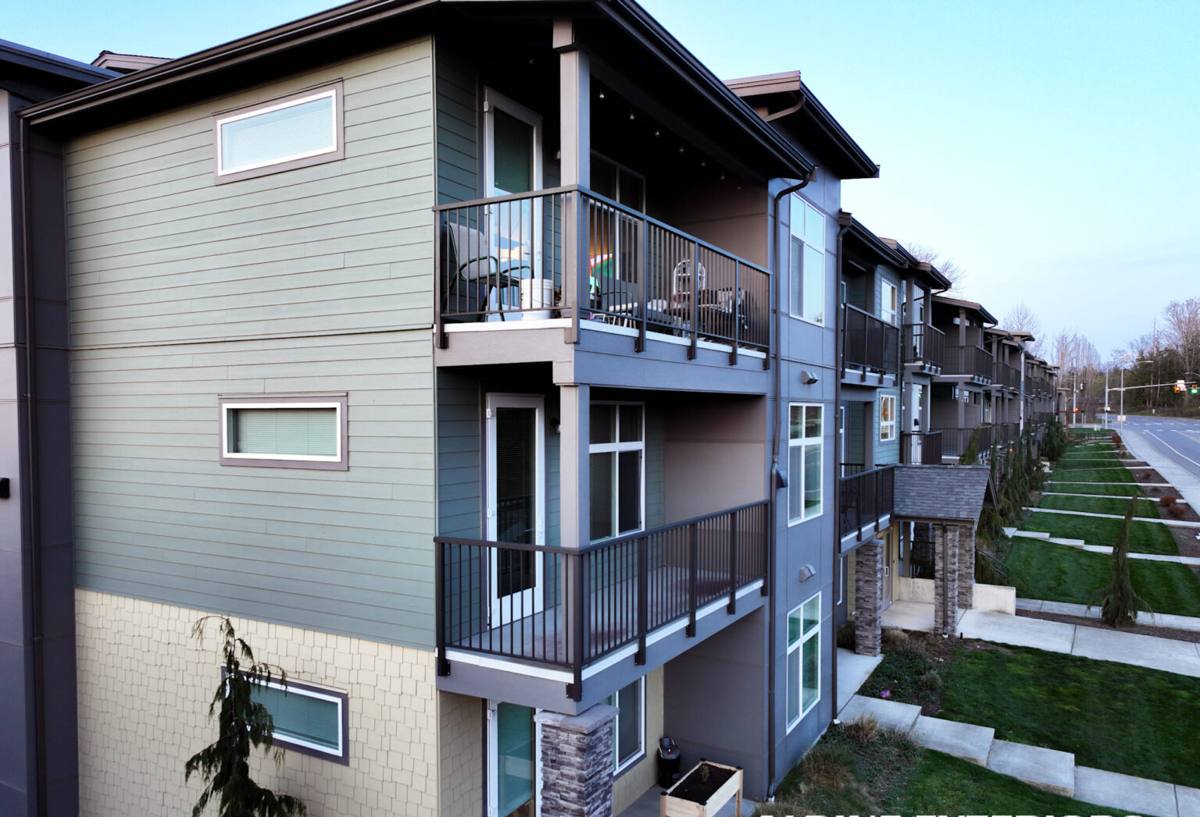
What Blaine Homes Are Actually Up Against
Salt Air and Corrosion
Homes within a mile or two of the water pick up airborne salt that settles on every exterior surface, including siding, trim, and fasteners. Salt is hygroscopic — it pulls moisture out of the air and holds it against whatever it lands on. Over years, that constant low-grade dampness accelerates corrosion in cheap fasteners, breaks down adhesives, and speeds up paint failure on materials that weren't built to handle it.
Driving Rain and Wind-Driven Moisture
Bellingham and Whatcom County get plenty of rain, but the way it arrives in Blaine matters more than the total volume. Open water exposure means rain frequently comes in sideways rather than straight down, driven by wind off the bay. That kind of weather finds every gap in flashing, every under-caulked seam, and every place where siding was nailed too tight against the wall. A siding job that would hold up fine on a sheltered inland lot can leak within a couple of seasons on an exposed Blaine elevation if the water management details were skipped.
A Long Moss Season
Cool, damp, and shaded conditions favor moss and algae growth for most of the year in this part of Washington, and homes near the water often stay damp longer after a storm because of the added humidity. Moss and algae don't destroy siding directly, but they hold moisture against the surface for extended periods, and on materials that aren't dimensionally stable or properly sealed, that prolonged dampness is what eventually causes swelling, rot, or coating failure.
What a Correct Fiber Cement Installation Requires Here
Fiber cement is the right base material for this climate, but the material alone doesn't guarantee a good outcome. Most of the siding failures we get called out to inspect in coastal Whatcom County towns trace back to installation shortcuts, not the product itself. A correct install for a Blaine home means paying close attention to a few details that matter more here than they would on a sheltered inland property.
Clearances and Drainage
Fiber cement needs proper clearance from grade, roof lines, decks, and horizontal surfaces so water has somewhere to go instead of wicking up into the bottom of the panel or plank. On a lot exposed to blowing rain, we treat these clearances as non-negotiable rather than best-effort.
Flashing and Water Management Behind the Siding
The siding itself is the visible layer, but the water-resistive barrier and flashing details behind it are what actually keep a wall dry over time. Window and door flashing, kick-out flashing at roof-to-wall intersections, and properly lapped house wrap all matter more on a coastal elevation that takes rain head-on than they would on a wall tucked out of the weather.
Fasteners and Hardware Rated for the Environment
In a salt-air environment, the fasteners holding the siding on need to be corrosion-resistant, not just whatever was on the truck. We follow manufacturer fastening specifications for coastal exposure, including nail type, spacing, and penetration depth, because a fastener that starts rusting in a few years compromises the whole installation regardless of how good the siding itself is.
Why We Install Only James Hardie Fiber Cement
We don't install vinyl, LP SmartSide, Cemplank, Allura, or primed wood siding. That's a deliberate standard, not a lack of options. James Hardie is the only exterior cladding we put on homes, and in a climate like Blaine's, the reasons matter more than they would somewhere drier and more sheltered.
HZ5 Engineered for Marine and Coastal Exposure
James Hardie manufactures its siding in different formulations engineered for different climate zones, and the HZ5 product line is built specifically for regions with higher moisture exposure and more extreme temperature swings, including marine and coastal environments like the Blaine waterfront. That climate engineering affects how the board handles moisture cycling over time, which is exactly the stress this location puts on a wall.
ColorPlus Factory Finish
Field-painted siding is only as good as the paint job and the maintenance schedule that follows it, and salt air is hard on field-applied coatings. James Hardie's ColorPlus finish is baked on in a controlled factory environment and backed by its own finish warranty, which holds up better against sun, salt, and repeated wet-dry cycling than a coat of paint applied on site. It also means touch-up and repainting isn't something a homeowner needs to plan for every few years the way they would with field-finished materials.
Non-Combustible and Dimensionally Stable
Fiber cement doesn't rot, doesn't attract insects, and doesn't expand and contract with moisture the way wood-based products do. That dimensional stability is what lets it hold paint and caulk lines properly over the long term instead of cracking joints open the way wood or wood-composite sidings can as they swell and shrink with the seasons.
How Fiber Cement Compares to Other Siding Options in This Climate
Every siding material has trade-offs. Here's how the options homeowners typically ask us about actually perform under Blaine's specific conditions — salt exposure, driving rain, and extended damp periods.
| Material | Salt Air / Corrosion | Moisture Behavior | Maintenance Burden |
|---|---|---|---|
| James Hardie fiber cement | Engineered HZ5 formulation for coastal exposure | Dimensionally stable, doesn't rot or swell | Low — factory finish, occasional wash |
| Vinyl | Fasteners and trim can corrode; panels can warp with temperature swings | Doesn't rot, but can trap moisture behind it if installed poorly | Low, but limited repair options and fading over time |
| Cedar / primed wood | Salt accelerates coating breakdown and grain checking | Absorbs moisture, prone to rot without diligent upkeep | High — regular refinishing and moisture monitoring |
| LP SmartSide (wood strand) | Edge and cut-end sealing is critical near salt air | Engineered wood core is moisture-sensitive if seals fail | Moderate — depends heavily on installation quality |
This isn't a case of one product being universally bad — it's about which material and finish system holds up with the least ongoing risk in a specific coastal environment. For Blaine, that's fiber cement with a factory-applied finish.
Our Process for a Blaine Siding Project
The steps don't change much from house to house, but the attention to detail at each step is what determines whether the siding performs for decades or starts showing problems in a few years.
- On-site inspection of the existing siding, sheathing, and any signs of past moisture intrusion around windows, doors, and roof-to-wall transitions.
- Assessment of the home's specific exposure — how much direct wind and rain the walls take off the water, and where the vulnerable elevations are.
- Product and color selection, including confirming the correct James Hardie profile and HZ product line for the home.
- Tear-off of old siding and inspection of the wall sheathing underneath, repairing or replacing any compromised sheathing before anything new goes up.
- Installation of house wrap, flashing, and trim details built for wind-driven rain, followed by the siding itself installed to manufacturer specification.
- Caulking, touch-up, and a final walk-through so the homeowner understands what was done and what, if anything, needs periodic attention.
Living With Fiber Cement Siding in a Moss-Prone Climate
Correctly installed James Hardie siding is low-maintenance, but "low-maintenance" doesn't mean "no attention ever." In a climate that stays damp and shaded for much of the year, a little seasonal care goes a long way toward keeping the siding looking and performing the way it should.
- Rinse siding periodically to keep organic buildup like moss, algae, and pollen from sitting on the surface for extended periods.
- Keep gutters clear so overflow doesn't run down the face of the siding or pool at the base of walls.
- Trim back vegetation and tree cover that keeps specific wall sections shaded and damp longer than the rest of the house.
- Check caulking at trim, window, and door joints every year or two, since caulk is the first line of defense and has a shorter service life than the siding itself.
- Watch for staining or soft spots near grade or at deck and roof intersections, which are the areas most likely to show an early sign of a flashing or drainage issue.
Why Hiring a Crew That Already Works in Blaine Matters
Siding installation isn't identical everywhere in Whatcom County. A crew that mostly works sheltered neighborhoods inland doesn't necessarily think about kick-out flashing, fastener corrosion resistance, or wind-driven rain exposure the same way a crew that regularly works Blaine's waterfront and near-water properties does. It's not that the manufacturer's instructions change — it's that the margin for error is smaller here, and knowing which details actually matter on an exposed coastal wall comes from having done the work in this specific environment before.
That local familiarity also extends to practical things like understanding typical home construction in the area, working around the wind and weather windows that affect scheduling near the water, and recognizing the early warning signs of moisture problems that are specific to salt-air exposure rather than generic siding wear.
What Affects the Cost of Your Project
Every Blaine home is different, and a real number only comes from an on-site look, but a few factors consistently move the price on fiber cement siding projects in this area: the condition of the existing sheathing once old siding comes off, the home's exposure level and how much extra flashing and detailing an exposed elevation needs, the amount of trim and architectural detail involved, and the specific James Hardie profile and finish selected. Homes with hidden sheathing damage from years of past moisture intrusion typically cost more simply because that damage needs to be repaired properly before new siding goes on — cutting that step to save money is how the same problem comes back a few years later.
If you're weighing a siding replacement for a Blaine home, we're happy to take a look and walk you through what your specific property actually needs — no pressure, no obligation. Request a free estimate below and we'll get back to you.