 Bellingham Roofing
 Board & Batten Siding, Built for a Waterfront Community
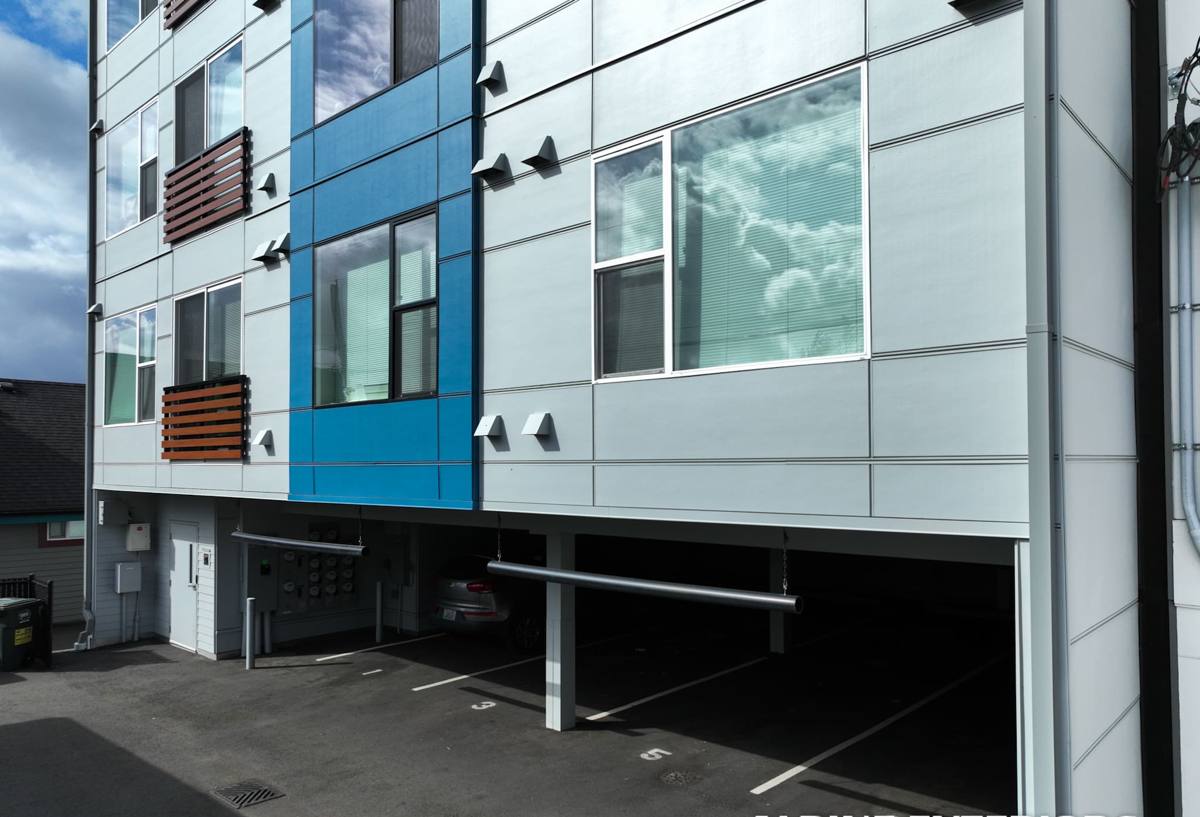
Birch Bay sits right on the water, and that changes what a home needs from its siding. The wide-board, narrow-strip look of board and batten has always suited waterfront and cabin-style homes in this part of Whatcom County — it reads as coastal, craftsman, or modern farmhouse depending on the trim and color, and it holds up visually in a way that flat lap siding sometimes doesn't against the area's mix of older beach cottages and newer full-time residences. But the same features that make board and batten attractive — strong vertical lines, exposed seams under the battens, a more dramatic shadow line — also make it a style where the underlying material and the installation quality matter more than usual. Done right, it's one of the best-looking sidings you can put on a Birch Bay home. Done wrong, the seams and battens are exactly where water finds its way in first.
What Birch Bay's Climate Actually Does to Siding
This isn't generic Pacific Northwest weather. Birch Bay sits directly on the Strait of Georgia, and homes here take a combination most inland Whatcom County properties don't see:
- Salt air: constant low-level salt exposure accelerates corrosion on fasteners, hardware, and any siding material that isn't rated for coastal use.
- Driving rain off the water: wind-driven rain hits vertical siding at an angle, not straight down, which puts real pressure on seams, battens, and any gap in the water-resistive barrier behind the siding.
- Long moss and mildew season: shaded north- and west-facing walls near tree lines and low-lying yards stay damp for months at a stretch, which is exactly the environment moss, algae, and mildew need to take hold.
- Wind exposure: open waterfront lots and bluff-adjacent properties see higher sustained wind loads than sheltered inland streets, which stresses fastening and panel attachment over time.
None of that means board and batten is a bad choice for Birch Bay — it means the material and the install both have to be built for it, not just adapted to it after the fact.
Why We Only Install Board & Batten in James Hardie Fiber Cement
Board and batten can be built out of several materials — primed wood, engineered wood panel products, vinyl board-and-batten profiles, or fiber cement. We've made a standing decision to install it in James Hardie fiber cement only, and on a Birch Bay job that decision matters more than on a typical inland install.
Wood-based board and batten, even primed and painted well, is a moisture-management project for as long as you own the home. In a salt-air, high-moisture environment, seams and end cuts on wood products are chronic entry points for water, and repainting cycles come faster than they would somewhere drier. Vinyl board and batten profiles handle rain fine but move a lot with temperature swings, don't hold up structurally to sustained coastal wind the way a heavier panel product does, and can't be finished with a factory paint system that resists salt-air fading.
Hardie fiber cement is non-combustible, dimensionally stable across temperature swings, and manufactured with ColorPlus factory finish — a baked-on finish that holds color and resists the fading and chalking that salt air and UV cause faster near open water than inland. It's engineered to take moisture exposure without swelling, rotting, or supporting the kind of mildew growth that thrives on organic wood siding. That's the whole reason we standardized on it: it's the one board and batten material we're comfortable putting our name behind on a property that sits this close to the water.
What a Correct Board & Batten Job Involves
Board and batten looks simple — wide panel, narrow strip, repeat — but the parts you don't see are what determine whether it lasts. A correct install includes:
Behind the Siding
A continuous, correctly lapped water-resistive barrier (house wrap or building paper) with all penetrations — windows, doors, hose bibs, light fixtures — properly flashed before a single panel goes up. On a Birch Bay home taking driving rain off the water, this layer is doing more work than the siding itself.
Panel Spacing and Fastening
James Hardie specifies exact gap tolerances between panels, minimum clearance off rooflines and grade, and fastener spacing and placement. Battens have to land over seams correctly and be fastened into framing, not just into the panel. Skipping or eyeballing these specs is the single most common way board and batten fails early, and it's not something you can see once the wall is painted.
Trim and Transitions
Corners, window and door casing, and the transition at the foundation line all need to be detailed to shed water outward, not trap it behind the trim. This is where amateur and rushed installs show up first — usually as staining or soft trim within a few years.
Finish
Factory-finished ColorPlus panels don't need field painting at install, which removes one more variable in a marine environment where field-applied paint has to cure and bond correctly to hold up.
Our Process on a Birch Bay Board & Batten Job
- On-site assessment: we look at wall exposure, existing siding condition, moisture or moss patterns on the current exterior, and any framing or sheathing issues that need to be addressed before new siding goes on — not covered up under it.
- Tear-off and prep: removal of existing siding where needed, repair of any damaged sheathing or framing, and installation of a correctly lapped water-resistive barrier.
- Flashing and detailing: every window, door, and penetration flashed before panels go up.
- Panel and batten installation: to James Hardie's published fastening and spacing specifications, not general carpentry judgment.
- Trim and final detail work: corners, transitions, and grade clearance finished to shed water away from the wall assembly.
- Walkthrough: a final check with the homeowner before we call the job done.
What Affects the Cost of a Board & Batten Job
| Factor | Why It Matters |
|---|---|
| Existing siding removal | Tear-off, disposal, and any sheathing repair found underneath add labor beyond a straightforward re-side |
| Wall complexity | Dormers, gables, and multiple roof intersections mean more flashing, more cuts, and more trim detail |
| Trim and batten spacing pattern | Tighter batten spacing and wider trim boards use more material and labor than a simpler pattern |
| Home accessibility | Waterfront lots, bluff access, and tight side yards common in Birch Bay can affect staging and equipment access |
| Color and finish selection | Standard ColorPlus colors vs. specialty finishes affect material cost |
| Moisture or structural repair | Any rot or sheathing damage found during tear-off gets repaired before new siding goes on, which affects final cost |
We give a firm, itemized quote after the on-site assessment — not a phone estimate — because on a coastal property, what's underneath the existing siding often matters as much as what goes on top of it.
Living With Board & Batten in a Salt-Air Climate
James Hardie fiber cement is low-maintenance compared to wood, but "low-maintenance" isn't "no-maintenance" this close to the water. A simple annual routine keeps a Birch Bay board and batten exterior looking right and catches small issues before they become repairs:
- Rinse salt residue and grime off the siding once or twice a year with a garden hose and soft brush — avoid pressure washing directly into seams or battens
- Check shaded, north- and west-facing walls for early moss or algae growth, especially near tree lines or low areas that stay damp longest
- Inspect caulking around windows, doors, and trim annually and re-caulk any cracked or separated joints before winter rains
- Keep gutters clear so water isn't sheeting down the wall behind the siding
- Trim back vegetation and landscaping that keeps a wall section shaded and damp longer than the rest of the house
- Watch grade lines and mulch beds so soil or bark buildup doesn't creep up over the siding's clearance from grade
Why It Matters That We Already Work in Birch Bay
A lot of siding problems in coastal Whatcom County trace back to details that are correct for an inland install but wrong for a waterfront one — house wrap laps oriented the wrong way for the prevailing wind-driven rain, batten fastening that doesn't account for the wind loads on an open lot, or a flashing detail that's fine on a sheltered street but not on a bluff. A crew that already works Birch Bay has seen how these homes actually perform a few winters after installation, not just how they look on install day. That's the difference between a board and batten job that's built for this specific stretch of coastline and one that's just built.
If you're considering board and batten siding for a home in Birch Bay, we're happy to walk the property, look at what you're working with, and put together a straightforward, no-pressure estimate — use the form below to get started.